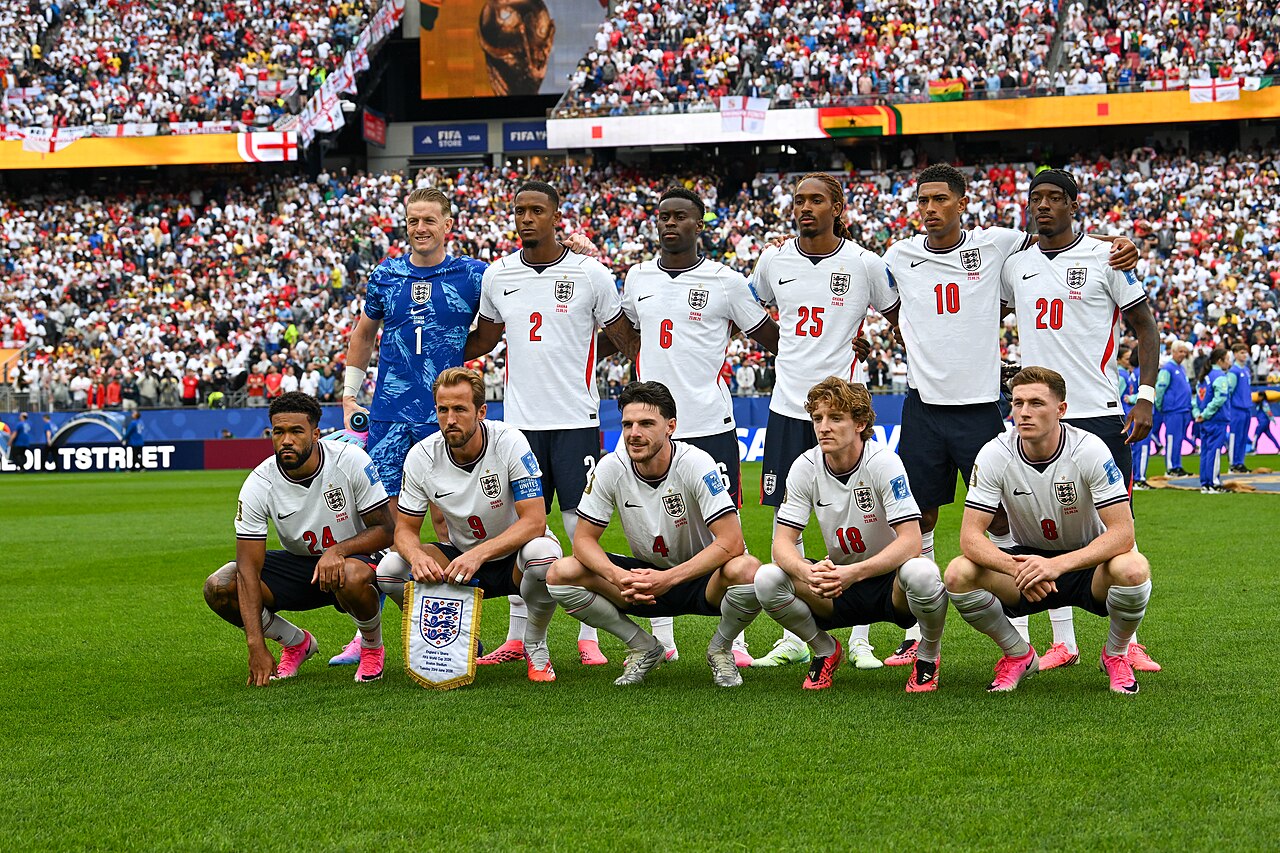
England did not simply beat Croatia in Rijeka. They took apart a team that has spent most of the past decade living comfortably among Europe’s elite and turned a difficult Nations League away fixture into a seven-goal exhibition. The scoreline, Croatia 0-7 England, will dominate the headlines, but the more important detail for Thomas Tuchel was the way his side produced it.
Harry Kane scored twice, Bukayo Saka scored twice, Jude Bellingham controlled the game between the lines, Anthony Gordon added another and Morgan Rogers completed the rout. Croatia suffered the heaviest defeat in their history. For England, it was their biggest Nations League win and the clearest sign yet that the post-World Cup reset is beginning to look like a coherent team rather than another collection of elite individuals.
England finally played at the speed Tuchel has wanted
Tuchel has spent much of his England tenure talking about intensity, sharper circulation and attacking the spaces before opponents can settle. In Rijeka, those ideas were visible from the opening stages. England moved the ball quickly enough to pull Croatia’s midfield apart, but they were also aggressive without it. The result was a game in which Luka Modrić and his team-mates were constantly being asked to defend while facing their own goal.
That matters because England’s problem in recent years has rarely been a lack of talent. The question has been whether the team can impose itself against opponents who are technically comfortable and tactically experienced. Croatia have embarrassed bigger nations by slowing games down and making them play at Croatian tempo. England refused to accept that invitation.
The contrast with some of the uncertainty Tuchel faced earlier in the international window was striking. The manager had been looking for a balance between control and aggression; against Croatia, he got both.

Bellingham gave England a second playmaker
Jude Bellingham’s numbers were exceptional, but the nature of his performance was more significant than the statistics. He finished with a goal and three assists, repeatedly receiving possession in positions where Croatia could not decide whether a midfielder or centre-back should engage him.
When Bellingham plays that way, England are no longer dependent on a winger beating his man or Kane dropping deep to create. There is a central route through the pitch. His movement also allowed Kane to stay closer to goal for longer spells, which is exactly where England want their record scorer.
Tuchel had recently discussed Bellingham as a possible No 9 option. Rijeka suggested something more useful: England may not need to turn him into a striker when he can arrive around Kane and still influence the penalty area. That relationship could become more important than any experiment with a conventional back-up centre-forward.
Kane remains the reference point
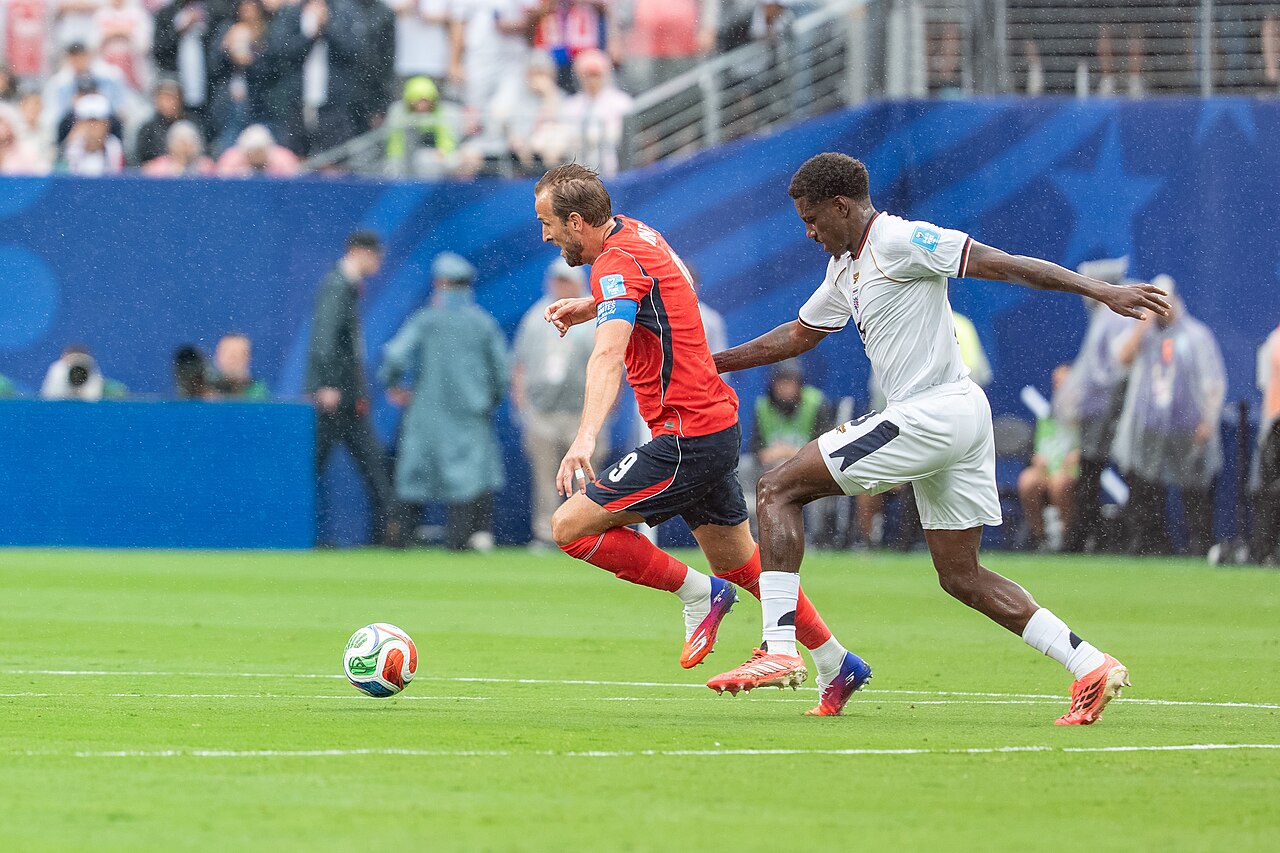
Kane’s two goals took him to 89 for England in 124 caps, leaving him one appearance short of Peter Shilton’s long-standing 125-cap mark. The numbers are extraordinary, but his value in this side is not limited to finishing. He still provides the calmest reference point in the final third, allowing England’s younger runners to play around him.
The encouraging detail for Tuchel is that Kane did not have to dominate every possession. Saka, Bellingham, Gordon and the midfield carried enough responsibility for England to avoid becoming predictable.

Saka and Gordon stretched Croatia until the structure broke
Bukayo Saka’s two goals came from the kind of positions England need their wide forwards to attack more consistently. He was direct without forcing the game, and his movement gave Croatia a problem on the right that they never solved. Gordon offered a similar threat from the opposite side, attacking space early and making England’s front line wider than it has sometimes looked under Tuchel.
That width was crucial. When Croatia narrowed to protect the centre, England could switch play. When the full-backs moved wider, Bellingham found space inside. The attacking structure produced choices rather than a single route to goal.
The performance also strengthened the argument that England’s depth is becoming an advantage rather than a selection headache. Earlier in the season, The Football Xtra looked at how Cole Palmer’s absence could reshape Tuchel’s options. Rijeka showed that England can absorb important absences without losing creativity.

Alex Scott changed the conversation around England’s midfield
Alex Scott’s full debut was easy to overlook beside a seven-goal scoreline, but it may prove one of the most useful developments of the night. The Bournemouth midfielder completed 97 per cent of his passes and looked comfortable against one of the most celebrated midfielders of his generation in Modrić.
He did not play like a debutant trying to survive. Scott demanded the ball, moved it forward and pressed with the confidence of a player who believes he belongs at this level. England have often had plenty of attacking midfielders but fewer players capable of giving the team rhythm from deeper positions. Scott’s emergence gives Tuchel another profile.
The immediate temptation after a result like this is to declare a transformation complete. That would be premature. Croatia were poor, and England will face opponents who defend their box better and punish mistakes more ruthlessly. But there is a difference between overreacting to a scoreline and recognising a structural improvement.
England were faster, more connected and less dependent on one player to solve the match. The seven goals made the performance spectacular. The spacing, pressing and variety are what should interest Tuchel most.
Read Here: The Guardian’s match report from Croatia 0-7 England.
Images: Bryan Berlin / WikiPortraits and YantsImages / WikiPortraits, used under CC BY-SA 4.0.