Arsenal’s Premier League title was not built in one summer.
It was not won by one transfer window, one coach, one tactical idea or one star player. It was the result of a long, expensive and often painful journey that began after the 2003/04 Invincibles season and finally reached its reward in 2025/26.
Arsenal ended a 22-year wait for the league title after Manchester City’s draw with Bournemouth made it mathematically impossible for City to catch them, triggering celebrations across North London and confirming Arsenal’s first Premier League crown since 2004.
But the bigger question is this:
How much did it really cost Arsenal to return to the top?
The answer depends on what we count.
If we focus only on modern transfers, Arsenal’s spending is already huge. If we include the Emirates Stadium project, the financial picture becomes even bigger. If we also consider the commercial machine that powered the rebuild — Emirates, Adidas, shirt sponsorships, stadium naming rights and global revenue growth — then Arsenal’s title becomes not just a sporting story, but a football business case study.
A reasonable estimate is this:
Arsenal’s modern title project from 2004 to 2026 sits around $3.1bn in football investment, built mainly on transfer expenditure and the Emirates Stadium project.
That figure does not include wages, agent fees, bonuses, staff salaries, academy costs, debt servicing, medical departments, scouting operations or inflation adjustments. If those were added, the real economic cost of the journey would be far higher.
I. The Core Estimate: Around $3.1bn
The cleanest way to frame this article is to separate costs from commercial income.
Estimated football investment
Area Approx. original value Approx. USD estimate
Gross transfer expenditure, post-Invincibles modern era estimate Around €2.2bn–€2.3bn equal to Around $2.55bn–$2.65bn
Emirates Stadium construction project Around £390m equal to Around $520m–$525m
Estimated football investment total Around $3.1bn
The transfer figure is an editorial estimate based on public transfer-market data and Arsenal’s modern-era spending profile. Transfermarkt lists Arsenal’s 2025/26 expenditure alone at €294.60m, with income of €13.88m, giving a 2025/26 transfer balance of -€280.73m.
The stadium figure is also important. Arsenal’s Emirates Stadium, opened in 2006, cost around £390m, a project that reshaped the club’s finances for the next two decades.
So the headline number should not be treated as an audited accounting figure. It is a football-business estimate of the investment base that made the 2026 title possible.
II. Why 2004 Is the Correct Starting Point
The story starts in 2004 because that was the last time Arsenal won the league before this season.
The Invincibles were not only a great team. They became the standard by which every Arsenal side after them was judged.
After 2004, Arsenal changed as a club. The move from Highbury to the Emirates Stadium was supposed to give the club long-term financial strength, but in the short term it also created pressure. Arsenal had to compete while managing stadium financing, transfer discipline and a self-sustaining business model.
That is why the years after 2004 were complicated.
Arsenal were still a big club. They still played attractive football. They still developed elite talent. But they gradually lost the power to compete consistently with clubs that were spending more aggressively.
The 2026 title is therefore not just the end of a title drought. It is the final answer to a question Arsenal have lived with since leaving Highbury:
Could the Emirates-era Arsenal ever return to the top of English football?
Now they have.
III. Five-Year Spending Phases: How the Rebuild Evolved
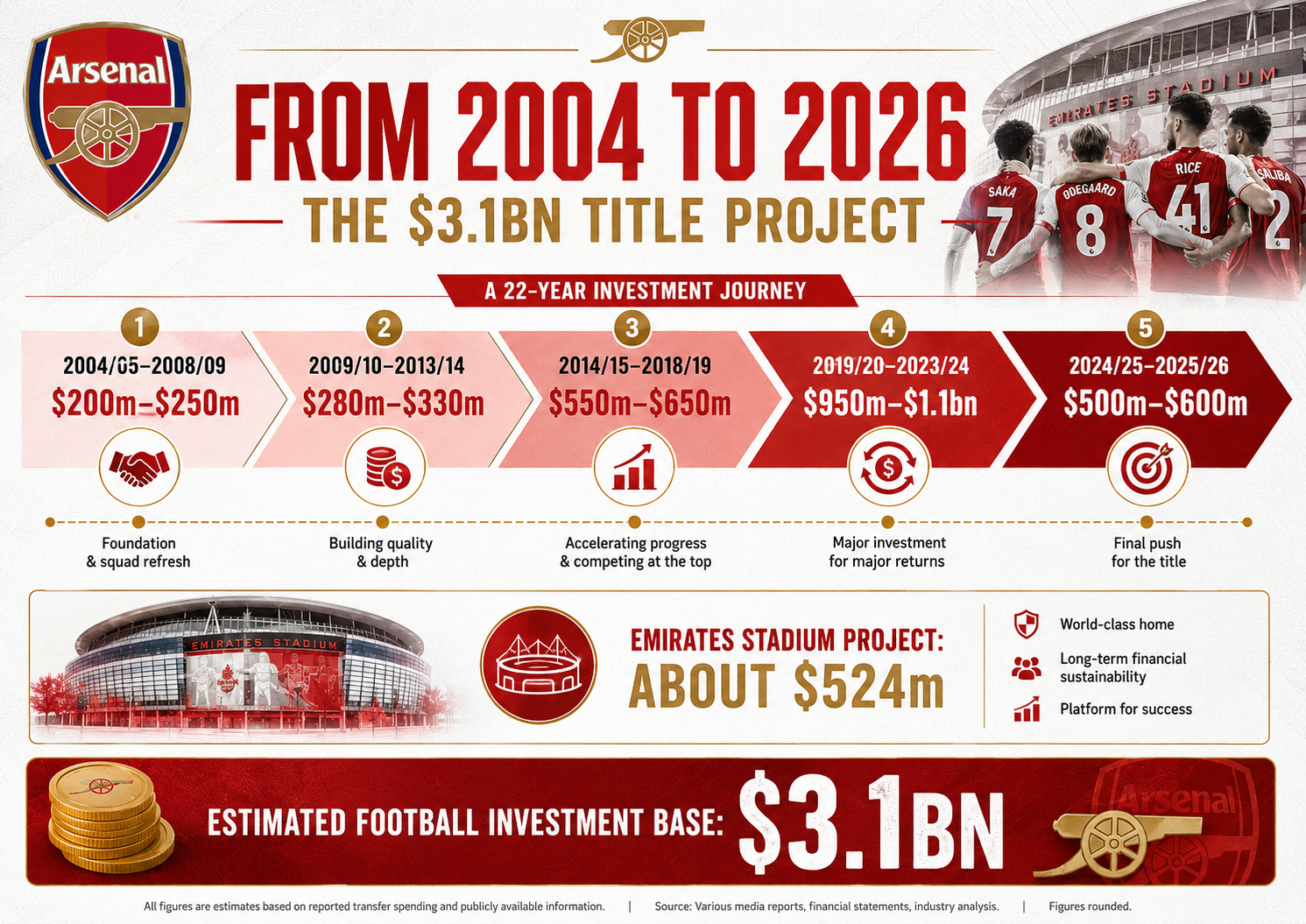 Because exact transfer totals across 22 seasons can vary depending on exchange rates, add-ons and reporting sources, the cleanest way to present Arsenal’s journey is through five-year phases.
These are editorial ranges, not audited accounts, but they help explain how Arsenal’s spending profile changed.
- Period Arsenal phase Estimated gross transfer spend
- 2004/05–2008/09 Stadium transition, controlled spending Around $200m–$250m
- 2009/10–2013/14 Champions League survival, selective spending Around $280m–$330m
- 2014/15–2018/19 Late Wenger and Emery transition Around $550m–$650m
- 2019/20–2023/24 Arteta rebuild begins Around $950m–$1.1bn
- 2024/25–2025/26 Final push to the title Around $500m–$600m
Total transfer investment range Around $2.55bn–$2.65bn
The pattern is clear.
Arsenal did not spend evenly across the whole period. The title was really accelerated by the Arteta-era rebuild, especially from 2019 onward.
IV. The Stadium That Changed Everything
The Emirates Stadium is one of the most important parts of this story.
The stadium cost around £390m to build and opened in 2006. It gave Arsenal a modern home with greater capacity and stronger long-term commercial potential, but it also changed the club’s financial behaviour for years.
In football terms, the Emirates was both a burden and a blessing.
It restricted Arsenal in the short term because the club had to operate carefully. But over time, it became a major asset. It improved matchday revenue, strengthened the club’s commercial profile, and helped Arsenal operate as one of the biggest clubs in England.
Without the Emirates, Arsenal may not have built the financial platform that eventually allowed the later rebuild.
But without the pain of the Emirates years, the title wait may not have lasted so long.
V. The Commercial Engine: Emirates, Adidas and Sponsorship Growth
This is where the article must be careful.
Sponsorships are not costs. They are revenues. But they are part of the financial machine that helped Arsenal return to the top.
In 2004, Arsenal agreed a sponsorship and stadium naming-rights deal with Emirates worth around £100m, covering the new stadium name and shirt sponsorship.
Later, Emirates extended its relationship with Arsenal, with the airline confirming that the stadium naming rights were already signed through 2028 and shirt sponsorship was renewed in 2018.
Arsenal also signed a major Adidas kit deal. ESPN reported in 2018 that Arsenal’s Adidas agreement was expected to be worth close to £60m per year. SportsPro later reported that Arsenal extended their Adidas technical partnership until 2030.
Together, these deals show how Arsenal’s off-pitch machine grew.
The commercial rebuild did not “buy” the title directly. But it helped create the financial strength that allowed Arsenal to spend, retain players and build deeper squads.
VI. The Real Title-Building Era: Arteta’s Arsenal
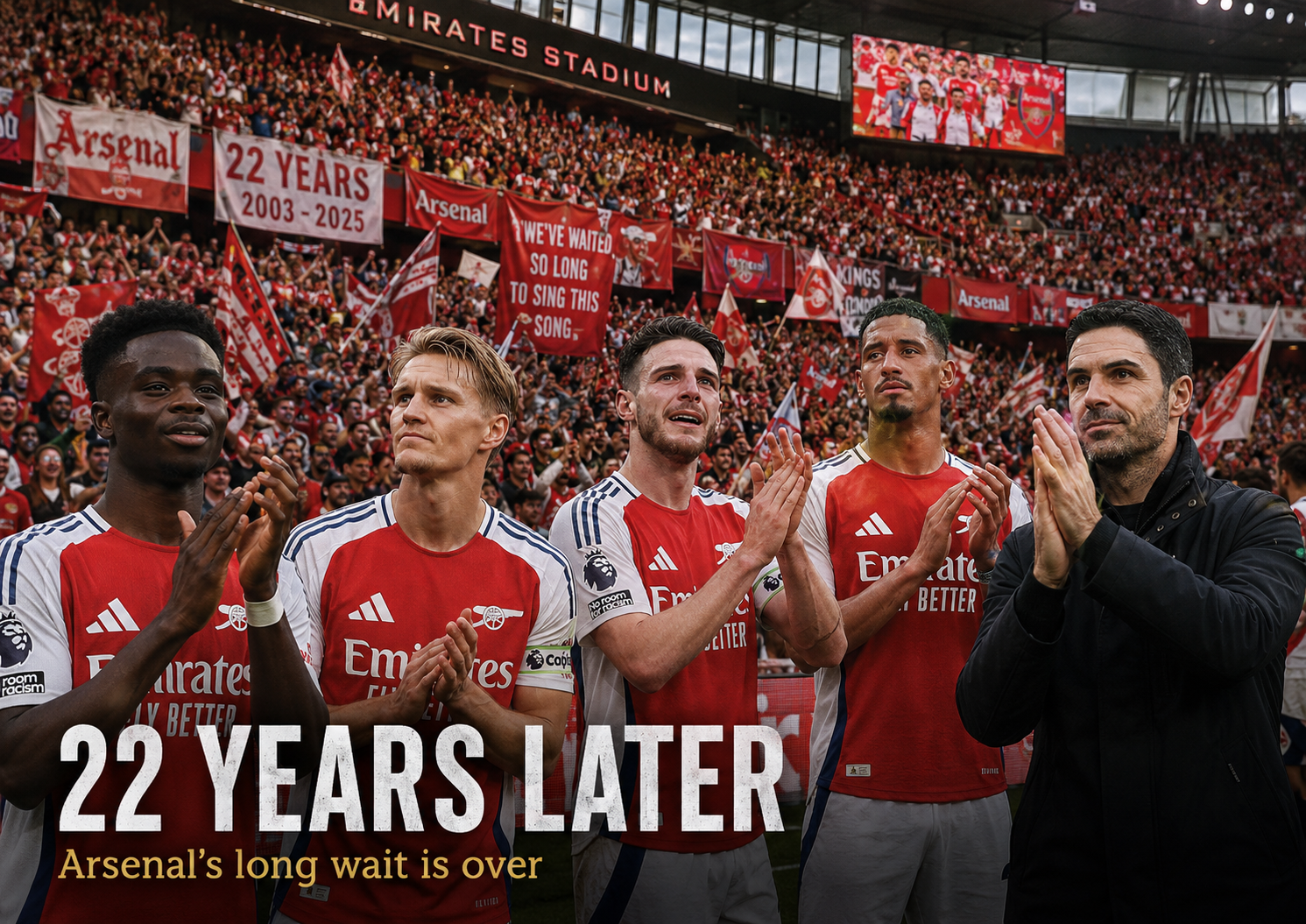 If the entire journey runs from 2004 to 2026, the title-winning construction phase begins properly under Mikel Arteta.
Arteta arrived in December 2019. At the time, Arsenal were not close to the top. The squad was unbalanced, the mentality was fragile, and the club still carried the emotional weight of the late Wenger and post-Wenger transition.
Arteta’s achievement was not simply tactical.
He changed the standards of the club.
- He changed the age profile.
- He changed the dressing room.
- He changed the pressing structure.
- He changed the defensive aggression.
- He changed the way Arsenal recruited.
- He changed the way Arsenal believed.
Transfermarkt lists Arsenal’s 2025/26 squad as having a total market value of around €1.23bn, with the club sitting top of the Premier League table and carrying a current transfer record of -€280.73m for that season.
That tells the modern story: a valuable squad, heavy investment and finally, the league title.
VII. The Final Push: 2025/26
The final push was expensive.
Arsenal’s 2025/26 transfer window included major arrivals such as Martín Zubimendi, Eberechi Eze, Viktor Gyökeres, Noni Madueke, Cristhian Mosquera, Christian Nørgaard and Kepa Arrizabalaga, with Transfermarkt listing the total arrivals at €294.60m.
That window was not random spending. It was completion spending.
Arsenal were no longer trying to build the foundations. They were trying to add the final pieces: depth, control, goals, rotation options, midfield strength and tactical flexibility.
That is what top clubs do when they move from “project” to “title machine.”
VIII. Most Expensive Symbol of the Rebuild: Declan Rice
The biggest symbolic signing of the modern Arsenal rebuild remains Declan Rice.
Rice joined Arsenal from West Ham in 2023 in a club-record deal widely reported at £105m. Sky Sports described the deal as part of Arsenal’s major spending push alongside other high-profile signings.
Rice mattered because he changed Arsenal’s midfield personality.
He brought power, leadership, defensive security, ball-carrying and big-game authority. Arsenal had technical midfielders before. Rice gave them something different: control with physical dominance.
In title-winning teams, that matters.
IX. Best Signing of the Project
 The best signing is open to debate.
- You can argue for Declan Rice because of his influence.
- You can argue for Martin Ødegaard because he became the captain and creative brain.
- You can argue for William Saliba because defensive stability changed Arsenal’s ceiling.
- You can argue for Gabriel because he became a defensive warrior.
- You can argue for David Raya because goalkeeping control became essential.
- But if we judge by value, influence and identity, Martin Ødegaard is probably the signing that best represents the rebuild.
He gave Arsenal rhythm. He gave the team a creative language. He became captain. He made Arteta’s positional football feel natural.
Rice was the expensive power piece.
Ødegaard was the system brain.
X. Best Internal Asset: Bukayo Saka
Not every title piece was bought.
Bukayo Saka is the best reminder that Arsenal’s title was not only about the market.
Saka came through the academy and became the face of the modern club. In a squad built with heavy transfer spending, he remained the emotional centre.
He represented something money cannot easily buy: identity.
Every great title team needs expensive signings. But the best ones also have players who make fans feel the club still belongs to them.
Saka did that for Arsenal.
XI. Worst Big-Money Mistake: Nicolas Pépé
No long rebuild is perfect.
Arsenal made mistakes, and the clearest big-money failure remains Nicolas Pépé.
Pépé arrived for a club-record fee at the time, widely reported around £72m, but he never became the transformative winger Arsenal hoped they had signed.
The lesson was not that Pépé lacked talent. The lesson was that talent without tactical fit, recruitment clarity and squad balance can become expensive waste.
In hindsight, Pépé belonged to the old Arsenal transfer era.
The title-winning Arsenal became smarter because they had already learned what poor alignment looks like.
XII. The Managers Who Carried the Wait
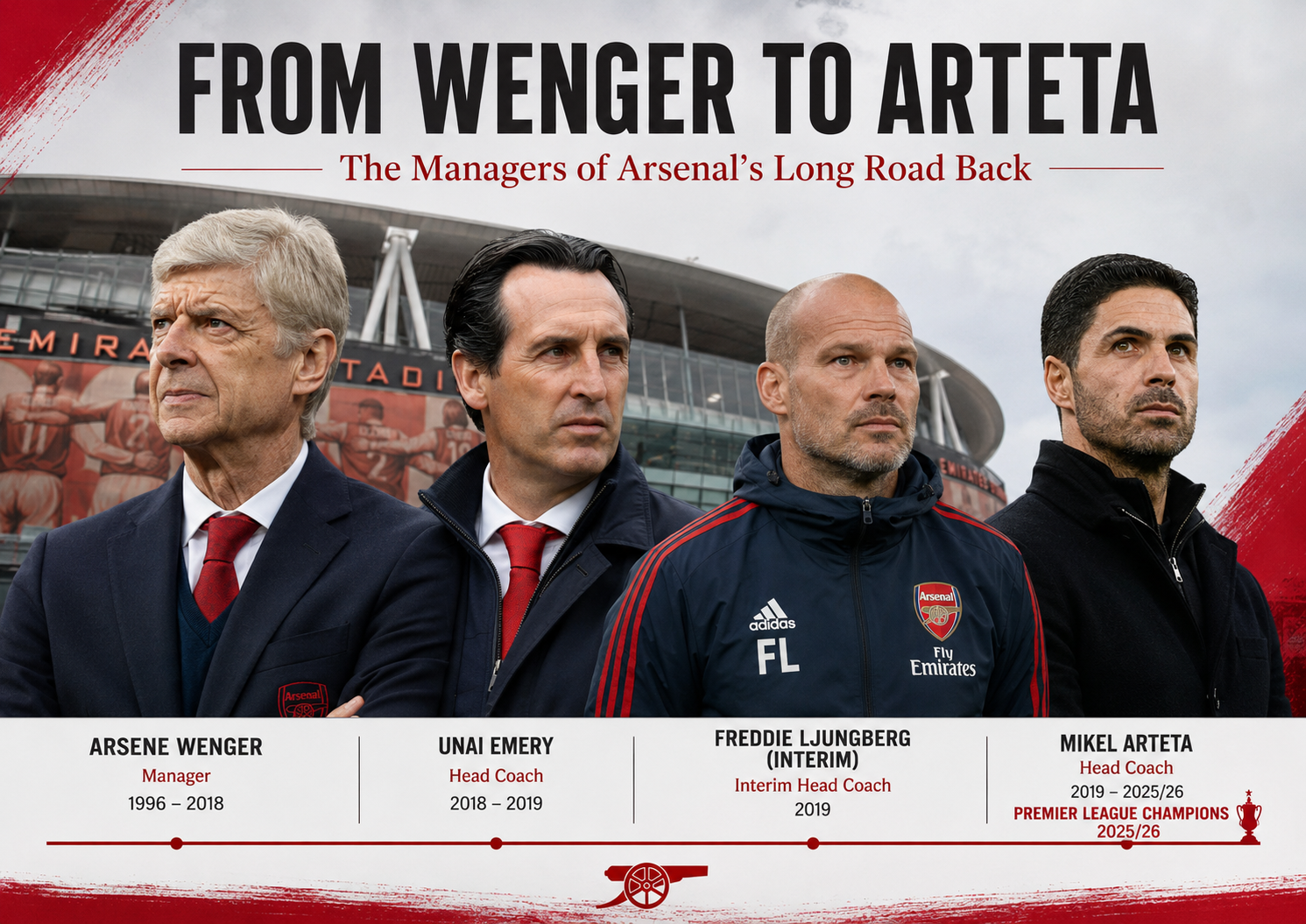 Arsenal’s 22-year wait passed through several managerial chapters.
Arsène Wenger managed the transition from Highbury to the Emirates. He kept Arsenal competitive for years, but the title never returned after 2004.
Unai Emery inherited a club in transition. He reached a European final but could not restore league authority.
Freddie Ljungberg briefly held the team together as interim coach.
Then came Mikel Arteta, who turned a broken project into a title-winning structure.
This title belongs most directly to Arteta and his players, but the road to it cannot be separated from the managers who carried the club through different phases.
XIII. What Arsenal Bought Over 22 Years
From 2004 to 2026, Arsenal did not just buy players.
- They bought time.
- They bought infrastructure.
- They bought commercial power.
- They bought squad depth.
- They bought tactical flexibility.
- They bought a stadium future.
- They bought the right to compete again.
The $3.1bn estimate is not just about transfer fees and bricks.
It is about the full cost of returning to the elite.
XIV. What the Money Did Not Buy
Money alone did not win the title.
If spending alone delivered trophies, football would be simple. It does not.
Arsenal’s money only worked when it met:
- better recruitment
- clearer coaching
- stronger mentality
- academy identity
- defensive structure
- set-piece detail
- leadership
- patience from ownership
- belief from supporters
That is why this title feels different from simply saying Arsenal spent big.
They did spend big.
But they also finally spent with purpose.
XV. Final Cost Summary
The cleanest summary is this:
- Item Estimated USD value
- Gross transfer spending, 2004–2026 modern estimate Around $2.55bn–$2.65bn
- Emirates Stadium project Around $520m–$525m
- Estimated football investment base Around $3.1bn
- Major commercial sponsorship engine Over $1bn in key long-term deals
- Wider football-and-commercial ecosystem Over $4bn when commercial agreements are considered
So the best headline number is:
$3.1bn in football investment.
The bigger ecosystem number is:
Over $4bn when major commercial partnerships are included.
Final Thoughts
Arsenal’s 2026 Premier League title was not a sudden success.
It was the result of 22 years of building, failing, correcting, investing and believing.
From the Invincibles to the Emirates move, from Wenger to Emery, from uncertainty to Arteta, from restricted spending to billion-dollar squad-building, Arsenal’s journey was long and expensive.
The final cost cannot be reduced to one perfect number.
But the best estimate is clear enough:
Around $3.1bn in football investment helped Arsenal move from the last title in 2004 to the next one in 2026.
The Emirates Stadium gave them the platform.
Commercial deals gave them financial muscle.
Transfers gave them the squad.
Arteta gave them the structure.
The players gave them the title.
And after 22 years, Arsenal finally turned the cost of rebuilding into the reward of being champions again.