
England’s new chapter under Thomas Tuchel was supposed to begin with Cole Palmer back in the picture. Instead, the Chelsea star has withdrawn from the squad with an injury just days after receiving his recall.
The timing could hardly be more frustrating.
Palmer was one of the most notable names brought back into Tuchel’s plans after being left out of England’s 2026 World Cup squad. The 24-year-old had responded strongly at club level, producing four goals and two assists in seven appearances for Chelsea before the latest setback.
Now, the Cole Palmer injury means Tuchel must begin England’s new Nations League campaign without one of his most creative attacking players.
The Football Association confirmed on September 21 that Palmer, Declan Rice, Marcus Rashford, Kobbie Mainoo and Tino Livramento had all withdrawn because of respective injury issues. Morgan Gibbs-White and James Garner were subsequently called up as replacements.
For Palmer, it is an unfortunate interruption.
For Tuchel, however, it creates another tactical problem at exactly the moment when England are attempting to move beyond the disappointment of the World Cup.
Cole Palmer Injury Comes at the Worst Possible Moment
 The timing of Palmer’s withdrawal matters almost as much as the injury itself.
Just three days before the announcement, Tuchel had selected Palmer in his first England squad since the World Cup. It was a significant moment because Palmer had been one of the most high-profile omissions from England’s tournament squad.
Tuchel did not present the recall as an apology or automatic restoration of Palmer’s status.
Instead, he framed it as another opportunity.
Speaking after the squad announcement, Tuchel pointed to Palmer’s improved production for Chelsea, noting that he was starting regularly and producing goals and assists again. The England manager also said Palmer had a “point to prove.”
That made the upcoming international window particularly important.
Palmer was supposed to demonstrate that his club form could translate into Tuchel’s evolving England structure.
Instead, the Cole Palmer injury has delayed that audition.
The FA has confirmed that Palmer will miss England’s forthcoming Nations League fixtures, although it has not publicly provided a detailed recovery timetable.
That distinction is important.
There is currently no confirmed evidence that this is a long-term absence. The immediate consequence is simply that Palmer cannot participate in the opening international window.
England’s New Era Was Already About Change

To understand the importance of Palmer’s absence, it is necessary to understand where England are coming from.
Tuchel’s first major tournament ended with England finishing third at the 2026 World Cup.
That was a historic achievement in one respect: England recorded their best World Cup finish since winning the tournament in 1966 and their best finish at a World Cup staged outside England. They defeated France 6–4 in the bronze-medal match after losing 2–1 to Argentina in the semi-final.
But the semi-final remains a major part of the story.
England led Argentina before late goals from Enzo Fernández and Lautaro Martínez turned the game around.
Tuchel subsequently described the defeat as painful, while making clear that England’s ambition was to close the gap on the world’s best teams ahead of Euro 2028.
That is why the September international window represents more than four Nations League matches.
It is the beginning of the next phase.
Tuchel has already made significant changes, including recalling Palmer and Trent Alexander-Arnold while introducing younger players such as Rio Ngumoha and Alex Scott.
Palmer was supposed to be part of that transition.
Now Tuchel must adapt.
Cole Palmer Injury Changes Tuchel’s Attacking Puzzle
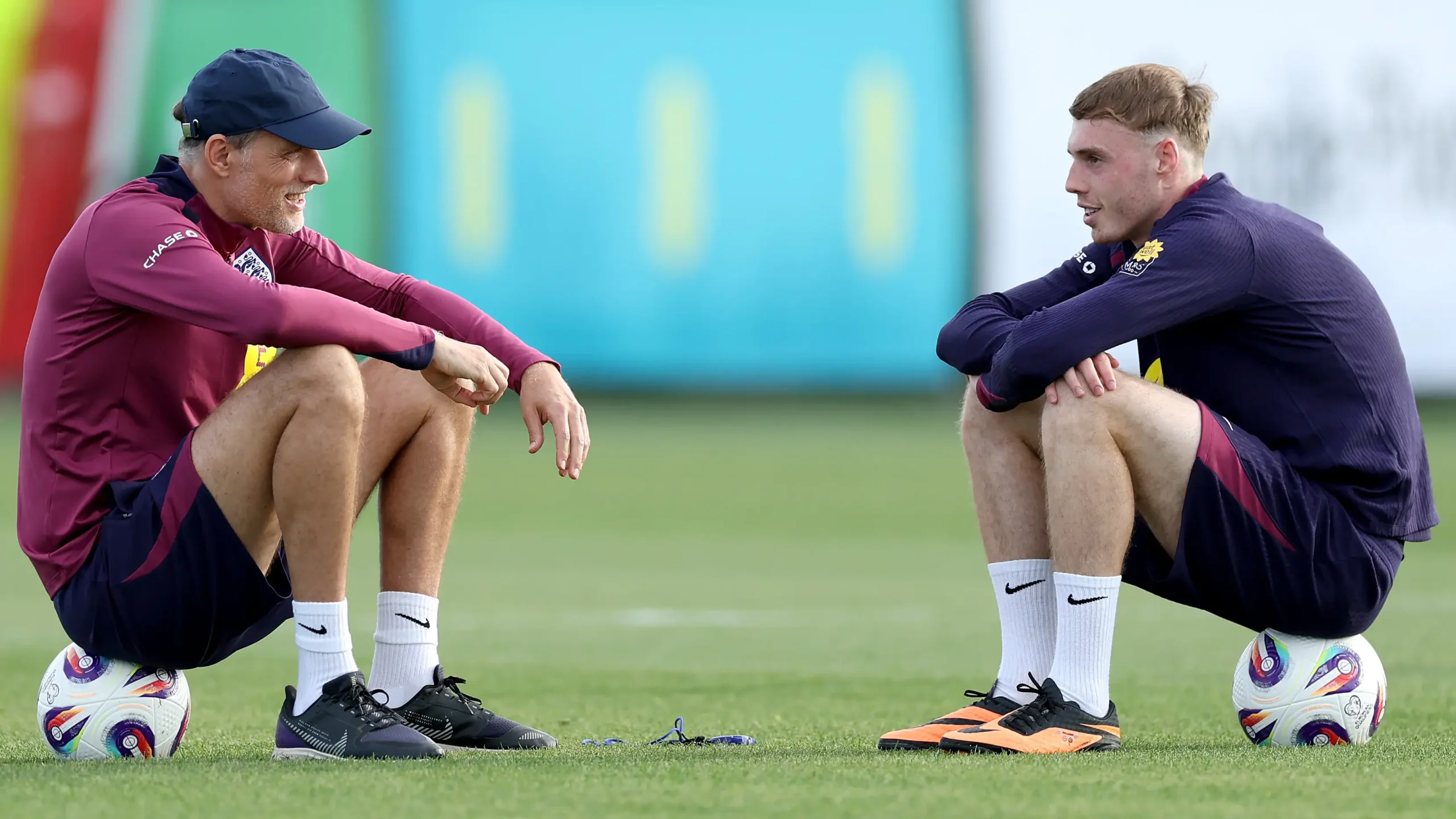 Palmer’s greatest value to England is not simply the number of goals he scores.
It is the way he can connect different attacking zones.
At Chelsea, Palmer has developed into a player capable of operating between midfield and attack, receiving possession in pockets, combining with wide players and creating opportunities through his passing and movement.
That gives Tuchel tactical flexibility.
England can use Palmer as a central attacking midfielder, a right-sided creator or a player drifting inside from a wider position.
His absence therefore removes more than one player from the squad.
It removes a particular type of attacking solution.
Tuchel still has significant attacking talent available.
Jude Bellingham can operate between midfield and attack. Bukayo Saka provides left-footed creativity and one-v-one quality from the right. Ebere Eze offers ball-carrying and combination play. Morgan Rogers brings physicality and direct running, while Harry Kane remains an experienced focal point.
Morgan Gibbs-White has now been added to the group following Palmer’s withdrawal.
But replacing Palmer’s function is different from replacing his name.
That is the tactical challenge.
Cole Palmer England Withdrawal Opens the Door for Gibbs-White
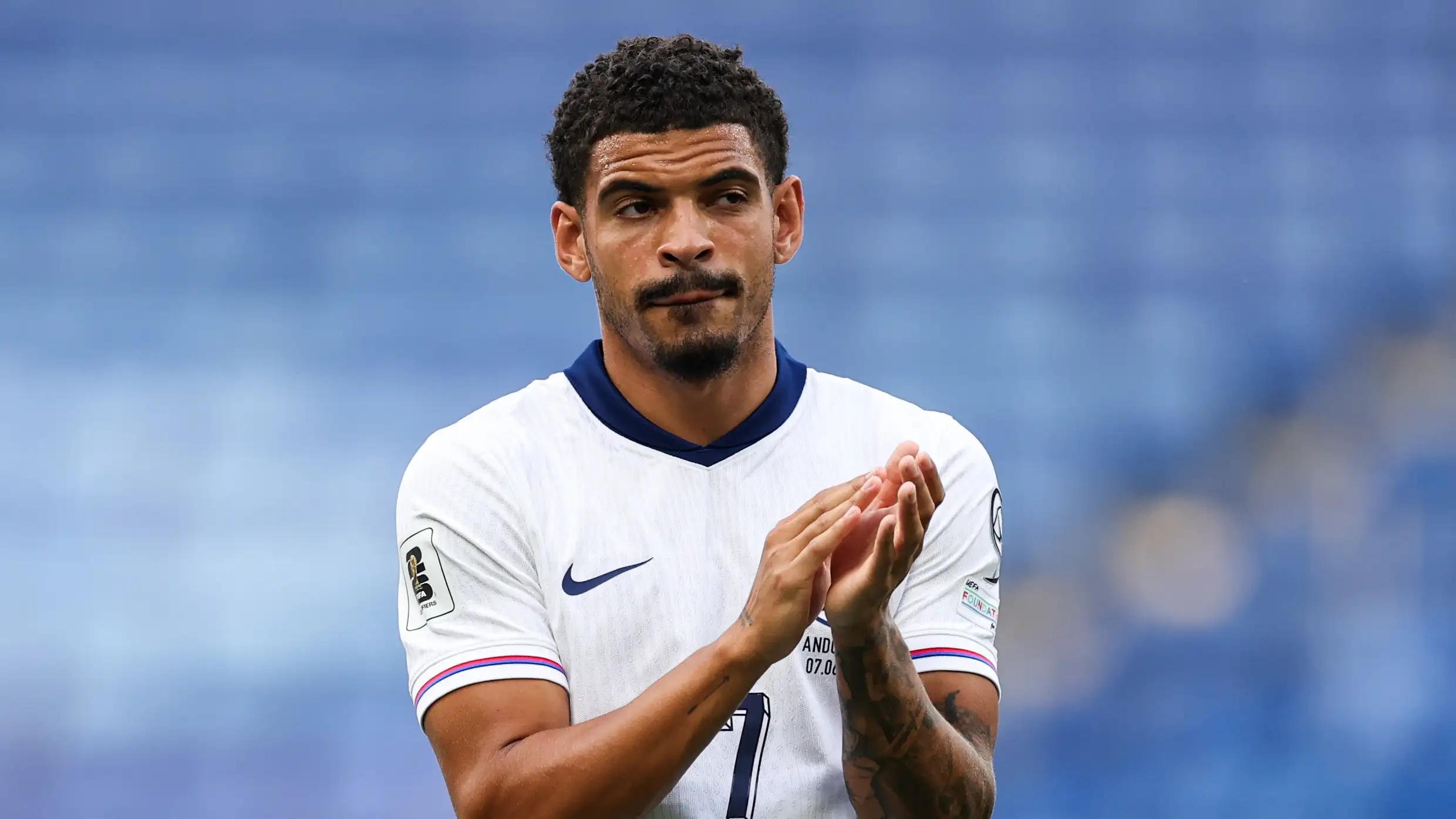 The most immediate beneficiary is Morgan Gibbs-White.
The Nottingham Forest attacking midfielder had initially been left outside Tuchel’s squad but has now been recalled following Palmer’s withdrawal.
This creates an interesting subplot.
Gibbs-White was already being considered as part of England’s wider attacking competition. His recall now gives him a chance to demonstrate his value in a much higher-profile environment.
It does not mean Gibbs-White is replacing Palmer like-for-like.
Rather, Tuchel can use the situation to test another creative profile.
That could be useful for England in the longer term.
International football often gives managers limited training time. A three-week international window is unusual, but the Nations League schedule still requires Tuchel to establish combinations quickly. UEFA’s 2026/27 competition begins in September and England’s Group A3 contains Spain, Croatia and Czechia.
Gibbs-White’s opportunity therefore arrives at an interesting moment.
The Cole Palmer England withdrawal has unintentionally created another audition for a player who was already close to Tuchel’s thinking.
Why Palmer’s Chelsea Form Matters
 The biggest reason Palmer’s absence hurts England is the form he was carrying into the international break.
According to Reuters, Palmer had produced four goals and two assists in seven Chelsea appearances at the start of the 2026/27 season.
SEE ALSO: Xabi Alonso Chelsea System: Why 12 Goals Conceded?
That was precisely the evidence Tuchel wanted to see.
Palmer had missed the World Cup partly because of questions surrounding his form and fitness. His return to Chelsea’s starting XI and renewed statistical output strengthened the case for bringing him back into the national team.
Tuchel explicitly highlighted those numbers when discussing the recall.
That makes the latest injury particularly frustrating.
Palmer had finally regained momentum.
Now he has to pause.
The positive side is that the withdrawal prevents Tuchel from having to make a difficult decision about using an injured player during four demanding Nations League matches.
England’s opening opponent is Spain, the reigning world champions. The Three Lions then travel to Prague to face Czechia, travel to Croatia and return home to face Czechia again.
This is not a gentle introduction to the new international cycle.
Tuchel Still Has Enough Creativity — But Less Predictability
One of the fascinating questions is how much Palmer’s absence will actually change England’s structure.
Tuchel has options.
He could use Bellingham higher up the pitch, allowing another midfielder to operate behind him.
He could introduce Eze or Rogers in a more advanced role.
He could also use Saka as a major creative outlet from the right and ask another player to occupy the central spaces Palmer would normally exploit.
But each option changes the balance of the team.
With Palmer available, England have another player capable of slowing the game down around the penalty area, combining with Kane and creating passing angles between the opposition’s midfield and defence.
Without him, England could become more dependent on direct running and individual moments.
That may not necessarily be negative.
It simply changes the tactical profile.
Against Spain, particularly, England will need players capable of retaining possession under pressure and progressing the ball through a technically strong midfield.
Tuchel therefore loses an important piece of his attacking puzzle just before one of the most demanding fixtures of the international window.
Cole Palmer Injury Also Matters for Palmer Himself
There is another side to this story.
Palmer’s England career is entering an important phase.
He missed the 2026 World Cup despite being one of the most recognizable young English attacking players. Tuchel subsequently brought him back and publicly challenged him to compete for his place.
That means Palmer now has something to prove within the manager’s new system.
The current withdrawal should not automatically be interpreted as damaging his long-term England prospects.
The FA has simply confirmed that he is unavailable because of injury issues.
But football at international level is competitive.
Every missed camp is a missed opportunity to learn the manager’s tactical instructions, build relationships with teammates and compete directly with other players for starting positions.
Palmer will therefore need to return to Chelsea, recover properly and continue producing at club level.
If his Chelsea form remains strong, another England opportunity should naturally follow.
The key point is that his place cannot be assumed.
Tuchel has already demonstrated that reputations alone do not guarantee selection.
The Bigger Problem: Tuchel Has Lost More Than Palmer
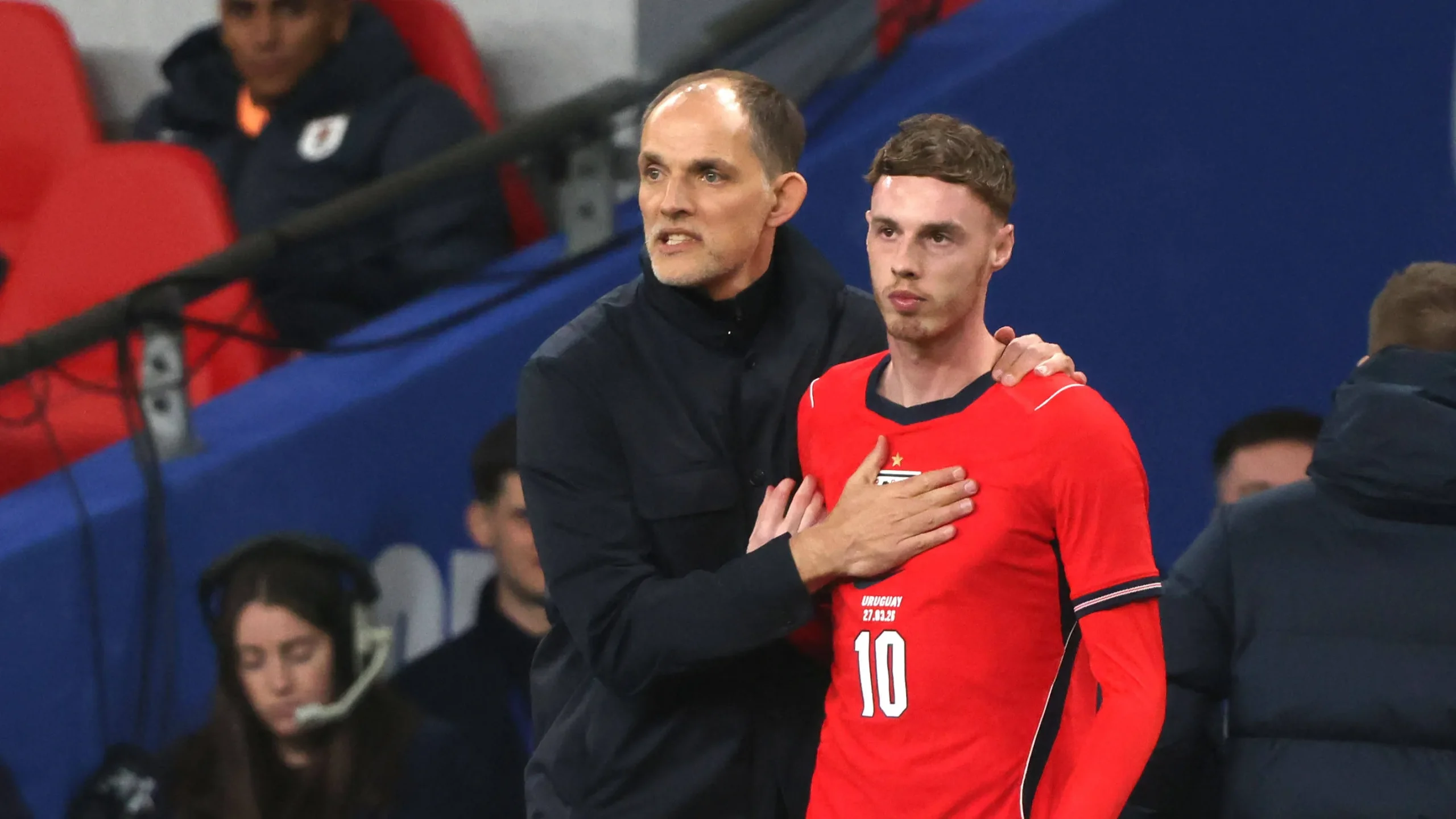 Palmer is not the only major absence.
Declan Rice, Marcus Rashford, Kobbie Mainoo and Tino Livramento have also withdrawn.
Rice’s absence is particularly significant because of his importance in midfield.
Mainoo’s withdrawal reduces another midfield option.
Rashford removes pace and experience from the attacking group.
Livramento’s absence further changes Tuchel’s defensive options.
So this is not simply a Palmer problem.
It is a squad-management challenge.
The positive for Tuchel is that the extended 2026/27 international calendar gives him opportunities to test different players. England’s Nations League campaign includes six group matches, with Spain, Croatia and Czechia forming Group A3.
The competition also provides a pathway for experimentation without abandoning the need for results.
That could ultimately make Palmer’s absence useful from a squad-building perspective.
Tuchel now has to find alternatives.
And alternatives are exactly what a national-team manager needs before a major tournament cycle.
What Cole Palmer’s Withdrawal Means for England’s New Era
The biggest takeaway is not that England suddenly lose their attacking identity without Palmer.
They do not.
England have too much quality for that.
The bigger issue is that Tuchel wanted this international window to begin establishing the next version of his team, and Palmer was an important part of that process.
His recall suggested that Tuchel was willing to reopen the door after the World Cup.
His injury closes that door temporarily — but not permanently.
The manager will now have to work with Bellingham, Saka, Eze, Rogers, Kane, Gibbs-White and others to discover how England can create chances without one of their most technically gifted connectors.
That could produce something valuable.
It could reveal another attacking structure.
It could give Gibbs-White a larger role.
It could encourage Tuchel to use Bellingham higher.
Or it could simply reinforce how difficult Palmer is to replace.
Only the matches will answer that.
What’s Next for Cole Palmer and England?
The immediate priority is straightforward: Palmer needs to recover properly rather than rush back simply to protect his international position.
For England, the focus turns to Spain.
The Three Lions begin their Nations League Group A3 campaign against Spain at Wembley on September 26 before travelling to face Czechia and Croatia, followed by another home fixture against Czechia on October 6.
For Tuchel, this is another test of his squad-building philosophy.
The World Cup produced England’s best finish since 1966, but the manager has already made clear that the objective is to take another step forward.
Palmer was supposed to help make that step.
Instead, his absence forces Tuchel to find another route.
The Cole Palmer injury is therefore more than a short-term fitness setback. It is an unexpected tactical test for an England side entering a new era — one in which competition for attacking places is only going to become more intense.
Palmer’s next chapter with England will depend on how quickly he returns, how consistently he performs for Chelsea and how successfully he fits into Tuchel’s evolving system.
The opportunity has not disappeared.
It has simply been delayed.
What do you think? Can England’s attacking system function at its best without Cole Palmer, or does his absence expose how important he has become to Tuchel’s plans? Share your thoughts in the comments.