Lamine Yamal needed six minutes against Czechia to change the mood in Oviedo. One quick exchange with Dani Olmo, one familiar shift of balance onto his stronger angle and another finish that made a difficult international match feel as though Spain had already found its direction.
Spain eventually won 3-1, maintaining a perfect Nations League start and moving within touching distance of the quarter-finals. Rodri added the second, Czechia threatened a recovery after the break and Mikel Merino finished the contest late. Yet the game again revolved around the teenager on Spain’s right. For the third consecutive match, Yamal scored inside the opening six minutes.

Spain are using Yamal to start matches, not just finish them
There was a time when the most dangerous winger in a national team could spend the opening quarter of an hour feeling out his full-back. Spain are doing the opposite with Yamal. They are looking for him immediately, before the opposition block has settled and before the game becomes cautious.
That approach suits Luis de la Fuente’s side because Yamal’s threat changes defensive behaviour. The left-back cannot simply hold his position. A midfielder has to slide across, the nearest centre-back becomes reluctant to step out and suddenly Spain have an extra pocket of space around the edge of the box.
His early goal against Czechia was not an isolated piece of brilliance. It was another example of Spain using their most gifted one-against-one attacker as a tactical trigger. Once the opponent begins leaning towards Yamal, the rest of the pitch opens.
Rodri makes the chaos around Yamal useful
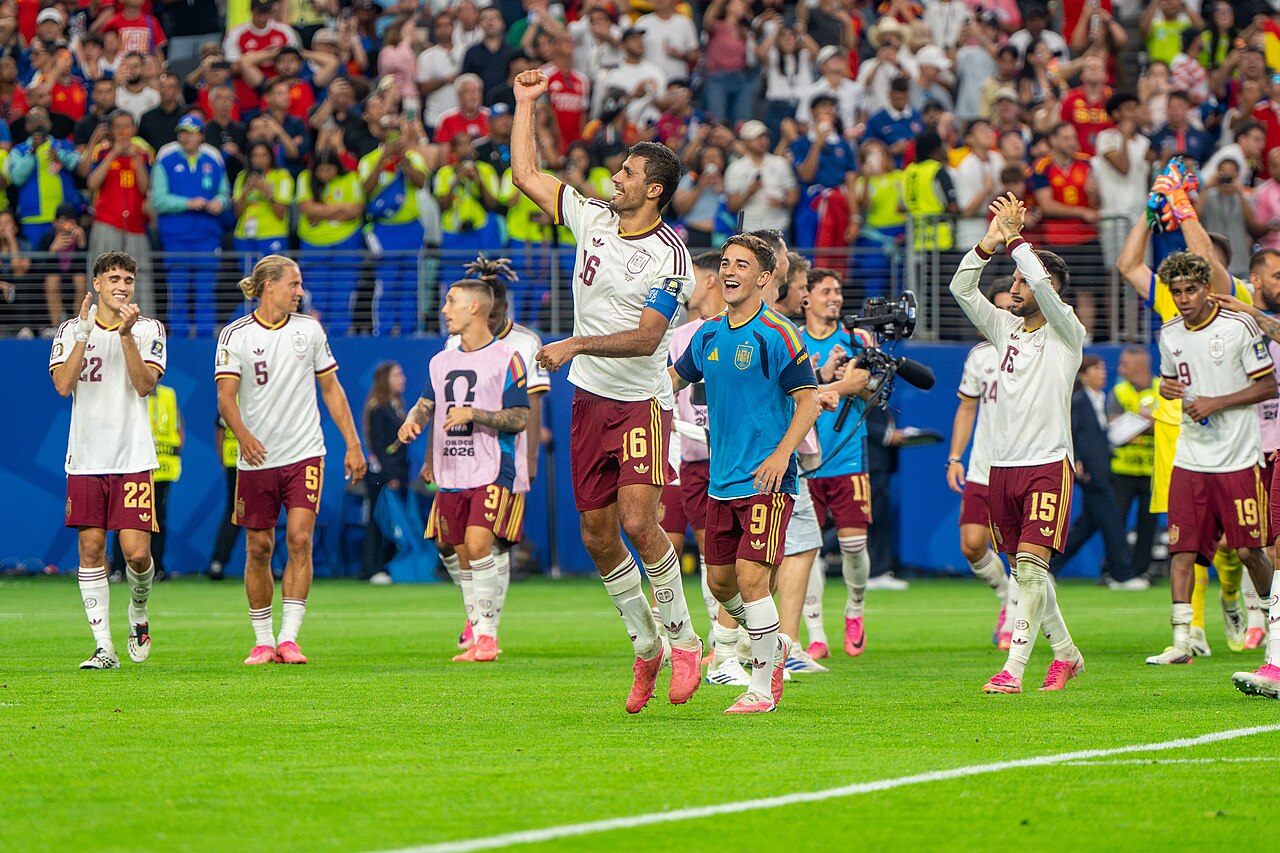
Yamal attracts attention; Rodri gives Spain control after that attention has been moved. His goal in the first half was a reminder that he is more than the player who protects the centre-backs and recycles possession. When the lane opened, he carried the ball through midfield and finished the move himself.
That relationship between a high-risk winger and a low-risk midfielder is one of the reasons Spain look so balanced. They can accelerate through Yamal, Nico Williams or Dani Olmo, then slow the match down through Rodri when the opposition begins chasing.
It is a pattern that also helps explain why Spain have become so difficult to press. Opponents can commit numbers high, but one clean pass into Rodri can remove the first wave. If they sit deeper, Yamal receives the ball closer to the penalty area.
The Football Xtra has already examined how Barcelona’s attacking volume can put pressure on their own defensive balance. With Spain, Yamal operates inside a more controlled structure. He is encouraged to be unpredictable because the rest of the team is built to manage what happens after the attack.

Czechia showed where Spain can still be hurt
The match was not as comfortable as the early scoreline suggested. Czechia improved after the interval and Jiri Slama’s goal made it 2-1, briefly turning the final phase into a genuine contest. Spain also benefited when Ladislav Krejci was sent off before Merino scored the third.
That spell matters for De la Fuente. Spain’s confidence in possession can tempt both full-backs and midfielders forward at the same time. When the first pressure is broken, there can be space to attack behind them. Better opponents will target those moments.
It is also why Spain’s route through the Nations League will be useful preparation for the next major tournament cycle. Dominating possession is no longer enough. The champions are being asked to control transitions while continuing to play with the freedom that has made them Europe’s most watchable national side.
Merino keeps giving Spain another route
Mikel Merino’s late goal offered another reminder of Spain’s depth. He is not a winger who changes a game through dribbling and he is not a controller in the Rodri mould. His value is different: he attacks space, arrives in the box and gives Spain a physical presence when a match becomes less tidy.
Yamal’s rise is now changing expectations
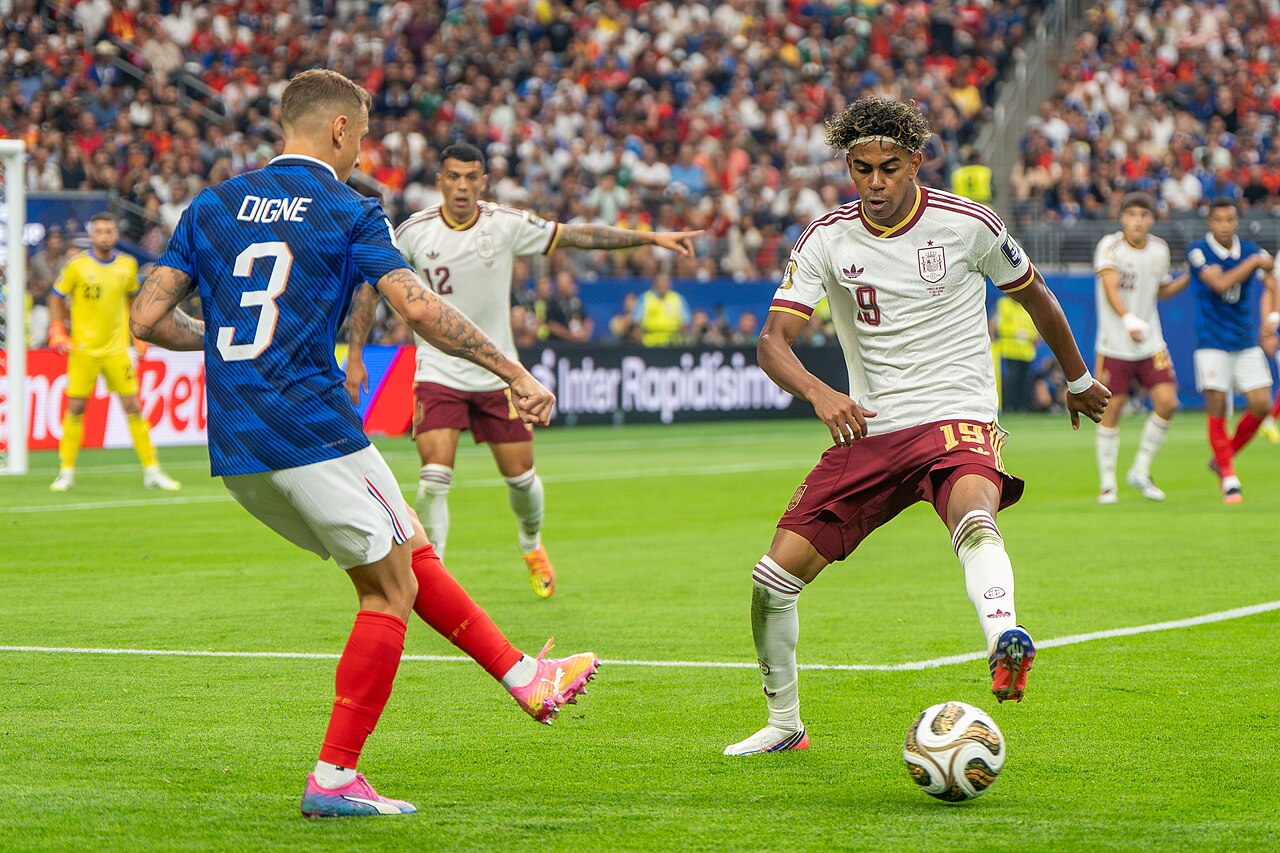
The challenge for Yamal is no longer proving he belongs in international football. That argument ended some time ago. The new question is how Spain manage a player whose influence is already so large that every opponent builds a plan around stopping him.
His performances have also made discussions around individual awards unavoidable. The Football Xtra recently assessed Yamal’s Ballon d’Or case, while the wider Barcelona story has continued to grow through Europe. The danger is expecting a decisive moment every time he receives the ball.
Spain, however, are making that pressure easier to carry. Rodri, Merino, Olmo and the rest of the structure ensure Yamal does not have to create every attack. Against Czechia, he provided the spark. The team then had enough control and variety to turn that spark into another victory.
Read Here: The Guardian’s report on Spain 3-1 Czechia.
Images: Bryan Berlin / WikiPortraits, used under CC BY-SA 4.0.