


Pau Cubarsí is making the Golden Boy debate uncomfortable in the best possible way. The award has traditionally been easiest to understand through goals, assists and attacking highlights. Barcelona’s 19-year-old centre-back offers a different argument: control can be spectacular too.
Cubarsí has reached the final 25-player shortlist for the 2026 Golden Boy award after a year in which his reputation moved well beyond the category of promising defender. He became a central figure for Barcelona, then carried that composure into Spain’s World Cup-winning side, where his performances made him one of the tournament’s defining young players.
The question is no longer whether a defender can compete with Europe’s most exciting young attackers. It is whether voters are ready to value the things Cubarsí does before a chance ever becomes a shot.

Cubarsí’s case is built on responsibility, not hype
Young defenders usually enter elite teams with protection around them. They are given selected matches, paired with senior centre-backs and removed when the pressure rises. Cubarsí has developed in the opposite direction. Barcelona have trusted him in matches where one mistake can decide a title race or a European tie.
Spain took that responsibility even further. During the World Cup, Cubarsí was asked to defend high, circulate possession under pressure and make decisions with enormous space behind him. He played with the calm of a veteran rather than a teenager trying to avoid mistakes.
In the final against Argentina, Spain’s defensive control was one of the central features of the match. Cubarsí’s involvement in possession was constant, and the opposition struggled to create clean shooting opportunities. That is the kind of performance that rarely produces a viral clip but has enormous tactical value.

Why modern football is changing the value of a centre-back
The old description of a great defender began with duels, headers and clearances. Those qualities still matter, but elite teams now ask for much more. A centre-back must help beat the press, manipulate the first line of pressure, find midfielders between opponents and defend transitions when the rest of the team is attacking.
Cubarsí is valuable because he performs those jobs without making them look complicated. His first touch often opens the next passing lane. He is willing to play through pressure rather than automatically sending the ball wide, and his passing gives Barcelona another midfielder during build-up phases.
That makes him especially important to a club whose football identity depends on controlling possession. Barcelona can play higher and commit more players forward because Cubarsí is comfortable defending space and starting attacks from deep.
The Football Xtra has already looked at how Lamine Yamal’s international performances strengthened his Ballon d’Or case. Cubarsí represents the other side of the same generation: less visible, less explosive, but increasingly central to how both Barcelona and Spain function.
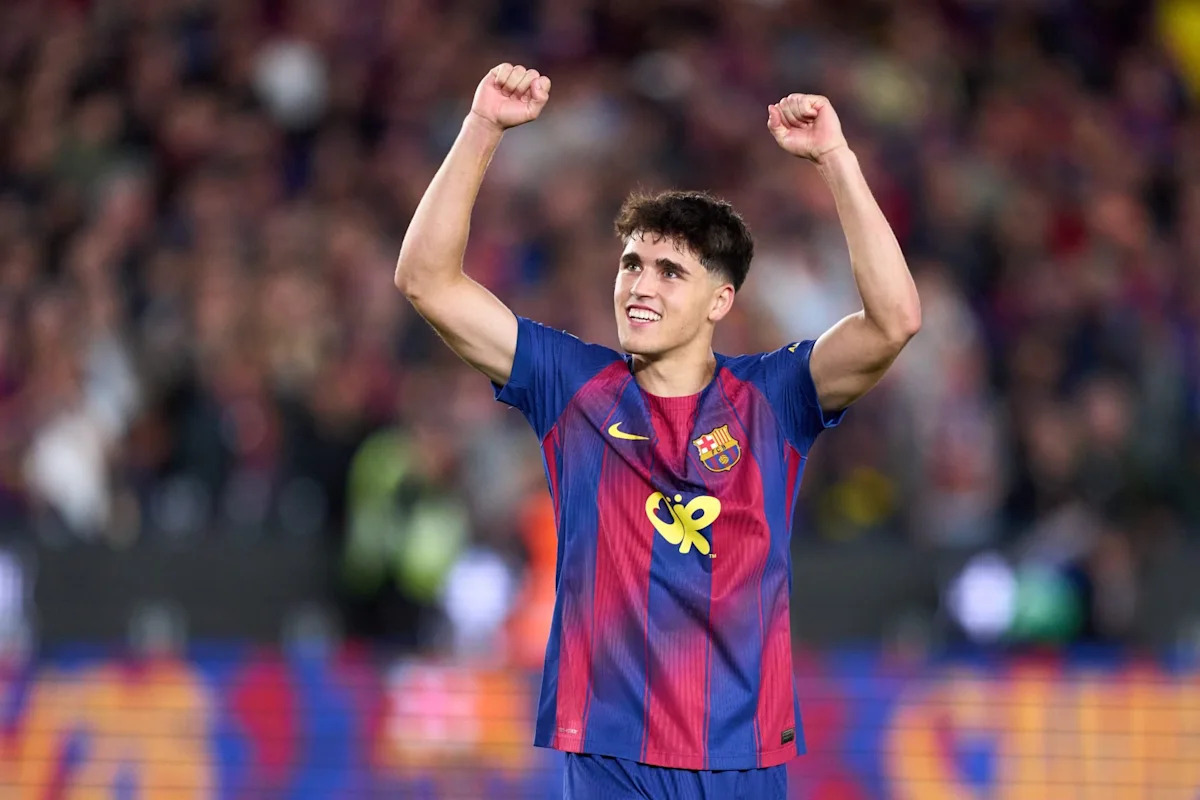
The Golden Boy award usually rewards the most obvious impact
Individual awards naturally lean towards attacking players. Goals are easy to count, match-winning moments are easy to remember and a brilliant dribble can define a player’s public image in seconds. Defenders accumulate their value more quietly.
That creates a problem when comparing positions. A winger can have an average match and still decide it with one action. A centre-back can play 89 excellent minutes and be remembered for the one duel he loses. Cubarsí’s candidacy challenges voters to judge how much responsibility a teenager carries, not just how many goals he creates.
There is also a difficulty unique to Barcelona. Playing in a possession-heavy side can make defensive work look easier than it is. Yet holding a high line for Barcelona often means defending fewer situations but more dangerous ones. When possession is lost, the centre-backs may be exposed to fast forwards with half the pitch behind them.
World Cup credibility changes the conversation
Cubarsí’s international year gives his case more weight because it removes the argument that he is simply benefiting from Barcelona’s system. Spain asked him to perform in a different environment, under tournament pressure, against opponents with very different attacking profiles.
He responded by becoming one of the most trusted players in a team that won the biggest competition in football. That matters in an award for young players because it shows adaptability as well as talent.

Barcelona’s next challenge is managing what they have created
The danger with a teenage defender this reliable is that coaches stop treating him like a teenager. Minutes accumulate quickly because the player solves problems that would otherwise require expensive recruitment. For Barcelona, protecting Cubarsí physically may become as important as developing him tactically.
His rise also strengthens the club’s sporting model. Producing a starting centre-back internally frees resources for other positions and gives the team a player already educated in Barcelona’s positional demands. That value is difficult to capture with a transfer fee.
Whether Cubarsí wins Golden Boy or not, his presence among the leading candidates says something about the way elite football is changing. Young defenders are no longer judged only on whether they survive. The best are expected to control games, break presses and set the rhythm of possession from the first line.
Cubarsí has reached that level unusually early. The award race now has to decide whether that type of influence deserves to be celebrated as loudly as goals.
Read Here: Barcelona’s Negreira case: what Real Madrid’s UEFA dossier changes.