The Champions League has entered a new era, and the biggest question is no longer which club will dominate Europe—it is which players will define the football that comes next.
For more than a decade, European football had recognisable faces.
Cristiano Ronaldo.
Lionel Messi.
Karim Benzema.
Luka Modrić.
Robert Lewandowski.
These players did not simply win matches. They became symbols of an era.
Now, football is approaching another generational handover.
The 2026/27 Champions League begins its league phase in September with 36 clubs and a completely different competitive landscape. Real Madrid, Barcelona, Bayern Munich, Manchester City, Liverpool, Paris Saint-Germain, Arsenal and Atlético Madrid remain among the elite, but many of their squads are increasingly being shaped around a younger generation of stars. UEFA’s league-phase draw has already produced major tests, including Real Madrid vs Inter, Liverpool vs Atlético Madrid and Barcelona vs Manchester City.
That makes this season particularly fascinating.
The New Champions League Era may not ultimately belong to one club.
It may belong to a collection of players.
Here are 10 stars who could define European football over the next decade.
1. Lamine Yamal — Barcelona
 At 19, Lamine Yamal is already beyond the conventional definition of a wonderkid.
Barcelona’s official records show that he has won major domestic honours with the club and has become a central figure of both Barcelona and Spain. He also enters this period as a World Cup winner after Spain’s triumph in 2026.
But the more interesting question is not whether Yamal is talented.
It is whether Barcelona will become his team in the same way previous generations became defined by Messi, Xavi, Iniesta or Ronaldinho.
The 2025/26 season provided evidence of his enormous attacking influence. Barcelona’s official recognition of Yamal as their LaLiga Player of the Season came after a campaign in which he recorded 16 league goals and 11 assists. That creative output established him as more than a wide attacker; he became a primary source of progression and chance creation.
The next step is Champions League domination.
The league phase already gives Barcelona a fascinating test against Manchester City on 8 December.
If Yamal produces decisive performances in those European nights, the conversation changes.
He will no longer be discussed simply as the future of Barcelona.
He will become one of the players defining the present of European football.
2. Kylian Mbappé — Real Madrid
 Mbappé may be the bridge between two generations.
He inherited the enormous expectations attached to Real Madrid’s superstar tradition, but his numbers already suggest that he is capable of carrying the role.
In 2025/26, Mbappé scored 42 goals in 44 matches for Madrid, finished as LaLiga’s top scorer with 25 goals and also led the Champions League scoring chart with 15.
Those numbers are important because the Champions League is historically where Real Madrid’s biggest attackers have been measured.
Mbappé already has the production.
Now comes the legacy phase.
The Frenchman is no longer trying to prove that he belongs at Madrid. The next question is whether he can build a European era around himself.
Real Madrid’s 2026/27 league-phase schedule includes Inter at home, Arsenal away and other demanding fixtures, giving Mbappé opportunities to establish himself immediately as the attacking reference point of another Madrid generation.
And there is another narrative developing alongside him:
Vinícius Júnior.
If the Mbappé-Vinícius partnership eventually becomes historically important, the Champions League may be where that story is written.
3. Jude Bellingham — Real Madrid
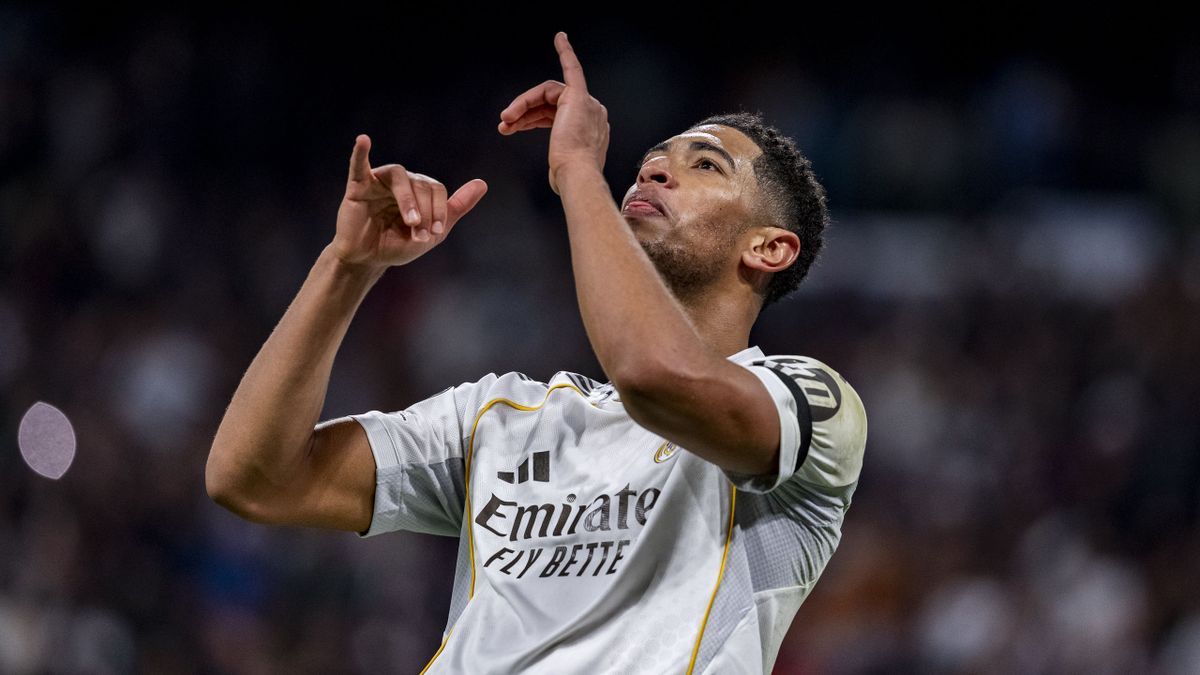 Bellingham is a different kind of generational player.
He is not simply an attacking star.
He is a midfielder capable of influencing matches through goals, carries, positioning and physical presence.
By his 23rd birthday, Real Madrid recorded that Bellingham had already played 140 matches for the club and scored 46 goals, while collecting five trophies during his first three seasons. His first Madrid season alone included the Champions League, LaLiga and Spanish Super Cup.
That trajectory is extraordinary.
And his importance becomes even more interesting when placed next to Mbappé.
Real Madrid do not necessarily need Bellingham to become their biggest goalscorer.
They need him to become the player who connects everything.
He can arrive from midfield.
He can create.
He can press.
He can carry.
He can attack the box.
That versatility gives him the potential to become the defining midfielder of the post-Modrić generation.
4. Désiré Doué — Paris Saint-Germain
 If there is one player who already has a Champions League résumé that looks much older than his age, it is Désiré Doué.
PSG’s official biography records a remarkable progression: he scored twice and assisted once in the 2025 Champions League final against Inter, was named Player of the Match and UEFA Young Player of the Season, won the Golden Boy award later that year, and then won a second consecutive Champions League title with PSG in 2026.
That is not potential anymore.
That is production at the highest possible level.
At just 21, Doué has already experienced Champions League final pressure twice.
The next question is whether he can move from being a crucial member of a great PSG team to becoming the face of PSG’s European project.
That distinction matters.
PSG have already shown that they can win Europe without relying on the traditional superstar model.
Doué could become the player who defines what that new PSG model looks like.
5. Rayan Cherki — Manchester City
 Cherki’s trajectory is one of the most tactically fascinating in this list.
Manchester City have entered a post-Guardiola period in which the club is attempting to maintain elite standards while evolving its football identity.
Cherki offers something unusual: creativity that is less predictable and more improvisational.
His impact arrived immediately in the new season. He scored twice in City’s 4-1 victory over Crystal Palace, reinforcing the impression that he can become one of the central attacking figures of this new City cycle.
That matters because City have spent years being associated with control.
Cherki represents something slightly different.
He can create from individual initiative.
He can receive between lines.
He can manipulate defenders.
And he can produce moments that do not necessarily emerge from a perfectly scripted positional sequence.
The Champions League will provide the real laboratory.
City face Barcelona on Matchday 6, with PSG also on their league-phase schedule.
Those matches could reveal whether Cherki can become City’s next European superstar.
6. Florian Wirtz — Liverpool
 Wirtz represents the new generation of European midfield creators.
His move to Liverpool adds another dimension to a club that is already undergoing a major squad transition.
Liverpool have entered a new managerial era under Andoni Iraola, and Wirtz was already on the scoresheet in pre-season against Monaco.
But his importance should not be judged by goals alone.
Wirtz’s greatest value is his ability to operate in the spaces between midfield and attack.
He can receive under pressure.
He can combine.
He can accelerate an attack through passing rather than pure speed.
He can arrive around the box.
That makes him potentially central to Liverpool’s next tactical identity.
And the timing is perfect.
Liverpool have also invested heavily in Alexander Isak and are finalising a record-level deal for Bradley Barcola, meaning the club is constructing an attack that could look completely different from the Salah era.
Wirtz could therefore become the creative brain of Liverpool’s next generation.
7. Bradley Barcola — Liverpool
Barcola is perhaps the most immediate “new era” story on this list.
On 29 August 2026, Liverpool finalised an agreement to sign him from Paris Saint-Germain for a package reportedly worth up to £123 million, including £106 million guaranteed and £17 million in potential add-ons. The 23-year-old is expected to sign a five-year contract.
His PSG spell already includes two Champions League titles, three Ligue 1 championships and two French Cups, while he contributed 39 goals and 37 assists in 152 appearances for PSG across competitions.
That creates a fascinating situation.
Liverpool are not buying an unknown prospect.
They are buying a player who has already experienced the highest level of European football and are asking him to become one of the faces of a post-Salah attack.
The financial investment adds another layer.
At £123 million, the expectations will be enormous.
If Barcola thrives at Anfield, this transfer could eventually be remembered as one of the defining moves of the early post-Salah period.
8. Warren Zaïre-Emery — Paris Saint-Germain
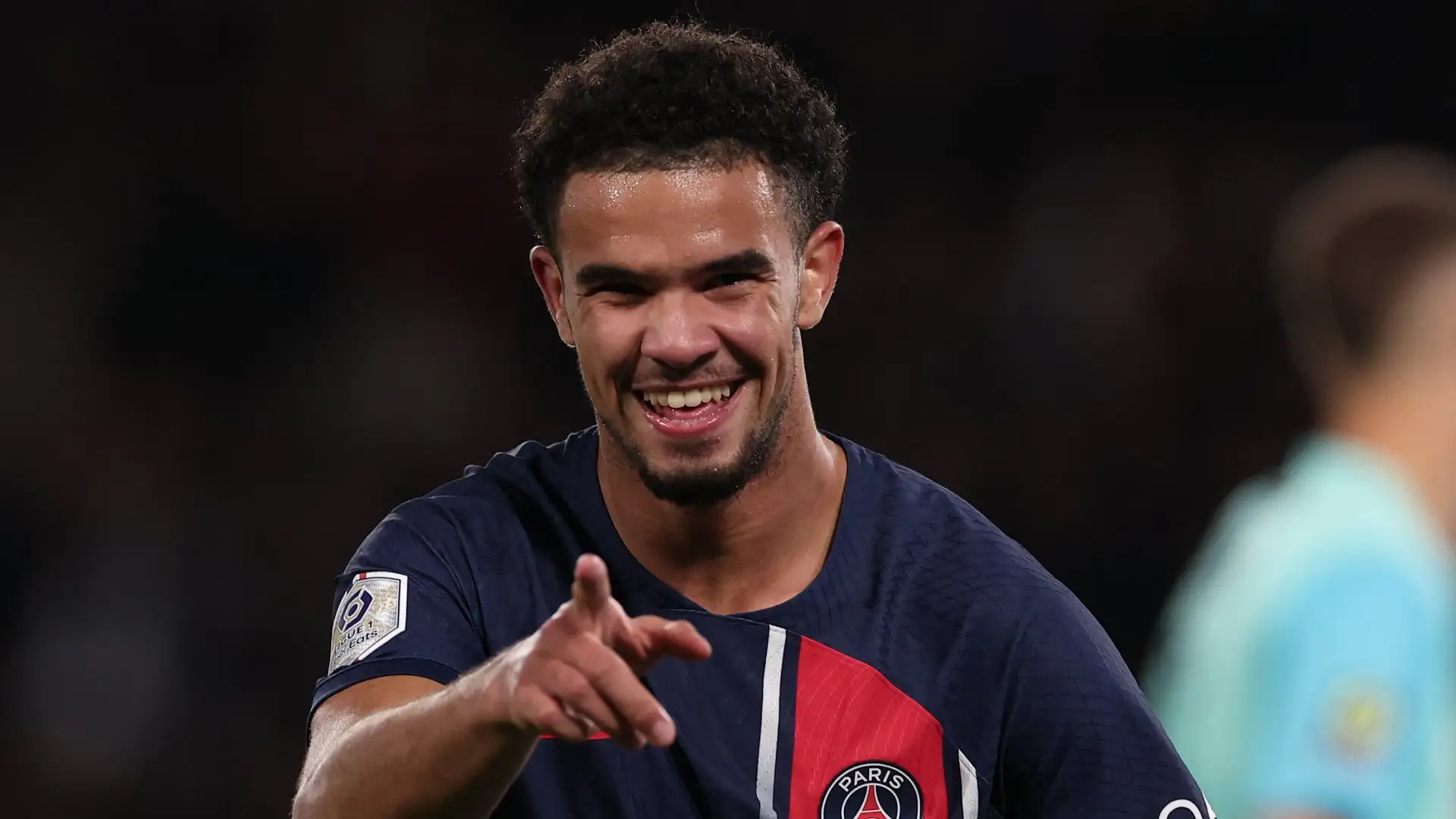 Zaïre-Emery is perhaps the player on this list who could transform how we think about the modern central midfielder.
PSG’s official profile describes him as a box-to-box midfielder who progressed rapidly through the club’s academy before becoming an established member of the senior team.
He became PSG’s youngest player to appear in an official match at 16 years, four months and 29 days, and later became the club’s youngest player to start a Champions League knockout match.
Now he is 20.
That is important.
His youth-team story is already over.
He is entering the professional phase where potential must become sustained elite production.
PSG’s two consecutive Champions League titles provide an exceptional environment for that development.
The next decade could therefore be shaped partly by whether Zaïre-Emery becomes the midfield anchor of a PSG dynasty.
9. Pau Cubarsí — Barcelona
 European football traditionally celebrates attackers.
But dynasties are also built by defenders.
Cubarsí could become one of the defining defenders of the next generation.
Barcelona’s official player records show that the centre-back, born in 2007, has already reached 130 appearances for the first team and accumulated more than 9,800 official minutes during his first three seasons. He has also won two LaLiga titles and two Spanish Super Cups.
Those are extraordinary numbers for a teenager.
His significance goes beyond age.
Barcelona need defenders capable of surviving enormous spaces when the team commits numbers forward.
That requires anticipation.
It requires passing ability.
It requires composure.
And it requires the courage to defend aggressively rather than constantly retreat.
If Cubarsí develops into an elite Champions League centre-back, Barcelona could have something every dominant European side needs:
a defensive organiser who can remain important for an entire era.
10. Khvicha Kvaratskhelia — Paris Saint-Germain
 Kvaratskhelia is older than several names on this list, but he belongs because the next decade will not be defined only by teenagers.
The Georgian winger is entering what could become the prime of his career.
PSG’s official profile records that he was central to their European success, scoring in the 2025 Champions League final against Inter and then becoming the 2025/26 Champions League Player of the Season after another outstanding campaign. He contributed 10 goals and six assists during his first full European campaign with PSG.
His value is partly stylistic.
Kvaratskhelia combines unpredictability, ball carrying and creativity with an ability to change the rhythm of a match.
And PSG have now reached the point where they can surround him with players such as Doué and Zaïre-Emery who represent the next generation.
That makes him a bridge player.
He can help establish PSG’s current dynasty while simultaneously influencing the development of the younger stars who may eventually take over from him.
New Champions League Era: The Battle for Europe’s Next Superstar
The common mistake is to treat a list like this as a prediction of who will win the next 10 Ballon d’Or awards.
That is not the point.
The deeper story is about football’s changing centres of gravity.
Look at the clubs represented:
Real Madrid: Mbappé, Bellingham
Barcelona: Yamal, Cubarsí
PSG: Doué, Zaïre-Emery, Kvaratskhelia
Manchester City: Cherki
Liverpool: Wirtz, Barcola
These are not random clubs.
They are some of the organisations most capable of competing for European trophies.
And many of them are building squads around players who are still approaching their prime.
That is why the 2026/27 Champions League could become more than another European competition.
It could become the opening chapter of a new football generation.
The Champions League Schedule Could Accelerate the Handover
The new league-phase structure gives these players more varied elite-level matchups.
Every team plays eight opponents, with two opponents drawn from each seeding pot.
For the stars on this list, that means more opportunities to establish their reputations against elite opposition.
Yamal will face Manchester City.
Mbappé and Bellingham will face Arsenal and Inter.
Liverpool will meet Atlético Madrid and later Inter.
Manchester City have PSG and Barcelona on their schedule.
These are not ordinary matches.
They are potential legacy games.
SEE ALSO: Champions League Draw: Who Got The Toughest Road?
A great generation is remembered through moments.
The Champions League remains Europe’s most powerful stage for creating those moments.
The Old Guard Has Not Disappeared
There is another reason this transition is so fascinating.
The previous generation is not simply gone.
Experienced players remain at the top level.
That creates competition between eras rather than a clean handover.
Mbappé is particularly important because he sits directly between those worlds.
He learned from a football culture dominated by Messi and Ronaldo.
Now players such as Yamal, Doué, Cherki and Zaïre-Emery are coming through behind him.
That means European football may spend the next several seasons watching one generation compete against another.
And eventually, the younger generation will take over.
The Biggest Question Is Who Becomes the Face of Europe?
Ten names do not make one era.
One or two usually rise above the rest.
That is the mystery.
Could it be Yamal?
Could Mbappé establish a new Madrid dynasty?
Could Doué lead PSG towards multiple Champions League crowns?
Could Bellingham become Europe’s defining midfielder?
Could Cherki become the creative face of Manchester City’s post-Guardiola era?
Could Wirtz and Barcola rebuild Liverpool’s attack into something fundamentally different?
There is no answer yet.
And that uncertainty is precisely what makes the beginning of this Champions League cycle so compelling.
The Players Who Define Eras Usually Do More Than Collect Numbers
The footballers who become historic are rarely remembered simply because they scored 30 goals.
They change how their clubs are perceived.
They influence tactical trends.
They become symbols.
They dominate specific matches that supporters remember decades later.
They win trophies.
They survive pressure.
And eventually, the question changes from:
“How good is this player?”
to:
“What did football look like when this player was at his peak?”
That is the threshold these 10 players are approaching.
Conclusion: Europe Is Waiting for Its Next Icons
The New Champions League Era does not have a single face yet.
It has several candidates.
Yamal brings extraordinary youth and creative influence.
Mbappé brings elite scoring and the weight of Real Madrid history.
Bellingham offers midfield versatility.
Doué already has two Champions League titles before turning 22.
Cherki may represent Manchester City’s next attacking identity.
Wirtz and Barcola could become the foundations of Liverpool’s post-Salah era.
Zaïre-Emery could become the midfield heartbeat of PSG.
Cubarsí could define the next generation of Barcelona defenders.
Kvaratskhelia could bridge PSG’s current dominance with its future.
The 2026/27 Champions League begins on 8 September.
By the time the final is played at Madrid’s Metropolitano on 5 June 2027, some of these players will have taken another step toward greatness. Others may have discovered just how difficult it is to stay at Europe’s highest level.
But history is rarely obvious while it is being created.
Perhaps one of these ten will eventually become the face of European football.
Perhaps three or four will form the next generation of legends.
And perhaps, years from now, supporters will look back at the 2026/27 Champions League and realise that the next great era of European football started right here.
The trophies will tell us who won. The next decade will tell us who defined it.