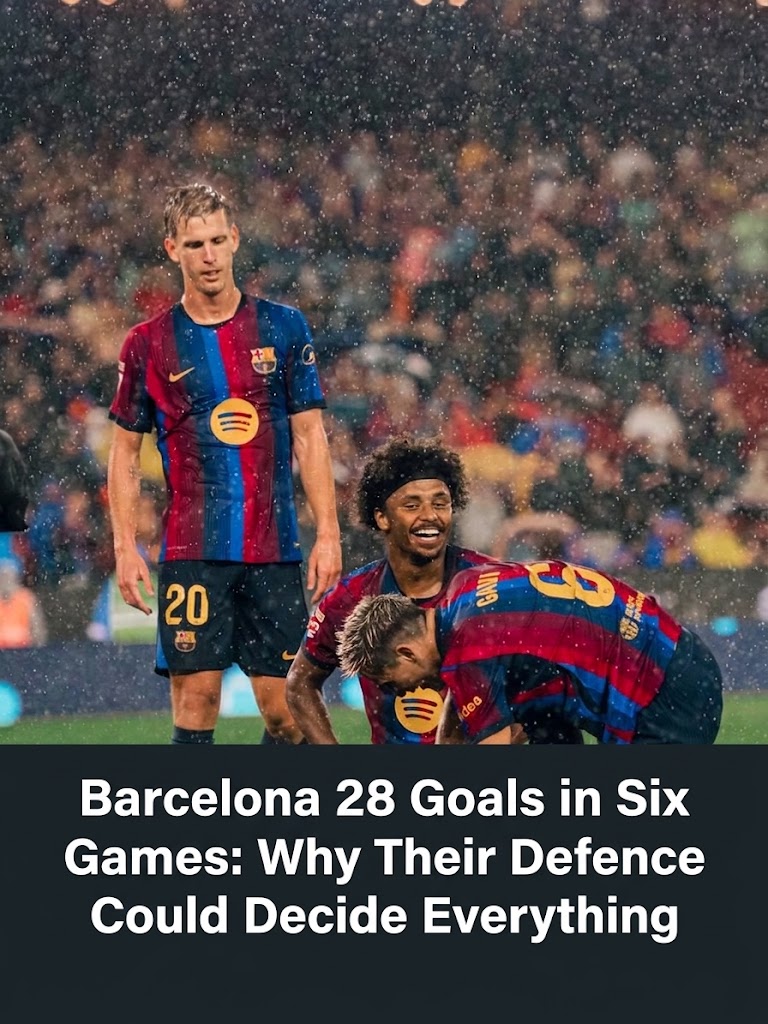
Barcelona 28 goals in six LaLiga matches. The frightening part is not how often they are scoring — it is how quickly they are turning every match into a test of whether their defence can keep pace with their attack.
Hansi Flick’s side made that contradiction impossible to ignore on Wednesday night.
Barcelona demolished Racing Santander 7-2 at Spotify Camp Nou, with Raphinha scoring a hat-trick while João Cancelo, Gabriel Jesus and Lamine Yamal also found the net. The victory maintained Barcelona’s perfect six-from-six start and left them top of LaLiga with 18 points, three ahead of Real Madrid.
The numbers are extraordinary.
Twenty-eight goals scored. Six conceded. A +22 goal difference.
On the surface, that looks like an almost flawless start.
But there is another number worth examining.
Barcelona have conceded two goals in each of their last three league matches — against Rayo Vallecano, Levante and Racing Santander. They have scored 14 across those three games, so the results have never been in serious danger for long. Yet the repeated defensive concessions reveal a pattern that stronger opponents will eventually test much more aggressively.
That is why Barcelona’s defence, rather than their attack, could become the defining issue of Flick’s season.
Because when the opposition is good enough to punish every transition, scoring three or four may no longer be enough.
Barcelona 28 Goals Are Rewriting the Opening Six Games
Before analysing the problem, the scale of Barcelona’s attacking achievement needs to be recognised.
After six LaLiga matches, Barcelona have:
- 18 points from 18
- 28 goals scored
- 6 goals conceded
- +22 goal difference
- 6 consecutive league victories
- 3-point lead over Real Madrid
LaLiga’s official standings confirm the numbers. Real Madrid are second with 15 points and a +11 goal difference, while Atlético Madrid sit third on 13 points.
Barcelona’s latest performance was another demonstration of their attacking depth.
Raphinha scored three times, João Cancelo contributed two goals, Gabriel Jesus scored from the bench and Lamine Yamal added another late goal.
The most interesting element is that Barcelona are not relying on one attacking mechanism.
They can create through combinations.
They can attack through wide areas.
They can exploit defensive transitions.
They can produce individual brilliance.
And they can now get goals from players arriving from different positions.
That variety makes them exceptionally difficult to defend.
But it also creates the central tactical dilemma.
The more players Barcelona commit forward, the more space they potentially leave behind them.
The Barcelona Defence Is Not Bad — The Risk Is Structural
It would be misleading to describe Barcelona’s defence as a failure.
Six goals conceded in six league matches is a respectable record.
Barcelona have also kept three clean sheets in those six games, including 5-0 wins against Elche and Valencia.
The problem is therefore not simply the number of goals conceded.
It is the circumstances in which they are conceding them.
Against Rayo Vallecano, Barcelona won 5-2.
Against Levante, they won 4-2.
Against Racing Santander, they won 7-2.
The common theme is that opponents have found moments where Barcelona’s attacking structure leaves opportunities to attack space.
That distinction matters.
A team can concede six goals in six matches while still being defensively elite.
But a team can also concede six goals in six matches while repeatedly showing the same vulnerability.
The latter is what opponents will study.
Barcelona’s Defensive Transition Is the Real Test
The most important tactical phrase in understanding this Barcelona team is defensive transition.
When Barcelona have the ball, they often commit significant numbers ahead of it.
That is fundamental to Flick’s attacking football.
The midfield pushes high.
The full-backs can advance.
The wingers occupy aggressive positions.
The attacking midfielders search for spaces between the lines.
The centre-forward or false-nine movement can pull defenders away from their preferred positions.
When the ball is lost, Barcelona therefore need to recover their defensive shape immediately.
That first five seconds can determine everything.
If the counter-press works, Barcelona regain possession and begin another attack.
If it fails, the opponent suddenly has space.
That is where their defensive structure is tested.
And the fact that Barcelona have conceded two goals in three consecutive league matches suggests that opponents are beginning to find moments against that structure.
The danger becomes much greater against elite opposition.
Racing Santander can punish a mistake.
But a Champions League heavyweight may punish the same mistake with a goal before Barcelona have time to recover.
Hansi Flick’s Greatest Strength Could Also Become His Biggest Risk
 Flick deserves enormous credit for the way he has transformed Barcelona’s attacking identity.
The team’s mentality is aggressive.
The football is direct when space appears.
The pressing is designed to force turnovers high up the pitch.
And Barcelona’s attackers appear comfortable playing at a very high tempo.
But aggressive football comes with a price.
Control becomes more difficult when the team is constantly trying to accelerate the match.
That is particularly relevant when Barcelona are already winning.
Against Racing, Barcelona led 4-1 at half-time and eventually won 7-2. The attacking machine kept producing chances even after the contest had effectively been decided.
From an entertainment perspective, that is magnificent.
From a title-race perspective, however, there will be moments when Flick needs his team to do something completely different.
Slow the match.
Keep the ball.
Reduce transitions.
Move the opponent from side to side.
Protect the centre.
Force the opposition to defend rather than attack.
That ability to control a match without constantly trying to destroy it could become one of Barcelona’s most important developments.
Barcelona’s Attack Is Giving the Defence Extraordinary Margin for Error
There is another side to this argument.
Barcelona’s extraordinary scoring rate means their defence currently has a considerable margin for error.
A team that scores 28 goals in six league games does not need to defend perfectly to win football matches.
If Barcelona concede one, they can score two.
If they concede two, they can score four.
Against Racing, they conceded twice but responded with three more goals.
That is the ultimate attacking luxury.
But it cannot be assumed to continue indefinitely.
Football eventually produces matches in which the opponent scores first.
It produces nights when an attacker misses chances.
It produces Champions League away games where the atmosphere and tactical pressure are completely different.
It produces knockout football, where one defensive error can eliminate a team.
And it produces El Clásico.
Barcelona’s schedule already points toward a significant test.
Their next league fixture is against Sevilla before the international break, while the standings currently show Real Madrid only three points behind.
The margin is small.
The performances are spectacular.
But the season is long.
Raphinha Is Making Barcelona’s Attack Look Almost Unfair
 One reason Barcelona can afford some defensive instability is the extraordinary form of Raphinha.
The Brazilian captain scored three against Racing, taking his involvement to another level during this opening phase of the campaign.
His importance is tactical as much as statistical.
Raphinha is comfortable starting from the left but can operate centrally.
That flexibility makes Barcelona difficult to track.
When he moves inside, space can open for the full-back.
When he stays wide, he can isolate defenders.
When he receives between the lines, he can turn and attack.
And when Barcelona lose the ball, his ability to immediately press can help initiate the counter-press.
His current form is therefore not simply about goals.
It is about how many different problems he creates for the opposition.
Raphinha’s own comments after the Racing match also reflected Barcelona’s mentality. He stressed the team’s desire to keep scoring and highlighted the collective spirit within the squad.
That mentality explains why Barcelona continue attacking even when matches appear finished.
The question is whether Flick can maintain that aggression while improving control.
Lamine Yamal Adds Another Layer to the Problem
 Then there is Lamine Yamal.
The teenager scored Barcelona’s seventh goal against Racing, continuing his influence on an attack that has become remarkably difficult to contain.
Yamal’s presence creates a unique tactical problem.
He can remain wide and stretch the defensive line.
He can move inside.
He can receive between defenders.
He can carry the ball through pressure.
And he can create something from situations where the opposition appears to have eliminated the passing options.
But when Yamal moves inside, Barcelona’s positional structure changes.
That requires other players to compensate.
The same is true when the full-back advances.
The same is true when Raphinha moves centrally.
The same is true when midfielders push forward.
Barcelona’s attacking freedom depends on coordinated positional exchanges.
And those exchanges must remain balanced when possession is lost.
That is where the real tactical challenge lies.
The Goalkeeper Situation Could Become Important
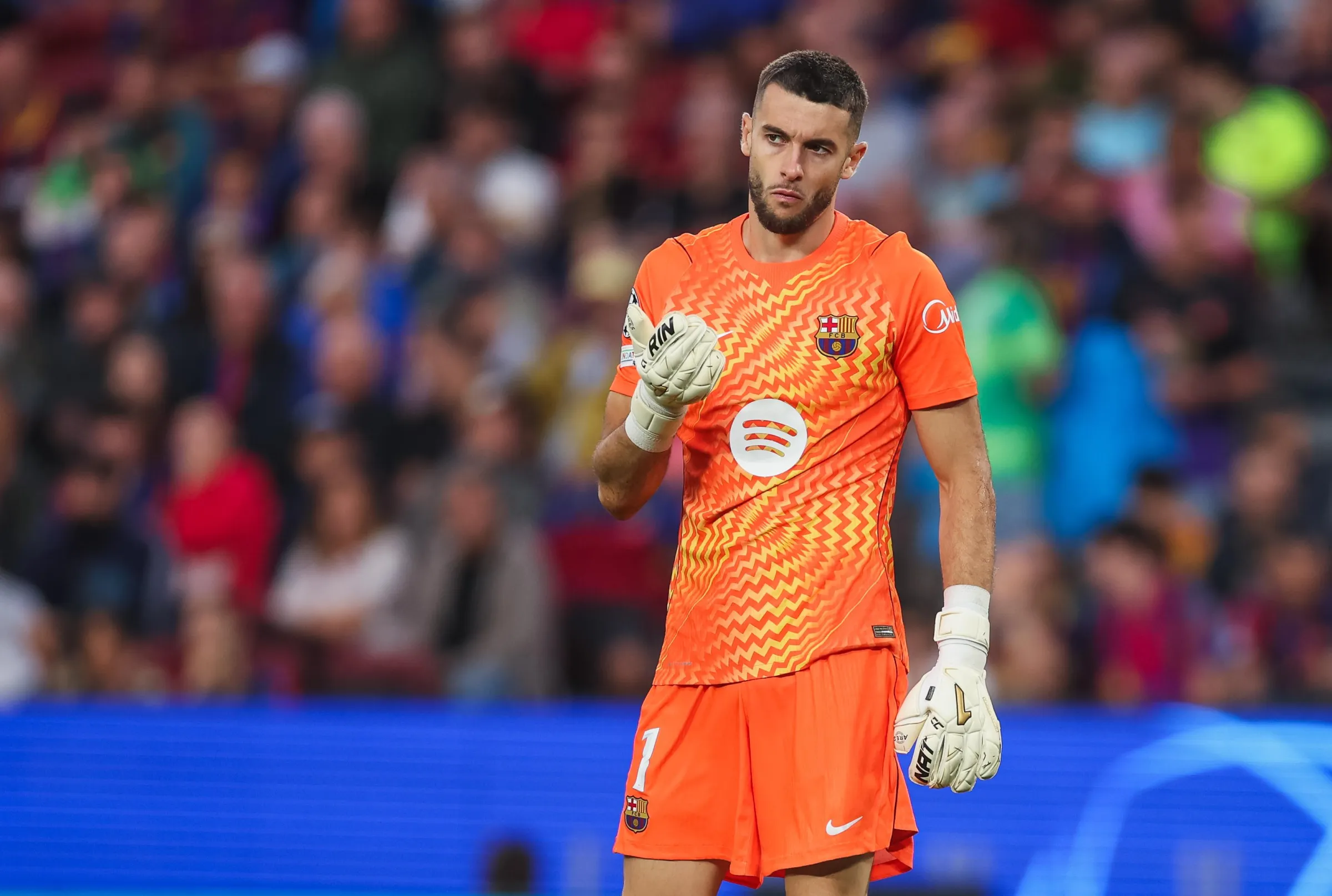 Barcelona’s defensive discussion also extends beyond the back four.
Joan García had started the opening league matches and played in Barcelona’s first four LaLiga victories before featuring against Levante.
Against Racing, Wojciech Szczęsny started, and Barcelona conceded twice.
That does not mean the goalkeeper was solely responsible.
It would be wrong to turn a team-wide structural issue into a goalkeeper narrative.
But goalkeeping becomes particularly important for a side that plays a high defensive line.
The goalkeeper is effectively another defender.
He has to read through balls.
He has to position himself aggressively.
He has to sweep behind the defensive line.
He has to make saves when the counter-press fails.
For Barcelona, that role becomes increasingly important as their attacking structure pushes opponents deeper and creates more space behind the defence.
Barcelona’s Biggest Defensive Test Will Not Come Against Racing
The 7-2 victory should not be criticised simply because Barcelona conceded two goals.
That would miss the bigger picture.
Racing were beaten comfortably.
Barcelona remain perfect.
They scored seven.
They created an enormous amount of attacking pressure.
They lead LaLiga.
The concern is about preparation.
Because eventually Barcelona will face a team capable of turning those same defensive moments into a completely different match.
SEE ALSO: Rodri Pedri Partnership: Barcelona’s New Midfield Weapon That Could Change Everything
Real Madrid are only three points behind.
Atlético Madrid have already demonstrated their ability to control games defensively, moving to 13 points after a 4-0 victory over Osasuna.
And Europe’s best teams will have spent considerable time studying Flick’s system.
That is where the real examination begins.
Barcelona Defence vs Barcelona Attack: Which Side Wins the Season?
There is an intriguing contradiction at the heart of this Barcelona team.
Their attack is already good enough to win games that other teams would struggle to control.
Their defence is already good enough statistically to suggest that the problem is manageable.
Yet neither side exists independently.
The attack creates the defensive risk.
The defence enables the attack.
The midfield connects both.
And the counter-press determines whether Barcelona can maintain their structure after losing possession.
That means Flick does not necessarily need to make Barcelona more defensive.
He needs to make them more controlled.
There is a difference.
A defensive Barcelona would potentially sacrifice the quality that makes this team so dangerous.
A controlled Barcelona could retain the aggression while reducing unnecessary exposure.
That may mean:
- Better rest defence behind attacks.
- More disciplined positioning from the midfield.
- Faster counter-pressing after turnovers.
- Greater awareness of when to slow the game.
- Better protection of central spaces.
- More coordinated movement between full-backs and midfielders.
- Greater goalkeeper involvement when defending space behind the back line.
These details could determine whether Barcelona remain merely spectacular or become genuinely dominant.
The Real Barcelona Test Is Still Coming
 Six victories and 28 goals represent an extraordinary opening.
There is no reason to diminish that achievement.
Barcelona are producing some of the most devastating attacking football in Europe, and Flick has established a winning mentality almost immediately.
But football history repeatedly demonstrates that spectacular attacks can dominate ordinary opponents while defensive weaknesses remain hidden.
The strongest teams eventually encounter an opponent capable of asking a different question.
Can you win when the counter-press fails?
Can you defend a 1-0 lead?
Can you survive 20 minutes without the ball?
Can you stop an elite transition?
Can your goalkeeper defend the space behind your high line?
And, ultimately:
Can you control the biggest matches without turning them into seven-goal shootouts?
That is where the Barcelona defence becomes so important.
What’s Next for Barcelona?
Barcelona’s next LaLiga match is against Sevilla on September 19, giving Flick another opportunity to refine the balance between attacking aggression and defensive control before the international break.
For now, the numbers tell two stories.
Twenty-eight goals say Barcelona are terrifying going forward.
Six conceded say they are not invulnerable.
Neither statistic should be ignored.
The attack has put Barcelona three points clear at the top of LaLiga and produced a perfect six victories from six. But the defensive details may ultimately determine whether this becomes simply a spectacular start or the foundation of another trophy-winning campaign.
Because over 38 league matches, brilliance wins plenty of games.
Control wins titles.
And for Hansi Flick, the next stage of Barcelona’s evolution may not be finding another way to score.
It may be finding a way to make sure that, when the best opponents finally arrive, Barcelona’s defence gives their extraordinary attack the platform it deserves.
Do you think Barcelona’s defence is a genuine weakness, or are six goals conceded in six matches simply an acceptable price for Flick’s attacking football? Share your thoughts in the comments.