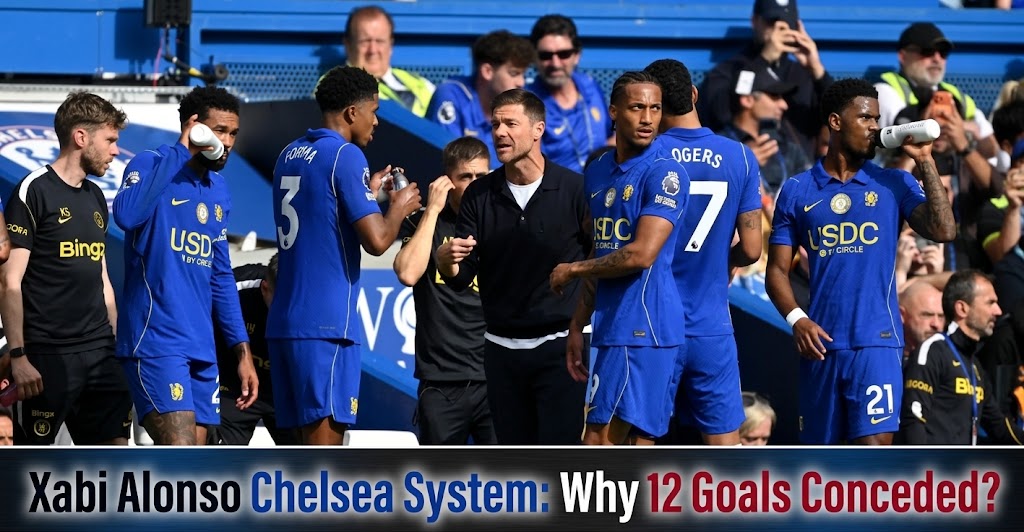
Chelsea do not have a scoring problem. They have a control problem.
That distinction has become impossible to ignore after Xabi Alonso’s side conceded three second-half goals in a 3–0 defeat to Brentford, taking their Premier League total to 12 goals conceded in just five matches.
The early optimism surrounding the Xabi Alonso Chelsea system has therefore collided with a worrying reality. Chelsea can dominate possession, create attacking moments and field an expensive collection of talent — yet opponents are still finding remarkably clear routes into their penalty area.
Brentford exposed that contradiction perfectly.
Chelsea had more of the ball. They completed more passes. They won 12 corners. Yet Brentford generated 2.61 expected goals to Chelsea’s 1.04 and ultimately scored three times.
The question is no longer simply whether Alonso needs time.
It is what exactly needs fixing during that time?
Chelsea’s 12 Goals Conceded Tell Only Half the Story
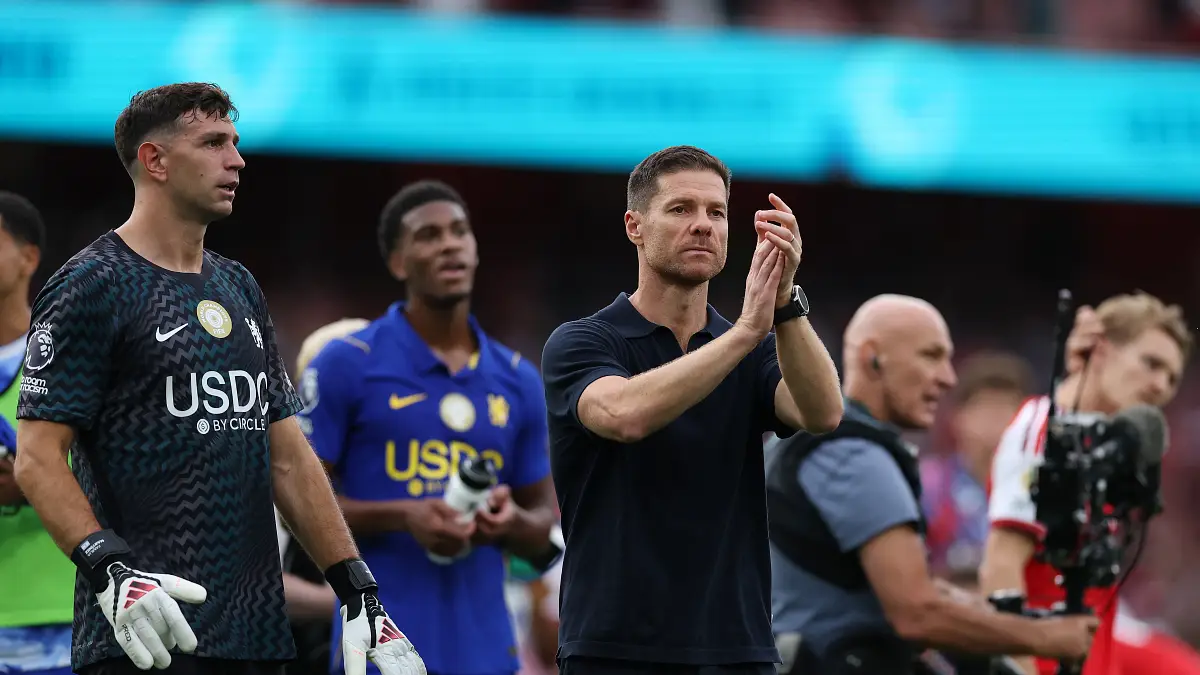 The headline number is brutal: 12 goals conceded in five Premier League games.
That works out at 2.4 goals per match.
More significantly, Chelsea have conceded at least twice in every league game of Alonso’s reign so far. That means the problem is not isolated to one bad afternoon or one unfortunate defensive error.
Chelsea’s opening league results illustrate the pattern:
- Fulham 2–3 Chelsea
- Chelsea 4–3 Brighton
- Arsenal 2–1 Chelsea
- Chelsea 2–2 Hull City
- Brentford 3–0 Chelsea
The attacking numbers initially disguised the defensive instability.
Chelsea scored seven goals across their first two league victories, creating the impression of a side capable of overwhelming opponents.
But those victories also contained a warning.
Chelsea conceded five goals against Fulham and Brighton combined. Reuters noted that the warning signs were already visible before the Brentford defeat.
The difference now is that Chelsea’s attack did not rescue them.
Against Brentford, they failed to score for the first time this season.
And once the attacking safety net disappeared, the defensive weaknesses became impossible to hide.
The Xabi Alonso Chelsea System Has a Control Problem
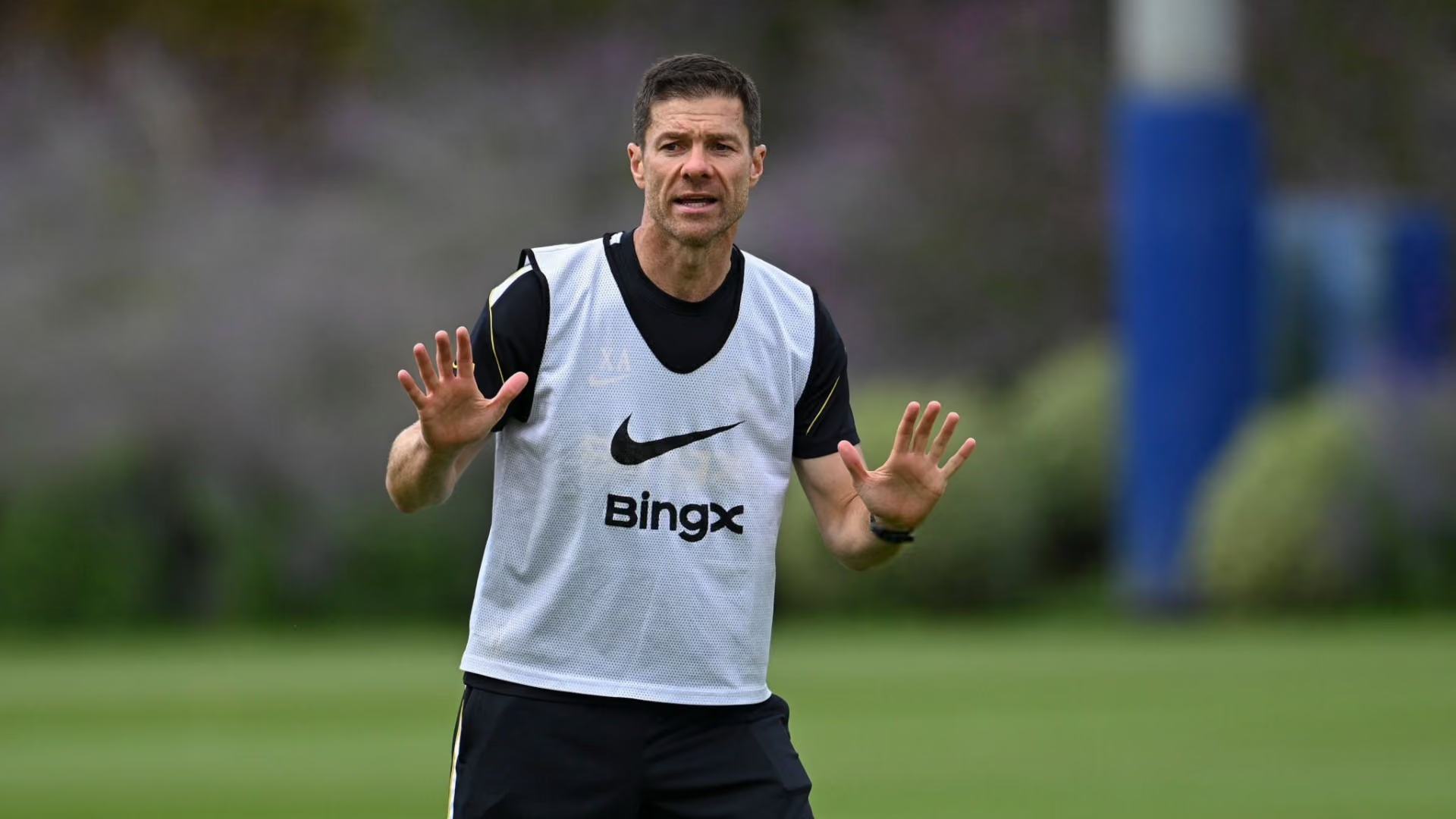 One of the most interesting aspects of Chelsea’s situation is that possession has not necessarily translated into control.
At Brentford, Chelsea had 59% possession and 508 passes, compared with Brentford’s 41% possession and 338 passes. Chelsea also earned 12 corners.
On a conventional statistical sheet, those numbers can make Chelsea look dominant.
The match itself told a different story.
Brentford created the better chances, producing 13 shots and 2.61 xG compared with Chelsea’s 11 shots and 1.04 xG.
This distinction matters enormously when evaluating the Xabi Alonso Chelsea system.
Possession is only useful if it prevents the opponent from generating dangerous attacks.
Chelsea are currently having spells where they control the ball but not the risk profile of the match.
That is a tactical issue.
Alonso himself acknowledged the problem after the defeat, saying Chelsea had failed to maintain their level for the full match and had “lost a little bit of control.”
That may be the most revealing description of Chelsea’s start.
They are not consistently losing the ball.
They are losing control of what happens after something goes wrong.
Chelsea’s Defensive Shape Is Being Tested in Transition
 The second Brentford goal demonstrated another major issue.
After Chelsea pushed forward searching for an equaliser, Brentford exploited the space created behind them.
Kristoffer Ajer’s interception initiated the counter-attack, Kevin Schade raced through and Emiliano Martínez made the initial save before Igor Thiago followed up to score.
This is precisely the kind of situation Alonso’s system must eventually prevent.
A possession-oriented side inevitably commits numbers forward.
But the defensive structure behind the attack has to remain stable.
That requires:
- good rest defence;
- immediate counter-pressing;
- appropriate distances between defenders and midfielders;
- intelligent positioning of the full-backs;
- and midfield protection when possession is lost.
Chelsea’s problem is that opponents are finding opportunities during those transitions.
The result is an uncomfortable contradiction: Chelsea can have the ball without being the team controlling the match.
Xabi Alonso’s Set-Piece Problem Is Bigger Than Brentford
If there is one defensive issue that has become particularly obvious, it is set pieces.
Brentford’s opener came from a corner.
Mikkel Damsgaard delivered, Jannik Schuster headed the ball across the area and Jaidon Anthony was able to attack the ball from close range.
Sky Sports reported that this was Chelsea’s fourth set-piece goal conceded in five Premier League games.
Even more concerning, Chelsea had already conceded 23 set-piece goals since the beginning of last season, joint-worst in the Premier League over that period according to the Sky Sports analysis.
That makes this more than an Alonso-specific problem.
But Alonso has inherited it — and now has to solve it.
The Brentford goal was especially instructive because the hosts had identified the weakness.
Vitaly Janelt said Brentford targeted the back-post space after identifying a gap there at half-time.
That is the kind of detail that will concern Alonso.
Elite Premier League opponents study these weaknesses relentlessly.
Once a defensive vulnerability becomes predictable, it gets attacked repeatedly.
Chelsea Are Giving Opponents Too Many Penalty-Area Opportunities
The set-piece issue is only part of the defensive problem.
Sky Sports reported that Chelsea are among the Premier League’s top three teams for allowing shots inside their own penalty area, at around 10 per game. Their non-penalty goals conceded rate was also approximately 2.2 per game at the time of the analysis.
That tells us something important.
Chelsea are not merely conceding spectacular goals or suffering from goalkeeper mistakes.
Opponents are repeatedly getting into valuable shooting positions.
That is fundamentally a team-structure problem.
A goalkeeper can save shots.
A defender can make a tackle.
But if an opponent consistently receives the ball inside the penalty area, the defensive system is already under pressure.
This is where the Xabi Alonso Chelsea system has its biggest examination.
The International Break Gives Alonso a Tactical Laboratory
The timing of the defeat may actually be useful for Chelsea.
The international break provides Alonso with approximately three weeks before Chelsea’s next Premier League fixture against Bournemouth on October 10. Reuters identified that extended period as an opportunity for Alonso to work on the team’s problems.
That time should not simply be used for more attacking patterns.
Chelsea already have attacking talent.
The priority should be establishing defensive certainty.
1. Fix the rest defence
When Chelsea attack, how many players remain behind the ball?
Where are they positioned?
Who protects the centre?
Who covers the full-back?
These questions need clear answers.
2. Improve set-piece organisation
Four set-piece goals in five league games is too significant to treat as random variance.
Chelsea need clearer assignments, better back-post protection and greater physical aggression.
3. Reduce defensive distances
If the midfield and defensive lines become separated, opponents can play through the first pressure.
Alonso’s system depends on collective movement.
The distances must therefore remain compact.
4. Improve transition reactions
The first few seconds after possession changes could determine Chelsea’s season.
If the counter-press fails, the team needs an immediate fallback structure.
But Alonso Has One Important Historical Argument
 It would be premature to conclude that Alonso’s tactical ideas cannot work in England.
His Bayer Leverkusen evolution provides evidence of how dramatically his teams can improve with time.
According to Premier League analysis, Leverkusen went from 51.8% possession and 169 high turnovers in Alonso’s first Bundesliga season to 62.1% possession and 367 high turnovers in his second. They also went from sixth with 50 points to champions with 90 points.
That is a significant transformation.
It suggests that Alonso’s tactical framework is not designed to become perfect immediately.
The challenge at Chelsea is that the Premier League does not provide unlimited time for experimentation.
Chelsea’s squad is also different from that Leverkusen team.
There are new players.
There are injuries.
There are different defensive profiles.
And Alonso is attempting to impose his ideas while competing against some of the most tactically sophisticated teams in Europe.
So the relevant question is not whether Alonso needs time.
It is whether Chelsea can reduce the defensive damage while he builds that system.
Injuries Cannot Be Ignored
Chelsea have also been dealing with personnel problems.
Reuters reported that Moisés Caicedo, an important defensive midfielder, had played only 14 minutes of the season by the time of the Brentford match, while Italy defender Marco Palestra had yet to feature.
Caicedo’s absence matters because his role can provide defensive protection in front of the back line.
Reece James has also dealt with a hamstring problem, while João Pedro was unavailable for the Brentford match.
That context matters when assessing Alonso.
A manager attempting to establish a new tactical system needs continuity.
Chelsea have not had much of it.
The starting XI has changed.
The midfield has changed.
The defensive combinations have changed.
And the manager himself is still learning his players.
That does not eliminate the problems, but it provides an important explanation for why the system has not yet become stable.
The Biggest Warning: Chelsea Lose Control After Conceding
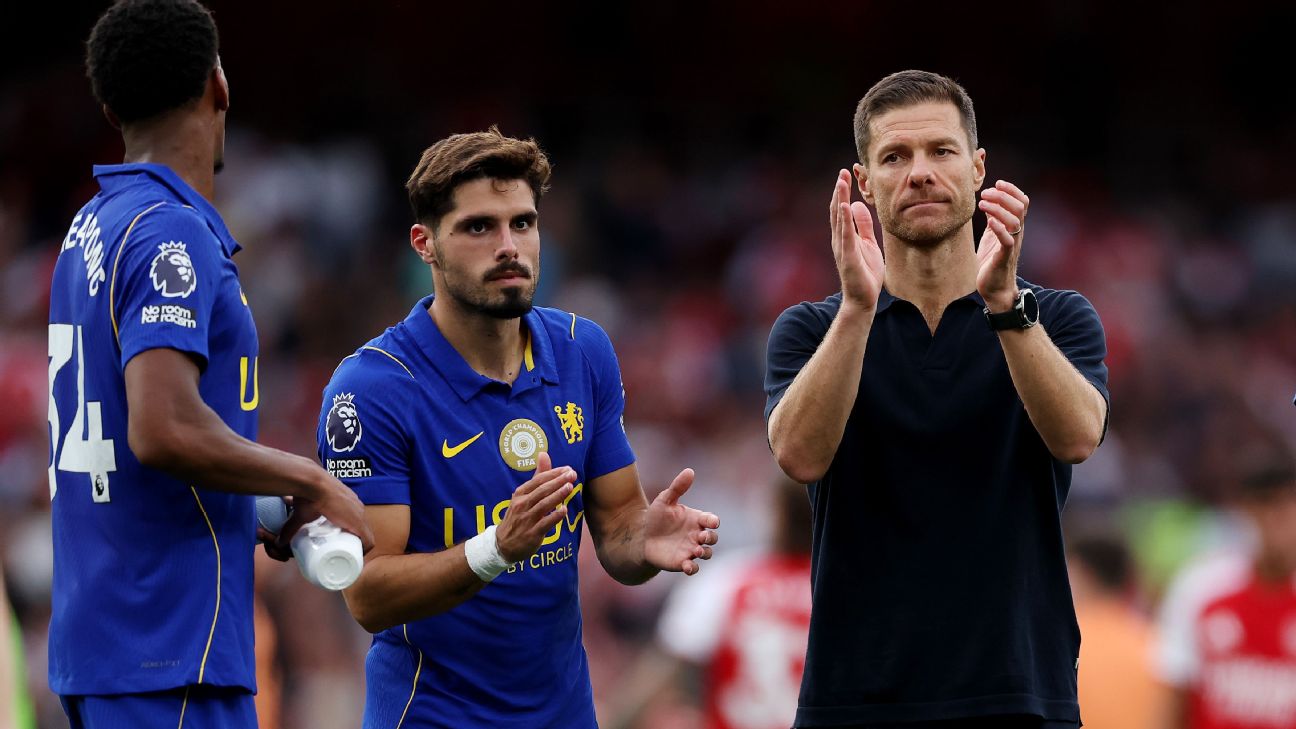 Perhaps the most concerning pattern is what happens after Chelsea concede.
Against Brentford, the first goal changed the match.
Chelsea pushed forward.
Brentford countered.
The second goal arrived.
Then Chelsea became increasingly vulnerable and Fabio Carvalho completed the 3–0 victory in stoppage time.
Alonso described the problem in terms of consistency, competitive mentality and maintaining focus for the full match.
This is where tactics and mentality intersect.
A good structure gives players security.
But players also have to execute that structure under pressure.
Chelsea currently appear vulnerable when the match moves outside their preferred rhythm.
That is perhaps the most important thing Alonso must fix.
What the Xabi Alonso Chelsea System Needs Next
Chelsea do not necessarily need a complete tactical revolution.
They may need better foundations.
The immediate objectives should be straightforward:
Defend the box better.
Protect the back post.
Improve set pieces.
Control transitions.
Reduce the number of clear shots conceded.
Maintain structure after falling behind.
If those elements improve, Chelsea’s attacking talent can become significantly more valuable.
If they do not, Chelsea may continue producing entertaining matches while dropping points unnecessarily.
The 4–3 win over Brighton showed the upside.
The 3–0 loss to Brentford showed the downside.
The question is which version becomes the norm.
Chelsea’s Next Test Will Tell Us More Than Brentford Did
The Brentford defeat was damaging, but it should not automatically be interpreted as proof that Alonso’s entire project has failed.
Five Premier League matches are a small sample for a manager implementing a new tactical structure.
But five matches are also enough to identify patterns.
And Chelsea’s pattern is clear.
They concede too many goals, allow too many dangerous opportunities and struggle to maintain control once matches become chaotic.
SEE ALSO: Chelsea 3-0 Brentford: What Went Wrong in Xabi Alonso’s System?
The good news for Alonso is that the problems are identifiable.
The bad news is that Premier League opponents have already identified them too.
Chelsea’s next league match is against Bournemouth on October 10.
By then, the international break should have given Alonso valuable time to work on his defensive structure.
The football world will then get a much clearer indication of whether the Xabi Alonso Chelsea system is simply going through the difficult early stages of construction — or whether deeper structural problems remain.
For Chelsea, the next phase is not about scoring more goals. It is about learning how to stop giving opponents so many opportunities to score.
What do you think Chelsea’s biggest defensive problem is under Xabi Alonso — set pieces, transitions, defensive positioning or midfield protection? Share your view in the comments.
Would you like the next piece to focus more on Chelsea’s set-piece defending or their transition defence?