Arsenal vs Bayern Munich is more than another glamorous Champions League fixture. When the two sides meet at the Allianz Arena on October 21, the match will provide Mikel Arteta with one of the clearest examinations yet of whether Arsenal have genuinely evolved into a team capable of controlling Europe’s biggest nights.
Arsenal entered the 2026/27 Champions League as the reigning Premier League champions and began their European campaign with an important 1–0 victory away to Napoli. Bayern, meanwhile, announced their arrival with a 5–0 demolition of Bodø/Glimt.
But Arsenal’s domestic season has already produced a warning.
Their 3–0 defeat to Brighton showed that even an established team can lose control when its structure, intensity and decision-making begin to break down. The defeat ended Arsenal’s early perfect league run and arrived after a demanding sequence of away fixtures.
Now comes Bayern.
And Bayern are precisely the kind of opponent capable of turning small structural weaknesses into decisive problems.
Arsenal vs Bayern Munich Will Test Arteta’s Control
 For years, Arteta’s Arsenal have been built around control.
The idea is straightforward: dominate territory, compress the opponent, recover possession quickly and create sustained pressure around the penalty area.
That philosophy has helped Arsenal become one of England’s leading sides.
But European football asks a different question.
Can you maintain that control when the opponent has the technical quality to escape your pressure?
Bayern are built to test exactly that.
Vincent Kompany’s side have an extraordinary concentration of technical players capable of receiving between lines, attacking spaces and switching the point of attack quickly.
The official Bayern squad list for the Champions League includes Harry Kane, Michael Olise, Jamal Musiala, Luis Díaz and Joshua Kimmich among their established senior options.
That creates a fascinating tactical battle.
Arsenal cannot simply press aggressively.
They have to press intelligently.
If the first wave is beaten, Bayern can attack the space behind it.
That means Arsenal’s defensive line, midfield distances and rest-defence structure will be tested simultaneously.
The First Question: Can Arsenal’s Press Survive Bayern’s First Pass?
One of the most important battles will occur before either team reaches the penalty area.
Arsenal will want to prevent Bayern from building comfortably.
Bayern will want to invite pressure and then play through it.
That creates a classic Champions League problem.
If Arsenal push their full-backs forward and commit midfielders aggressively, Bayern’s attacking players can attack the spaces left behind.
If Arsenal sit deeper, they give Bayern more possession and allow players such as Musiala and Olise to receive facing forward.
Neither option is comfortable.
The solution will be in the details.
Arsenal’s forwards must decide when to jump.
The midfield must remain close enough to support the press.
The centre-backs must judge when to step forward and when to protect the space behind them.
One mistimed movement could open the entire structure.
Arsenal vs Bayern Munich Could Become a Battle of the Midfields
 If there is one area where this fixture could be decided, it is midfield.
Arsenal have assembled a midfield capable of combining physicality, technical quality and positional intelligence.
Declan Rice, Martin Ødegaard, Martín Zubimendi and Bruno Guimarães give Arteta different combinations depending on the tactical requirement.
The Champions League squad list confirms the depth available to Arsenal in this area.
Bayern possess their own control mechanism through Kimmich and a group of technically gifted midfielders and attacking midfielders.
That makes the central battle particularly important.
Arsenal need to prevent Bayern from turning the game into an end-to-end contest.
Bayern, meanwhile, will want to move Arsenal’s midfield laterally before attacking the gaps.
Why Zubimendi Could Be Crucial
One of the reasons Arsenal recruited Martín Zubimendi was his ability to provide control from the base of midfield.
Against Bayern, that role becomes even more important.
Zubimendi’s positioning could determine whether Arsenal are able to maintain numerical security when their full-backs advance.
If he remains disciplined, Arsenal can build a stable platform behind their attacking midfielders.
If he is dragged toward the ball too frequently, Bayern’s attacking midfielders could find pockets between the lines.
That is where a match can change in seconds.
Bayern’s Attack Gives Arsenal’s Defence a Different Problem
 Arsenal’s defensive record has generally been one of their strongest foundations under Arteta.
But the 3–0 defeat at Brighton offered an important reminder that defensive excellence cannot be taken for granted.
The problem against Bayern is that defensive concentration has to remain perfect for much longer periods.
Harry Kane provides the obvious reference point.
The England striker can operate as a conventional centre-forward, but he is also capable of dropping into midfield and connecting play.
That creates a dilemma for centre-backs.
If William Saliba or Gabriel follows Kane into midfield, space can appear behind them.
If they stay deep, Kane can receive between the lines.
And once Bayern’s wide attackers begin making diagonal runs, Arsenal could be forced into difficult decisions.
This is where Bayern’s attacking structure becomes dangerous.
It is not simply about stopping Kane.
It is about preventing Bayern from creating the conditions in which Kane, Musiala, Olise and Díaz can attack different spaces simultaneously.
Arsenal’s Full-Backs Could Decide Arsenal vs Bayern Munich
 Modern Champions League football is increasingly decided by what happens in the wide areas.
Arsenal’s full-backs have important roles in Arteta’s possession structure.
They are expected to provide width, support attacks and sometimes move into midfield.
Against Bayern, however, their positioning becomes a major risk-reward calculation.
Push too high and Bayern can counter into the space behind.
Stay too deep and Arsenal may struggle to create enough width to move Bayern’s defensive block.
That means Arteta may need to vary the positioning rather than use one rigid structure for the entire match.
The same applies defensively.
Bayern’s wide players will attempt to isolate Arsenal’s defenders.
Arsenal therefore need coordinated support rather than relying exclusively on individual defending.
The Bigger Issue: Arsenal Must Respond to the Brighton Warning
 The timing of the Bayern fixture makes the Brighton defeat particularly interesting.
Arsenal entered the Brighton match having won consecutive away games against Napoli, Sunderland and Ipswich, with Arteta describing the team’s performances as dominant.
The 3–0 defeat therefore represented a sharp change.
SEE ALSO: Arsenal 3-0 Brighton Collapse: Five Questions Arteta Must Answer
It demonstrated that Arsenal’s control can disappear when the opposition disrupts their rhythm and exploits mistakes.
That does not mean the entire project has been compromised.
But it does provide Bayern with a tactical blueprint to investigate.
The German side will have studied how Brighton disrupted Arsenal.
They will look for:
- spaces behind Arsenal’s midfield;
- opportunities during attacking transitions;
- weaknesses when Arsenal’s full-backs advance;
- moments when the defensive line becomes exposed;
- and situations where Arsenal lose composure after conceding.
The Champions League is often about turning an opponent’s minor weakness into a major problem.
Bayern have the players capable of doing exactly that.
Bayern Munich Have Already Shown Their Attacking Ceiling
 Bayern’s opening European performance should not be dismissed simply because Bodø/Glimt are not Arsenal.
A 5–0 Champions League victory nevertheless demonstrated the attacking depth available to Kompany.
Bayern also began their Bundesliga campaign strongly, including a 5–1 victory over Stuttgart, before continuing with wins over Schalke, Elversberg and Union Berlin. Their official fixture record shows a 7–0 victory over Union Berlin on September 18.
That is an important contrast with Arsenal’s recent setback.
By the time the teams meet, both managers will have additional information about their squads and systems.
But Bayern’s early attacking rhythm suggests Arsenal will not be able to rely on defensive caution alone.
They will need to threaten Bayern themselves.
Arsenal’s Attack Must Give Bayern Something to Defend
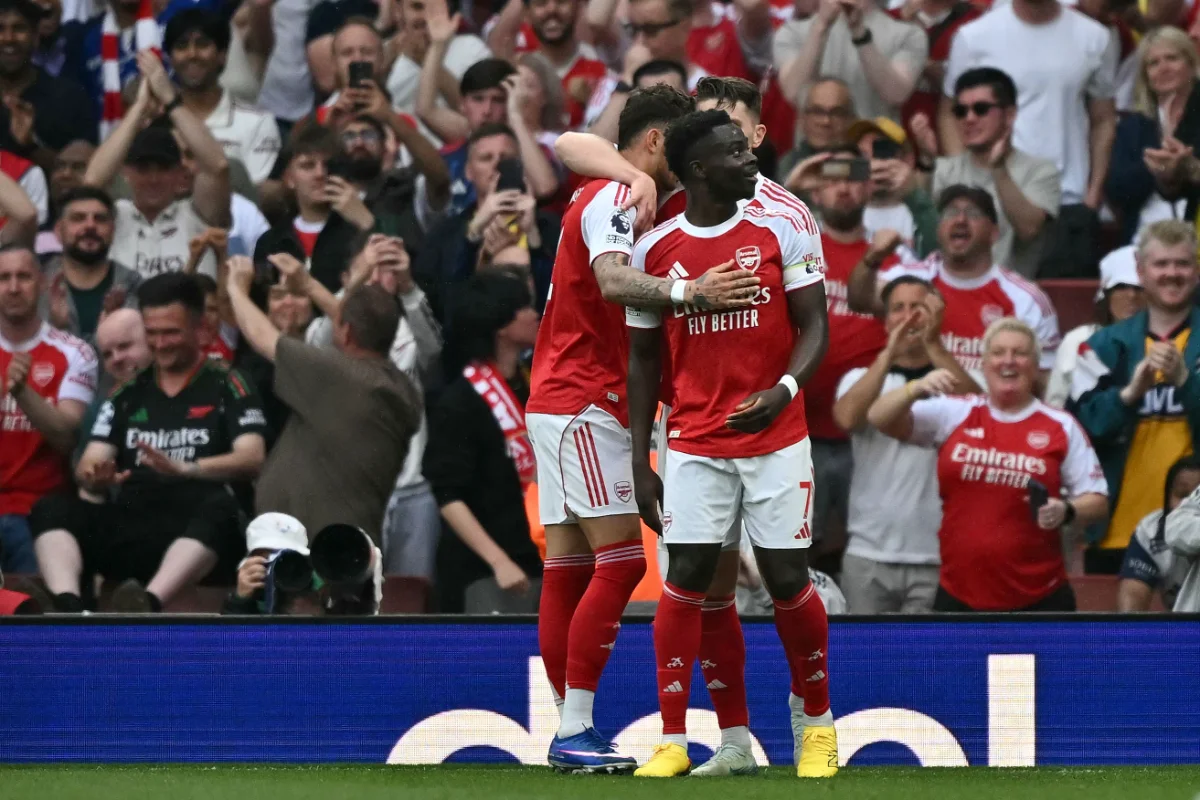 The biggest mistake Arsenal could make would be treating this as a defensive exercise.
Arteta’s team have enough attacking quality to hurt Bayern.
Bukayo Saka remains one of Arsenal’s principal creative threats, while Viktor Gyökeres gives them a different physical dimension at centre-forward. Eberechi Eze, Noni Madueke and Kai Havertz add further attacking options.
The objective should therefore be to create a game Bayern cannot comfortably control.
If Arsenal spend 90 minutes defending, the pressure will eventually become difficult to absorb.
But if Arsenal can attack Bayern’s defensive line consistently, the German side will have to think twice before committing numbers forward.
That changes the tactical equation.
Saka vs Bayern’s Left Side
Saka could be one of Arsenal’s most important outlets.
His ability to hold width, attack defenders and create chances can force Bayern to adjust their defensive structure.
If Bayern commit two players toward him, Arsenal can potentially exploit the spaces elsewhere.
If Bayern defend him one-versus-one, Saka has the opportunity to create the type of individual advantage that can change a Champions League game.
Arsenal therefore need to make their right side a genuine attacking weapon rather than simply a possession outlet.
Arteta vs Kompany: Two Coaches With Different Challenges
The managerial battle will be fascinating.
Arteta has spent years constructing Arsenal into a highly structured team.
Kompany is still shaping Bayern’s identity, but he inherits an enormous amount of technical quality.
That creates two different pressures.
Arteta needs to prove that Arsenal’s structure can survive against Europe’s elite.
Kompany needs to demonstrate that Bayern can combine attacking freedom with sufficient defensive control against a team capable of punishing mistakes.
The match could therefore become a contest between structure and adaptability.
The manager who responds fastest to what the opponent changes may gain the decisive advantage.
What Arsenal vs Bayern Munich Could Reveal About Arsenal
This fixture is important because Arsenal’s ambitions have changed.
They are no longer simply trying to qualify for the Champions League.
They are trying to win it.
That requires surviving matches against teams like Bayern.
Last season’s European experience already gave Arsenal a taste of the highest level, but another deep run requires consistency against multiple tactical styles.
The Bayern game can reveal several things.
Can Arsenal defend transitions against elite attackers?
Can they maintain possession when aggressively pressed?
Can their midfield resist Bayern’s technical rotations?
Can their attacking players create enough danger to stop Bayern dominating territory?
And perhaps most importantly:
Can Arsenal remain tactically disciplined when the match becomes chaotic?
Those answers will matter more than possession percentages or total passes.
Why This Is Not Just Another Champions League Fixture
The Champions League league phase gives teams eight matches, meaning one defeat does not automatically destroy a campaign.
But certain fixtures carry greater strategic importance.
Arsenal vs Bayern Munich is one of them.
Bayern are one of the most historically successful clubs in European football, while Arsenal are entering the competition with the expectations that come from being Premier League champions.
UEFA’s schedule confirms that Bayern will host Arsenal on 21 October 2026, before Arsenal later host Real Madrid on December 9.
That makes Arsenal’s trip to Munich part of a brutal sequence of elite European tests.
The match will also arrive after Arsenal have already experienced their first serious domestic setback of the campaign.
That makes the psychological response fascinating.
Do they become more cautious?
Do they return to their principles?
Or do they use the defeat as evidence that certain elements of their structure need to evolve?
The Real Test Is Not Whether Arsenal Can Beat Bayern
It is tempting to reduce a fixture like this to one question:
Can Arsenal beat Bayern Munich?
The more important question is different.
Can Arsenal impose their football against a team that can punish every structural mistake?
That is the true Champions League test.
Arsenal’s domestic dominance can only tell us so much.
Against Bayern, there will be fewer forgiving moments.
A misplaced pass can become a counter-attack.
A poorly positioned full-back can become a one-on-one.
A lost midfield duel can become a shot.
A weak defensive transition can become a goal.
That is why the Allianz Arena could expose everything.
Not necessarily because Arsenal are flawed.
But because elite European football magnifies every weakness.
What’s Next for Arsenal?
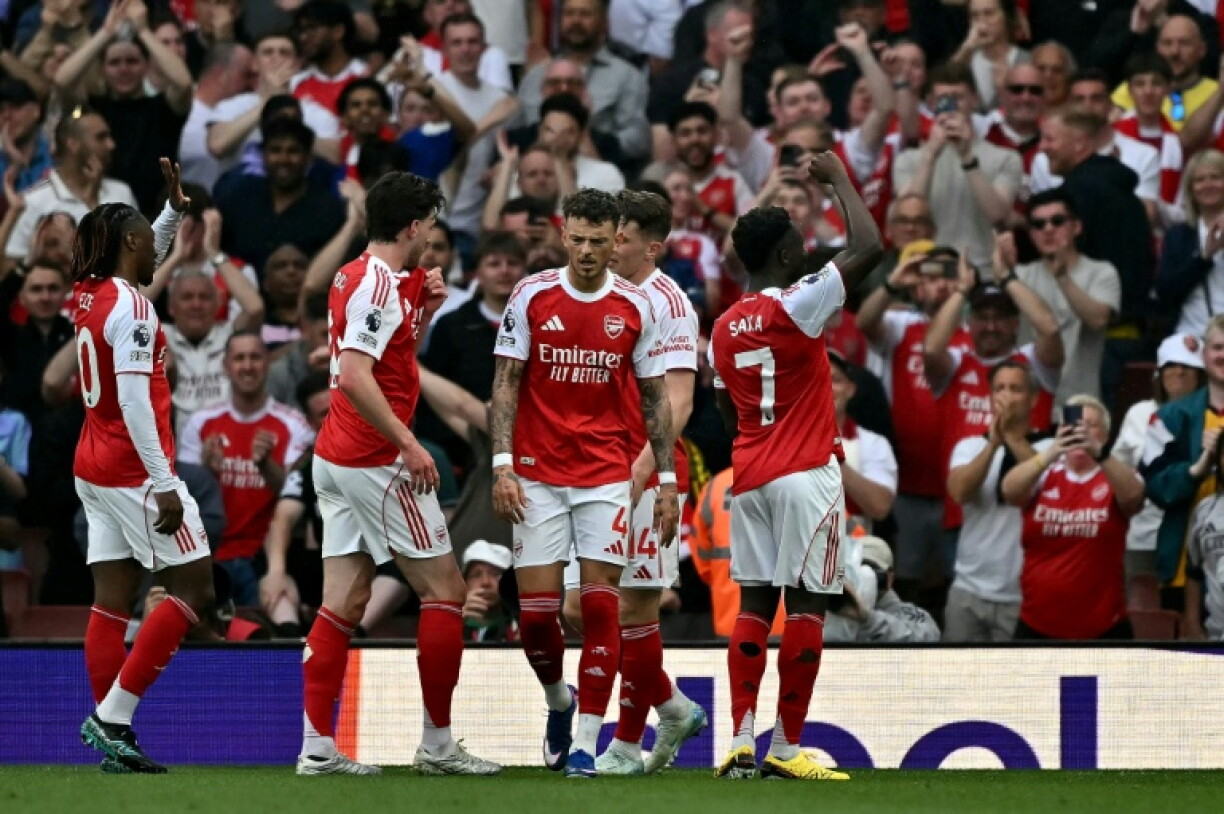 The good news for Arteta is that there is time.
Arsenal’s Bayern fixture is not until October 21, giving the coaching staff several weeks to analyse the early-season evidence and refine the team’s defensive and attacking mechanisms. UEFA’s official schedule places Bayern vs Arsenal as Matchday 3 of the league phase.
The Brighton defeat should therefore be treated as information rather than a final verdict.
Arsenal have already shown they can win in difficult environments, including their 1–0 Champions League victory at Napoli.
But Bayern represent another level of examination.
At the Allianz Arena, Arsenal’s pressing structure, midfield control, defensive transitions, attacking efficiency and mental resilience will all be tested at once.
That is what makes Arsenal vs Bayern Munich so significant.
It is not simply a battle between two famous clubs.
It is an examination of whether Arsenal’s football can survive when every tactical detail matters.
And if Arteta’s team passes that examination, the conversation around Arsenal’s European ambitions will become considerably more serious.
What do you think will decide Arsenal vs Bayern Munich — Arsenal’s midfield control, Bayern’s attacking quality, or the battle in transition? Share your view in the comments.