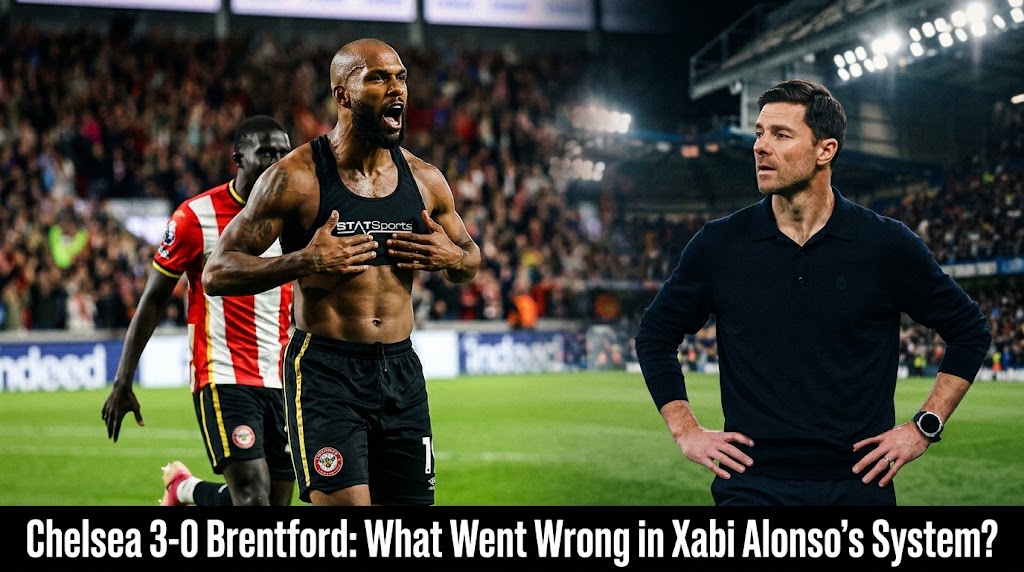
Chelsea 3-0 Brentford was more than a bad night for Xabi Alonso. It was a revealing tactical examination of a team that still looks caught between the ideas of its new manager and the structural problems that have followed the club into another season.
Chelsea entered the west London derby looking to recover momentum after drawing 2-2 with Hull City and going two Premier League matches without a victory. Instead, Brentford delivered a 3-0 defeat that exposed familiar weaknesses: poor defensive organisation, vulnerability from set pieces, an inability to control transitions and a worrying drop in intensity after halftime.
For 45 minutes, Chelsea had reasons to believe the game was under control. They competed physically, circulated the ball and restricted Brentford’s attacking threat. But football is rarely decided by one half.
The second half told a completely different story.
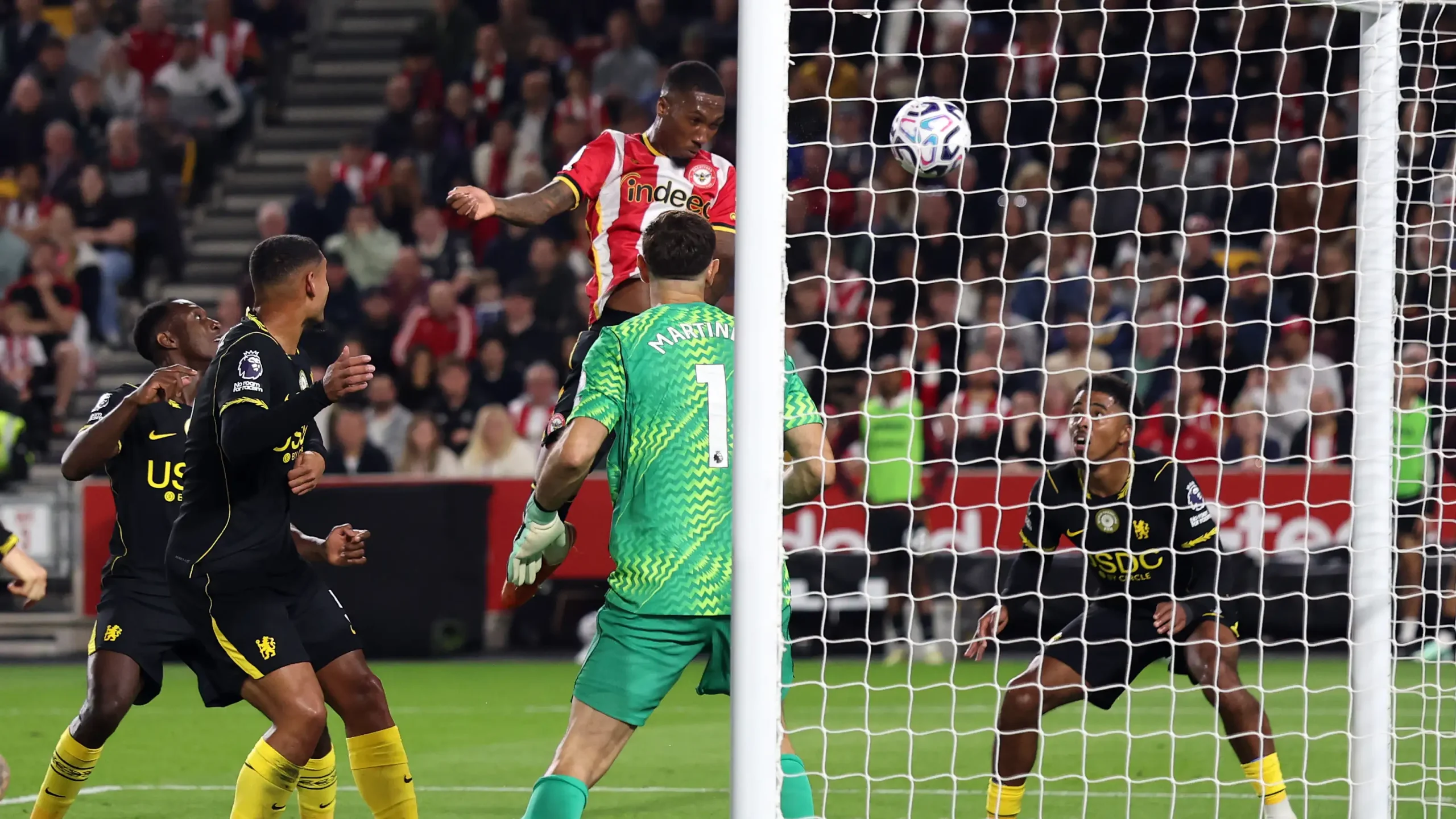
Jaidon Anthony opened the scoring in the 61st minute, Igor Thiago doubled Brentford’s advantage in the 83rd, and Fábio Carvalho completed the rout in stoppage time. All three goals highlighted different aspects of Chelsea’s problems.
The question now is not simply why Chelsea lost.
The bigger question is whether Xabi Alonso’s system is giving Chelsea enough defensive control to support the attacking football he wants to build.
Chelsea 3-0 Brentford Reveals a Familiar Defensive Problem
 One of the most concerning statistics from Chelsea 3-0 Brentford is Chelsea’s continued inability to keep clean sheets.
According to Reuters, the defeat extended Chelsea’s run without a Premier League clean sheet to 21 matches. That is not a problem that can comfortably be described as a short-term adjustment to a new manager’s tactics.
Alonso himself has repeatedly acknowledged that Chelsea need to become more balanced.
After the 2-2 draw with Hull City, the Chelsea manager admitted that his team needed to become more solid and compete for the entire match rather than only certain periods. He also described defensive consistency as one of the biggest areas requiring improvement.
The Brentford defeat demonstrated exactly what he was talking about.
Chelsea did not collapse because Brentford dominated the entire match.
They collapsed because when the match became difficult, their structure stopped protecting them.
That distinction is important.
A team can concede goals while still having a functioning defensive system. Chelsea’s bigger problem was that Brentford repeatedly found moments when the system became vulnerable.
Xabi Alonso’s System Was Exposed After the Break
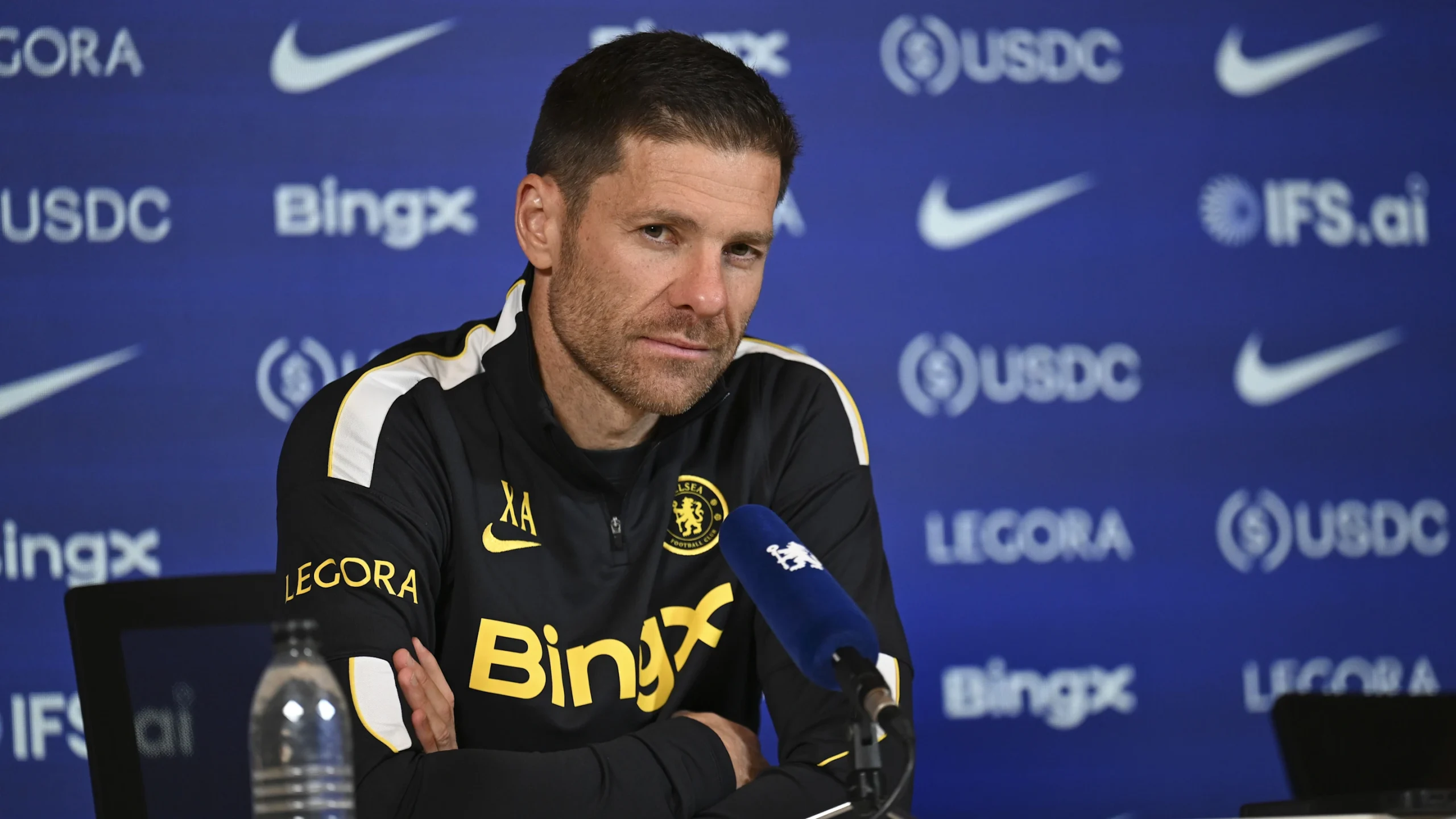 Alonso has used different structures during the opening stages of his Chelsea tenure, including variations of a back three and a 4-2-3-1. Before the Brentford match, Brentford’s own tactical preview noted the uncertainty surrounding Chelsea’s exact shape and highlighted the team’s susceptibility to counter-attacks.
That flexibility can be an advantage.
But tactical flexibility only works when players understand the defensive responsibilities associated with every variation.
Against Brentford, Chelsea initially looked more stable. However, once they conceded, their response became increasingly aggressive.
That created another problem.
Chelsea began pushing more players forward in search of an equaliser, but the additional attacking commitment created spaces behind the midfield and defensive lines.
Brentford were waiting for exactly that.
Their second goal was the clearest example.
Chelsea pushed forward. Brentford recovered possession and immediately transitioned. Kevin Schade carried the ball forward before forcing a save from Emiliano Martínez. The rebound fell to Igor Thiago, who finished to make it 2-0.
It was not simply a case of Chelsea being unlucky.
The sequence demonstrated the risk-reward equation inside Alonso’s structure.
If Chelsea are going to attack with numbers, they need an effective counter-press when possession is lost.
If the counter-press fails, the midfield must still provide protection.
Against Brentford, that protection was not reliable enough.
The First Goal: Chelsea’s Set-Piece Organisation Failed
The opening goal was perhaps the most damaging from a coaching perspective.
Chelsea had spent much of the first half controlling Brentford’s threat. Yet a relatively straightforward set-piece situation changed the match.
Mikkel Damsgaard delivered the corner, Jannik Schuster headed the ball back across goal and Jaidon Anthony was left with the opportunity to finish from close range.
For Chelsea, this was a preventable goal.
Set pieces are among the clearest areas where organisation, concentration and individual responsibility can be measured.
The problem was not necessarily the sophistication of Brentford’s routine.
It was the execution of Chelsea’s defensive assignments.
Levi Colwill later acknowledged that conceding from a set piece was not good enough and admitted that Brentford were able to exploit Chelsea in several important moments.
For Alonso, this is particularly significant because defensive set pieces are not dependent on beautiful attacking football.
They require discipline.
They require communication.
And they require every player to understand exactly who and what he is responsible for.
Chelsea failed in that moment.
Brentford’s Second Goal Showed the Danger of Chelsea’s Transitions
 If the first goal exposed Chelsea’s set-piece organisation, the second exposed their transition defence.
This was where Brentford’s tactical discipline became particularly impressive.
Brentford did not need long periods of possession.
They needed Chelsea to lose control.
Once that happened, the Bees attacked the space immediately.
Schade’s pace became a major weapon, while Igor Thiago positioned himself to benefit from the developing attack. The move eventually resulted in Thiago reacting fastest after Martínez saved Schade’s effort.
This is precisely the kind of situation Alonso will want to eliminate.
A possession-oriented team must understand that attacking structure and defensive structure are connected.
The more players Chelsea commit forward, the more important their rest defence becomes.
Rest defence is essentially the structure a team maintains behind the ball while attacking, allowing it to respond quickly if possession is lost.
Chelsea’s rest defence was not convincing enough.
That is why Brentford could turn defensive moments into attacking opportunities so quickly.
Chelsea’s Attacking Quality Was Not Enough
It would be too simplistic to say that Chelsea were completely poor.
They created opportunities, especially during the first half.
Pedro Neto came close early, while Chelsea’s attacking players showed enough quality to suggest that the team has considerable offensive potential. Brentford’s own pre-match analysis highlighted the attacking production surrounding Alonso’s early Chelsea games, with 19 goals scored across both teams in his first four Premier League matches.
The problem is that attacking talent cannot compensate indefinitely for defensive instability.
Chelsea have invested heavily in attacking players.
Cole Palmer remains one of their most creative players. Pedro Neto offers pace and direct running. Morgan Rogers provides ball-carrying ability, while other attacking options give Alonso significant flexibility.
But when a team consistently concedes avoidable goals, the attack is forced to operate under unnecessary pressure.
Every missed chance becomes more important.
Every opposition counter-attack becomes more dangerous.
Every set piece becomes a potential crisis.
That is the imbalance Alonso must solve.
Why the Midfield Matters So Much
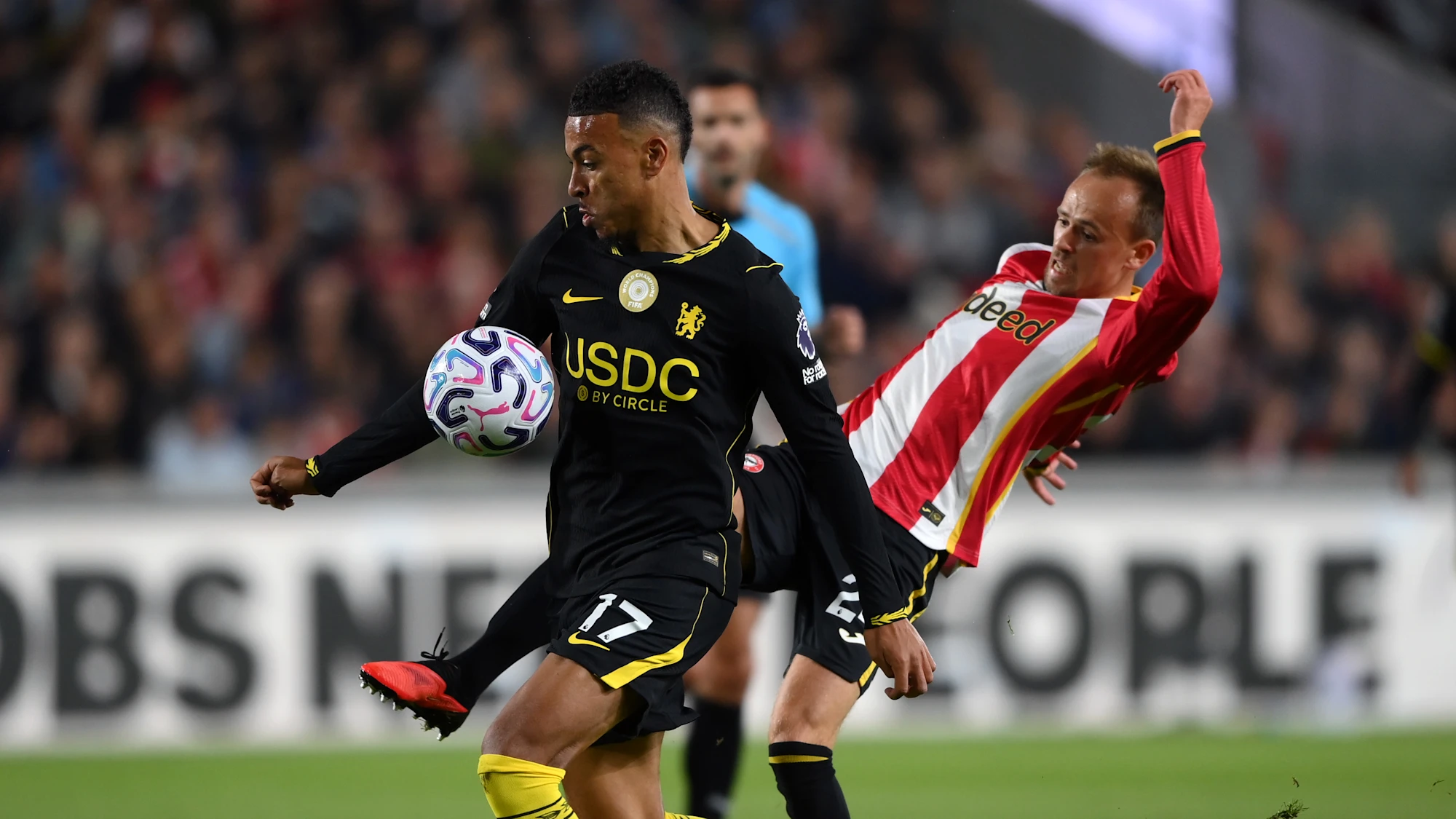 Chelsea’s midfield is another crucial part of the equation.
Before the match, Alonso had spoken about the importance of Moisés Caicedo and the need for greater balance in the centre of the pitch. He described Caicedo as one of the top midfielders in the world and highlighted the Ecuadorian’s ability to provide stability.
Against Brentford, however, Chelsea had to manage changes in midfield.
Jordan Henderson made his first Premier League start for Chelsea against his former club, while other players were rotated. Chelsea’s official lineup showed five changes from the previous league match, including Henderson, Danny Welbeck, Valentín Barco and Pep Chavarría.
That lack of continuity matters.
Alonso is trying to establish a new tactical identity while simultaneously integrating a large number of players.
Chelsea’s squad has considerable depth, but depth does not automatically create cohesion.
Players need to understand:
- when to press;
- when to hold their position;
- when to attack space;
- who covers when a full-back advances;
- how midfielders protect the centre;
- and how the team reacts immediately after losing possession.
Against Brentford, those relationships were not consistently strong enough.
The Third Goal Summed Up Chelsea’s Night
By the time Fábio Carvalho scored Chelsea’s third goal in stoppage time, the game had already been decided.
But the goal still offered another useful tactical lesson.
Schade received the ball after a long throw and was allowed too much space on the left. His delivery eventually reached Carvalho, who finished from close range.
The defending was symptomatic of a team that had lost its concentration.
Chelsea were chasing the match.
Brentford were controlling the situation.
That difference in mentality and structure became visible in the final stages.
Alonso himself admitted afterwards that Chelsea had lost some control and that the team had not been consistent enough to compete for the full 90 minutes. He also rejected excuses and stressed that the team needed to analyse and improve.
That assessment is important because the defeat does not need to be framed as a tactical disaster that requires an immediate revolution.
It may instead be evidence that Alonso’s current version of Chelsea is still incomplete.
Brentford Deserved Credit
Chelsea’s problems should not overshadow Brentford’s performance.
Keith Andrews’ side were disciplined, patient and ruthless when their opportunities arrived.
They remained unbeaten in the league and moved up to third place after the victory.
Brentford understood the game better as it developed.
They did not panic when Chelsea had periods of control.
They defended their penalty area.
They remained dangerous from set pieces.
And once Chelsea became increasingly open, they attacked the spaces with conviction.
That is what makes the result more significant for Chelsea.
They were not beaten by a team that simply sat back and survived.
They were beaten by a side that identified Chelsea’s weaknesses and repeatedly attacked them.
What Must Xabi Alonso Change?
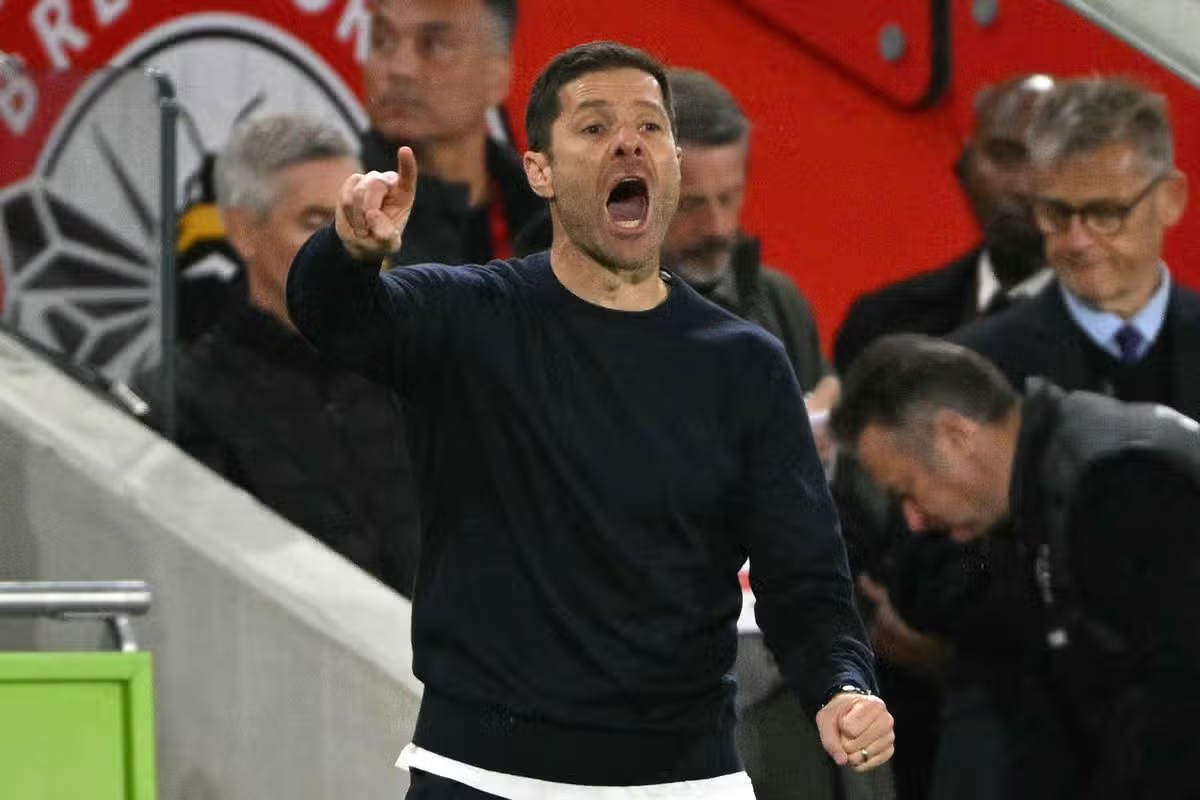 The international break now gives Alonso an opportunity to work on the structural problems.
There are several areas that should be central to that process.
1. Improve Defensive Set Pieces
The first goal cannot be treated as an isolated mistake.
Chelsea need clearer responsibilities and better concentration.
2. Protect the Space Behind the Midfield
When Chelsea attack, there must always be enough players positioned to deal with the counter.
The team’s attacking ambition cannot come at the cost of defensive security.
3. Establish a More Consistent Core
Constant tactical and personnel changes can make it difficult for players to build automatic relationships.
Alonso needs a reliable defensive and midfield structure.
4. Improve Game Management
Chelsea cannot play every match as if they must score immediately after conceding.
Sometimes the correct response is to regain control first.
5. Turn Possession Into Control
Having the ball is not the same as controlling a match.
Chelsea need possession that reduces the opponent’s attacking opportunities while creating their own.
Chelsea 3-0 Brentford Is a Warning, Not the Whole Story
It would be premature to define Alonso’s Chelsea project based on one result.
The manager has only recently taken charge, and Chelsea are integrating new players while attempting to establish a different tactical identity.
But Chelsea 3-0 Brentford cannot simply be dismissed as an unlucky result either.
The warning signs are becoming increasingly difficult to ignore.
Chelsea have now gone three Premier League matches without a victory, while the Brentford defeat extended their league run without a clean sheet to 21 matches.
Those numbers do not necessarily tell us what Chelsea will become.
SEE ALSO: Pochettino Says Tottenham Deserve Chelsea’s 2017 Title — Could Spurs Really Be Crowned Champions?
They do, however, tell us what Chelsea currently are.
A talented attacking team.
A team still searching for defensive stability.
A side capable of controlling stretches of matches but struggling to maintain that control for 90 minutes.
And a squad that still needs time to understand Alonso’s demands.
What’s Next for Xabi Alonso and Chelsea?
The biggest challenge for Alonso during the international break will not be inventing another attacking pattern.
Chelsea already have attacking quality.
The bigger challenge is creating balance.
Alonso’s best teams have historically depended on structure, intelligent positioning and coordinated movement. His Bayer Leverkusen side demonstrated how attacking football can coexist with defensive organisation when the players understand their roles collectively.
Chelsea are not there yet.
The 3-0 defeat at Brentford showed the distance between potential and execution.
The good news for Alonso is that the problems are identifiable.
The set-piece organisation can be coached.
The rest-defence structure can be improved.
The midfield relationships can become more stable.
The defensive communication can improve.
But the process requires consistency.
Chelsea cannot build a new identity every weekend.
They need to establish one and repeat it until the players begin to execute it instinctively.
Chelsea 3-0 Brentford was therefore more than a scoreline. It was a tactical warning about the balance Alonso still needs to find.
The attacking talent is obvious.
The ambition is obvious.
Now the defensive structure must catch up.
Because if Chelsea want to compete with the Premier League’s strongest sides, scoring goals will not be enough. They must also learn how to control the moments when the game becomes chaotic.
And that may ultimately determine whether Alonso’s Chelsea becomes a genuine contender or remains another expensive work in progress.
What do you think went wrong for Chelsea against Brentford? Was the main problem Alonso’s system, the players’ execution, or a combination of both? Share your thoughts in the comments.