The 2026 World Cup Effect has turned the football transfer market into a live stock exchange.
Every match, every goal, every dribble, every save and every viral moment is now being measured not only in sporting value — but in millions. For Premier League players, the effect is even stronger. The league already sits at the top of world football’s financial pyramid. Add World Cup exposure, international hype, agent pressure and club panic, and suddenly £100 million no longer sounds like madness.
It sounds like the opening bid.
As of July 2026, the 2026 World Cup is already in its final stages, with Argentina, England, France and Spain left in the tournament after the first 48-team edition began with 104 scheduled matches across Canada, Mexico and the United States. FIFA president Gianni Infantino has described the expanded format as a major success, while Reuters reported that two semi-finals and the final remain from the original 104-match schedule.
For Premier League clubs, this tournament has created a perfect storm: the richest league in football, the biggest World Cup ever, and a transfer window running at the same time.
The Premier League’s 2026 summer transfer window opened on June 15 and closes on September 1 at 23:00 BST, meaning clubs are buying and selling players while the World Cup is still shaping reputations in real time.
That is why the market feels so aggressive. Clubs are not just buying what a player is today. They are buying what the World Cup might make him tomorrow.
The £100M Player Is No Longer Rare
The most important change is psychological.
A few years ago, £100 million was a line reserved for football’s most extraordinary names. Today, that number has become the language of elite Premier League business.
Transfermarkt’s latest Premier League market-value data lists the division’s total squad value at €12.63 billion, with 593 players, 405 foreign players and an average age of 25.9. Erling Haaland is listed as the league’s most valuable player at €200 million.
 But Haaland is not the only one pushing the ceiling. The same data places Declan Rice at €120 million, Bukayo Saka at €110 million, and Moisés Caicedo, Cole Palmer, William Saliba, Florian Wirtz and Dominik Szoboszlai all at €100 million.
That matters because market value is not the same as selling price. A player valued at €100 million by a public database can easily become a £100 million-plus asking price once contract length, club power, age, World Cup exposure and Premier League tax are added.
This is the new reality: £100 million is no longer a shock. It is a negotiation zone.
The Premier League Has the Money — and Everyone Knows It
The second reason valuations are exploding is the financial dominance of English football.
Deloitte’s latest football finance review shows that the Premier League remains Europe’s top-earning domestic league. Reuters reported from Deloitte’s 2026 review that Premier League revenue reached £6.8 billion in the 2024/25 season, helped by European competition income, higher ticket prices and stadium expansion.
Deloitte also reported that Premier League commercial revenue grew by 13% to £2.4 billion in 2024/25, while matchday revenue rose 15% and passed £1 billion for the first time. Broadcast revenue also increased slightly to £3.4 billion.
This creates what many call the “Premier League tax.”
If a Spanish, German or Italian club asks about a player, the price may be one number. If Arsenal, Chelsea, Manchester United, Liverpool, Manchester City or Tottenham ask, the price often changes immediately.
Selling clubs know the Premier League has money. Agents know the Premier League can pay. Players know the Premier League offers visibility, wages and global relevance.
So when a Premier League club enters the race, the market inflates.
The World Cup Turns Players Into Global Assets
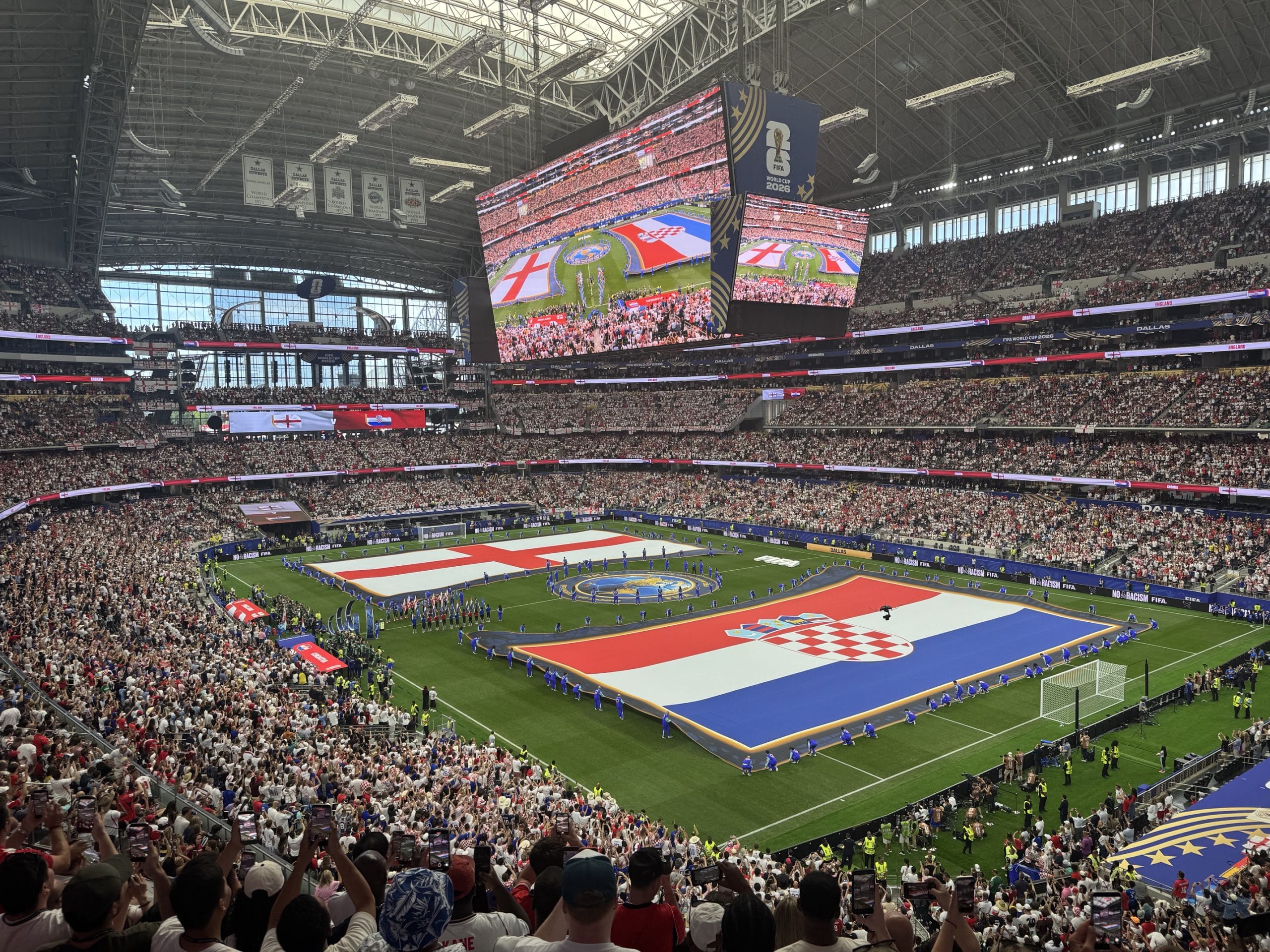 A World Cup does something league football cannot always do: it makes a player visible to the entire world at the same time.
A winger who beats two defenders in a Premier League match may impress scouts. A winger who does it in a World Cup knockout game becomes a global story.
A midfielder who controls games for his club may be respected. A midfielder who controls a World Cup semi-final becomes a commercial asset.
A centre-back who dominates in the Premier League may already be valuable. A centre-back who leads France, England, Spain or Argentina deep into the World Cup becomes a player clubs can sell to sponsors, fans and investors.
That is why Premier League stars are being priced differently. Clubs are not only paying for ability. They are paying for global recognition.
This is especially powerful for players still in their early or mid-20s. Haaland is 25, Saka is 24, Caicedo is 24, Palmer is 24, Wirtz is 23, Saliba is 25 and Szoboszlai is 25, according to Transfermarkt’s current Premier League valuation table.
That age profile matters. These players are not just expensive because they are good. They are expensive because clubs believe they can still improve, generate commercial value and retain resale power.
The Market Has Already Been Rewritten
The Premier League’s £100 million era did not begin with the World Cup, but the tournament has accelerated it.
Sky Sports reported that Premier League clubs spent a record £3.19 billion on new signings in the 2025 summer window, beating the previous record of £2.46 billion set in 2023.
That same window saw Liverpool break records, including a British-record £125 million move for Alexander Isak and a massive total summer spend of £446.5 million.
Once deals like that happen, every selling club adjusts its expectations.
If Isak is worth £125 million, why should another elite striker leave for £70 million?
If Wirtz crosses the £100 million conversation, why should a young creator with World Cup exposure be cheaper?
If Premier League clubs can spend more than £3 billion in one summer, why would any seller give them a discount?
That is how inflation spreads. One record transfer becomes the reference point for the next negotiation.
The 2026 Window Is Already Showing the Pattern
The current summer window is proving that £100 million is not just a historical number — it is still active in the market.
Reuters reported on July 6 that Tottenham signed Sandro Tonali from Newcastle in a deal worth up to £100 million, with an initial fee of £92.5 million. The same report said the deal became Tottenham’s club record and the second-largest fee Newcastle have received after Isak’s £125 million move to Liverpool.
That deal is important because Tonali is not being sold as a once-in-a-generation global icon. He is an elite midfielder at a Premier League club with proven quality, strong age profile and major-club value.
That is exactly the point.
The £100 million zone is no longer limited to Ballon d’Or-level attackers. It now includes midfielders, defenders and tactical pieces who can transform a team — especially if the buying club is desperate and the selling club has no need to sell.
Clubs Are Buying Before Prices Explode Further
The World Cup creates one major fear for clubs: waiting too long.
If a player performs well before the final on July 19, his price can rise instantly. If he scores in a knockout match, becomes a national hero or trends globally, his agent gains leverage. If three clubs suddenly join the race, the selling club gains control.
This is why Premier League clubs are trying to move quickly.
The official Premier League website has already identified key areas every club needs to strengthen in the 2026 summer window. Arsenal need a direct left-winger, Aston Villa need a creative No. 10, and similar squad gaps exist across the league.
That means clubs are not shopping casually. They are under pressure.
They know the World Cup can make every target more expensive. They also know rivals are watching the same players. In this environment, hesitation can cost millions.
Financial Rules Make the Panic More Complex
 The irony is that Premier League clubs are richer than everyone else, but they are also under more financial pressure than ever.
Deloitte reported that Premier League clubs’ wage costs reached a record £4.4 billion in 2024/25, while aggregate pre-tax losses worsened sharply to £948 million from £135 million the previous season.
That makes recruitment more difficult. Clubs cannot just spend freely without considering wages, amortisation, sales and future squad cost limits.
The Premier League’s new Squad Cost Ratio system from 2026/27 limits on-pitch spending to 85% of football-related revenue and net profit or loss from player sales.
So the £100 million player is not just a transfer decision. He is a financial structure.
A club must ask: can we afford the fee, wages, bonuses, agent cost and long-term squad-cost impact? Can we sell players to create space? Can this player produce commercial value as well as football value?
That is why World Cup hype can be dangerous. A club may love a player’s tournament, but the numbers still have to work.
Why English Players Become Even More Expensive
The World Cup effect is even stronger for English players.
England reaching the final stages of the tournament gives Premier League-based English stars enormous visibility. The Guardian reported that Jude Bellingham’s goals helped England reach a semi-final against Argentina after a tense 2-1 quarter-final win over Norway.
For English clubs, domestic stars are valuable for more than performance. They bring homegrown status, marketing power, fan connection and long-term brand identity.
That is why players like Saka, Rice, Palmer and other England-connected stars carry a premium. Their value is not only tactical. It is cultural and commercial.
When an English player performs at a World Cup, his price does not just rise because of football. It rises because he becomes part of the national story.
The Striker and Midfielder Premium Is Back
The modern market is also being driven by scarcity.
Elite strikers are rare. Complete midfielders are rare. Left-footed centre-backs, ball-playing defenders, press-resistant No. 6s and explosive wide players are rare.
That scarcity is what pushes valuations toward £100 million.
If five clubs need the same profile and only three players in Europe can truly provide it, the price rises automatically. Add World Cup exposure, and the auction becomes even more intense.
This explains why the top of the Premier League market is no longer dominated by only traditional goal scorers. Haaland is the obvious €200 million superstar, but Rice, Caicedo, Palmer, Saliba, Wirtz and Szoboszlai show how midfielders, creators and defenders are now part of the same financial conversation.
The modern £100 million player is not always the player who sells the most shirts. Sometimes he is the player who solves the hardest tactical problem.
But the World Cup Can Also Create Illusions
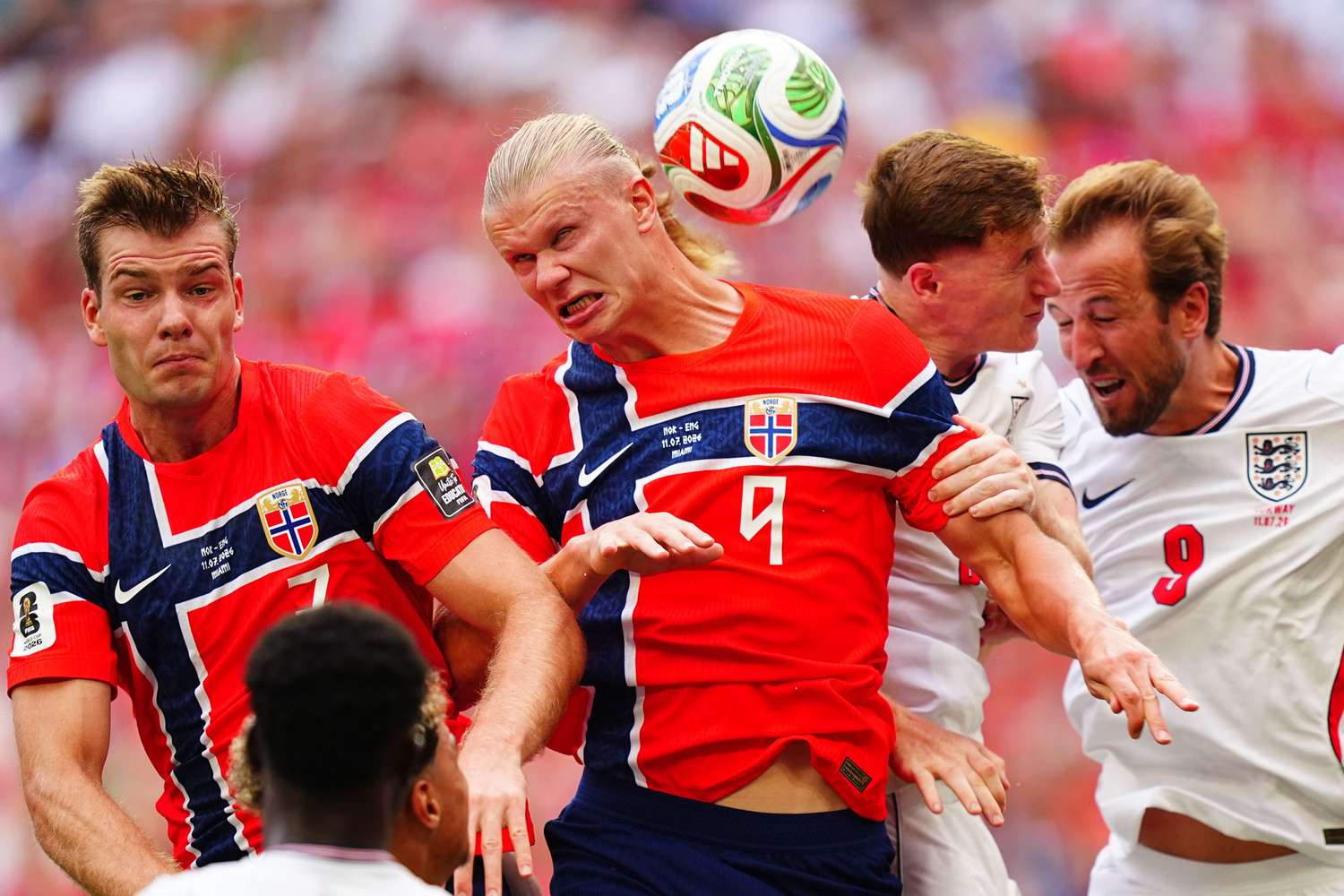 There is one major warning: not every World Cup star is worth £100 million.
Tournament football is emotional. It is short. It creates heroes quickly and exposes players dramatically. A player can have three brilliant weeks and still struggle in a 38-game Premier League season.
This is where smart clubs must separate signal from noise.
A great World Cup should confirm a scouting process, not replace it. Clubs that already knew the player before the tournament are safer. Clubs that discover him only after one viral performance are more likely to overpay.
The World Cup creates value. But it also creates hype.
And hype is expensive.
Final Verdict
The World Cup effect is real, but it does not work alone.
Premier League stars are suddenly being pushed toward £100 million because several forces are moving together: the expanded 48-team World Cup, global exposure, English football’s financial dominance, record transfer spending, scarce elite talent, long contracts, commercial value and fear of missing out.
The data tells the story. The Premier League is worth €12.63 billion in squad market value. Its clubs generated £6.8 billion in revenue in 2024/25. Commercial revenue reached £2.4 billion. Transfer spending has already crossed record levels in recent windows. And multiple Premier League players are now publicly valued around or above €100 million.
This is why £100 million no longer feels like the ceiling.
In the Premier League, it has become the price of youth, scarcity, global exposure and control.
The World Cup did not invent football inflation.
It simply turned the spotlight on — and made every club pay for what the world can now see.