Mbappé Vinícius partnership is quickly becoming one of the most fascinating attacking stories in European football. Real Madrid now have two of the most explosive forwards of their generation operating in the same attack, and their early chemistry is beginning to raise a much bigger question: could Mbappé and Vinícius become the next legendary attacking partnership at the Santiago Bernabéu?
Real Madrid’s ambitions have never been limited to assembling individual superstars. The club’s greatest eras were built around combinations that became bigger than the players themselves. Cristiano Ronaldo and Karim Benzema, Raúl and Fernando Morientes, and other iconic attacking partnerships became part of the club’s identity because their understanding translated individual quality into collective dominance.
Now, Madrid have another potentially historic combination.
Kylian Mbappé brings elite finishing, devastating acceleration and an extraordinary ability to attack space. Vinícius Júnior brings explosive dribbling, unpredictability and the ability to destabilise defensive structures from wide areas. The challenge is obvious: both can be at their best from similar zones, particularly the left side.
Yet that apparent problem may ultimately become their greatest tactical advantage.
The Mbappé Vinícius partnership is no longer simply a theoretical idea. Recent performances have already shown signs that the two forwards can complement rather than compete with each other. The question now is whether those early signs can develop into a relationship capable of defining Real Madrid’s next generation.
Mbappé Vinícius Partnership Is Already Changing Real Madrid’s Attack
 The problem with judging Mbappé and Vinícius individually is that both players are already established superstars.
Mbappé does not need an introduction. In the 2025/26 season, he scored 42 goals in 44 matches for Real Madrid, finished as LaLiga’s top scorer with 25 goals and also led the Champions League scoring charts with 15.
Vinícius, meanwhile, remains one of the world’s most dangerous attacking players. Across all competitions in 2025/26, Real Madrid’s official statistics list him with 22 goals and nine assists in 53 appearances.
So the question facing Madrid is not whether either player is good enough.
It is whether two players with enormous individual influence can make one another better.
That is where legendary partnerships are created.
Individual brilliance wins matches.
Complementary brilliance can define eras.
The First Sign Is Already There — They Are Starting to Find Each Other
 The most encouraging evidence arrived against Real Sociedad.
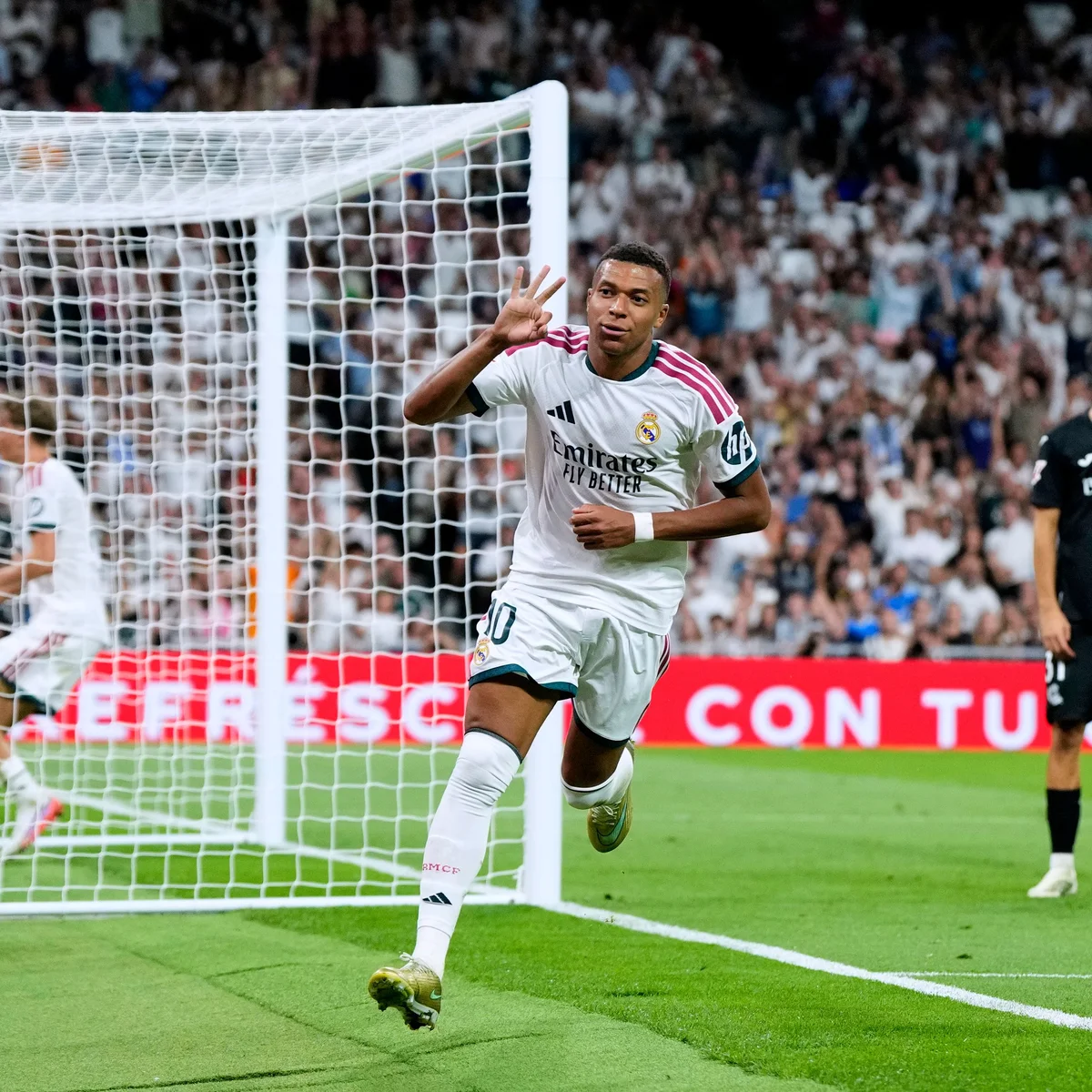
Mbappé scored in the 40th minute, restored Madrid’s lead in the 60th, Vinícius scored in the 68th and Mbappé completed his hat-trick in the 80th minute. Crucially, that fourth goal came from a through ball from Vinícius to Mbappé.
That final sequence tells us more than the scoreline.
Vinícius was not simply looking for his own shot. He recognised Mbappé’s movement and released the pass into the space the Frenchman wanted.
That matters because the greatest attacking partnerships are rarely built on equal numbers of goals or assists.
They are built on shared understanding.
One player starts a run before the other has even received the ball.
One recognises when to stay wide.
The other attacks the central channel.
One attracts two defenders.
The other attacks the space that opens behind them.
At their best, they stop behaving like two forwards and start behaving like one attacking mechanism.
That is what Madrid need from Mbappé and Vinícius.
Why Their Skill Sets Make the Partnership So Dangerous
 On paper, Mbappé and Vinícius could appear too similar.
Both are explosive.
Both can attack open space.
Both are comfortable starting from the left.
Both can carry the ball at high speed.
Both can destroy a defender in transition.
That overlap creates a tactical problem.
But it can also create an extraordinary advantage.
Vinícius Creates the Disorder
Vinícius’ greatest value is not simply his goals.
It is the chaos he creates.
When he receives the ball wide, defenders often have to retreat because they cannot afford to allow him a clean acceleration into the box. That can force the defensive line backwards and distort the opponent’s shape.
Once that happens, passing lanes begin to appear elsewhere.
That is precisely where Mbappé can become devastating.
Mbappé Attacks the Space That Vinícius Opens
 Mbappé is at his most dangerous when he can attack space quickly rather than repeatedly operating against a perfectly settled defence.
Vinícius can help manufacture those conditions.
The Brazilian’s movement towards a defender can draw attention to one side of the pitch, while Mbappé attacks the central or opposite channel.
The Real Sociedad match provided an early example of that interaction.
Vinícius eventually supplied Mbappé for the Frenchman’s third goal of the night, turning what could have been another individual attacking action into a coordinated one.
That is the evolution Madrid supporters should be watching.
Not simply “How many goals did Mbappé score?”
But:
“How often did Vinícius’ movement create Mbappé’s opportunity?”
And the reverse.
The Partnership Has a Structural Problem — Both Like the Left
Here comes the biggest obstacle.
Neither player naturally wants to become a conventional right winger.
Both have historically been devastating from the left.
That means Real Madrid cannot simply place them on opposite wings and expect everything to work automatically.
The tactical solution is fluidity.
Rather than permanently assigning them fixed zones, Madrid can allow them to exchange positions depending on the phase of the attack.
Vinícius can begin wide.
Mbappé can begin centrally.
Then Mbappé can drift towards the left channel while Vinícius attacks the inside lane.
Or Vinícius can remain wide and isolate his full-back while Mbappé occupies the centre-backs.
The objective is not to decide which player “owns” the left.
It is to make the opposition uncertain about who will occupy it next.
That is where José Mourinho’s tactical management becomes fascinating.
The current Real Madrid side started against Real Sociedad in a 4-2-3-1, with Vinícius starting on the left and Mbappé through the middle.
That basic structure gives Madrid a starting point.
But the real danger can emerge when the shape becomes fluid in possession.
Jude Bellingham Could Be the Missing Piece
 There is another reason to believe this partnership could become special:
Jude Bellingham.
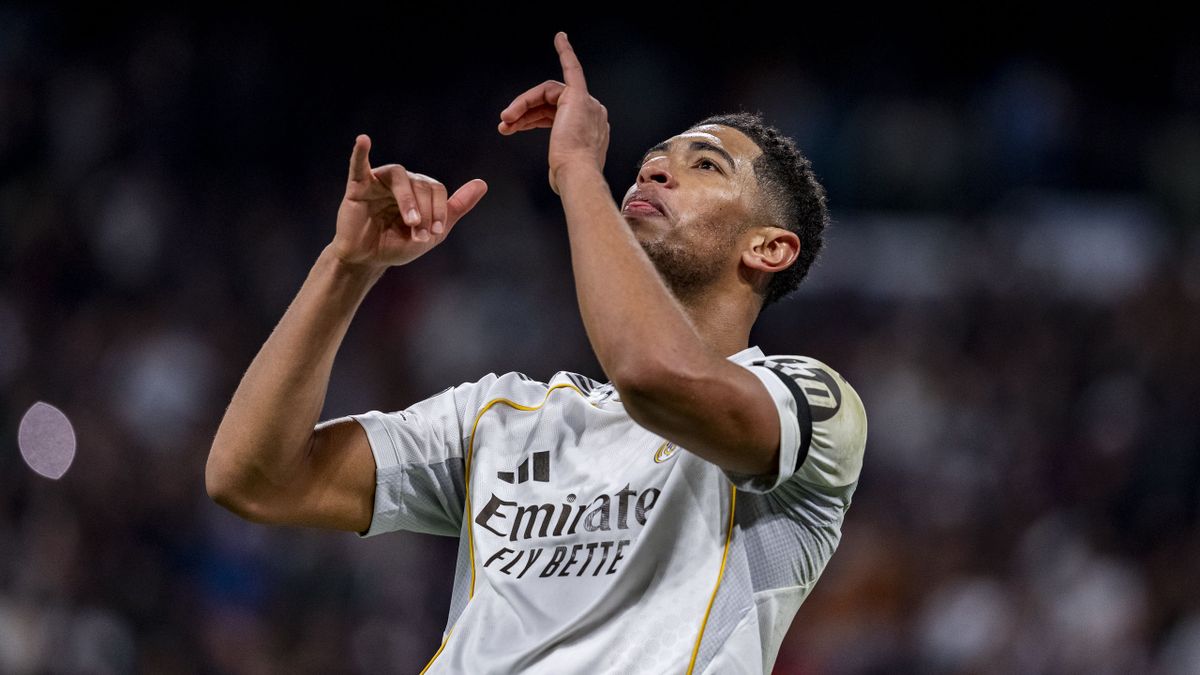
Against Real Sociedad, Bellingham assisted Mbappé’s second goal and also provided the assistance for Vinícius’ goal, meaning the English midfielder was directly involved in the two goals that separated Madrid from their opponents after halftime.
This is strategically important.
A two-forward partnership becomes considerably more difficult to defend when a third elite player can attack the spaces around it.
Bellingham can operate between midfield and attack, carry the ball, arrive late and draw midfielders towards him.
That creates a three-way problem:
Follow Vinícius and leave Mbappé.
Follow Mbappé and leave Vinícius.
Follow both and leave Bellingham.
That is the kind of attacking triangle that can become extremely difficult to control over 90 minutes.
The Numbers Suggest Both Players Can Carry Elite Production
There is a temptation to think the partnership needs both players to score 40 goals.
It does not.
Madrid already demonstrated that Mbappé can operate as the primary scorer.
His 42-goal 2025/26 campaign proves that.
Vinícius, meanwhile, produced 22 goals and 10 assists in all competitions according to FBref’s 2025/26 data, giving him 32 goal contributions.
The more interesting possibility is therefore redistribution rather than duplication.
Mbappé could remain the primary finisher.
Vinícius could increase his creative output.
Or the opposite could happen depending on the opponent.
That flexibility is more valuable than simply having two forwards who score frequently.
But One Brilliant Match Does Not Make a Legendary Partnership
This is where The Football Xtra has to separate analysis from hype.
Mbappé’s hat-trick against Real Sociedad was spectacular.
Vinícius’ goal and assist were significant.
But two games into the league season, the sample is still tiny.
Real Madrid’s first two league results are victories — 2-1 at Espanyol and 4-1 against Real Sociedad — but a partnership must survive much more than favourable early-season conditions.
It must survive:
- Champions League knockout football
- Atlético Madrid’s defensive intensity
- Barcelona’s high-level possession
- low blocks
- injuries
- tactical adjustments
- pressure at the Bernabéu
- matches where one player is having a poor game
- moments when both players need to sacrifice individual numbers for the team
That is where legends are separated from highlights.
History Shows Real Madrid Partnerships Are Built on More Than Numbers
 Real Madrid’s greatest partnerships were not memorable simply because both players scored.
They became historic because supporters could recognise the relationship immediately.
Benzema understood where Ronaldo would appear.
Ronaldo understood when Benzema would vacate space.
The same principle existed in other great Madrid attacks.
The partnership becomes iconic when a fan can watch an attack develop and think:
“They know exactly what the other one is going to do.”
Mbappé and Vinícius are not there yet.
But the first signs are becoming visible.
The Next Test Is Bigger Than Málaga
Real Madrid’s next league fixture is against Málaga at the Bernabéu on 30 August, part of a demanding opening stretch in which the club plays three league matches between 22 and 30 August.
The Málaga match itself will not decide whether Mbappé and Vinícius become legendary.
The bigger test is what happens over the next six months.
Does their passing frequency increase?
Does Mbappé increasingly find Vinícius in the final third?
Does Vinícius become more comfortable assisting Mbappé rather than always finishing himself?
Can they maintain their attacking relationship against elite Champions League opposition?
Those are the numbers and behaviours worth tracking.
There Is Also a Generational Question
Perhaps the most fascinating part of this story is that Real Madrid are not simply creating another attacking partnership.
They may be attempting to create their next identity.
The club has already undergone major changes around them.
The 2026/27 side includes players such as Trent Alexander-Arnold, Ibrahima Konaté, Dean Huijsen, Denzel Dumfries, Bernardo Silva, Arda Güler and Bellingham alongside Mbappé and Vinícius. Real Madrid’s official line-up against Real Sociedad showed exactly how dramatically the squad’s composition has evolved.
That makes Mbappé and Vinícius especially important.
They are not simply two forwards inside a finished team.
They could become the attacking faces of a new team.
That distinction matters.
Because when historians eventually discuss the Real Madrid side of the late 2020s, they may not remember every tactical detail.
They will remember the players who symbolised the era.
What Would Make Mbappé–Vinícius Truly Legendary?
There are five conditions.
First: sustained elite production.
One season is not enough. The partnership needs years of influence.
Second: trophies.
At Real Madrid, individual brilliance is ultimately measured against Champions League nights and major silverware.
Third: tactical sacrifice.
Both must accept that sometimes the partnership matters more than personal numbers.
Fourth: big-game chemistry.
The real test comes when the opposition knows exactly what Madrid want to do and still cannot stop it.
Fifth: defining moments.
Every legendary Madrid partnership eventually produces images remembered long after the statistics have faded.
A Champions League semi-final goal.
A decisive final combination.
A comeback at the Bernabéu.
A season when both players become indispensable.
That is how reputations are built.
CONCLUSION: Madrid May Be Watching the Beginning of Something Historic
The Mbappé Vinícius partnership is still in its early stages, but the foundations are becoming increasingly difficult to ignore. Mbappé has the scoring profile to become Madrid’s primary attacking reference, while Vinícius possesses the creativity and individual brilliance to make space for himself and for those around him.
The difference between a good partnership and a legendary one will ultimately be decided by consistency, trophies, Champions League performances and the biggest moments.
For now, Real Madrid do not have a new legend yet.
They have something more exciting:
the beginning of one.
The real question is whether these moments become a pattern.
Then whether the pattern becomes a partnership.
Then whether the partnership becomes an era.
For Real Madrid, that is the dream.
For European football, it could become one of the defining stories of the next generation.
The numbers have started. Now comes the legacy.
What do you think: can Mbappé and Vinícius eventually become Real Madrid’s next truly legendary attacking partnership?