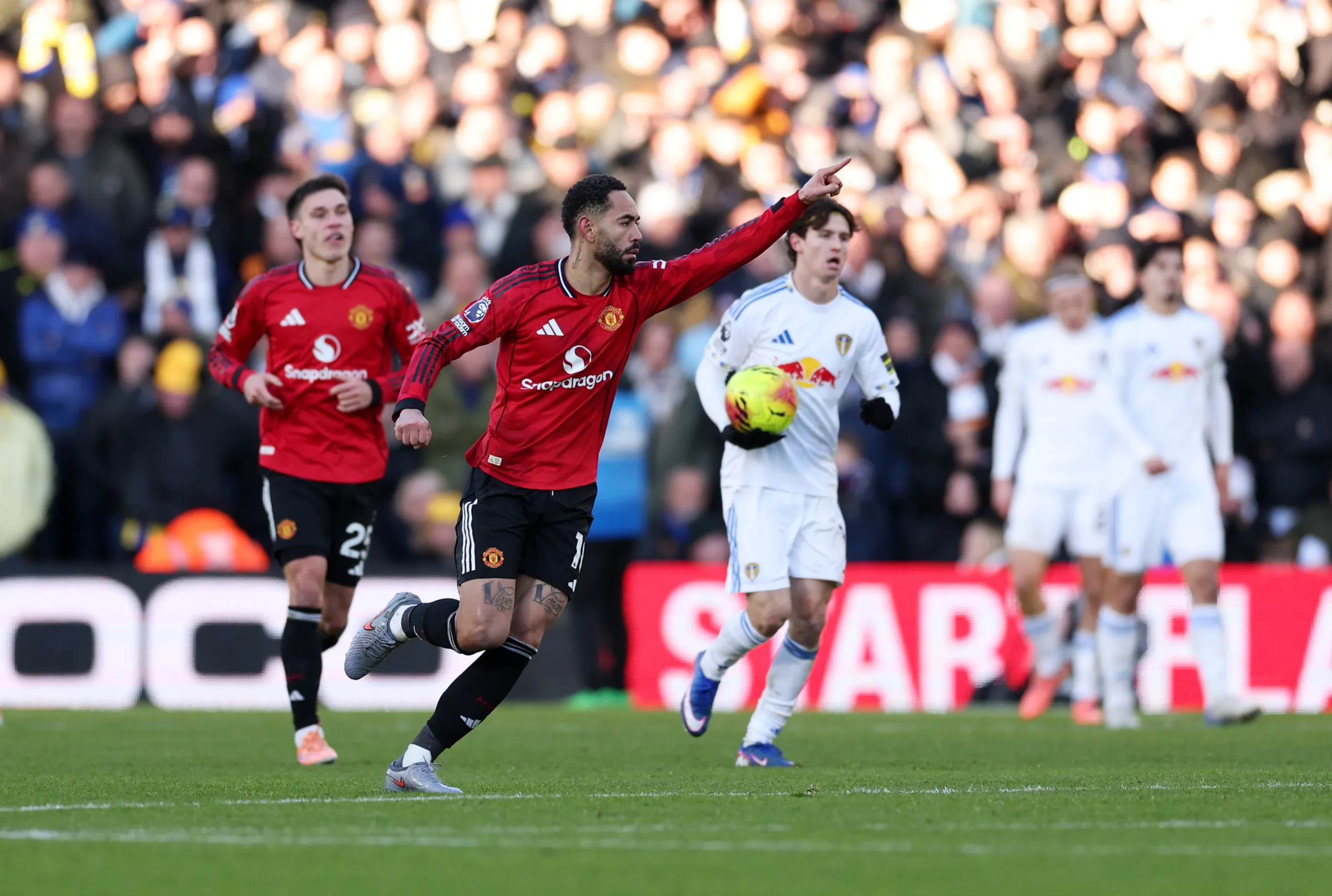
Manchester United 1-1 Leeds was another frustrating result for a club whose ambitions remain far greater than its performances. Bryan Mbeumo gave Manchester United the lead at Elland Road, but Dominic Calvert-Lewin’s second-half equaliser left Michael Carrick with one point when his team desperately needed three.
The draw on 18 October 2026 extended a difficult spell for United. After seven Premier League matches, they had won just once, collected seven points and fallen to 13th in the table. For a side that finished third last season, the decline has become difficult to explain away as a temporary dip in form.
Yet the question facing United is bigger than whether Carrick deserves more time. Why does the club repeatedly find itself rebuilding, changing tactical approaches and questioning its managers without establishing consistent progress?
The performance at Elland Road provided evidence for both sides of that argument. United showed greater structure in the first half, found a productive attacking combination and defended with commitment. But they surrendered their advantage, struggled to impose themselves after the interval and again lacked the quality needed to turn a competitive performance into a victory.
Carrick must take responsibility for those shortcomings. However, recruitment, squad balance, injury problems and decisions made above the coaching staff also deserve scrutiny. Manchester United’s crisis cannot be understood by examining the manager in isolation.
Manchester United 1-1 Leeds: What the Draw Revealed
 United began the match with greater control than they had displayed in some recent performances. Their midfield shape made it more difficult for Leeds to attack through central spaces, while the visitors found opportunities to progress the ball down the right.
The breakthrough arrived in the 35th minute. Youri Tielemans and Amad Diallo helped create the attacking situation, before Bryan Mbeumo finished from close range after a delivery into the penalty area.
For Carrick, the goal provided evidence that his team could create an effective attacking move through coordination rather than relying entirely on an individual moment of brilliance.
But the lead did not last.
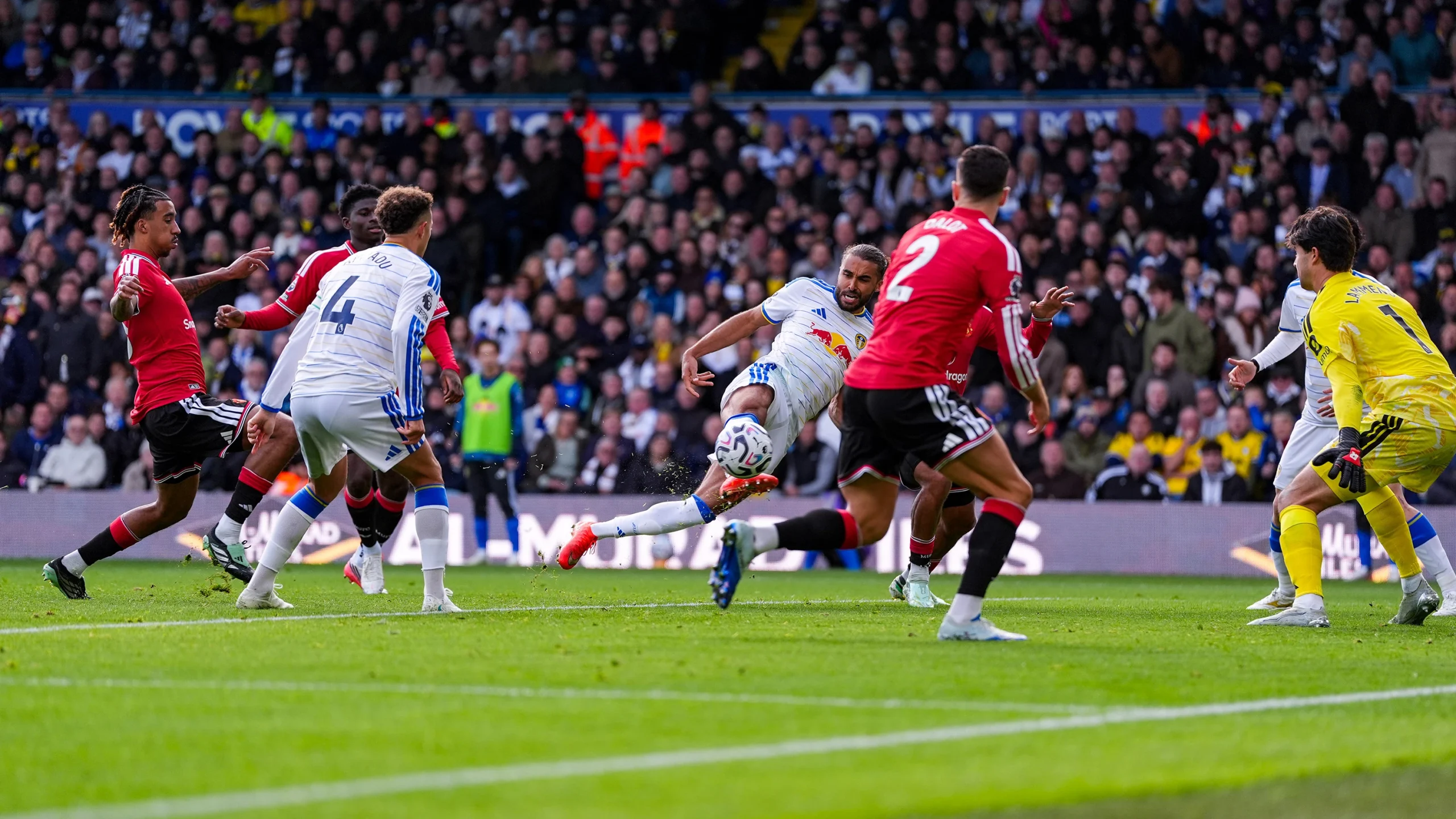
Leeds returned from half-time with greater urgency, pushed forward and began finding space in wide areas. Six minutes into the second half, they won a corner that created the equaliser. Anton Stach delivered the ball, Tarik Muharemović flicked it on, and Calvert-Lewin controlled before finishing past Senne Lammens.
Leeds’ official [match report](https://www.leedsunited.com/en/news/leeds-united-draw-1-1-with-manchester-united-at-elland-road) records both goals and describes how the home side increased its pressure after the interval.
The equaliser changed the mood of the contest. Leeds continued to threaten, while United struggled to sustain the attacking rhythm that had helped them take the lead. There were opportunities for both teams late in the match, but neither found a winner.
For Leeds, the draw represented another competitive performance in a promising start to the campaign. For United, it was another reminder that controlling parts of a match is not the same as controlling its outcome.
The result in context
The league position makes the disappointment more significant. Reuters reported that United had one win from seven Premier League matches and were 13th, in sharp contrast with their third-place finish last season.
That is not proof that Carrick alone is responsible. It is, however, evidence that the current approach has not produced the consistency expected from the squad.
United’s immediate problem is practical: they need to start turning performances into wins. A better first half, improved discipline or a respectable away draw cannot indefinitely compensate for dropped points.
The deeper question is whether those improvements are signs of a sustainable recovery or merely small steps within a much larger problem.
Michael Carrick’s Tactics: Progress Without Control
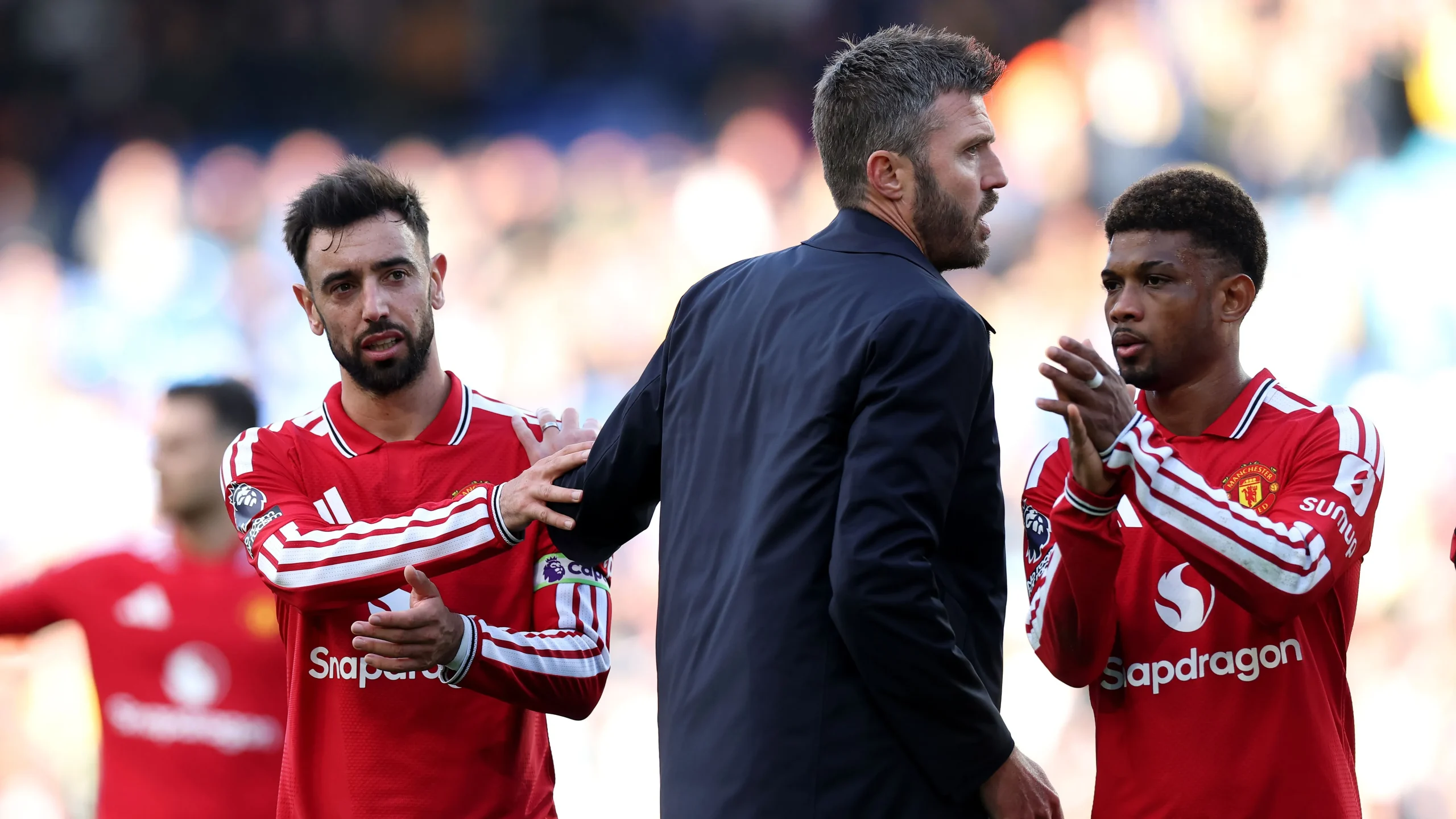 Carrick has reason to take some encouragement from the first half at Elland Road. United looked more organised, protected the central areas better and created the opening goal through a coordinated move.
The Times’ [match analysis](https://www.thetimes.com/sport/football/article/leeds-man-united-premier-league-score-result-table-n5j2d76q6) noted that the use of Carlos Baleba, Andrey Santos and Tielemans gave United a more substantial midfield presence than in the previous match against Tottenham. Bruno Fernandes operated from a wider attacking position in a fluid system.
The tactical adjustment offered a logical response to a problem that had become increasingly visible: opponents were finding too much space through the middle.
A more compact midfield
When a team struggles defensively, the instinctive response is often to look at the back four. But the midfield can determine whether defenders face organised attacks or repeated situations in which opponents are allowed to run directly at them.
A compact midfield can close passing lanes, compete for second balls and make it harder for opponents to receive between the lines.
Against Leeds, United appeared better equipped to contest those central areas in the first half. They also found a route forward through Tielemans, Amad and Mbeumo, whose combination produced the opening goal.
This is precisely the kind of development Carrick needs. The objective is not simply to select different players; it is to establish a structure in which their roles complement one another.
However, the opening half also exposed an important limitation. A team can defend in a compact shape without having sufficient control of possession to dictate the match.
Once Leeds raised their intensity, United found it harder to progress the ball and relieve the pressure. Their attacking threat became less consistent, giving the home side more opportunities to recover possession and attack again.
The second-half response was inadequate
A manager cannot control every mistake, injury or refereeing decision. But the response to changing match conditions is one of the most important tests of coaching.
Leeds returned with greater energy and attacked the wide areas more effectively. United needed to adjust by finding better outlets, keeping possession for longer spells or using their forward players to threaten the space left behind Leeds’ advancing defenders.
Instead, the equaliser arrived early in the second half, and United struggled to regain the authority they had shown before the break.
This is where Carrick deserves scrutiny. Did his team have a clear alternative when the initial plan stopped working? Could substitutions have helped United retain the ball or create more dangerous counterattacks? Were players being asked to perform roles suited to their strengths?
Those questions cannot be answered fully from the scoreline alone. They require analysis of the match footage, positioning and decision-making. But they are fair questions for a coach whose team is struggling to collect points.
The tactical verdict is mixed: Carrick improved United’s structure for a period, but the team still lacked the control and adaptability required to protect its lead.
Carrick Is Not Blameless—but Is He the Main Problem?
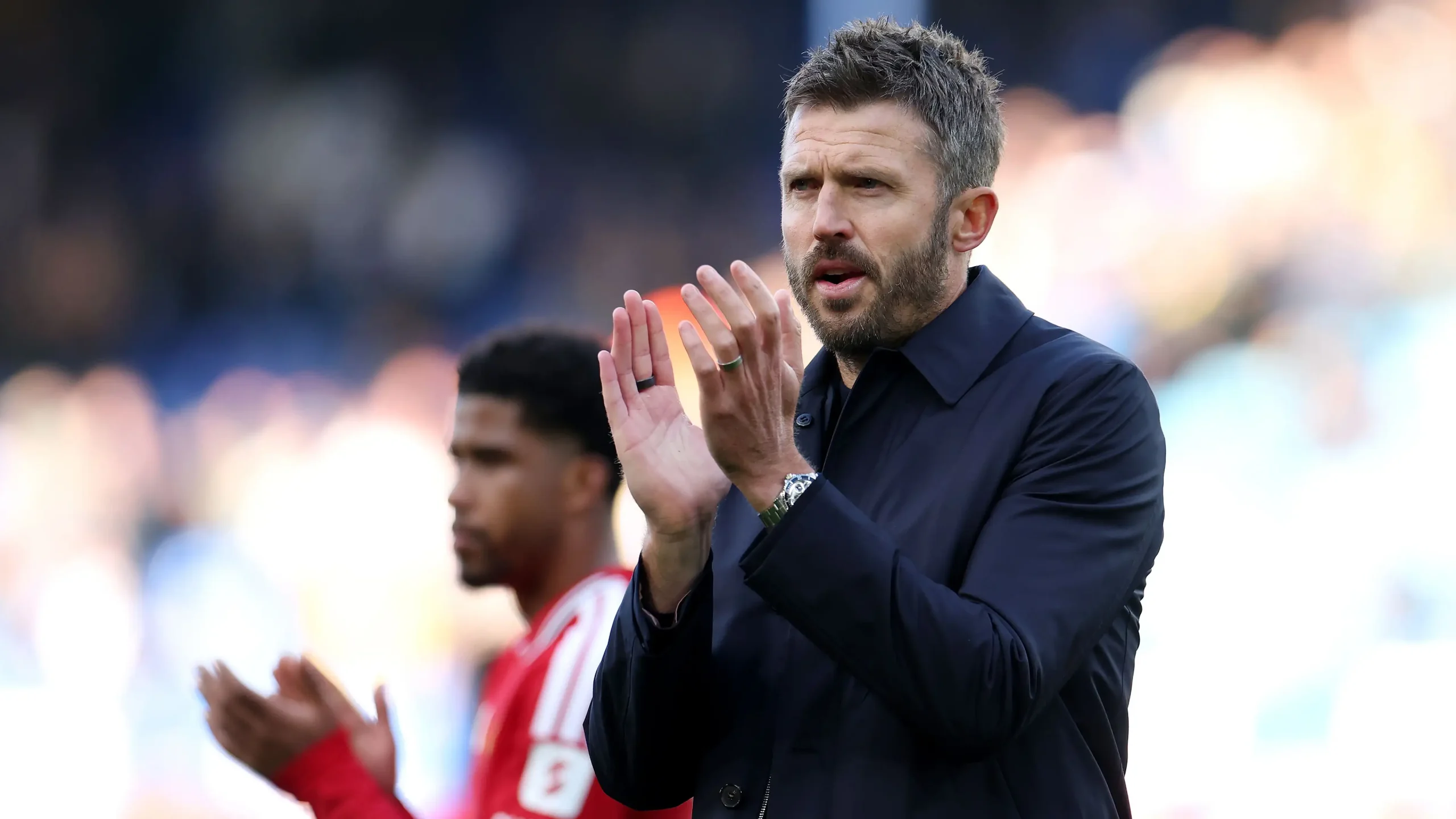 The argument that Carrick must be judged on results is straightforward. Manchester United cannot treat every draw as progress simply because the performance looks marginally better than the previous match.
One victory in seven league games is not good enough for a club expecting to compete near the top of the table. Carrick is responsible for his starting line-up, tactical plan, substitutions, training standards and the way his team responds when an opponent changes approach.
Those responsibilities cannot be transferred to the board whenever a result disappoints.
At the same time, replacing a manager does not automatically resolve the conditions that produced the poor performances.
The Guardian’s [analysis of United’s wider problems](https://www.theguardian.com/football/2026/oct/18/manchester-united-michael-carrick-omar-berrada-leeds-premier-league) argues that the club’s difficulties extend beyond the man in the dugout. Its central criticism concerns the consequences of repeated changes in management and the challenge of building a coherent squad across different recruitment cycles.
That is an argument worth examining rather than accepting without scrutiny.
The problem of competing football philosophies
When recruitment decisions are made across different managerial eras, a squad can accumulate players recruited for different tactical demands.
One coach may prioritise defenders comfortable defending a high line. Another may prefer a deeper defensive block. One recruitment strategy may focus on technical midfielders who can control possession, while another targets players suited to direct transitions.
Each decision may make sense in isolation. Together, however, they can create a squad whose strengths and weaknesses do not fit a single, consistent approach.
The result is a difficult environment for any coach. A manager may have to work around players who do not suit the preferred system, while supporters and executives expect immediate results.
This does not absolve Carrick of responsibility. Coaches must adapt to the players available, simplify their approach where necessary and make the most of the squad they inherit.
But it does explain why repeatedly changing the manager can produce diminishing returns if recruitment priorities and long-term football planning remain unresolved.
Accountability must extend beyond the touchline
Manchester United need a clear answer to a fundamental question: what kind of football is the club trying to build?
That requires agreement on recruitment profiles, tactical identity, player development and how success will be measured across several seasons.
The club’s leadership must also establish who is accountable when those plans fail. If recruitment is inconsistent, the consequences should not fall exclusively on whichever manager happens to be in charge.
A coherent structure does not guarantee success. Transfers can fail, injuries can disrupt plans and tactical approaches can be exposed by stronger opponents.
However, a coherent structure makes it easier to identify mistakes, correct them and maintain a consistent direction.
The available evidence suggests that United must examine these wider issues alongside Carrick’s own coaching decisions. Making the manager the sole explanation would be too simplistic.
Manchester United’s Recruitment Crisis: Lisandro Martínez’s Warning
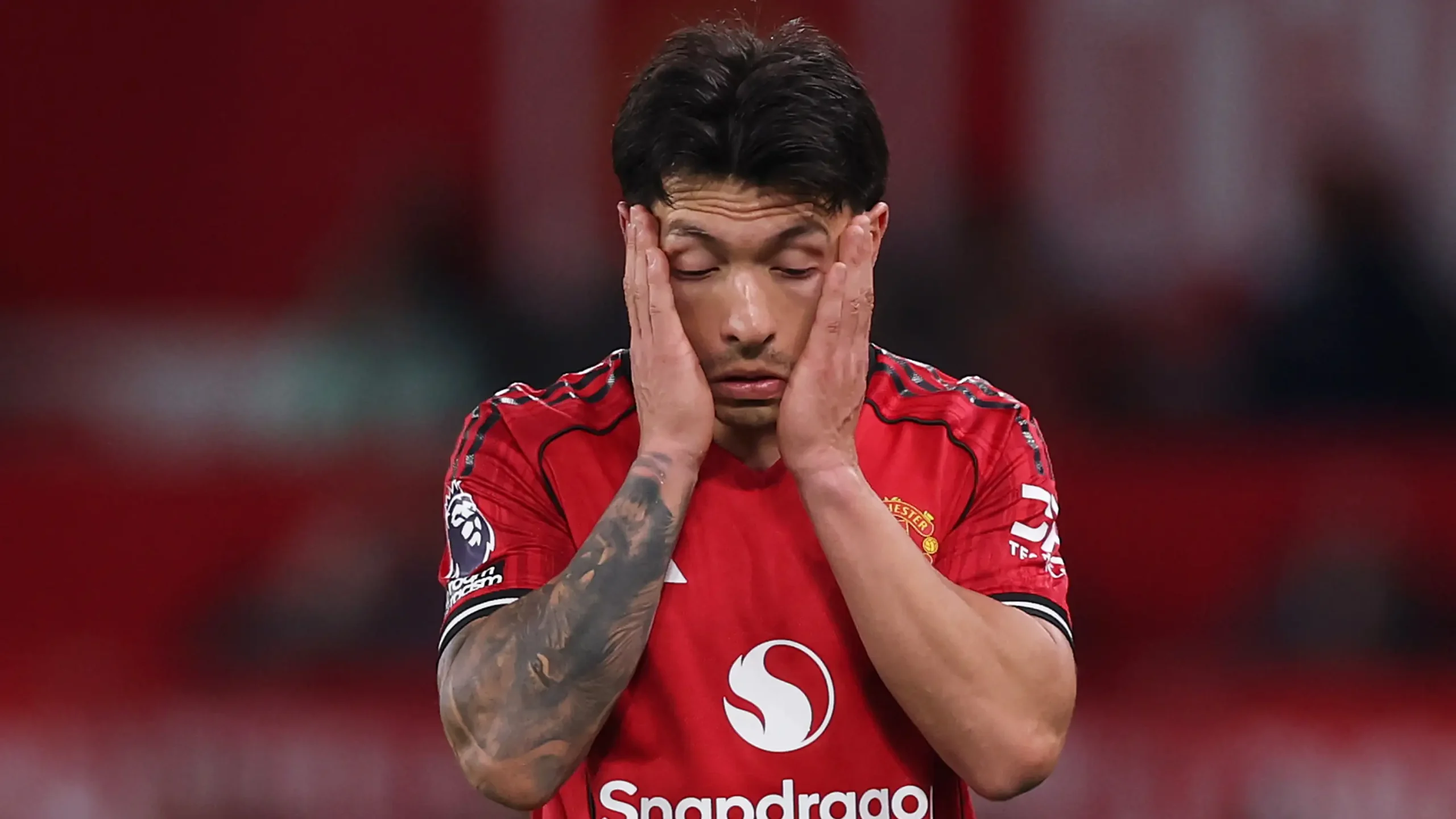 The draw at Leeds came after a week in which Lisandro Martínez publicly questioned the club’s recruitment and football leadership following the Champions League defeat to Atlético Madrid.
Reuters reported that Martínez criticised the club hierarchy over investment and recruitment decisions, bringing internal frustrations into public view. His comments—and the subsequent discussion surrounding them—added another layer to an already difficult period.
The significance is not that a single player’s opinion proves the club’s strategy is wrong. It does not. A public statement can reflect frustration after a disappointing result, and an individual player will not necessarily have a complete picture of financial or recruitment decisions.
SEE ALSO: Manchester United Transfers: Martínez’s Explosive Criticism Raises 3 Questions
The important point is that questions about the squad’s construction have become part of the public debate around United’s performance.
Squad balance matters as much as spending
Recruitment should not be judged only by how much a club spends or how recognisable its signings are. The more important questions concern how new players fit together.
Does the squad have enough midfielders who can receive the ball under pressure? Are there defenders suited to the intended defensive line? Do the forwards offer different attacking qualities, and can the team create chances when its preferred route is blocked?
United’s struggles suggest that these questions deserve serious attention.
The objective should be to develop a consistent recruitment model that supports the club’s tactical direction. If the next manager—or Carrick, should he remain in charge—needs a different profile of player, that should be reflected in a long-term plan rather than another short-term overhaul.
The danger of reacting to every crisis
When results deteriorate, the pressure to make an immediate change becomes intense. That reaction is understandable at a club of United’s stature, where poor performances attract enormous scrutiny.
But an emergency signing, a rushed change of system or another managerial dismissal may offer temporary relief without addressing the underlying weaknesses.
A serious recruitment review should identify the positions that most affect the team’s ability to control games, progress possession and defend transitions. It should then prioritise those needs according to tactical importance, player availability and financial reality.
The right question is not simply whether United need more players. It is whether they are building a team whose parts fit together.
The Martínez Injury and United’s Defensive Fragility
One of the most important details from the Leeds match was Martínez’s half-time withdrawal due to a thigh issue. Noussair Mazraoui came on in his place, requiring another adjustment to the defensive personnel.
United conceded six minutes into the second half, when Leeds scored from a corner. That sequence highlights the importance of defensive organisation, although it would be inaccurate to claim that the substitution alone caused the goal.
Set pieces are particularly demanding because every defender must understand their assignment, track movement and react to the initial delivery as well as any flick-on or second ball.
Leeds’ equaliser involved several elements: Stach delivered the corner, Muharemović redirected it and Calvert-Lewin completed the move. United failed to prevent the ball from reaching the striker in a dangerous position.
That is a collective defensive failure rather than a problem that can be assigned to one player without further evidence.
Why defensive depth affects the entire system
An injury can change much more than the identity of one defender. It can alter who covers the wide channels, how the defensive line communicates and whether the team can maintain the positions required for an effective press.
If a coach repeatedly has to move players away from their preferred roles, the system can become less stable. That instability becomes especially damaging when the team is already struggling to control possession.
United therefore need both reliable medical management and sufficient depth in the positions required by their tactical approach.
Martínez’s condition should be assessed through the club’s subsequent medical updates. His substitution is a confirmed event; the precise severity and expected recovery period should not be guessed.
What Must Carrick Fix Before the Next Match?
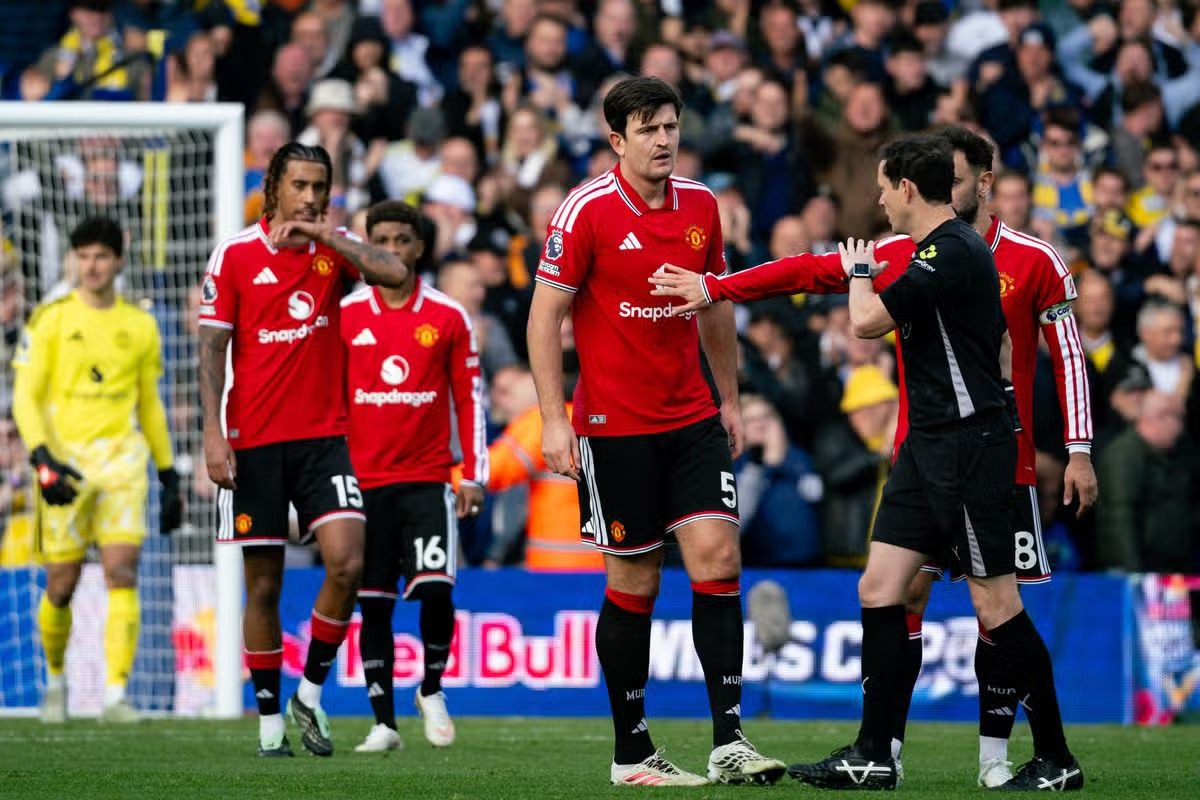 United’s next challenge is a Champions League trip to Como on Wednesday, 21 October, according to Reuters. That fixture arrives with little time for a major tactical overhaul, making clarity and execution especially important.
Carrick must focus on improvements that can produce an immediate effect while continuing to assess the longer-term shape of the squad.
First, protect leads more effectively. United need greater control after scoring, whether through safer possession, better counter-pressing or more disciplined positioning behind the ball.
Second, improve set-piece defending. The equaliser against Leeds came from a corner. That requires a review of assignments, communication and reactions to second balls.
Third, establish a reliable build-up structure. United need clear passing options when opponents press aggressively, otherwise the defence and goalkeeper may be forced into hurried decisions.
Fourth, use the midfield more consistently. The first-half improvement suggests that a denser central structure can help. Carrick must determine how to retain that protection without sacrificing the forward support necessary to create chances.
Fifth, make substitutions that respond to match momentum. When Leeds grew into the game, United needed ways to relieve pressure and threaten the spaces being left behind. The answer may involve personnel changes, positioning or a different method of retaining possession.
These priorities are more useful than demanding a complete tactical revolution after every disappointing result.
Final Verdict: Michael Carrick or Manchester United’s Bigger Crisis?
The 1-1 draw at Leeds leaves Manchester United with uncomfortable questions and no easy answers.
Carrick deserves criticism for the team’s inability to maintain control after taking the lead. His side showed promise in the first half but struggled to respond when Leeds raised their intensity. Seven league matches with only one victory represent a serious problem, regardless of the wider circumstances.
Yet the evidence does not support treating the manager as the only cause.
Recruitment, squad balance, injury disruptions and the absence of a consistently applied footballing identity all influence what a coach can achieve. If Manchester United respond to every difficult spell by changing the manager while leaving those issues unresolved, they risk repeating the same cycle.
The responsible approach is to hold Carrick accountable for what he controls while requiring the club’s leadership to explain how recruitment and long-term planning will support better performances.
His immediate task is to turn improved organisation into victories. United’s broader task is to build a squad and structure capable of sustaining progress beyond one manager or one transfer window.
What do you think? Is Michael Carrick responsible for Manchester United’s poor start, or is he being asked to solve problems created by years of inconsistent planning? Share your opinion in the comments and follow The Football Xtra for more Premier League news, tactical analysis and expert football coverage.