Manchester City Rebuild 2026 is not about replacing one player or one manager — it is about rebuilding the foundation of a football empire that dominated Europe for almost a decade.
For years, Manchester City represented football perfection under Pep Guardiola. Their possession football, tactical flexibility and elite squad depth transformed them into the most feared team in world football.
But every dynasty eventually faces its biggest challenge.
The question now facing the Etihad is not whether City can spend money.
They already can.
The real question is:
Can Manchester City create another winning machine after Guardiola?
With Enzo Maresca taking charge and a new generation of players arriving, City are attempting something extremely difficult in football: replacing success while still competing at the highest level.
Manchester City Rebuild 2026: How The Next Premier League Dynasty Is Being Created
 The End Of An Era And The Beginning Of A New Project
Manchester City’s dominance under Pep Guardiola was built on consistency.
The team had:
- A clear tactical identity.
- Elite technical players.
- Experienced leaders.
- A recruitment system designed for long-term success.
However, football history shows that even the greatest teams eventually require evolution.
Barcelona after Guardiola.
Manchester United after Ferguson.
Real Madrid after their Galáctico eras.
Every dominant team reaches a moment where rebuilding becomes unavoidable.
Manchester City have reached that moment.
The difference is that City are not rebuilding because they failed.
They are rebuilding because they want to avoid decline.
That is the biggest difference between City’s project and many previous football transitions.
Why Manchester City Needed A New Beginning
The Guardiola era created one of the strongest teams in football history.
However, several structural changes forced City into evolution.
1. The Midfield Revolution
The biggest challenge has been midfield.
Rodri became the tactical heart of Guardiola’s system.
He provided:
- Defensive protection.
- Control of tempo.
- Press resistance.
- Tactical intelligence.
Replacing Rodri was almost impossible with one player.
Instead, City chose a different strategy:
Replace one superstar influence with a new generation of midfield talent.
That explains the major investments in:
- Elliot Anderson.
- Ayyoub Bouaddi.
Ayyoub Bouaddi: The Player Who Represents City’s Future
 The signing of Ayyoub Bouaddi represents the biggest symbol of City’s rebuild.
At only 18 years old, Bouaddi arrived from Lille in a deal reported around £86 million.
But City are not buying him only for today.
They are buying the next decade.
His profile fits modern elite football:
Technical ability:
- Comfortable receiving under pressure.
- Intelligent passing decisions.
- Ability to control midfield spaces.
Tactical intelligence:
Bouaddi has been praised for his understanding of positioning and ability to follow tactical instructions.
Long-term value:
City’s recruitment model has always focused on players who can:
- Improve.
- Adapt.
- Increase in value.
Bouaddi represents exactly that philosophy.
Elliot Anderson: The Immediate Solution
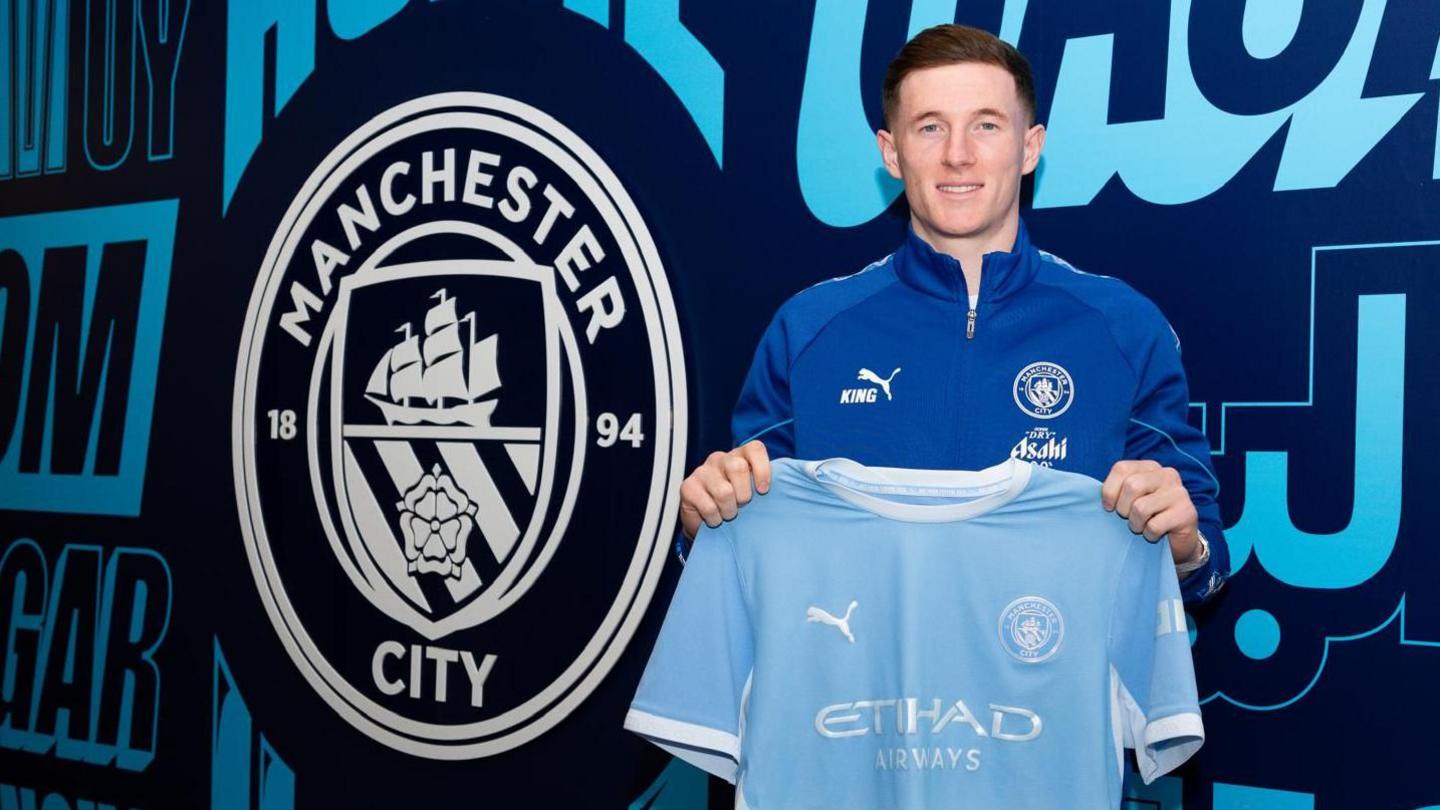 While Bouaddi represents the future, Elliot Anderson represents immediate impact.
City invested heavily to bring him from Nottingham Forest, reportedly in a deal around £116 million.
His role is different:
- Physical presence.
- Premier League experience.
- Defensive intensity.
- Ball progression.
The combination of Anderson and Bouaddi gives City something they lost:
A midfield capable of controlling matches in different ways.
Enzo Maresca’s Biggest Challenge: Following Guardiola
 Replacing Guardiola is arguably the hardest managerial job in football.
Guardiola did not only win trophies.
He created a football language.
City played with:
- Inverted full-backs.
- Positional rotations.
- High pressing.
- Extreme possession control.
Maresca understands this philosophy because he worked inside Guardiola’s coaching structure.
But copying Guardiola is impossible.
The challenge is adaptation.
Maresca must answer:
- What parts of Guardiola’s football remain?
- What parts change?
- How does he create his own identity?
The New Manchester City Philosophy: Evolution Instead Of Revolution
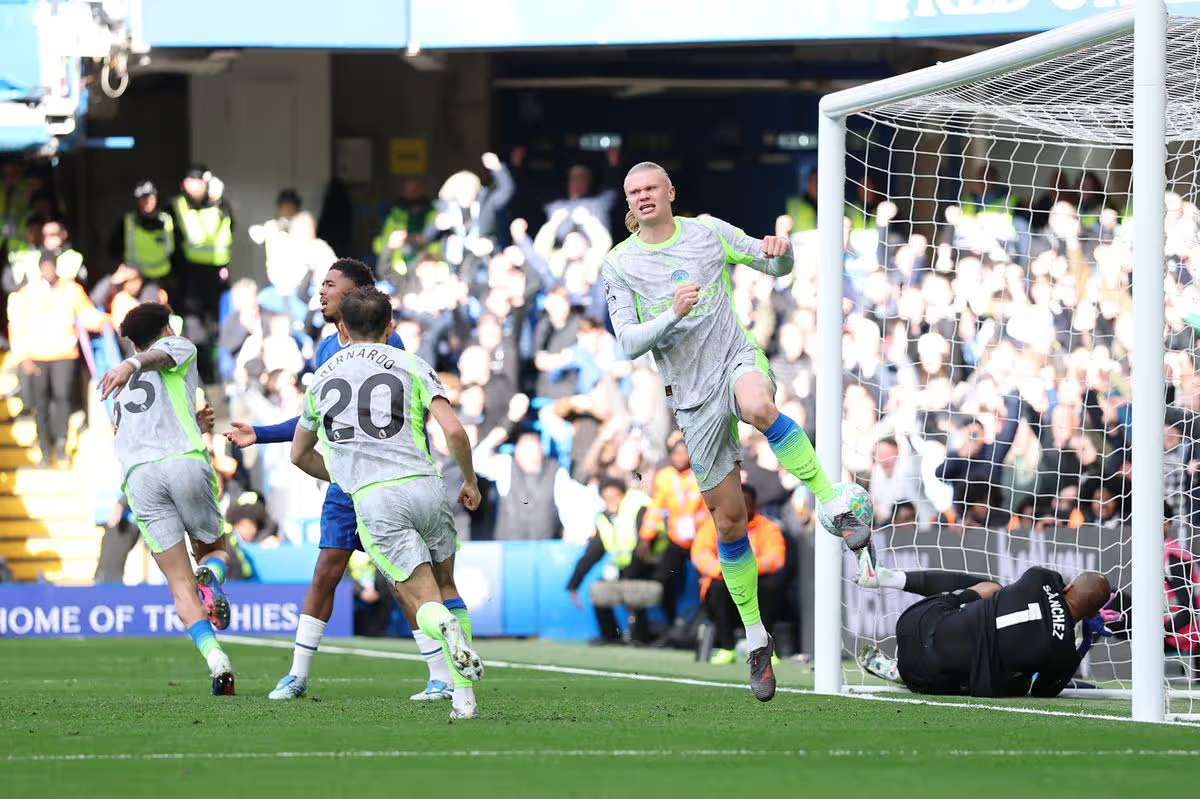 Many clubs rebuild by destroying everything.
City are doing something different.
They are evolving.
The strategy:
Keep:
- Winning mentality.
- Tactical principles.
- Elite standards.
Change: - Player profiles.
- Age structure.
- Squad balance.
This is why City continue investing in younger players.
They are not preparing for next season.
They are preparing for the next five years.
The Financial Intelligence Behind The Rebuild
Manchester City’s rebuild is also a business strategy.
Elite football clubs now operate like companies.
A successful signing must provide:
- Sporting value.
- Commercial value.
- Future resale potential.
Bouaddi is the perfect example.
A young elite talent has the possibility of becoming:
- A world-class player.
- A global brand.
- A valuable football asset.
This is why clubs are increasingly investing heavily in teenagers.
SEE ALSO; Top 10 Smartest Summer Signings of 2026: Ranking the Deals That Could Transform European Football
The Biggest Risk: Can A New Generation Handle City Pressure?
Talent is not the only requirement at Manchester City.
The pressure is enormous.
Every season:
- Premier League title expectation.
- Champions League expectation.
- Trophy expectation.
Young players must adapt quickly.
Bouaddi may have incredible potential, but replacing Rodri’s influence requires more than technical ability.
It requires:
- Leadership.
- Consistency.
- Mental strength.
Manchester City vs History: Can Dynasties Survive Their Leaders?
 Football history provides a warning.
Great managers often leave behind impossible standards.
The challenge is maintaining success without the person who created the system.
Manchester City believe their structure is stronger than one individual.
Their recruitment department.
Their academy.
Their financial power.
Their football philosophy.
These are designed to survive change.
What’s Next For Manchester City?
The rebuild is not finished.
Expect more focus on:
- Midfield balance.
- Defensive depth.
- Developing young stars.
- Creating Maresca’s identity.
The next 12 months will determine whether City have successfully created a second dynasty or whether Guardiola’s era was impossible to replicate.
Conclusion: Manchester City Rebuild 2026 Is About More Than Transfers
Manchester City Rebuild 2026 represents one of the biggest tests in modern football: proving that a club can replace a legendary manager and still remain at the top.
The arrival of Enzo Maresca, Elliot Anderson and Ayyoub Bouaddi shows a club thinking beyond short-term success.
City are not trying to recreate the past.
They are attempting to build the future.
The Guardiola era created history.
Now the question is whether the next generation can create a new chapter.
Can Manchester City build another football dynasty, or will the post-Guardiola era finally bring the Premier League back into complete competition?
Share your thoughts: Is City’s rebuild the smartest project in world football, or the biggest risk of the 2026 season?