Thomas Tuchel has added a fresh layer of frustration to England’s disciplinary headache after saying the national team are still waiting for a clear Jarell Quansah suspension explanation following his upgraded two-game suspension after the red card against Mexico. The issue, first reported by Sky Sports, has sparked questions not just about the defender’s punishment, but about how football’s disciplinary decisions are communicated when a player’s availability is on the line.
The situation is simple on the surface and more complicated underneath. Quansah was sent off against Mexico, and that red card was later followed by a two-match ban. What has irritated Tuchel is not only the sanction itself, but the absence of a clear explanation for why the suspension was extended. For England, the concern is practical. For Tuchel, it is also about transparency. In short, the Jarell Quansah suspension explanation has become a wider issue about process as much as punishment.
What happened to Jarell Quansah?
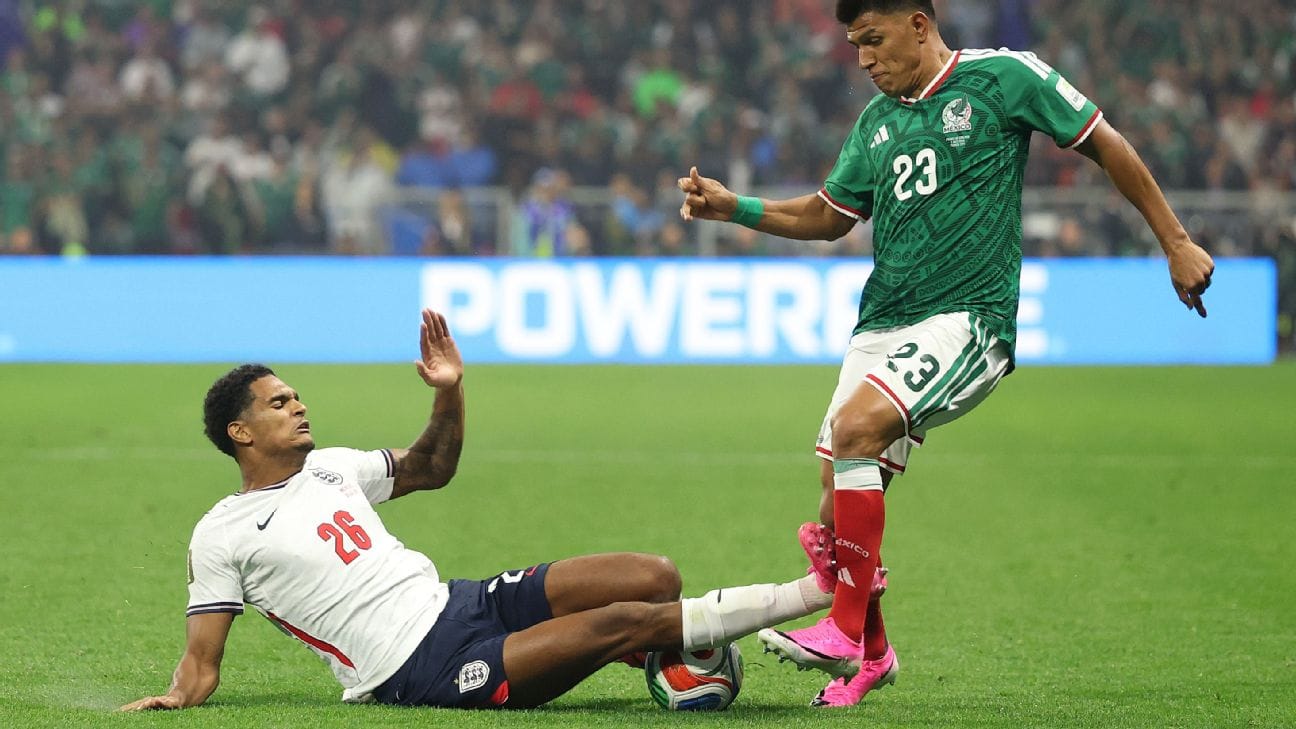 Quansah’s dismissal against Mexico was the starting point for a case that has now become about process as much as punishment. According to the Sky Sports report, the defender was handed a two-game suspension after the red card, but England have not been offered an explanation as to why the ban was upgraded.
That detail matters because disciplinary decisions can affect far more than one player’s individual record. A red card already removes a player from the match in question. A suspension that extends beyond that can influence selection plans, squad balance, defensive organisation and even the confidence with which a coach builds a game plan.
Tuchel’s complaint suggests that England expected some clarity about the reasoning behind the sanction and did not receive it. In elite international football, where windows are short and every squad decision is magnified, that kind of silence becomes a story in itself. The Jarell Quansah suspension explanation is therefore not just about one player, but about how the system communicates with teams.
The fact that the issue concerns an England defender makes it even more relevant. International squads do not have the same weekly rhythm as club teams. There is limited time to adjust, limited time to test alternatives and often no margin for administrative uncertainty. If a player is suddenly unavailable for two matches, the manager needs to know why, and quickly.
Jarell Quansah suspension explanation and Tuchel’s frustration
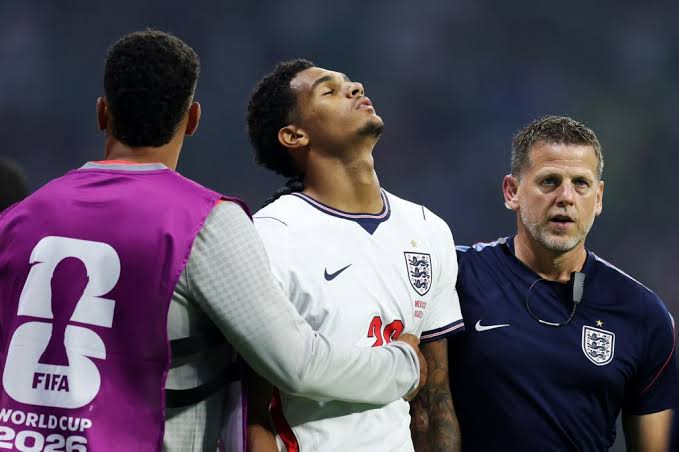 Tuchel’s concern reaches beyond Quansah’s individual case. His comments point to a broader issue in modern football: the gap between disciplinary action and disciplinary explanation.
Managers are used to accepting refereeing calls, suspensions and post-match sanctions. What they are less willing to accept is a process that appears opaque. When a player is banned for more than the immediate consequences of a red card, national teams want to understand the basis for the decision. Was it a standard escalation? Was it based on the nature of the challenge? Was it reviewed by a disciplinary panel? Was there a separate offence? The report does not say, and that is exactly the problem Tuchel appears to be highlighting.
From a football governance perspective, transparency is not a minor detail. It affects trust. Coaches, players and administrators are more likely to accept tough decisions when the framework behind those decisions is understood. Without that framework, a sanction can feel arbitrary even if it is technically correct.
That is particularly relevant in international football, where governing-body rulings can have immediate sporting consequences. England may not be dealing with a club crisis over a long season, but a two-match suspension in a short international cycle can be costly. A single absence can change the way the team presses, builds from the back, defends set pieces or rotates between tournament-style matches.
For readers following the source report directly, Sky Sports’ coverage of Tuchel’s comments can be found here.
The footballing impact on England
 Even without adding any speculation beyond the reported facts, the footballing logic is clear. If Quansah is unavailable for two matches, England must fill a defensive gap and do so without full certainty over the disciplinary reasoning that caused it.
That creates two separate pressures.
First, there is the selection issue. A manager plans around available players, not abstract possibilities. If a defender is suspended, the squad must absorb that loss. The defensive unit may need reshaping, the bench may need rebalancing and the workload of other defenders may increase.
Second, there is the psychological effect. Players generally want to know where the boundaries are. If a red card turns into a two-game ban without explanation, it leaves a cloud over how similar incidents might be treated in future. That is especially important for defenders, who operate on fine margins and often face split-second decisions in one-vs-one situations. The Jarell Quansah suspension explanation matters because clarity can affect confidence as much as it affects selection.
International football is already a game of compressed preparation. Teams train together for only brief periods before competitive matches or camps. Any uncertainty over who is available creates extra complexity. Coaches often spend days preparing solutions for problems that are already difficult enough. When an administrative question remains unresolved, the uncertainty can become part of the match plan.
That is why fans and analysts are paying attention to the Jarell Quansah suspension explanation, not just the ban itself. In a short international cycle, every missing defender matters.
Why the disciplinary process matters
The Quansah case also shines a light on how much modern football depends on the credibility of decision-making systems. Disciplinary rulings are not just punishments. They are signals about standards, intent and risk.
In the current era, football’s governing and disciplinary structures are expected to do more than hand down verdicts. They are expected to explain them clearly. That expectation has grown as the sport has become more scrutinised, more global and more commercially valuable. Coaches, clubs and associations all operate in an environment where every ruling can be dissected within minutes.
When a manager says the team has not been offered an explanation, the issue becomes one of communication rather than just sanction. That is particularly sensitive for a national side like England, where the relationship between the federation, the coaching staff and external administrators can shape the mood around the camp.
The concern is not necessarily that the decision was harsh, but that it was unexplained. In football, those are very different complaints. A harsh ruling can be accepted if the reasoning is transparent. An unexplained ruling tends to breed frustration.
That is exactly why the Jarell Quansah suspension explanation has generated so much attention. It is not only about the outcome; it is about the process that led there.
Governance, trust and transparency
International football depends on confidence in institutions. FIFA and associated disciplinary structures are expected to deliver consistency across different matches, countries and competitions. That is a difficult task because incidents vary, contexts vary and interpretations vary. But the expectation of fairness remains constant.
Tuchel’s position, as reported by Sky Sports, is rooted in that principle. If England have not been told why Quansah’s red card led to a two-game suspension, the problem is not simply that the player is missing games. The problem is that the process appears incomplete from the team’s perspective.
For governing bodies, communication is part of governance. A sanction without sufficient explanation can be perceived as a closed-door judgement rather than an accountable one. Even when the outcome is legitimate, football stakeholders often want the trail of reasoning.
This is where the business side of the sport intersects with the sporting one. Clubs, national associations and broadcasters all depend on clarity in scheduling and player availability. A ban can affect selection, performance, fan expectations and coverage. In high-profile environments, even a routine disciplinary matter can have ripple effects if the reasoning is not communicated.
England’s situation is a reminder that governance is not a back-office issue. It directly shapes what happens on the pitch.
Why the timing is awkward for England
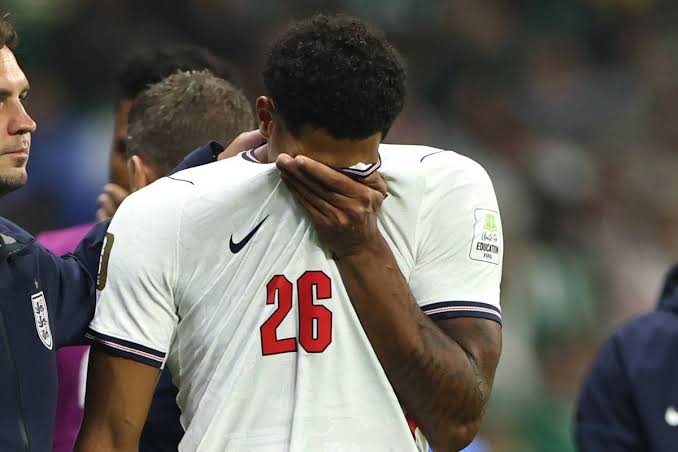 The timing of a suspension matters almost as much as the suspension itself. A two-game ban in international football can overlap with a crucial period when teams are trying to build rhythm, integrate players or maintain momentum. For a player like Quansah, missing two matches is not a trivial inconvenience.
Tuchel’s complaint suggests the England camp wants to know whether the extension of the ban was automatic, exceptional or based on a separate assessment. Without that information, planning becomes less efficient.
For a national side, every camp is precious. Unlike club managers, international coaches cannot drill the same combinations daily over weeks. They have to identify patterns quickly and trust players to carry them into matches. A suspension removes one option from the tactical toolbox and forces the staff to accelerate contingency planning.
That may sound administrative, but in international football the administrative and tactical sides are tightly linked. If a centre-back is unavailable, the team may need a different defensive line, different build-up angles, different set-piece assignments and different cover behind the full-backs. That is not just a personnel issue. It can reshape the team’s entire structure.
The Jarell Quansah suspension explanation matters here because a clear answer would at least let England move forward with certainty, even if they disagree with the decision.
For more context on how off-field decisions can shape England’s bigger-picture planning, read our analysis of England World Cup win bonus payout and the potential bonus bonanza.
The wider red card debate
Red cards in football often trigger debate because they sit at the edge of subjectivity and rule enforcement. A referee sees the challenge in real time. A disciplinary body may review the incident afterward. The final outcome can therefore feel different from the in-match emotion.
When a red card leads to an extended suspension, the scrutiny rises again. Teams want to know whether the escalation is standard practice or something more severe. That is why explanation matters so much. A two-game ban may appear straightforward to some observers and excessive to others. But either way, the reasoning should ideally be clear.
Tuchel’s response suggests that England are not seeking a loophole as much as an understanding. That distinction matters. Football teams can accept punishment. What they resist is uncertainty.
For Quansah himself, the issue is also professional. Disciplinary records become part of a player’s profile. If a sanction is upgraded, it affects the way the episode is remembered. That makes explanation even more important for the player, the coaching staff and the wider audience.
In that sense, the Jarell Quansah suspension explanation has become a case study in how modern football handles difficult decisions.
The Jarell Quansah suspension explanation has also prompted debate about whether governing bodies should be quicker and more transparent when a sanction affects a national team’s preparations. In elite football, time is short, and even a small delay can alter training plans, defensive partnerships and matchday decisions.
That is why the Jarell Quansah suspension explanation is being discussed alongside broader questions of fairness, accountability and communication. Supporters may focus on the player, but coaches focus on the process, because the process shapes the next selection call.
What comes next
The key question now is whether England will receive the explanation Tuchel says they are still waiting for. The reported issue is not just the ban itself, but the lack of communication around it. Until that is resolved, the matter will remain a talking point.
For Quansah, the suspension is already in place, meaning the footballing consequences are real and immediate. For Tuchel and England, the longer-term concern is ensuring that future disciplinary decisions are clearer and more predictable.
That is why this story has attracted attention beyond the narrow facts of one red card. It touches on player availability, coaching preparation, disciplinary oversight and institutional trust. In other words, it is about much more than a single match incident against Mexico.
As things stand, England are left waiting for answers, and Tuchel is left asking why those answers have not yet arrived. Until the governing-body position is properly explained, the Jarell Quansah suspension explanation will remain part of the conversation.
Source Credit: Sky Sports report on Thomas Tuchel’s comments regarding Jarell Quansah’s two-game suspension after his red card against Mexico. For a primary reference on the wider disciplinary context, see the official FIFA website.