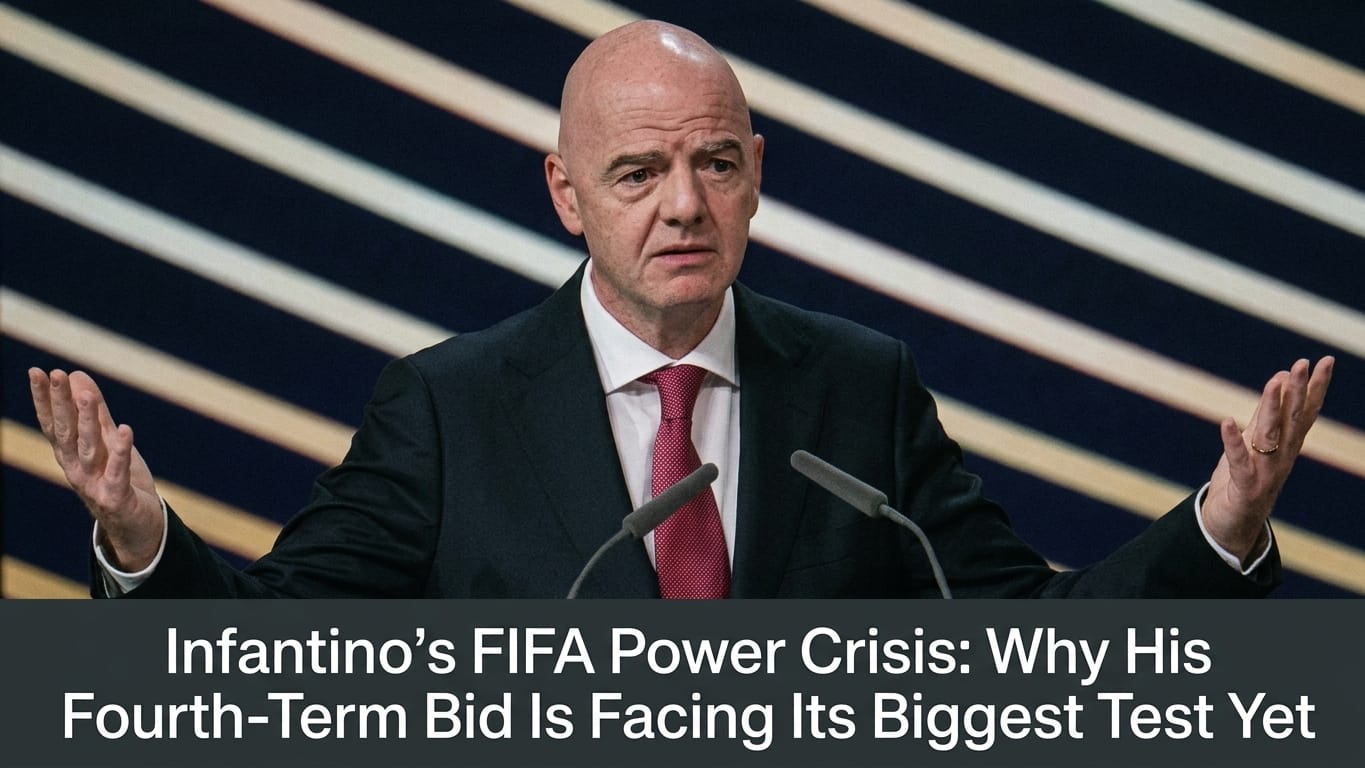
Gianni Infantino was once heading towards a fourth term as FIFA president with seemingly overwhelming support. Now, less than seven months before the election, the political landscape around him has changed dramatically.
The latest rupture came with the dismissal of FIFA Chief Operating Officer Kevin Lamour, whose departure followed his criticism of Infantino’s controversial plan to commercialise FIFA competition rights through the proposed FIFA Forward Enterprise.
Within days, FIFA’s political map became harder to read.
FIFA Vice-President Sandor Csanyi withdrew his support for Infantino and described Lamour’s dismissal as the “final straw”. Reuters also reported that several other football figures and associations had distanced themselves from the FIFA president, while UEFA President Aleksander Čeferin, AFC President Sheikh Salman bin Ibrahim Al Khalifa and Concacaf President Victor Montagliani have all been associated with growing criticism of FIFA’s direction.
Yet this is not a simple story of a FIFA president losing power.
Infantino still has major institutional advantages.
CAF and CONMEBOL remain important pillars of his support, and FIFA’s 211 member associations—not UEFA alone—will ultimately determine who occupies the presidency.
That is what makes the current crisis so fascinating.
This is no longer merely about whether Infantino can survive criticism.
It is about who controls the commercial future, political direction and governance model of world football.
The Crisis Started With Money — Not Football
To understand the current confrontation, it is necessary to go back to the proposal that triggered the backlash.
In July, FIFA presented the concept of FIFA Forward Enterprise (FFE), a proposed subsidiary designed to consolidate FIFA’s commercial and event operations.
The plan covered areas including:
- broadcasting rights;
- sponsorship;
- licensing;
- ticketing;
- hospitality;
- other commercial ventures.
Infantino presented the proposal as a mechanism to unlock previously uncaptured commercial value and increase football-development funding.
According to FIFA’s own explanation, the proposal could have increased FIFA Forward funding dramatically, with the organisation projecting more than $4 billion in potential funding across 211 member associations for the 2027–30 cycle if the initiative were approved.
From FIFA’s perspective, the logic was straightforward:
Commercialise more → generate more revenue → distribute more money → develop more football.
But the political problem was the method.
Concacaf and its 41 member associations publicly rejected the proposal, questioning the consultation process, the deadline imposed and whether private investment was necessary after what they described as FIFA’s most profitable World Cup.
UEFA went further.
It argued that FIFA’s commercial strategy represented a governance problem and questioned why FIFA would seek outside capital while holding substantial financial reserves. UEFA subsequently welcomed the withdrawal of the proposal but said the process of rebuilding trust had only begun.
That distinction matters.
The argument was never simply about whether FIFA should make more money.
It was about who should control the commercialisation of football—and under what governance framework.
Kevin Lamour’s Exit Changed the Story
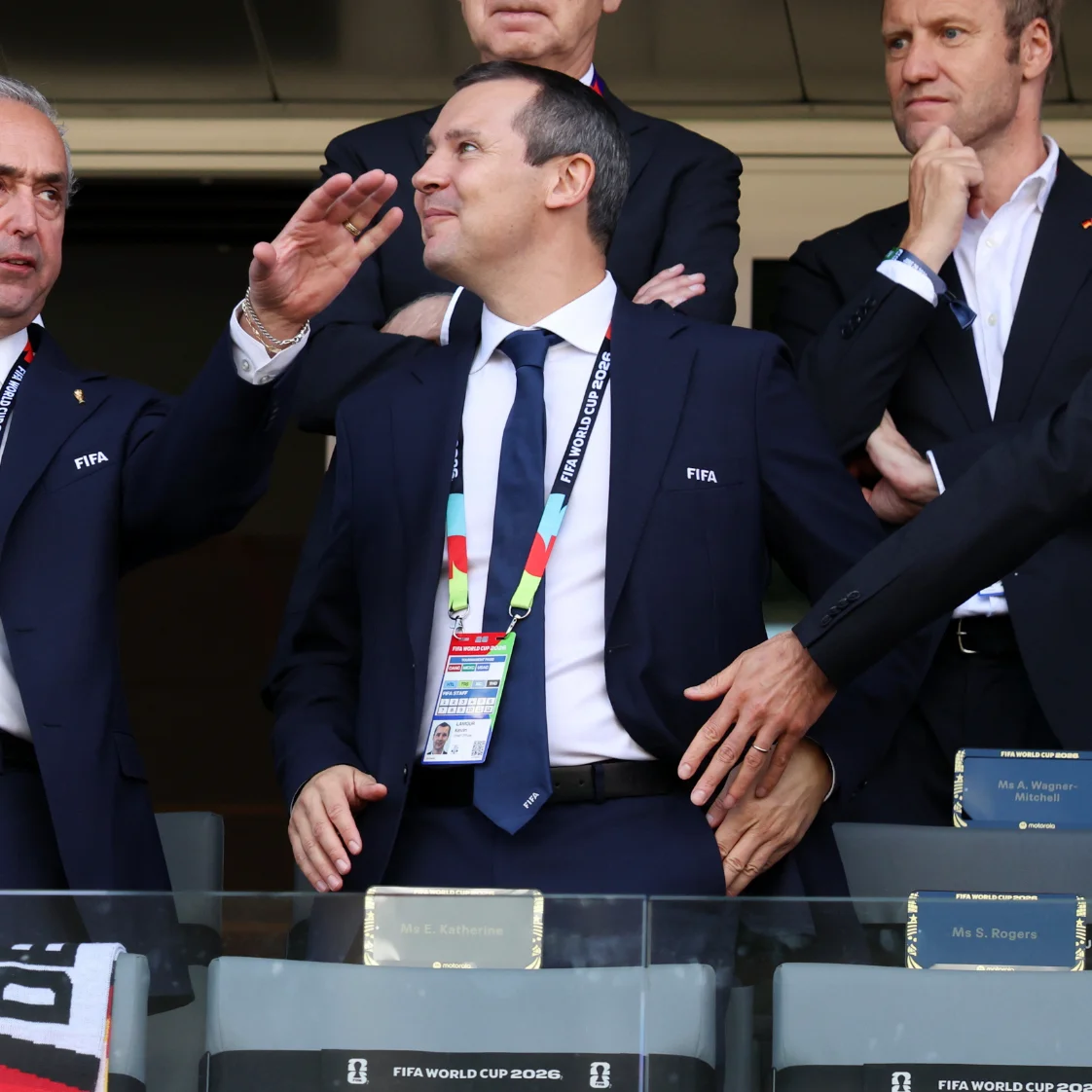 The controversy became much more serious when Kevin Lamour, FIFA’s Chief Operating Officer, openly criticised the proposal and was subsequently removed from his position.
Reuters reported that Lamour had criticised Infantino’s plan to sell commercial rights of FIFA tournaments to private investors. His dismissal then became the catalyst for a much broader political backlash.
The significance of Lamour’s departure goes beyond one executive leaving FIFA.
A senior operational figure publicly challenging the president creates a fundamentally different political narrative:
Is FIFA debating internally—or is dissent becoming impossible?
That question has now moved from the corridors of FIFA headquarters into the public domain.
Human-rights and labour organisations have also criticised the handling of Lamour’s exit, arguing that his departure raises concerns about internal transparency and the treatment of dissent within FIFA.
Those allegations should not be presented as established fact.
But politically, their importance is undeniable.
A governance controversy can survive one bad headline.
It becomes much harder to contain when executives, confederations, national associations and external stakeholders begin asking the same question about institutional transparency.
Sandor Csanyi’s Withdrawal Is More Important Than It Looks
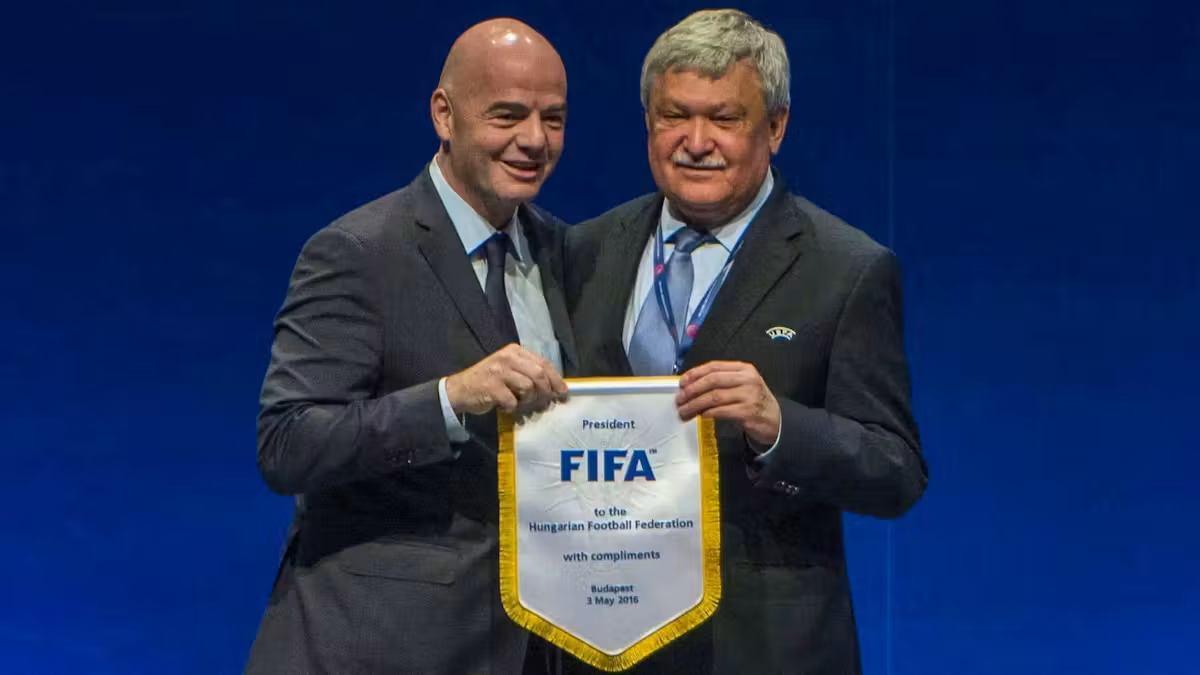 One of the biggest developments came from FIFA Vice-President Sandor Csanyi.
Reuters reported that Csanyi withdrew his support for Infantino and characterised Lamour’s dismissal as the “final straw”, while criticising the decision as evidence of poor professional judgement and ethical standards.
This matters because FIFA politics is ultimately a coalition game.
The president does not govern football globally through personal popularity.
He governs through relationships with:
- national associations;
- confederations;
- FIFA Council members;
- regional football leaders;
- commercial stakeholders;
- political networks.
When one important ally changes position, it does not automatically threaten the presidency.
But it can encourage others to reconsider their own position.
That is how political momentum develops.
The real danger for Infantino is therefore not one defection. It is the possibility of defections becoming normal.
UEFA Has Become the Centre of Resistance
The most visible institutional opposition has come from Europe.
UEFA and its national associations have increasingly challenged FIFA over commercial strategy, governance and the treatment of internal dissent.
This represents an important reversal in football politics.
Infantino’s career was built partly through UEFA. He served as UEFA general secretary before becoming FIFA president in 2016.
His original political story was therefore one of moving from European football administration to global leadership.
Today, however, UEFA is increasingly one of the strongest centres of resistance to his leadership.
That makes the confrontation unusually personal from an institutional perspective—but it is important not to reduce the story to personalities.
The disagreement is fundamentally about power architecture.
Who decides how FIFA’s most valuable assets are commercialised?
Who controls the revenue?
Who determines the development model?
And how much authority should the FIFA president exercise over the organisation?
Those questions are far more consequential than the latest exchange of statements.
The FIFA Forward Enterprise Fight Was Really About Football’s Future
This is where the story becomes particularly important for fans.
Football is no longer simply a competition between national teams.
It is a global commercial ecosystem.
FIFA controls some of the most valuable sporting properties on the planet, including:
- the men’s World Cup;
- the Women’s World Cup;
- the Club World Cup;
- youth World Cups;
- women’s club competitions;
- sponsorship platforms;
- global broadcasting rights.
The more valuable those properties become, the more political power is attached to whoever controls them.
FIFA itself argues that greater commercialisation can produce more money for football development.
Its own figures show that FIFA has invested around $5 billion in football development over the previous decade, while the next FIFA Forward cycle is projected at $2.7 billion.
That is a powerful argument.
But opponents are asking a different question:
If FIFA is already generating billions and holds substantial reserves, why should it sell or transfer part of the commercial upside to private investors?
That is the heart of the disagreement.
And it is a question that will not disappear simply because the FFE proposal has been withdrawn.
Infantino Still Has a Major Political Weapon: 211 Votes
 This is where many simplified reports about the “FIFA crisis” miss the bigger picture.
Infantino is under pressure.
But he is not politically defeated.
FIFA has 211 member associations.
Every association ultimately has a voice in the presidential election.
That gives the global governing structure a very different political balance from UEFA competitions, where Europe’s football power is concentrated among a smaller number of associations.
Infantino has also already formally announced that he will seek re-election.
At the 76th FIFA Congress in Vancouver in May, he told FIFA’s 211 member associations that he would be a candidate for the 2027 presidential election.
The election is scheduled for 18 March 2027 in Rabat, Morocco, at the 77th FIFA Congress.
And that gives Infantino time.
A lot can change between August 2026 and March 2027.
Africa Could Become the Decisive Political Bloc
For The Football Xtra, this is arguably the most important part of the story.
Africa’s position could become enormously significant.
In April, CAF member associations unanimously agreed to support Infantino’s re-election for the 2027–31 period.
That does not mean every African football leader will necessarily maintain that position until the election.
Politics evolves.
But it demonstrates something important:
Infantino’s support is not confined to Europe or Western football markets.
African football has a strategic interest in FIFA’s development funding.
The FIFA Forward programme is particularly important to national associations in emerging football economies because FIFA funding can support infrastructure, technical development, women’s football, youth programmes and national-team structures.
That creates a very different political calculation from Europe’s.
For many African associations, the question is not simply:
“Do we like Infantino?”
It can also be:
“Which FIFA leadership model delivers the greatest resources and influence for our football?”
That distinction could become decisive.
Why the World Cup Makes This Even Bigger
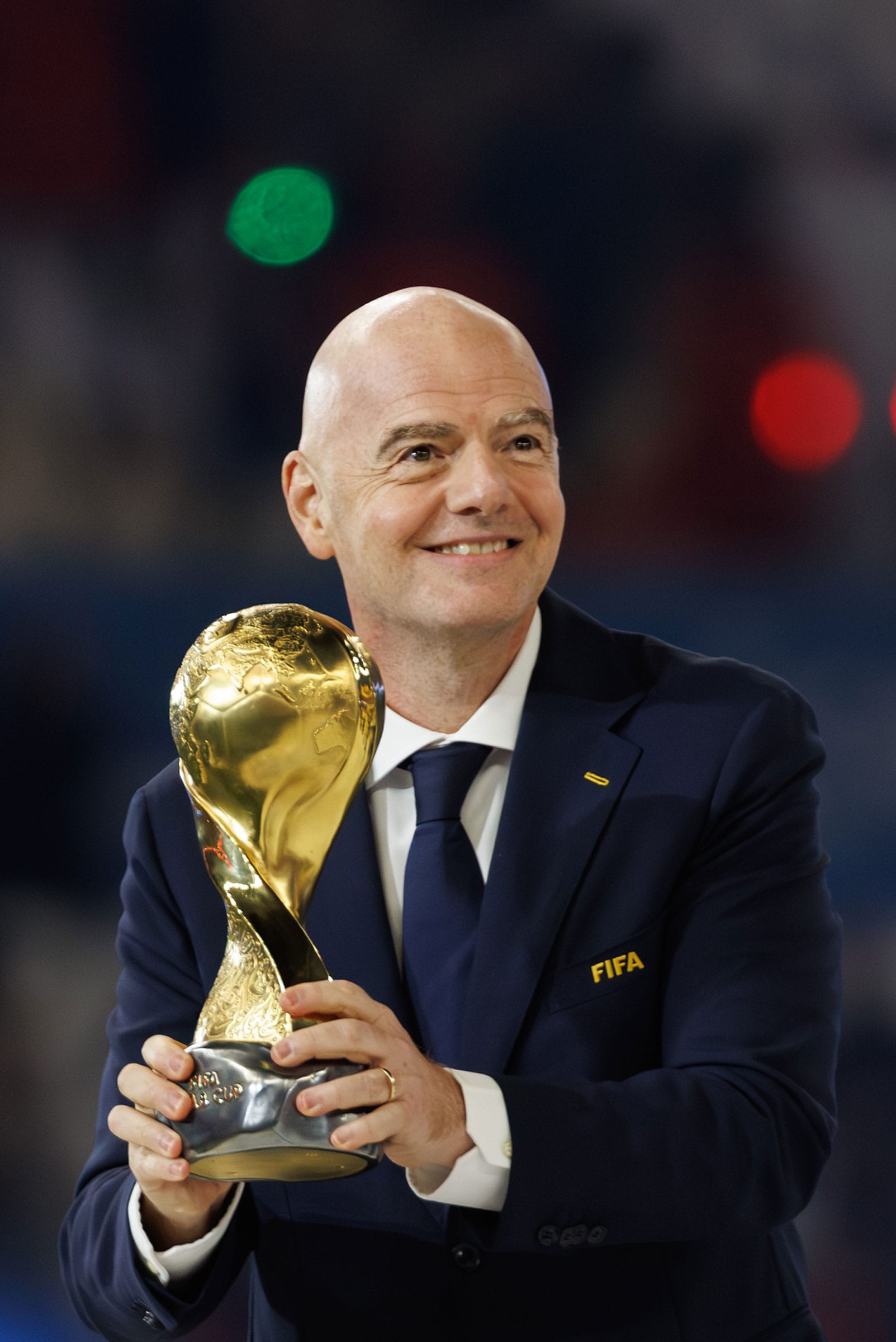 The timing of the crisis is extraordinary.
The 2026 World Cup has just concluded, and FIFA entered the tournament with an increasingly commercial global strategy.
Infantino emerged from the World Cup arguing that FIFA had expanded football’s global reach and commercial potential.
At the same time, FIFA was preparing to reshape how those commercial assets could be monetised.
Then the FFE proposal collapsed.
That means the organisation is now entering a politically sensitive period immediately after its biggest commercial showcase.
The question for Infantino is therefore not simply whether he can win another election.
It is whether he can convince the football world that the next phase of FIFA’s commercial growth can happen without another governance confrontation.
The Election Mathematics Are More Complicated Than Headlines Suggest
The FIFA presidency is decided through Congress voting rather than a conventional public election.
Under FIFA’s electoral rules, a presidential candidate needs a two-thirds majority of eligible votes in the first ballot; if another ballot is required, a simple majority is sufficient.
That makes coalition-building critical.
A candidate does not need universal popularity.
They need enough associations to form a winning coalition.
This is why the current political positioning of CAF, CONMEBOL, AFC, Concacaf and UEFA matters so much.
A European revolt alone does not automatically remove Infantino.
Likewise, African or South American support alone does not make the opposition irrelevant.
The election will ultimately come down to coalition mathematics.
And that is where the current crisis becomes genuinely unpredictable.
Infantino’s Defence: He Still Has the Mandate
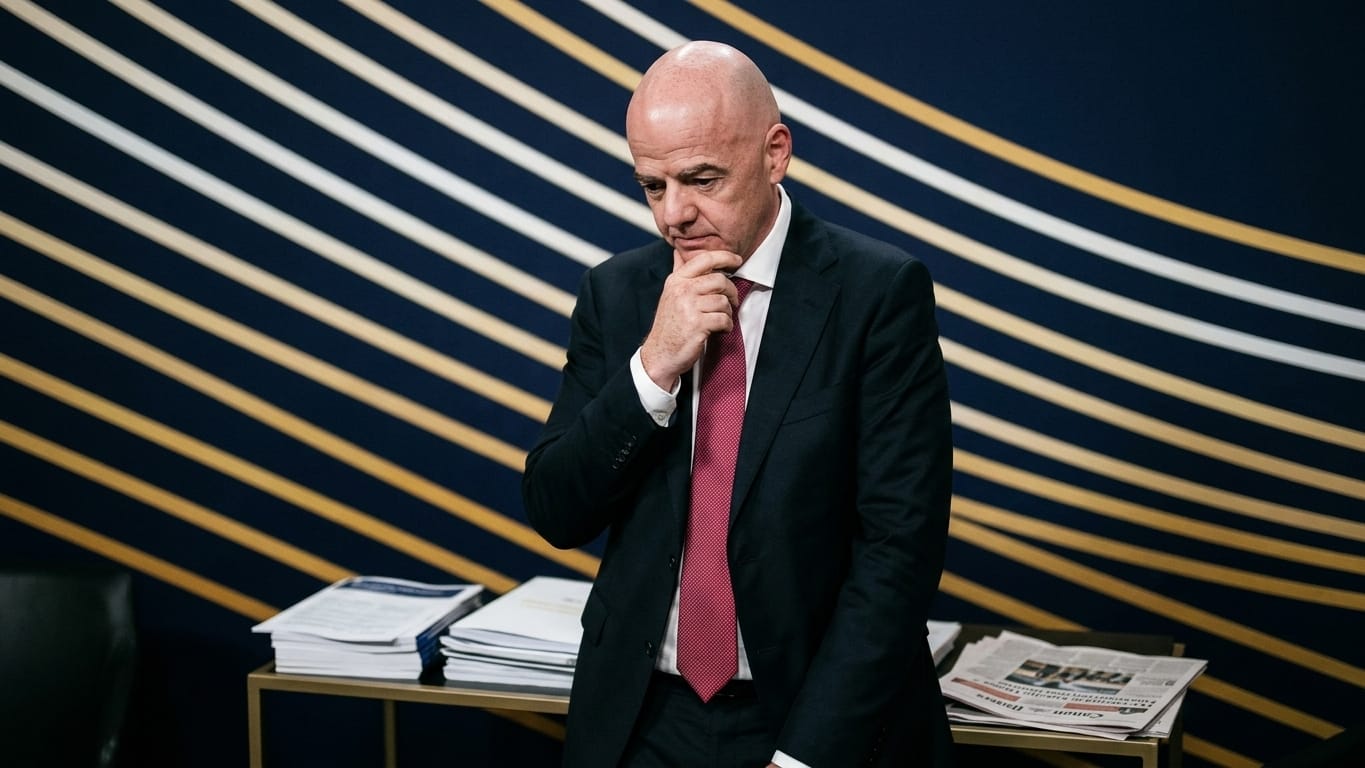 FIFA has not accepted the narrative that Infantino has lost legitimacy.
Following the growing criticism, FIFA issued a statement insisting that the president was democratically elected by the member associations and continues to serve under their mandate.
FIFA also warned against attempts to alter the presidency outside its established statutes and democratic procedures.
Earlier in August, FIFA leadership met in Rabat and publicly reaffirmed its support for Infantino.
The organisation said the meeting focused partly on improving internal processes and communication after the withdrawal of the FIFA Forward Enterprise proposal.
That response reveals FIFA’s strategy.
Infantino does not need to win the media argument today.
He needs to survive the political process.
And those are two very different objectives.
The Bigger Question: Can Infantino Govern If Trust Is Lost?
This is where the crisis moves beyond the 2027 election.
Imagine Infantino wins another term.
What happens next?
He would potentially govern FIFA until 2031.
But if major confederations remain distrustful, the organisation could enter a period of permanent institutional tension.
That could affect:
- commercial negotiations;
- international competition calendars;
- broadcasting relationships;
- Club World Cup participation;
- development funding;
- regulatory reform;
- relations between FIFA and UEFA;
- future tournament expansion.
A president can win an election and still lose political authority.
That may ultimately be the bigger challenge facing Infantino.
The question is not simply:
Can he get enough votes?
It is:
Can he rebuild enough trust to govern effectively after getting them?
What Happens Next?
The next several months will be critical.
1. The opposition needs a candidate
Criticism alone cannot defeat an incumbent.
The anti-Infantino coalition eventually needs a credible alternative.
That candidate would need support across more than one confederation.
2. FIFA needs to repair its governance narrative
The Lamour episode has become a symbol of the wider controversy.
FIFA can attempt to close the chapter, but questions about internal consultation and commercial decision-making are unlikely to disappear automatically.
3. Africa’s position will be closely watched
CAF currently provides Infantino with an important bloc of support.
Whether that support remains unanimous as the election approaches could become one of the most significant political indicators.
4. The commercial strategy will return
Even if FIFA Forward Enterprise is gone in its original form, FIFA’s search for greater commercial value is unlikely to disappear.
The organisation has already demonstrated that it sees enormous commercial opportunities ahead.
The debate is therefore likely to shift from:
“Should FIFA commercialise?”
to:
“How should FIFA commercialise—and who gets to decide?”
The Bottom Line: Infantino Is Under Pressure, But He Is Not Finished
The phrase “FIFA power crisis” is justified—but it needs context.
This is not yet an organised coup.
Infantino remains FIFA president.
He remains the declared candidate for 2027.
FIFA’s own leadership has publicly reaffirmed its support.
CAF has formally backed his re-election.
And the final decision still belongs to FIFA’s 211 member associations.
But something important has changed.
The assumption that Infantino’s fourth term would be politically effortless can no longer be taken for granted.
The collapse of the FIFA Forward Enterprise proposal exposed a deeper disagreement about the future of football’s global economy. Lamour’s dismissal intensified questions about internal governance. Sandor Csanyi’s withdrawal demonstrated that opposition can reach inside FIFA’s own leadership structure. UEFA, AFC and Concacaf have all become increasingly vocal about FIFA’s direction.
Yet Infantino still possesses something his opponents desperately need to overcome:
a global voting structure in which Europe does not control the presidency alone.
That makes the road to Rabat fascinating.
The 2027 FIFA election will not simply be a referendum on Gianni Infantino.
It will be a referendum on what kind of institution FIFA wants to become.
SEE ALSO; FIFA trust crisis: Infantino’s World Cup faith gamble is playing with fire
A commercially aggressive global sports corporation?
A development-focused governing body?
A federation-led organisation with stronger checks on presidential power?
Or an increasingly centralised institution driven by one global vision?
The answer will be determined not by the loudest federation, the biggest club or the most influential broadcaster.
It will ultimately be decided by 211 football associations.
And that is why Infantino’s biggest battle may not be against UEFA at all.
It may be the battle to convince the rest of world football that his vision of FIFA is still worth following.
What’s Next?
The FIFA presidential election is scheduled for 18 March 2027 in Rabat, meaning the current power struggle has months to evolve before the decisive vote.
For now, the biggest question is simple:
Can Infantino turn today’s political crisis into tomorrow’s electoral victory—or has the fight for FIFA’s future already begun?
What do you think? Is Infantino genuinely facing the biggest political challenge of his presidency, or does he still have enough global support to comfortably secure another term? Share your view in the comments.