Erling Haaland is only 25 years old. That should sound like the beginning of a career — but his record book is already starting to look like the middle of a legend.
On September 5, 2026, the Norwegian striker scored the only goal in Manchester City’s 1-0 Premier League victory over Coventry City, reaching 300 career goals in top-flight club football. The goal also extended his remarkable Manchester City record book, where he had already established himself as one of the fastest scorers in the club’s history.
But 300 goals is only one part of the story.
Before that milestone, Haaland had already scored 57 goals in 58 Champions League appearances, placing him inside the competition’s top ten all-time scorers despite still being just 25. UEFA also records him as the fastest player ever to reach 50 Champions League goals, requiring only 49 appearances.
That is the extraordinary part of the Haaland records story.
We are not looking at an established veteran trying to add a few more lines to an already legendary career.
We are looking at a 25-year-old who is already running through statistical territory normally associated with players who have spent a decade or more at the very top.
And that raises a much bigger question:
Are we simply watching an extraordinary goalscorer — or are we watching the early stages of football’s next all-time great?
Haaland Records: A Career Moving at an Extraordinary Speed
 Football records are normally built slowly.
A striker scores 20 goals one year, 25 the next, reaches 100 after several seasons, and gradually climbs the historical rankings.
Haaland has treated the process differently.
His career has developed at remarkable speed.
UEFA’s Champions League data shows just how unusual his progression has been. He reached 20 goals in only 14 appearances, 30 in 25, 40 in 35 and 50 in 49. The 50-goal mark made him the fastest player in competition history to reach that total, surpassing Ruud van Nistelrooy’s previous benchmark.
The numbers become even more striking when placed against his age.
Haaland did not need to wait until his late twenties to become one of Europe’s most prolific Champions League scorers.
He arrived almost immediately.
His Champions League debut for Salzburg was itself historic. Against Genk in 2019, he scored a first-half hat-trick, becoming the first and, according to UEFA’s record, still the only player to score a first-half hat-trick on his Champions League debut.
That first night was not simply an impressive introduction.
It was a warning.
From Bryne to the Champions League: The Making of a Goalscoring Machine
 The Haaland records story begins much earlier than Manchester City.
Haaland joined his local club, Bryne, at the age of five and progressed rapidly through the age groups. UEFA records that he made his senior debut in Norway’s second tier at just 15.
At Molde, his development accelerated.
Under Ole Gunnar Solskjær, Haaland began turning his unusual physical profile into a serious attacking weapon. In one remarkable Norwegian league match in July 2018, he scored four goals in the opening 21 minutes against unbeaten league leaders Brann.
The important thing about those early years is that Haaland was not simply a tall striker who happened to score.
He was developing an extraordinary combination of:
- pace
- power
- movement
- finishing
- anticipation
He could attack space like a winger but finish like a traditional No.9.
That combination would later become devastating at the highest level.
Salzburg: Where Europe First Realised What Was Coming
 Haaland joined Salzburg in January 2019.
Within months, European football was paying attention.
UEFA records show that he scored 29 goals in 27 appearances for Salzburg.
His Champions League performances were the major breakthrough.
The hat-trick against Genk was followed by a remarkable run of scoring that demonstrated he was not simply dominating a weaker domestic league.
He could score against elite European opposition.
That distinction matters.
A striker’s reputation is not built solely by scoring goals.
It is built by scoring when the level rises.
Haaland has repeatedly passed that test.
Borussia Dortmund: The Teenager Who Refused to Behave Like One
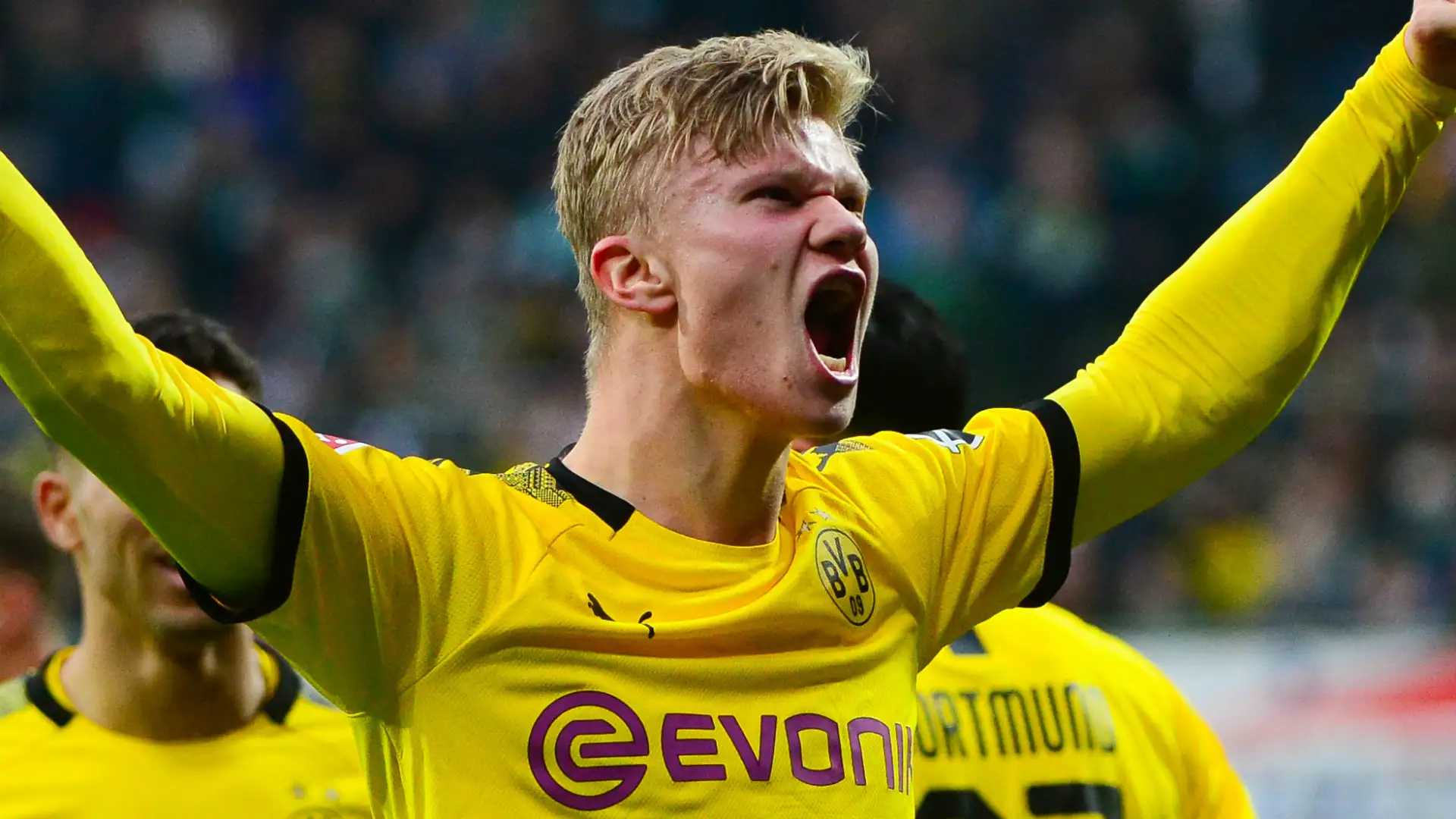 Moving to Borussia Dortmund in January 2020 placed Haaland in the spotlight of one of Europe’s biggest leagues.
But instead of taking time to adapt, he exploded immediately.
His physical profile gave Dortmund something rare: a forward capable of threatening space behind the defence while also winning physical battles against centre-backs.
His finishing made the equation even harder for defenders.
The result was a player who seemed to create panic before he even touched the ball.
By the time he left Germany, the debate was no longer about whether Haaland would become a star.
It was about how high his ceiling could be.
Manchester City: Where the Records Became Relentless

36 Premier League Goals in One Season
Haaland’s arrival at Manchester City in 2022 was one of the most anticipated transfers in Premier League history.
The response exceeded almost every expectation.
In his debut campaign, he scored 36 Premier League goals, the most ever in a single Premier League season. He also scored 52 goals in all competitions, the highest total by a Premier League player in a season and the highest in Manchester City’s history.
SEE ALSO: Manchester City Rebuild 2026: New Dynasty Plan
And he did it while helping City complete the Treble.
That first season changed the conversation around him.
He was no longer simply a promising young striker.
He was already one of the most productive forwards in world football.
The 100 Premier League Goals Milestone
 The next stage of the Haaland records story was even more remarkable.
Manchester City report that Haaland reached 100 Premier League goals in 111 appearances, making him the fastest player in competition history to reach that landmark.
That is the kind of record that normally takes years to construct.
For Haaland, it arrived before his career had even properly entered its peak years.
City’s own annual report adds another remarkable statistic: during his first three Premier League seasons, he scored 85 league goals, averaging one every 95 minutes, and reached 100 goal involvements in just 94 matches — faster than any player in Premier League history.
The pattern is becoming impossible to ignore.
Haaland does not simply break records.
He reaches them at extraordinary speed.
Manchester City: Haaland Is Already Climbing the Club’s Greatest Scoring Charts
When Haaland joined City, Sergio Agüero’s 260 goals looked like a mountain.
Agüero remains City’s all-time leading goalscorer, having scored 260 goals in 390 appearances.
But Haaland’s progress has been radically faster.
Manchester City recorded that Haaland had reached 154 goals in only 188 appearances, moving beyond club legend Colin Bell and into fourth place on City’s all-time scoring list at that point.
The comparison is revealing.
Bell required 498 appearances to score 153 times, according to City’s historical scoring records.
Haaland reached a similar total in fewer than 200 matches.
This does not mean he has surpassed those players in legacy.
It means he is building his statistical foundation at an almost unprecedented pace.
300 Goals: The Latest Milestone
 Then came Coventry.
Haaland’s 26th-minute header following Enzo Fernández’s assist gave Manchester City a 1-0 victory and moved the Norwegian to 300 career goals in top-flight club football.
It was also his third Premier League goal of the season.
The milestone arrived while he is still only 25.
That is precisely why the number matters.
Three hundred goals is not the end of his journey.
It may be the beginning of the truly extraordinary part.
The Champions League Is Where Haaland’s Case Becomes Most Convincing
If Premier League numbers can be influenced by the quality of the surrounding squad, the Champions League provides a different test.
The opponents are Europe’s elite.
The pressure is greater.
The margins are smaller.
And Haaland’s record is extraordinary.
UEFA lists him with:
57 goals in 58 Champions League appearances.
His goals have come for Salzburg, Borussia Dortmund and Manchester City:
- Salzburg: 8 goals in 6 games
- Dortmund: 15 in 13
- Manchester City: 34 in 39
This is perhaps the strongest evidence that the numbers are not simply a product of domestic competition.
Haaland has been able to score against Europe’s best teams too.
Haaland vs Messi vs Ronaldo: The Comparison That Will Not Go Away
Eventually, every extraordinary goalscorer gets compared with Lionel Messi and Cristiano Ronaldo.
Haaland is no exception.
But the comparison should be handled carefully.
Messi and Ronaldo built their legacies over an extraordinary period of longevity.
They combined goals with:
- trophies
- individual awards
- Champions League dominance
- sustained excellence
- international achievements
Haaland is still writing that part of his story.
What he already possesses, however, is something extraordinary:
scoring efficiency.
He does not need the same number of matches to reach major milestones.
That makes the comparison fascinating without making it premature.
The correct question is not:
“Is Haaland already better than Messi or Ronaldo?”
It is:
“If Haaland maintains anything close to this scoring rate for another decade, where could the record books place him?”
That is a much harder question to answer.
The Record That Could Become Haaland’s Biggest Legacy
There is one milestone that would change the conversation more than almost any other:
The Champions League all-time goals record.
Haaland has already reached 57 goals at an extraordinary pace and is already inside the competition’s top ten scorers.
But the all-time record requires longevity.
That is the final challenge.
His rate is historically impressive.
Now he needs years.
That is why the next decade matters so much.
Norway: The Missing Chapter in the Haaland Legacy
 There is also another part of the story that cannot be ignored.
Club football has given Haaland almost every platform available.
International football is different.
Norway have historically been outsiders on the biggest stage.
But Haaland has already changed that narrative.
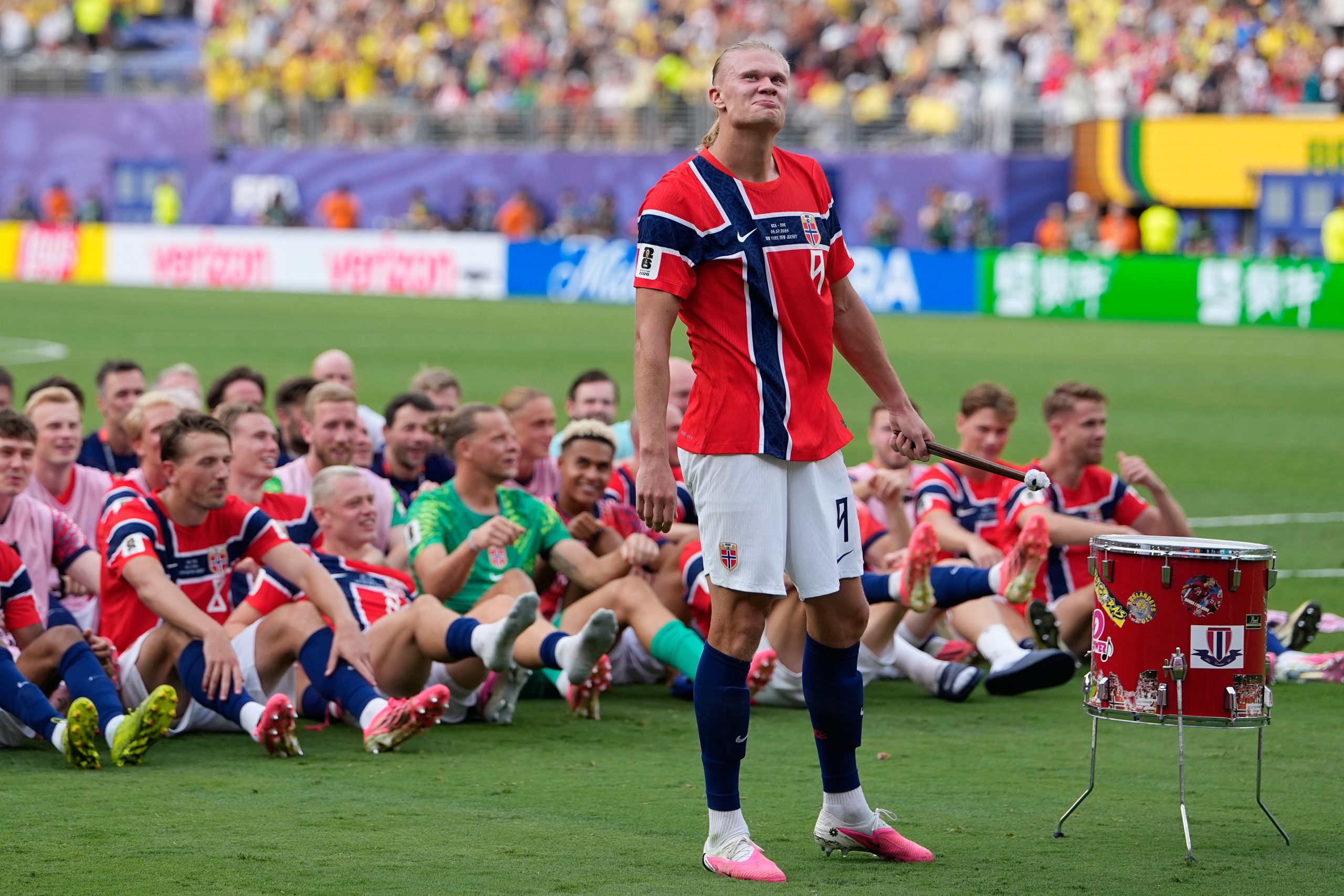
During 2026 World Cup qualifying, FIFA records show he scored **16 goals in eight matches**, equalling Robert Lewandowski’s record for goals in a European World Cup qualifying campaign. He also scored in every one of Norway’s qualifying matches.
Norway qualified for the 2026 World Cup, ending a 28-year wait to return to the tournament.
That could become one of the most important chapters in his career.
Because all-time greatness is not measured only by what happens in Manchester.
For Haaland, the Norway story has the potential to define the emotional side of his legacy.
The 10-Year Contract: Manchester City Are Betting on History
Manchester City have already made their position clear.
In January 2025, Haaland signed a new 10-year contract, keeping him at the club until 2034.
That is more than a contract.
It is a strategic bet.
City are effectively saying they believe Haaland can remain the centrepiece of their football project for the better part of a decade.
And the timing is significant.
He is now 25.
When that contract expires, he will be 34.
If he remains healthy and productive, the potential numbers are almost impossible to project.
That is where this story becomes fascinating.
We are not looking backwards at the career of a retired legend.
We are looking forward.
The Haaland Advantage: Why His Physical Profile Could Extend His Prime
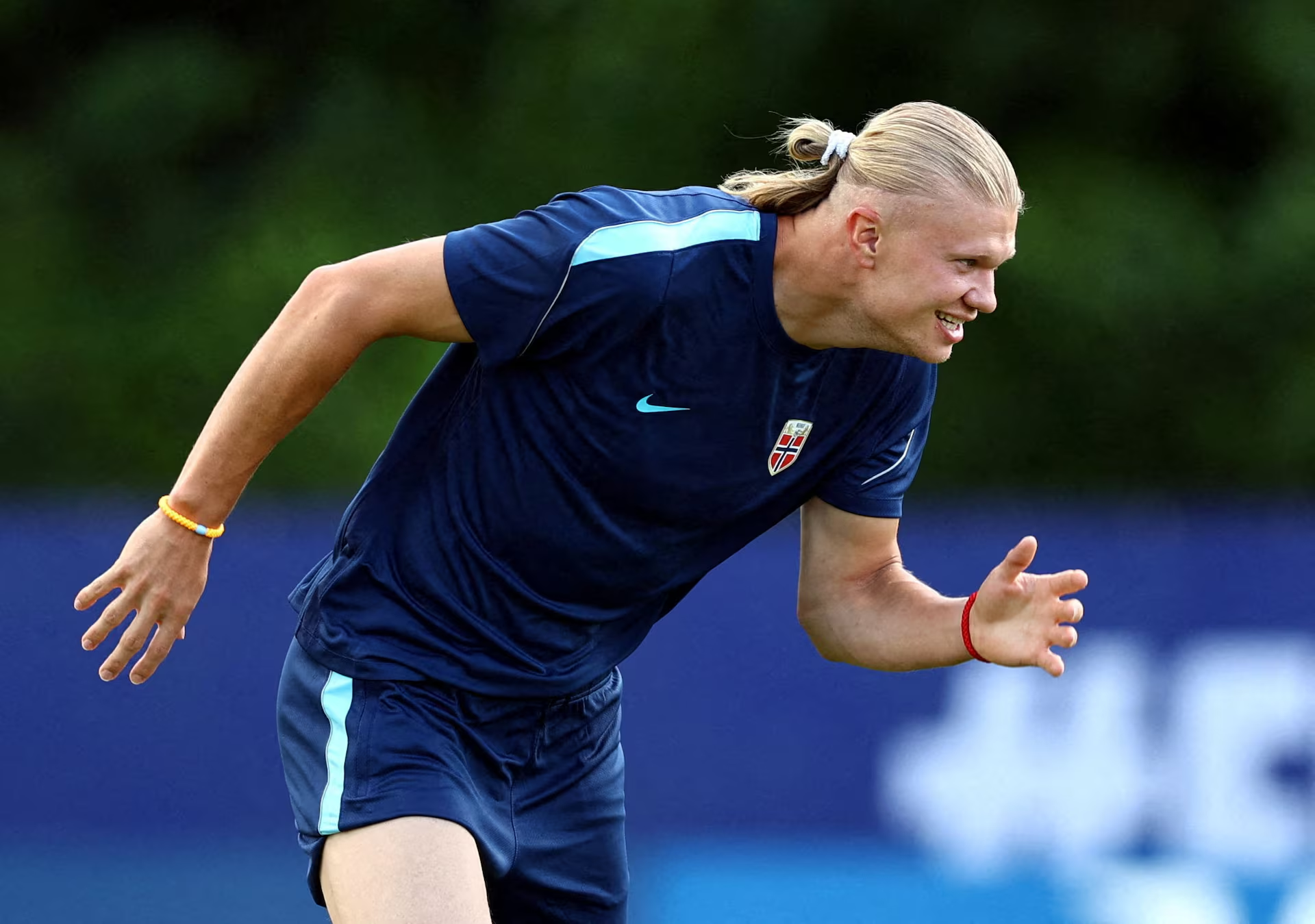 One reason the future is difficult to predict is Haaland’s physical profile.
His body is part of his football identity.
He combines enormous strength with exceptional acceleration and elite movement.
That combination gives him multiple ways to score.
If pace declines slightly with age, his positioning and physical strength may remain valuable.
If defenders become stronger, he can use his movement to create separation.
If teams sit deep, he can attack crosses.
If teams press high, he can attack space.
The versatility of his scoring methods could help him remain productive even as his athletic profile inevitably evolves.
But Records Alone Do Not Make an All-Time Great
This is where the article needs balance.
The Haaland records are extraordinary.
But records do not automatically create legacy.
To become an unquestioned all-time great, Haaland still needs:
Longevity.
Can he maintain world-class output into his thirties?
Champions League success.
Can he add more European titles?
International achievement.
Can he lead Norway to an unforgettable tournament run?
Consistency in the biggest matches.
Can he continue delivering when the stakes are highest?
These are the questions that will determine the final judgment.
What Happens If Haaland Maintains His Current Pace?
This is where football becomes speculation.
We cannot know how many goals Haaland will score over the next decade.
Injuries happen.
Tactics change.
Players change clubs.
Football changes.
But the trajectory is undeniable.
At 25, he has already:
- reached 300 top-flight club goals
- scored 57 Champions League goals
- become the fastest player to 50 Champions League goals
- broken the Premier League single-season scoring record with 36
- become the fastest player to 100 Premier League goals
- climbed rapidly through Manchester City’s all-time scoring charts
- matched the European World Cup qualifying record with 16 goals
The remarkable thing is not one record.
It is the concentration of milestones at such a young age.
Conclusion: The Career Has Barely Reached Its Peak
Erling Haaland is 25.
That sentence alone is difficult to reconcile with his statistics.
He has already accumulated a body of work that would represent a remarkable career for many strikers.
For him, it is the foundation.
That is what makes the story so compelling.
He is not trying to catch up with football history.
Football history is already trying to catch up with him.
The next chapter will determine whether Haaland becomes merely one of the greatest goalscorers of his generation or something much rarer: an all-time great whose numbers force future generations to rethink what is possible for a striker.
The evidence is already there.
The records are already there.
The trophies are beginning to accumulate.
And the most frightening part for defenders across Europe is this:
Haaland may not even have reached his prime yet.
What’s next?
The 25-year-old now enters the stage of his career where statistics must become legacy. More trophies, more Champions League nights and a World Cup campaign with Norway could determine how history eventually remembers him.
Is Erling Haaland on course to become one of football’s all-time greatest players, or will longevity and international success ultimately decide whether his incredible numbers become a true legacy?