Gabriel Jesus to Barcelona is not simply a surprise late-window transfer. It is the final product of a chain reaction involving a failed Julián Álvarez pursuit, Arsenal’s changing attacking hierarchy, Barcelona’s search for a natural No.9 and a Brazilian forward who suddenly found himself at the centre of two clubs’ very different problems.
For weeks, the conversation around Barcelona’s attack revolved around one name: Julián Álvarez.
Then, almost out of nowhere, Gabriel Jesus emerged.
Barcelona are now closing in on an agreement with Arsenal worth around €10 million plus variables, with the Brazilian expected to undergo a medical before the transfer is completed. The proposed contract is understood to be two years with an option for a third.
On the surface, it looks like a straightforward deadline-day solution.
It is anything but.
Behind the transfer sits a fascinating piece of squad planning: Barcelona needed a striker, Arsenal needed to clear a striker, and Gabriel Jesus needed an escape route.
Three different problems.
One solution.
And the consequences could stretch far beyond the transfer fee.
Gabriel Jesus to Barcelona: The First Domino Was Julián Álvarez
 To understand why Gabriel Jesus is suddenly heading towards Barcelona, you have to start with the player who is not joining them.
Julián Álvarez.
The Argentine had been a major target for Barcelona, but Atlético Madrid’s position made the operation extremely difficult. EFE reported that Barcelona moved towards Jesus after the club was unable to complete the signing of Álvarez in this summer window.
That changed the market completely.
Barcelona needed a striker profile.
But they also needed to be realistic.
Álvarez represented a premium-level investment. Jesus represented something very different: an experienced Champions League-level forward available for a fraction of the cost.
That distinction explains the speed of the operation.
Barcelona were not necessarily abandoning their interest in Álvarez forever.
They were solving the immediate problem.
Cadena SER reports that the Jesus deal does not eliminate Barcelona’s interest in Álvarez for this or future transfer windows.
That makes the Jesus signing even more intriguing.
He could be a solution.
But he could also be a bridge.
Why Barcelona Suddenly Saw Gabriel Jesus Differently
 The most interesting part of the story is that Barcelona are not simply buying Gabriel Jesus because he is a famous name.
They are buying his profile.
According to Cadena SER, Jesus was selected by sporting director Deco and head coach Hansi Flick as a reinforcement for the attack.
That matters because Jesus offers something Barcelona’s attack has needed: flexibility.
He can operate as a central striker, but he is also comfortable drifting into wider areas and combining with attacking players.
That makes him particularly interesting in a system where the No.9 is not expected simply to stand between two centre-backs and wait for crosses.
Jesus can:
- drop into midfield;
- combine around the penalty area;
- attack channels;
- press defenders;
- rotate with wide forwards;
- play centrally;
- create space for runners.
La Vanguardia similarly describes his value through his experience, mobility and ability to play both centrally and from wider positions.
For Flick, that versatility could be more important than raw transfer-market status.
Barcelona are not necessarily replacing one superstar with another. They are adding another tactical tool.
The Second Domino: Arsenal Had Already Moved On
 Then comes Arsenal.
This is where the deal becomes a story about squad management rather than simply recruitment.
Gabriel Jesus arrived at Arsenal from Manchester City in 2022 as a major attacking signing. But his position inside the squad changed dramatically.
The emergence of Viktor Gyökeres, alongside Kai Havertz, pushed Jesus further down the pecking order. Reports indicate he had not featured in Arsenal’s opening two matches and had been training away from the first-team group because of the club’s squad-management situation.
That is a major shift from the player Arsenal originally signed.
Jesus was brought in to be part of the solution.
Now Arsenal needed to find a solution for Jesus.
And that is why the Barcelona offer arrived at precisely the right moment.
The Times reported that Arsenal were preparing to offload several fringe players before the transfer deadline, with Jesus among them.
The timing was therefore not accidental.
Barcelona needed a forward.
Arsenal had a forward who was no longer central to their plans.
The market created the meeting point.
Arsenal’s Real Win Is Not the €10 Million
It would be easy to look at the reported €10 million fee and conclude that Arsenal are accepting a disappointing return on a player they paid more than €50 million for in 2022.
But that misses the bigger financial calculation.
Transfer fees are only one part of the equation.
A player who is outside the manager’s plans still occupies:
- a squad position;
- salary resources;
- registration space;
- training resources;
- potential resale value;
- and an opportunity cost.
Arsenal therefore had to decide whether retaining Jesus made more sense than moving him on.
With his role declining and the contract situation becoming increasingly relevant, a sale now could be more valuable than waiting.
The reported agreement also potentially protects Arsenal from carrying an increasingly peripheral asset into another season. EFE confirms the deal is being discussed at around €10 million plus variables.
For Arsenal, this is less about recovering the original investment and more about clearing the future.
That is an important distinction.
The Hidden Arsenal Consequence: Arteta’s Attack Gets Clearer
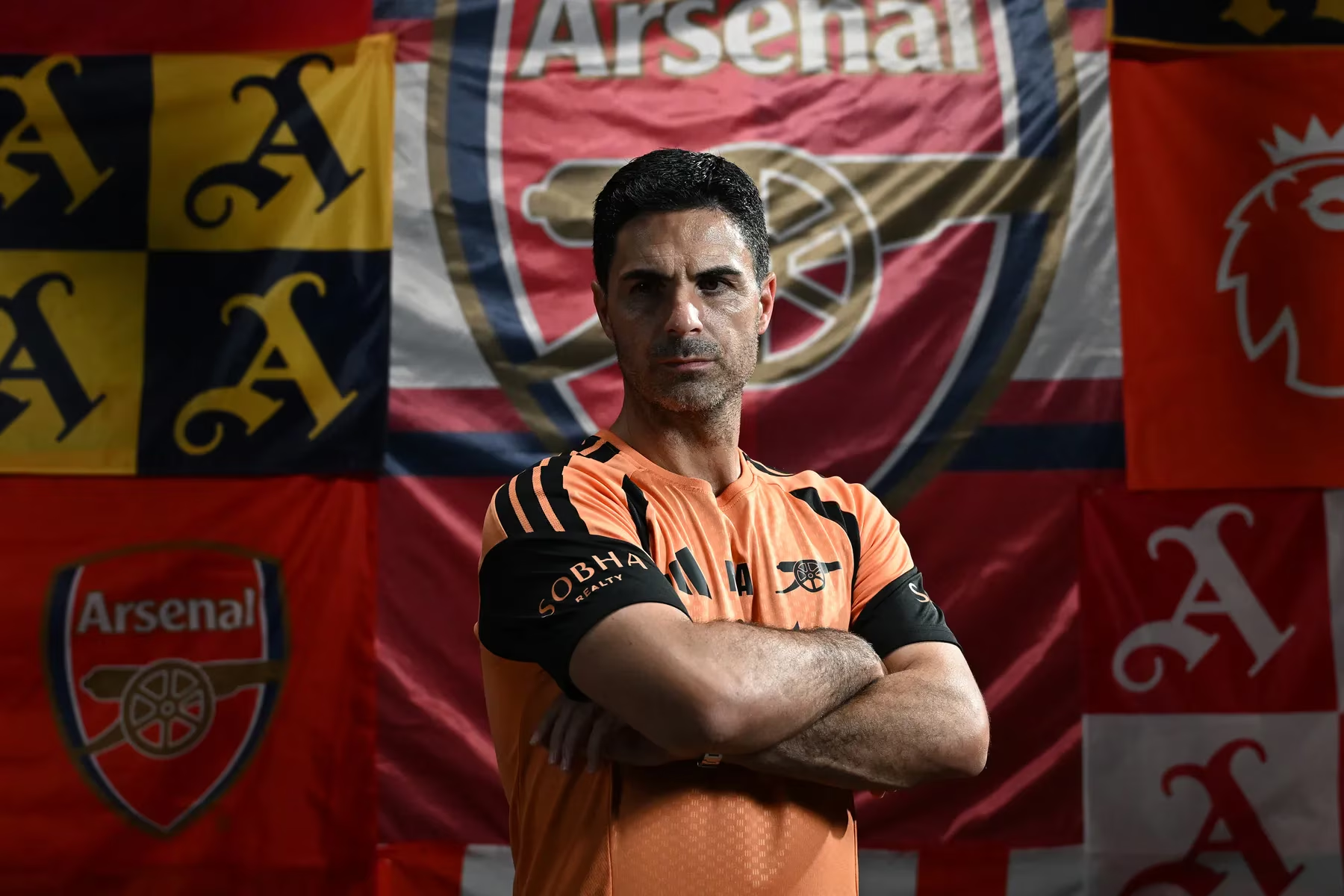 Mikel Arteta’s attacking hierarchy now becomes easier to define.
The arrival of Gyökeres already represented a major statement about Arsenal’s attacking direction.
Jesus leaving removes another layer of competition and uncertainty.
Instead of asking where Jesus fits, Arteta can build around the forwards he considers central to the project.
That creates clarity.
And clarity is one of the most valuable commodities in squad construction.
A manager does not necessarily need five players capable of playing the same role.
He needs players whose strengths complement one another.
Jesus increasingly looked like a player caught between identities at Arsenal: experienced enough to demand minutes, versatile enough to play multiple positions, but no longer clearly first-choice in any one of them.
Barcelona may be offering him exactly what Arsenal could no longer guarantee:
a defined opportunity to restart his career.
The Third Domino: Gabriel Jesus Needed a Reset
This may ultimately be the most important part of the story.
Gabriel Jesus is still only 29.
His career is not finished.
But his Arsenal chapter had clearly become complicated.
He had suffered a serious knee injury in recent years, and his consistency and availability had become important parts of the conversation surrounding his role. Reports now describe a player whose place in Arsenal’s hierarchy had fallen significantly.
Barcelona changes the environment completely.
Instead of being the experienced forward trying to break back into Arsenal’s hierarchy, Jesus arrives at a club actively looking for another attacking option.
That psychological difference matters.
A player can look ordinary when his role has disappeared.
The same player can become highly valuable when a system needs precisely the characteristics he possesses.
Jesus now has the opportunity to change the narrative.
From:
“What happened to Gabriel Jesus at Arsenal?”
to:
“Can Gabriel Jesus reinvent himself at Barcelona?”
Why €10 Million Makes This a Low-Risk Bet for Barcelona
Barcelona’s financial calculation is also fascinating.
The reported transfer fee of around €10 million plus variables is relatively modest for a player with Premier League, Manchester City and Arsenal experience.
That makes the operation fundamentally different from attempting to sign Álvarez.
Barcelona are not committing a massive transfer fee to solve one problem.
They are buying flexibility.
If Jesus succeeds, Barcelona have acquired an experienced forward at a comparatively low entry cost.
If he becomes a rotational option, the financial damage is more limited.
If the club eventually decides that Álvarez remains the ideal long-term target, Jesus does not necessarily prevent that strategy.
That is why the reported two-year contract plus an optional third season makes sense.
It gives Barcelona control without an excessive long-term commitment.
The Álvarez Question Has Not Disappeared
 This is where the transfer becomes particularly interesting.
Barcelona may have Gabriel Jesus.
But the Julián Álvarez question remains.
Cadena SER explicitly reports that Jesus’ arrival does not end Barcelona’s interest in the Argentine.
That means Barça could be thinking on two timelines.
Short term: Gabriel Jesus
Jesus provides:
- experience;
- flexibility;
- depth;
- mobility;
- immediate availability.
Long term: Julián Álvarez
Álvarez remains the higher-profile strategic target if circumstances eventually allow Barcelona to make the operation possible.
That creates an unusual situation.
Gabriel Jesus may not have been signed because Barcelona stopped wanting Álvarez. He may have been signed because Barcelona could not get Álvarez now.
That distinction changes the entire interpretation of the deal.
What This Means for Hansi Flick
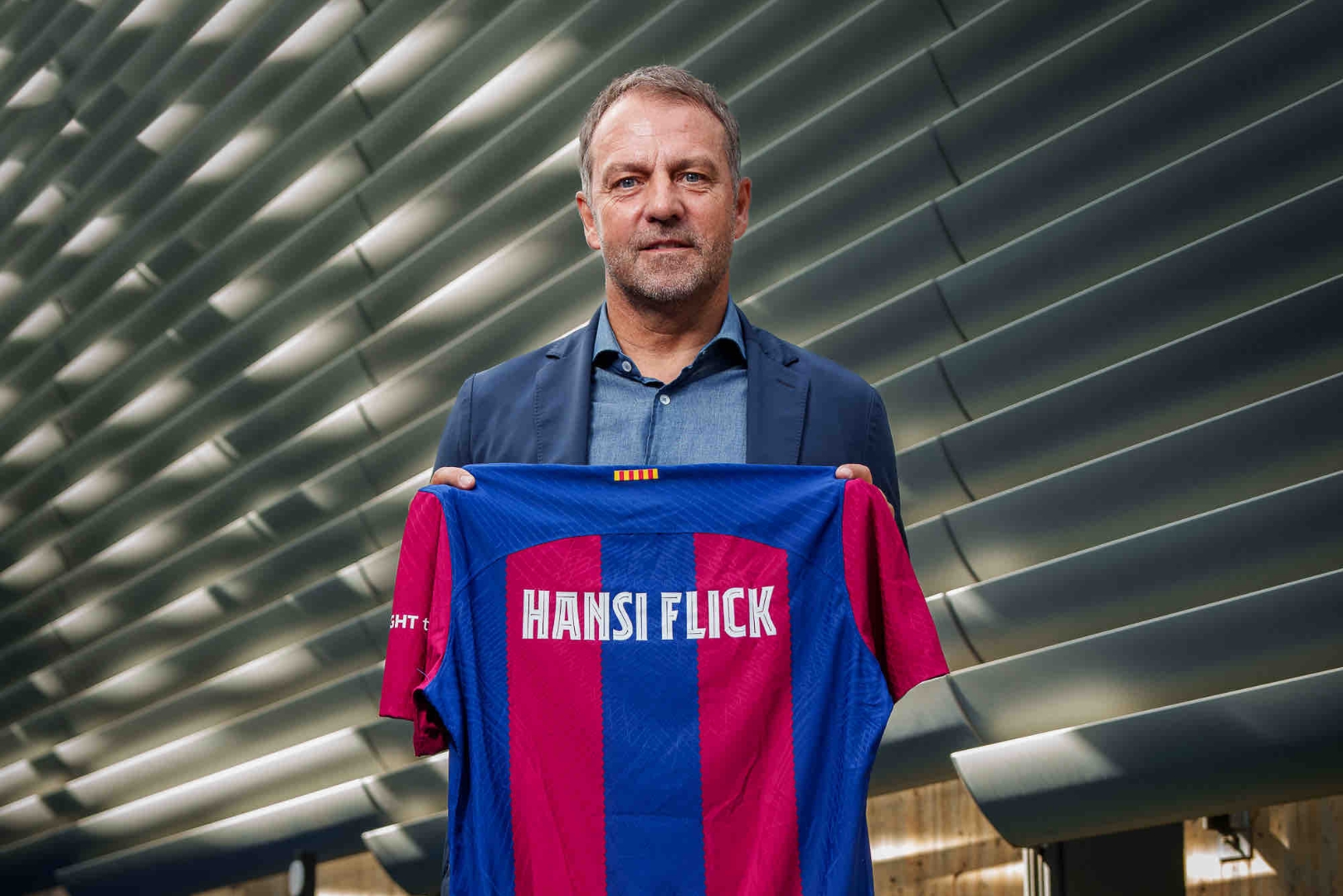 From Flick’s perspective, the signing should be judged tactically rather than emotionally.
Barcelona’s attack can benefit from having another player who can rotate between the central and wide zones.
Jesus can also give Flick a different type of pressing option.
SEE ALSO; Barcelona Champions League Problem Starts Now
His Premier League experience means he is accustomed to high-intensity football and aggressive defensive work from the front.
But there is also a major question.
Can he remain physically reliable enough to contribute consistently?
That is the risk Barcelona are taking.
The €10 million structure suggests they are not treating him like the guaranteed superstar who will transform the attack overnight.
They are treating him as a calculated opportunity.
And that may be the smartest way to view the transfer.
The Wider Barcelona Effect
Jesus’ arrival also changes the pressure on the rest of Barcelona’s attack.
A natural No.9 means Flick has greater freedom to use his other attacking players according to their strengths.
Instead of constantly searching for solutions when the central striker is unavailable, Barcelona now have another specialist option.
That can improve squad rotation.
It can protect key players from excessive workloads.
And it can allow Flick to change his attacking structure during matches.
In a long season involving La Liga, Champions League and domestic competitions, that depth can become decisive.
A €10 million signing does not need to score 30 goals to justify itself.
If Jesus helps Barcelona maintain their level across a demanding season, his value could be measured in something much broader than goals.
The Biggest Winner Could Be the Transfer Market Itself
There is another lesson hidden inside this deal.
Modern elite transfers are increasingly about finding the intersection between two clubs’ problems.
Arsenal did not need Gabriel Jesus in the same way they once did.
Barcelona needed a forward.
Jesus needed a new environment.
The result was a transfer that became possible very quickly.
This is how late-window deals often happen.
Not because one club suddenly discovers a player.
But because circumstances change.
One door closes.
Another opens.
A player’s market value changes.
A squad becomes overloaded.
A manager changes his priorities.
A sporting director spots an opportunity.
Then suddenly, a player who looked unlikely to move 48 hours earlier is travelling for a medical in another country.
That is the real story behind Gabriel Jesus’ move.
What’s Next?
Gabriel Jesus’ potential move to Barcelona is therefore much bigger than its €10 million headline.
For Arsenal, it represents the final step in moving away from a forward who had lost his central role.
For Barcelona, it is a relatively low-cost answer to an attacking problem created partly by the collapse of the Julián Álvarez route.
For Jesus, it may be the most important reset of his career since leaving Manchester City.
And for the wider transfer market, it is a perfect example of how one failed negotiation can trigger an entirely different deal.
The most intriguing question is not whether Gabriel Jesus can score goals at Barcelona.
It is whether Barcelona have signed him because they genuinely believe he is the right No.9 for Flick — or because the club needed a smart short-term solution while keeping the door open for Álvarez.
Either way, Arsenal and Barcelona have solved different problems with the same player.
And that is what makes Gabriel Jesus’ surprise move one of the most fascinating stories of the transfer window.