Bruno Fernandes
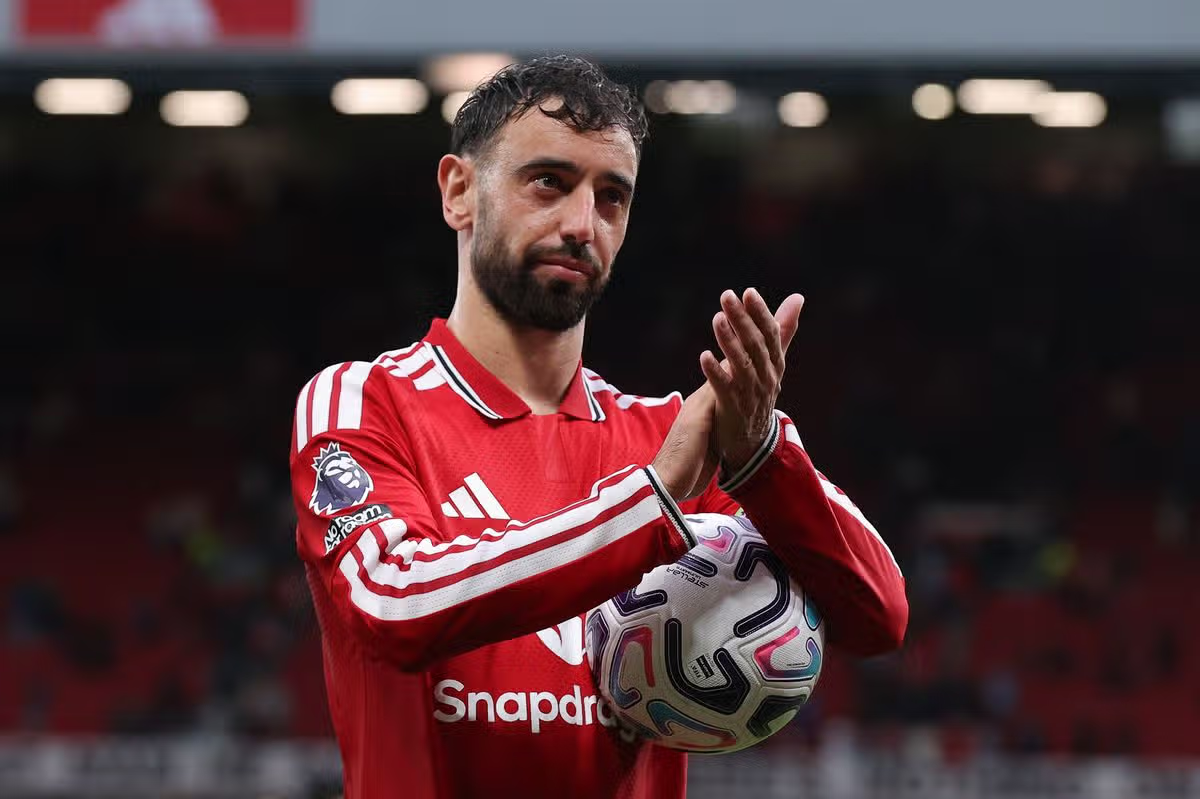
Bruno Fernandes did not suddenly become a better player against Ipswich. Michael Carrick simply stopped asking him to solve every problem at once.
That was the biggest tactical story behind Manchester United’s 5–2 victory at Old Trafford.
The hat-trick will dominate the headlines. The four goal involvements will dominate the statistics. But the more important question for Manchester United is this: why did Fernandes suddenly look so much more dangerous?
The answer was not simply confidence.
It was structure.
Carrick made four changes from the disastrous defeat to Hull City, but two stood out above everything else: Mainoo returned to midfield and Rashford returned to the starting XI. The result was a United attack that gave Fernandes more possibilities in front of him and more protection behind him.
And once Fernandes no longer had to constantly drop into midfield to rescue United’s build-up, he could spend more time doing what he does best: arriving in dangerous spaces, attacking the box and making the decisive pass or finish.
The real change was not Fernandes — it was the players around him
 The easy conclusion from Sunday would be that Fernandes simply produced another individual masterpiece.
That conclusion is incomplete.
He was outstanding, but Carrick had already built an environment in which that performance became much more likely.
Against Hull, United struggled with their attacking relationships. Their midfield lacked balance and the front players were not consistently occupying complementary spaces. Against Ipswich, Carrick selected Kobbie Mainoo alongside Youri Tielemans, with Fernandes operating higher as the No.10 behind the attack.
That distinction matters.
A No.10 can be devastating when the two players behind him are capable of progressing the ball without constantly needing his assistance.
Mainoo provided exactly that.
He was comfortable receiving possession, carrying the ball forward and attracting fouls, while Tielemans operated in a deeper controlling role. Manchester Football’s post-match assessment also highlighted Mainoo’s advanced touches and Tielemans’ deeper control of the game.
The effect was simple:
Fernandes could stay higher.
That sounds like a minor positional adjustment.
It was not.
Carrick created a proper attacking triangle around Fernandes
 Manchester United’s attacking structure against Ipswich was far more flexible than the team sheet initially suggested.
Fernandes nominally occupied the No.10 position, with Bryan Mbeumo on the right, Marcus Rashford on the left and Matheus Cunha leading the line.
But Cunha did not behave like a conventional centre-forward.
He frequently dropped away from the centre-backs and drifted across the front line, effectively creating a false-nine presence. That movement created one of the most important tactical effects of the afternoon.
Cunha pulled defenders toward him. Fernandes attacked the spaces they left.
The Irish Times specifically noted the sequence after half-time involving Mainoo, Tielemans and Fernandes, describing United as having transformed from a fragmented side into a more fluid attacking unit.
That is crucial.
Fernandes does not need to stand permanently between the lines.
He needs space between the lines.
Those are completely different things.
Against Ipswich, Cunha’s movement and the width provided by Rashford and Mbeumo created those pockets more consistently.
Rashford’s return quietly helped unlock Fernandes
 Much of the attention has understandably gone toward Fernandes.
But Marcus Rashford’s inclusion was an important part of the tactical equation.
It was his first Premier League start for Manchester United since December 2024, and he immediately provided what United had been missing: threat behind the defensive line.
That threat changes how defenders behave.
A winger who continually comes toward the ball allows the defensive line to squeeze forward.
A winger who threatens the space behind forces defenders to retreat.
Rashford repeatedly stretched Ipswich from the left. His movement helped create situations in which Mbeumo could attack space on the opposite side, while Fernandes could operate centrally.
One sequence demonstrated this perfectly.
Rashford’s delivery created a close-range opportunity for Mbeumo, who struck the crossbar.
The goal did not come from that moment.
But the tactical message was clear.
Ipswich could not simply collapse around Fernandes.
There were too many other threats.
Fernandes was no longer the player who had to make everything happen
 This is perhaps the biggest difference between the two United performances.
Against Hull, United could dominate possession without consistently turning it into dangerous attacking situations.
Against Ipswich, they produced a dramatically different attacking output.
United finished with 33 shots and 5.03 xG, compared with 21 shots and 1.83 xG in their opening-day defeat at Hull.
That difference tells us much more than the final score.
United were not merely more clinical.
They were generating better and more frequent attacking situations.
And Fernandes benefited.
His eight shots produced three efforts on target, three goals and an assist. His estimated xG was 1.95.
The remarkable part is that his goals came through different mechanisms.
His first goal came from a transition after Marcelino Núñez slipped and Cunha released him into space. Fernandes attacked the opening and finished with his left foot.
His second came from a penalty.
His third came from intelligent positioning around the box, reacting quickest after attempts from his teammates were blocked.
Then he produced the pass that released Mbeumo for United’s fifth.
That is not one-dimensional dominance.
That is complete attacking influence.
Mainoo was arguably the hidden key
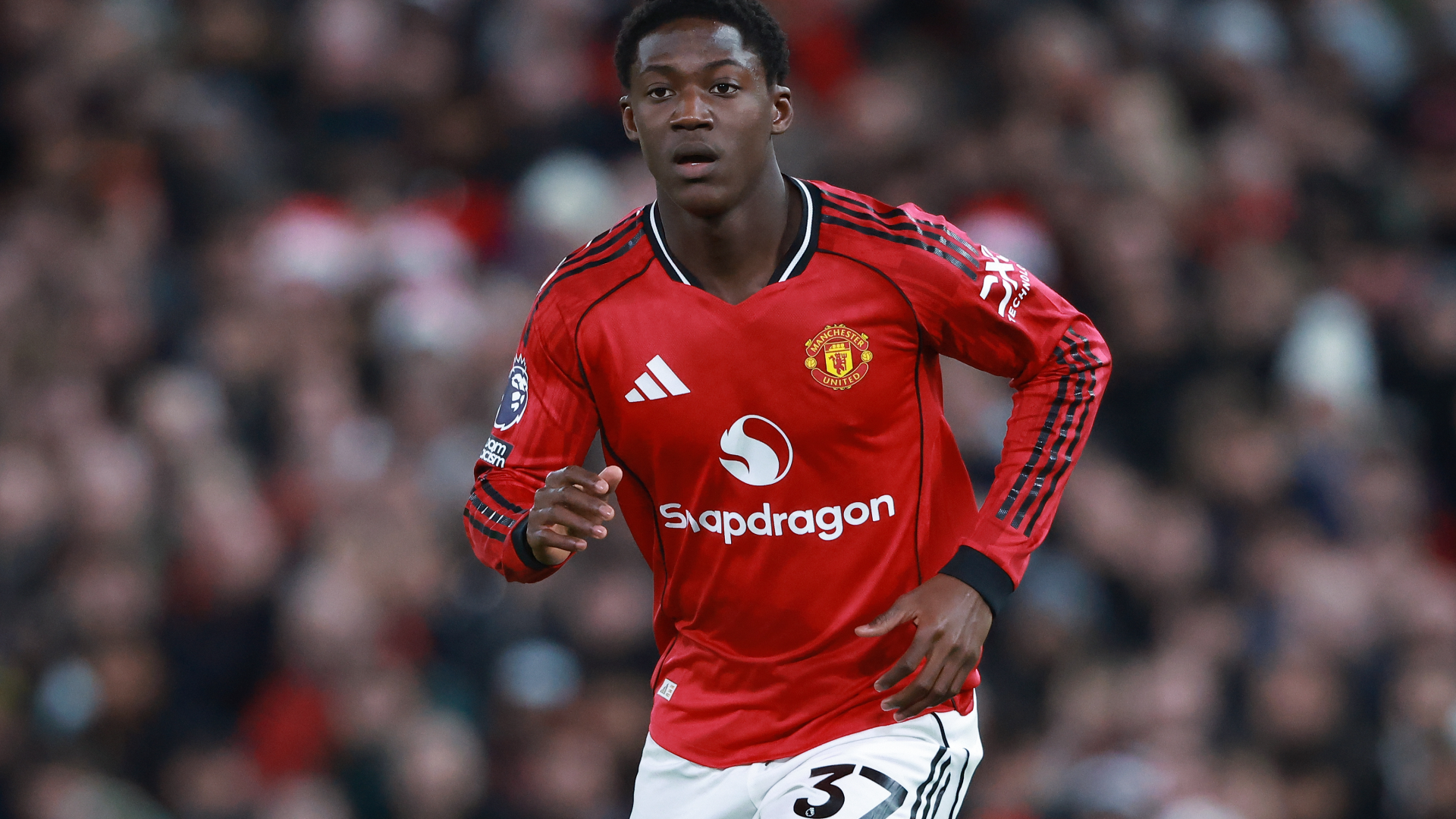 The player who deserves more credit for Fernandes’ freedom may actually be Kobbie Mainoo.
Mainoo did not score.
He did not provide an assist.
But his presence changed the geometry of the midfield.
His ability to receive and carry the ball meant Fernandes did not have to constantly come toward the centre-backs to connect the game. Mainoo could move the ball through midfield and then continue his run into more advanced zones. He was also involved in the move that eventually resulted in Fernandes completing his hat-trick.
That is the distinction between freedom and abandonment.
Giving Fernandes freedom without structure would simply leave United exposed.
Giving Fernandes freedom while Mainoo and Tielemans control the central areas gives him a platform from which he can attack.
Carrick had effectively separated the responsibilities.
Mainoo and Tielemans: build and connect.
Rashford and Mbeumo: stretch and attack width.
Cunha: move defenders and connect the front line.
Fernandes: decide the final action.
That division of labour is what made the performance look so natural.
Why the 4-2-3-1 worked better than the opening-day structure
The official XI listed United in a 4-2-3-1, with Fernandes behind Cunha and the two midfielders behind him.
But football formations are only starting points.
The real shape changed depending on possession.
In build-up, United could create a safer platform through Mainoo and Tielemans.
Higher up the pitch, Fernandes could move across the attacking midfield line without being tied to one channel.
Cunha could drop.
Rashford could run beyond.
Mbeumo could hold width.
That produced a particularly difficult question for Ipswich’s defenders:
Who exactly should follow Fernandes?
If a centre-back stepped into midfield, Cunha could exploit the space.
If the full-back narrowed toward Fernandes, Rashford or Mbeumo could attack the flank.
If Ipswich’s midfielders followed Fernandes, Mainoo could carry the ball beyond them.
That is why good attacking football is often less about one superstar and more about creating multiple problems simultaneously.
The first goal showed exactly what Carrick wanted
The equaliser in the 40th minute deserves tactical attention.
Ipswich had been the more dangerous side early in the match and had already taken the lead through Leif Davis after Abdul Fatawu beat Luke Shaw down the flank.
Then came the turning point.
Marcelino Núñez slipped.
Cunha reacted immediately, won possession and released Fernandes into space.
Fernandes did not have to drop deep to participate.
He was already positioned to attack.
That is what Carrick’s system was supposed to produce.
The player with the final quality was already close to the final action.
Fernandes finished emphatically.
Suddenly, the game had changed.
Carrick also gave Fernandes permission to be aggressive
 There is another layer to this.
Fernandes’ game is inherently high-risk.
He attempts difficult passes, switches play, shoots from ambitious positions and constantly looks for the decisive action.
A rigid system can sometimes make those qualities look like weaknesses because the player is forced to operate within too many positional restrictions.
Carrick’s philosophy has repeatedly leaned toward giving Fernandes responsibility and freedom. Earlier in 2026, Carrick explicitly spoke about wanting to see Fernandes with “a little bit of freedom” in areas where he could make the biggest difference.
Against Ipswich, that principle became visible.
Fernandes was not asked simply to circulate possession.
He was asked to change the game.
And he did.
The numbers show how much United’s attack opened up
The statistical contrast is striking.
Against Ipswich:
- 33 shots
- 12 shots on target
- 5.03 xG
- 44 touches in the opposition box
- 19 chances created
- 17 key passes
- 60.4% possession
Fernandes himself finished with:
- 3 goals
- 1 assist
- 8 shots
- 3 shots on target
- 3 chances created
Most importantly, this was the first time in Fernandes’ career that he had four Premier League goal involvements in one match. It was also his second Premier League hat-trick, with both coming in United’s first home game of a Premier League season—against Leeds in 2021/22 and Ipswich in 2026/27.
That is not normal production.
But neither should it be interpreted as a sustainable expectation that Fernandes will score three times every weekend.
The sustainable part is the structure that generated the opportunities.
The warning Carrick cannot ignore
The 5–2 scoreline should not hide the problems.
Ipswich still created dangerous opportunities and finished with around 2.02 xG and nine shots, while United’s defence again showed weaknesses.
The opening goal exposed Luke Shaw’s vulnerability against Fatawu’s pace, while Ipswich created other chances before United established control. Senne Lammens also had to make important interventions early in the contest.
Carrick himself refused to suggest that United had suddenly solved everything.
His post-match message was effectively that the victory mattered, but there remained a long way to go.
SEE ALSO; Manchester United Crisis 2.0: How Hull City Exposed the Problems Money Cannot Fix at Old Trafford
That is important.
Because the tactical lesson should not be:
“Fernandes scored a hat-trick, so everything is fixed.”
It should be:
“United finally gave Fernandes a structure that maximised his strengths.”
Those are two very different conclusions.
What Carrick Changed — In One Sentence

Michael Carrick did not set Bruno Fernandes free by moving him somewhere revolutionary; he set him free by taking responsibilities away from him.
Mainoo gave midfield greater mobility.
Tielemans provided deeper control.
Rashford provided vertical threat.
Mbeumo provided width and another goal threat.
Cunha moved defenders and connected the attack.
That left Fernandes in the place where Manchester United need their captain most:
near the final third, facing goal, with permission to decide what happens next.
What This Means for Manchester United Going Forward
 The biggest question now is whether Carrick can make this structure work against stronger opposition.
Ipswich’s approach gave United opportunities to attack spaces, and the game became increasingly stretched after the momentum shifted.
Champions League-level opponents and Premier League sides with stronger defensive organisation will ask different questions.
They will press Mainoo.
They will try to isolate Rashford.
They will close passing lanes into Cunha.
They will attempt to prevent Mbeumo from receiving in dangerous positions.
And they will certainly try to stop Fernandes finding the pockets around the penalty area.
That is where Carrick’s next tactical evolution will be tested.
But the principle is already clear.
Manchester United do not need Fernandes to touch the ball 100 times to dominate games.
They need him to touch the ball in the right places.
His 2025/26 campaign, which brought 21 Premier League assists and the PFA Player of the Year award, already demonstrated how much he can contribute when his creative instincts are trusted.
The Ipswich game added another dimension.
Fernandes does not have to choose between being United’s creator and being United’s scorer. With the right structure, he can be both.
What’s Next: Carrick May Have Found United’s Attacking Blueprint
The most encouraging part of Manchester United’s 5–2 victory was not the hat-trick.
It was the possibility that Carrick has identified a repeatable formula.
A formula in which Bruno Fernandes is not overloaded.
A formula in which Mainoo can play with freedom of his own.
A formula in which Rashford’s speed has a tactical purpose.
A formula in which Cunha’s movement creates space rather than simply occupying it.
And above all, a formula in which Manchester United’s best player is placed close enough to the goal to decide matches.
That is what Carrick changed against Ipswich.
He did not reinvent Bruno Fernandes.
He simply stopped making Bruno Fernandes carry Manchester United’s entire attack on his shoulders.
And perhaps that is the biggest lesson from Old Trafford: sometimes the best way to unlock a superstar is not to give him more responsibility, but to make sure he has less to worry about.
The real test begins when United face opponents capable of taking that space away.
Was Carrick’s Ipswich structure the beginning of Manchester United’s new attacking identity—or simply the perfect system for one afternoon?