FIFA fines Spain $20,000 after anti-Muslim chants during the international friendly against Egypt, raising serious questions about discrimination, stadium safety and football’s responsibility to protect players and supporters. The sanction includes spectator restrictions and a requirement for an anti-discrimination programme, but will these measures deliver lasting change?
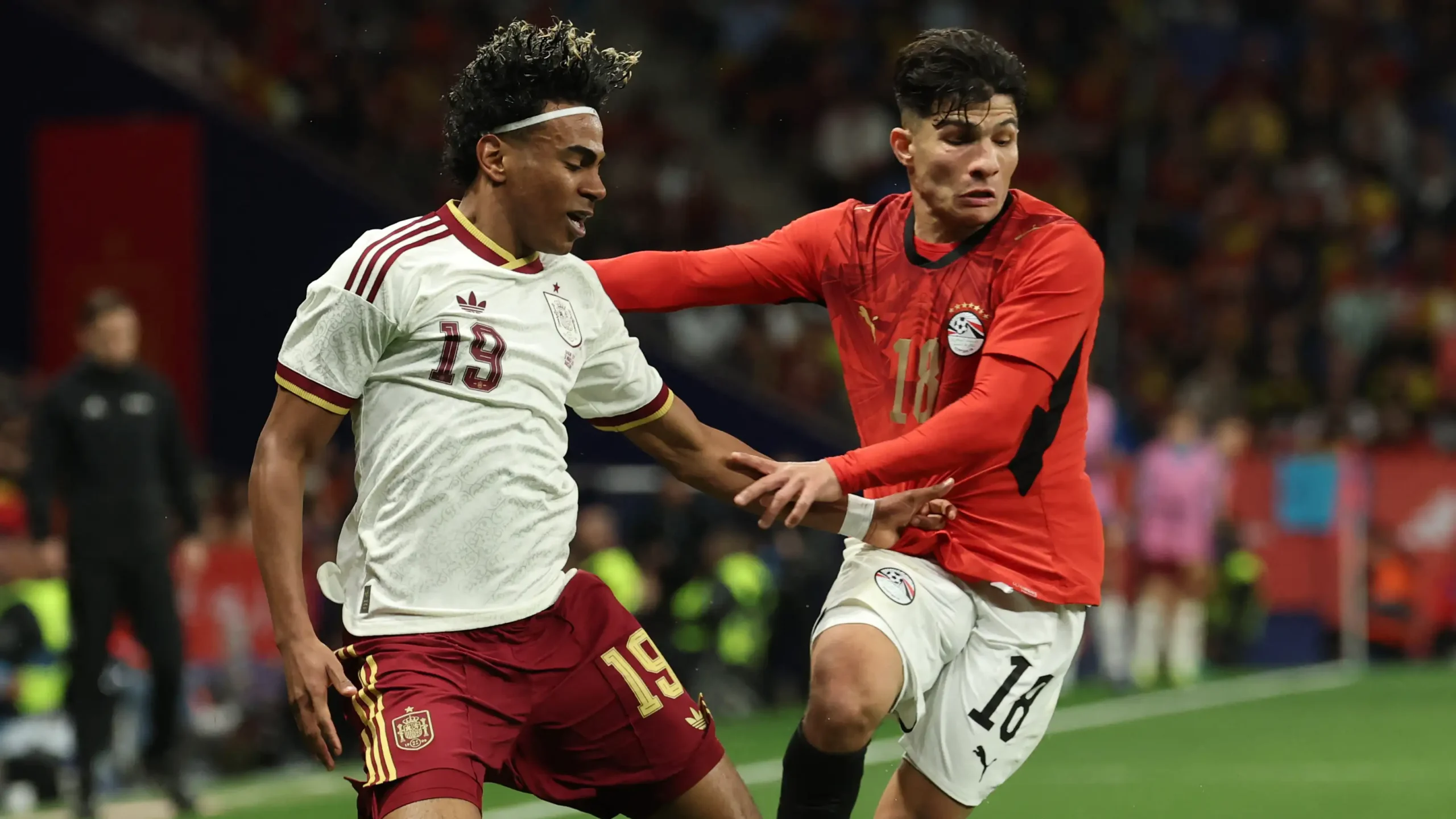
The decision to fine Spain’s football federation $20,000 and impose restrictions on spectators at a future home friendly has reopened the debate about how effectively football confronts religious discrimination. The controversy followed chants made by sections of the Spanish crowd during a 0–0 international friendly against Egypt in Barcelona on 31 March 2026. Spain international Lamine Yamal publicly condemned the behaviour, describing it as disrespectful and intolerable. [Associated Press reported the sanctions on 16 October](https://apnews.com/article/25b36f4ed8729dead4bcc500e9093469), bringing the incident back into the international spotlight.
The penalty is more complicated than a headline about a fine suggests. FIFA’s disciplinary decision also requires Spain to restrict at least 15% of the available seating at its next senior men’s home friendly, with the option of using those seats for approved community groups and anti-discrimination initiatives. The federation must also invest the fine amount in a comprehensive plan to combat discrimination within six months, subject to FIFA’s approval. [The published FIFA disciplinary decision](https://digitalhub.fifa.com/asset/f63359e7-52bf-4ddc-96f5-efb36e9289df/Spanish-Football-Association_04082026.pdf) sets out those requirements.
Spain’s football federation, the RFEF, has challenged the punishment through FIFA’s appeals process and now plans to take its case to the Court of Arbitration for Sport (CAS). [Reuters confirmed the planned CAS appeal on 16 October](https://www.reuters.com/sports/soccer/spain-punished-by-fifa-islamophobic-chants-egypt-friendly-2026-10-16/).
For FIFA, the case is a test of whether its disciplinary framework can hold football associations accountable even when a minority of supporters are responsible for discriminatory behaviour. For players and supporters, it is a test of whether punishment can create safer stadiums rather than simply produce another headline.
1. FIFA Fines Spain: What Happened During the Egypt Friendly?
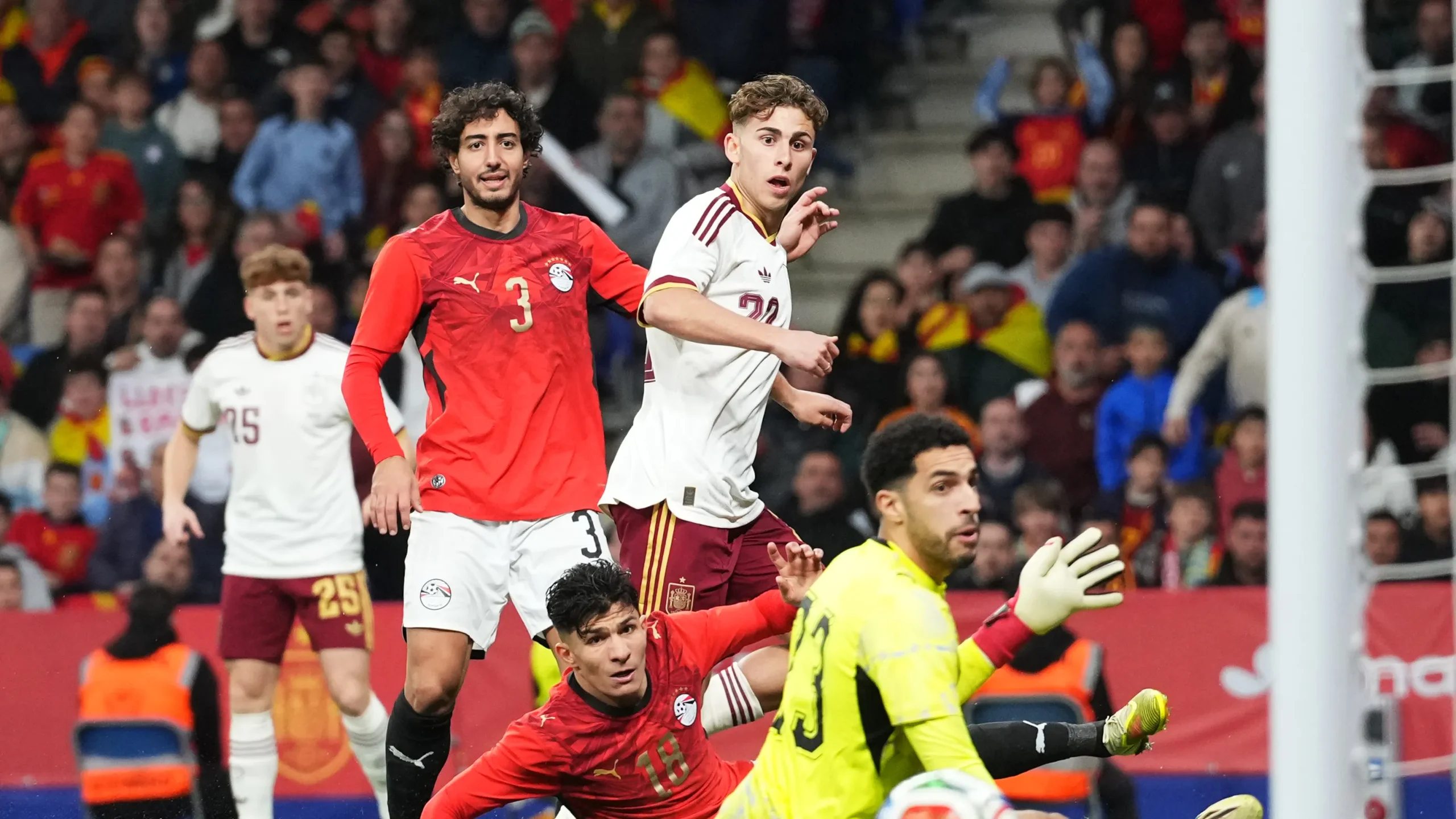
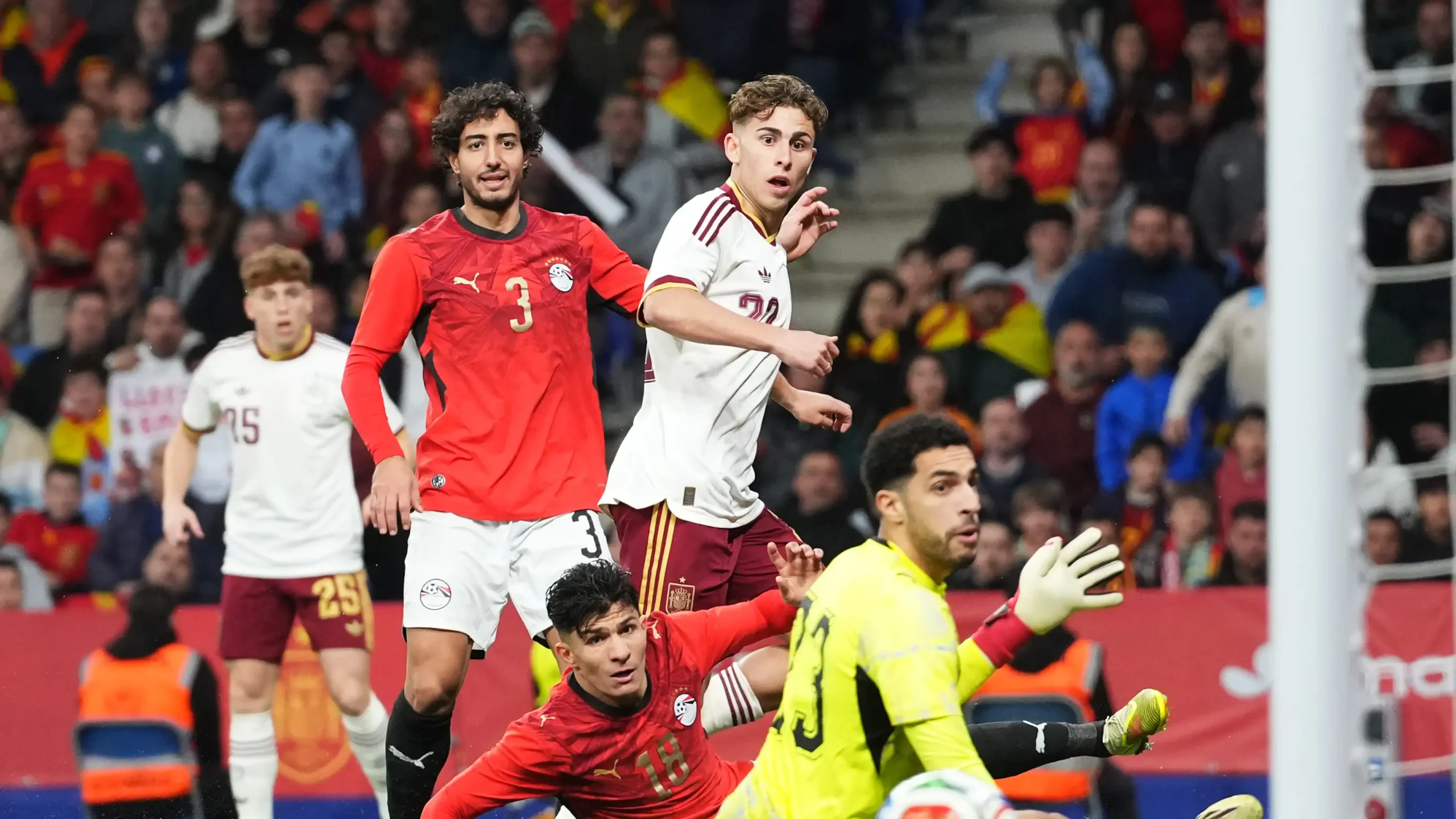
 The incident occurred at the RCDE Stadium near Barcelona, home of La Liga club Espanyol, during Spain’s international friendly against Egypt.
The match ended 0–0, but sections of the Spanish crowd chanted a slogan translated as “Who doesn’t jump is a Muslim”. The chant was heard around the 10th minute and again early in the second half, according to the FIFA disciplinary record. After the second occurrence, stadium officials issued a warning and displayed an anti-discrimination message on the stadium screen. [FIFA’s decision](https://digitalhub.fifa.com/asset/f63359e7-52bf-4ddc-96f5-efb36e9289df/Spanish-Football-Association_04082026.pdf) documents the incidents and the measures taken.
The incident was particularly significant because the chant used religious identity as a form of mockery in a match involving Egypt, a country whose population is predominantly Muslim.
Yamal, a practising Muslim, responded publicly after the match. He acknowledged that the chant had been directed at the opposing team rather than personally at him, but said that using religion to mock people was still unacceptable.
His intervention helped shift the discussion beyond the immediate match and towards a broader question: can players be expected to compete in an environment where aspects of their religious or cultural identity become targets for abuse?
Why the context matters
The word “Muslim” is not inherently insulting. The issue in this case was how it was used.
FIFA’s disciplinary committee concluded that the chant employed Muslim identity as a negative marker, using religion to distinguish and ridicule the opposing side. Its reasoning was that a term can be neutral in isolation but discriminatory when used as a taunt in a particular context. [The published decision explains FIFA’s interpretation of Article 15](https://digitalhub.fifa.com/asset/f63359e7-52bf-4ddc-96f5-efb36e9289df/Spanish-Football-Association_04082026.pdf).
That distinction matters far beyond football. Discrimination does not always depend on an explicit slur. It can also arise when an identity, faith or characteristic is repeatedly used to suggest that a person or group is inferior, unwelcome or deserving of ridicule.
The case therefore raises a question that stadium authorities and football associations must take seriously: should a discriminatory chant be dismissed simply because its words might appear harmless outside the situation in which they were used?
FIFA’s disciplinary committee answered no.
2. The FIFA Sanctions: Is a $20,000 Fine Enough?
 The financial penalty has attracted attention, but the full sanction package deserves closer examination.
FIFA imposed the $20,000 fine and ordered Spain to play its next senior men’s home friendly with a limited number of spectators. At least 15% of the available seats must be closed, primarily in the stands behind the goals, unless an approved alternative is used.
Under that alternative, the RFEF may allocate the affected seating to community or special-interest groups, including families, students and anti-discrimination organisations. The alternative requires FIFA’s approval and must include measures promoting anti-discrimination. The federation must also develop and implement a comprehensive prevention plan. [These conditions appear in FIFA’s formal ruling](https://digitalhub.fifa.com/asset/f63359e7-52bf-4ddc-96f5-efb36e9289df/Spanish-Football-Association_04082026.pdf).
This is an important distinction. The ruling does not simply require Spain to write a cheque and move on.
The decision makes the financial penalty conditional on the federation investing the amount in an approved anti-discrimination programme within six months. If it fails to develop and implement the plan, the fine becomes payable to FIFA.
Why the financial penalty remains controversial
A $20,000 penalty may appear relatively modest when applied to a major national football association. Its effect will depend partly on the organisation’s finances, the cost of compliance and whether the accompanying restrictions meaningfully change behaviour.
However, FIFA’s disciplinary committee described the amount as the minimum financial sanction applicable to a first offence under Article 15 of its Disciplinary Code, alongside a match played with a limited number of spectators.
FIFA also considered Spain’s first-offence status and acknowledged that the federation had taken preventive measures, responded promptly and cooperated with the authorities. The committee concluded that the selected sanctions were proportionate in light of those mitigating factors. [Read the detailed disciplinary reasoning](https://digitalhub.fifa.com/asset/f63359e7-52bf-4ddc-96f5-efb36e9289df/Spanish-Football-Association_04082026.pdf).
That makes the debate more nuanced than simply asking whether the number should have been higher.
**The critical test is whether the punishment changes future behaviour.** A fine that is technically correct but produces no improvement in stadium safety would represent an incomplete response. Conversely, a penalty accompanied by effective education, supporter engagement and identification of offenders could deliver longer-term value.
The seating restriction and mandatory prevention plan are therefore essential to assessing FIFA’s response. Their effectiveness will depend on how they are implemented and monitored.
3. Lamine Yamal’s Response: Why Players Must Not Carry the Burden Alone
 Yamal’s public criticism gave the incident a powerful human dimension.
The Barcelona winger was not the direct target of the chant, according to his own account, but he explained why the behaviour remained unacceptable to him as a Muslim.
His intervention highlighted a problem that football cannot solve simply by asking players to speak out more often.
Players have increasingly used their public platforms to challenge discriminatory behaviour, but the responsibility for preventing abuse must not fall on those experiencing or witnessing it. Organisers, associations, security personnel and governing bodies have the authority to establish clear rules and enforce them.
A player should not have to decide whether speaking publicly will affect relationships with supporters or expose them to further hostility before an incident is treated seriously.
Turning solidarity into practical action
Public statements from players can be powerful because they explain the human consequences of discrimination to audiences that might otherwise treat the matter as a minor controversy.
Yamal’s response helped clarify that the objection was not to the existence of a religious identity, but to using that identity to mock others.
However, statements of support must lead to practical measures.
Football associations can strengthen procedures for reporting discriminatory chants, ensure stadium staff know how to respond and make it easier to identify individual offenders. Clubs and federations can also work with legitimate supporters’ groups on education and behaviour standards.
There is an important balance here. The aim should be to identify and hold responsible individuals accountable, not to treat every supporter as guilty because of the actions of a minority.
An effective response must protect the dignity of targeted groups while preserving fair procedures for establishing who was responsible.
Solidarity becomes meaningful when it changes the environment in which football is played. Condemning a chant is a necessary first step, but safer stadiums require consistent enforcement and visible consequences.
4. Article 15 vs Article 17: The Legal Dispute Behind the Fine
 One of the most important aspects of the case concerns the rules used to sanction the RFEF.
Spain’s federation argued that the chants should not be treated as discriminatory conduct under Article 15 of FIFA’s Disciplinary Code. It maintained that the word “Muslim” is not inherently derogatory and argued that Article 17, which covers improper spectator messages and behaviour, was more appropriate.
The RFEF also argued that it had responded promptly, issued warnings and worked with authorities to identify those responsible. It considered the resulting sanctions disproportionately severe, particularly in light of its response and the fact that this was its first offence under Article 15.
FIFA rejected those arguments. Its disciplinary committee concluded that the chants were discriminatory in context because they used religious identity as a means of mockery and exclusion. It also rejected the suggestion that the referee’s handling of the incident meant the behaviour could not subsequently be found discriminatory. [Reuters summarised the legal dispute and the RFEF’s position](https://www.reuters.com/sports/soccer/spain-punished-by-fifa-islamophobic-chants-egypt-friendly-2026-10-16/).
These disagreements are not trivial. The legal classification of an incident determines the rules applied, the sanctions available and the responsibilities imposed on the federation.
Why the distinction matters for future cases
If a protected characteristic is used as an insult or taunt, FIFA’s approach suggests that the wider context matters more than whether the word itself is always offensive.
That principle could influence future disciplinary cases involving religion, nationality, ethnicity and other protected characteristics.
It also creates a responsibility for football’s governing bodies to explain their decisions clearly. Consistent reasoning helps associations understand their obligations and gives supporters a clearer idea of which behaviours cross the line.
The next legal stage will be important. Reuters reported on 16 October that the FIFA appeals process had rejected Spain’s challenge and that the RFEF intended to take the matter to CAS.
Until that process is concluded, the federation’s challenge remains unresolved. It would be premature to present the planned appeal as having either overturned or definitively settled the sanction.
5. FIFA’s Anti-Discrimination Framework: What Must Happen Beyond the Fine?
FIFA has an established disciplinary framework for discrimination and racist abuse. Article 15 of its Disciplinary Code addresses discriminatory conduct based on protected characteristics, including religion, and provides sanctions for associations or clubs whose supporters engage in such behaviour.
The rules also provide for more severe measures in repeat incidents or where circumstances justify them. These may include prevention plans, further fines, matches played behind closed doors, stadium restrictions and other sporting sanctions. [FIFA’s formal decision reproduces and applies the relevant provisions](https://digitalhub.fifa.com/asset/f63359e7-52bf-4ddc-96f5-efb36e9289df/Spanish-Football-Association_04082026.pdf).
But a disciplinary framework can work only when its requirements are enforced consistently and its outcomes are evaluated.
Three areas that deserve attention
First, better identification of offenders. Stadium cameras, incident reporting, trained stewards and cooperation with authorities can help establish who participated in discriminatory behaviour. Individual accountability is important because sanctions against associations do not automatically mean that the individuals responsible have been identified or punished.
Second, effective education. Education should not be reduced to a message on a stadium screen. Football organisations can work with supporters’ groups, schools, community organisations and players to explain why discriminatory conduct harms people and damages the game.
Third, transparent follow-up. FIFA and national associations should report whether agreed prevention plans have been implemented and whether repeat incidents have decreased. Without publicly accessible evidence of progress, it is difficult to determine whether sanctions are achieving their purpose.
These measures are consistent with the prevention plan required by FIFA’s decision in the Spain case, which is intended to address discrimination and reduce the risk of similar incidents occurring again.
The wider objective should be to build a system in which stadium authorities can intervene promptly, discriminatory conduct is investigated consistently and associations are held accountable for meeting their obligations.
6. What the Spain Case Means for Football Ahead of the World Cup
 The dispute carries significance beyond a single international friendly.
International tournaments bring together supporters with different languages, religions, nationalities and cultural backgrounds. Football’s global reach is one of its greatest strengths, but it also creates a responsibility to ensure that stadiums remain safe spaces for players and spectators.
The Spain–Egypt incident occurred during a World Cup warm-up friendly, making its lessons relevant to international football more broadly.
A major tournament cannot rely on pre-match campaigns alone. Organisers need practical reporting systems, trained security staff, clear escalation procedures and sanctions that are understood before incidents occur.
There is also a reputational dimension. When discriminatory behaviour becomes the dominant story around a national team, it can overshadow the football itself and undermine efforts to present international competitions as inclusive events.
The lesson for organisers is not that every incident can be prevented, but that responses must be swift, proportionate and effective.
For FIFA, the Spain case offers an opportunity to demonstrate that its disciplinary principles apply even when a major national association disputes the classification of an incident.
For national federations, it reinforces the need to prepare for misconduct, intervene when it occurs and cooperate with investigations rather than treating disciplinary action as a separate administrative issue.
Final Verdict: Is Football Doing Enough to Fight Anti-Muslim Abuse?
 FIFA’s decision to fine Spain $20,000 and impose a spectator restriction represents a concrete response to discriminatory behaviour. The accompanying requirement for an anti-discrimination programme makes the ruling more substantial than a financial penalty alone.
SEE ALSO: FIFA trust crisis: Infantino’s World Cup faith gamble is playing with fire
Yet whether football is doing enough cannot be decided by the size of one fine.
The real test will be whether the RFEF implements a credible prevention plan, whether individual offenders can be identified and held accountable, and whether future matches become safer for supporters and players from all backgrounds.
Spain’s planned CAS appeal will provide the next development in the legal dispute, but it does not change the broader responsibility that football organisations have to address discriminatory conduct.
Yamal’s response also offers an important reminder: people should not have to tolerate religious mockery as a normal part of supporting or playing football.
The ultimate measure of FIFA’s anti-discrimination policy should be fewer incidents, stronger accountability and a stadium culture in which religious identity is never used to humiliate another person.
What’s Next?
The RFEF’s planned CAS appeal and the implementation of FIFA’s required prevention plan are the key developments to watch. The federation’s actions over the coming months will help determine whether the ruling produces lasting change beyond the immediate controversy.
Do you believe FIFA’s $20,000 fine and spectator restrictions are enough to deter anti-Muslim abuse, or should football introduce stronger individual penalties as well? Share your opinion in the comments and follow The Football Xtra for more FIFA news, football governance analysis and international football reporting.