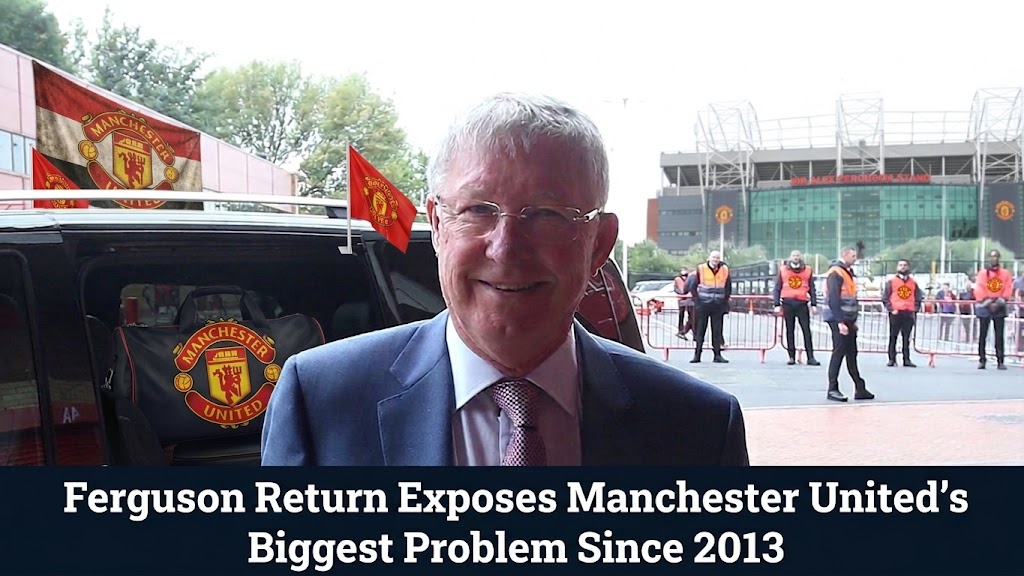
Ferguson return to Old Trafford is not the real story. The real story is the uncomfortable question his presence forces Manchester United to confront: why, 13 years after his departure, has the club still failed to replace what he built? Sir Alex Ferguson’s appearance at Old Trafford immediately brings back memories of an era when Manchester United did not simply play to win matches — they played with the expectation of dominating them. From the Class of ’92 to the Premier League title in 2013, Ferguson built far more than a collection of elite players. He created a culture, a recruitment philosophy, an elite mentality and a system capable of evolving with every new generation.
Today, United are still searching for pieces of that puzzle.
Managers have come and gone. Expensive players have arrived. Hundreds of millions have been invested. Tactical philosophies have changed. Yet one problem has continued to resurface: Manchester United have spent years searching for someone to replace Ferguson instead of building an institution capable of thriving without him.
And that is where the real story begins.
Because Ferguson did not build a Manchester United that depended on Ferguson.
He built a Manchester United that knew how to keep winning when generations changed.
So the question is no longer whether Ferguson can come back.
The question is whether Manchester United have finally learned what he left behind.
Ferguson Did Not Just Build a Team — He Built an Ecosystem
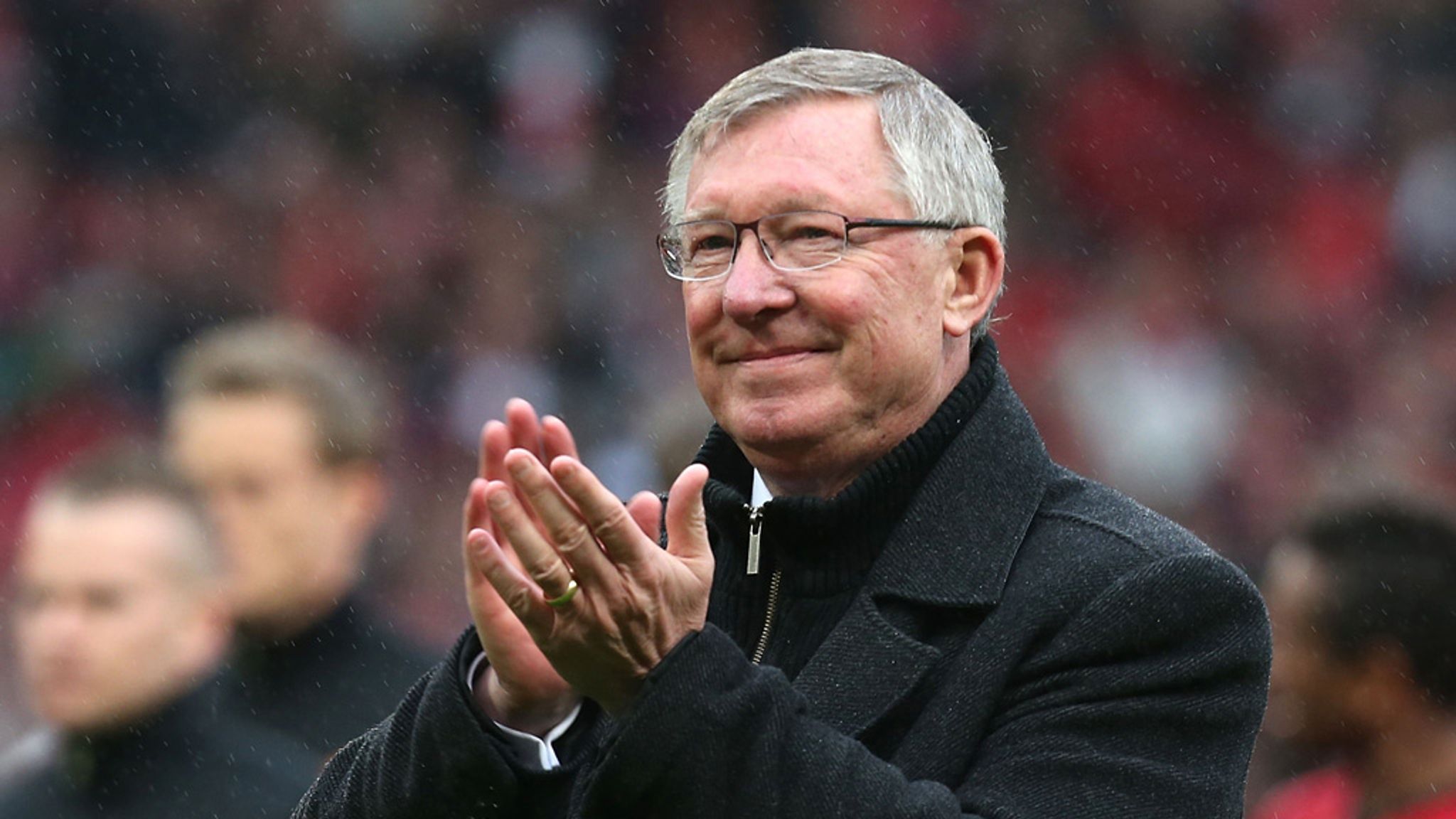 The easiest mistake is to describe Ferguson’s Manchester United as a collection of great players coached by a great manager.
That explanation is incomplete.
Ferguson built an ecosystem.
The evidence is visible in the extraordinary length of his reign and the number of different generations he successfully managed.
The Class of ’92 became central to the team.
Then came another generation.
Then another.
Players such as Eric Cantona, Roy Keane, Peter Schmeichel, Ryan Giggs, Paul Scholes, David Beckham, Cristiano Ronaldo, Wayne Rooney and many others operated within different versions of Ferguson’s Manchester United.
The team changed.
The football evolved.
The players aged.
The opponents improved.
Yet the institution continued winning.
Manchester United’s official history records 13 Premier League titles during the Ferguson era, including the final championship in 2012/13.
That is the critical distinction.
Ferguson was not simply maintaining a successful squad. He was repeatedly rebuilding a successful organisation.
That skill has proved extraordinarily difficult to reproduce.
The Post-Ferguson Problem Was Never Just the Managers
 Since Ferguson retired, Manchester United have gone through a remarkable succession of managerial experiments.
David Moyes was asked to inherit the job.
Louis van Gaal brought a different tactical philosophy.
José Mourinho arrived with elite-level experience and trophies.
Ole Gunnar Solskjær offered familiarity with the club’s identity.
Erik ten Hag arrived with a reputation for developing a modern positional structure.
Ruben Amorim was supposed to provide another tactical reset.
The results varied, but the broader pattern remained remarkably consistent.
A new manager arrived.
The club changed direction.
Recruitment followed the manager’s preferences.
Results deteriorated.
Another manager arrived.
The cycle began again.
Reuters’ historical review of United’s post-Ferguson managers captures the instability that followed the 2013 transition.
That is why blaming individual managers is too simplistic.
The bigger failure was succession.
Ferguson had spent decades creating a structure in which the manager’s authority was enormous but the club’s identity was even bigger.
After Ferguson, United repeatedly tried to find the next individual capable of restoring everything.
That was the wrong equation.
The Ferguson Model Was About Adaptation
One of Ferguson’s greatest strengths was his willingness to change.
The Manchester United of 1993 was not the Manchester United of 1999.
The 1999 team was not the 2008 team.
The 2008 team was not the 2013 team.
That flexibility matters.
United’s official history describes Ferguson’s later years as another rebuilding phase, culminating in the club’s 20th English league title in 2012/13.
The lesson is crucial.
Successful dynasties survive because they rebuild before they collapse.
Ferguson understood that.
Manchester United after Ferguson often appeared to rebuild only after the previous project had already failed.
That difference is enormous.
Recruitment Became a Symptom of the Problem
 Manchester United’s transfer history after Ferguson has frequently been dominated by individual names rather than collective squad architecture.
Paul Pogba.
Romelu Lukaku.
Jadon Sancho.
Harry Maguire.
Antony.
Casemiro.
Others followed.
The issue is not that every expensive signing was necessarily a bad footballer.
The problem was often whether the signing fitted the long-term construction of the team.
Recent analysis of United’s previous rebuilding cycles highlighted how several high-profile acquisitions failed to create the coherent team the club needed.
That is the opposite of what Ferguson’s best recruitment often achieved.
He did not simply ask:
“Who is the biggest available player?”
He asked whether a player could contribute to the next version of Manchester United.
That distinction is fundamental to modern squad building.
Carrick May Have Accidentally Revealed the Solution
 Interestingly, the most encouraging development at Old Trafford in 2026 has come from someone who understands Ferguson’s Manchester United from the inside.
Michael Carrick.
Carrick returned to the club as head coach in January 2026 after Ruben Amorim’s departure. He subsequently transformed United’s season, winning 11 of his first 16 league matches and steering the club towards third place and Champions League qualification.
His influence was not based on trying to recreate Ferguson’s football.
That would be impossible.
Instead, Carrick restored something Ferguson always valued:
clarity.
Players were used in more natural positions.
The team became more balanced.
Bruno Fernandes was allowed to influence games from a more productive role.
Kobbie Mainoo became increasingly important.
And the emotional temperature around the squad changed.
Premier League analysis highlighted five tactical and structural changes Carrick made during his initial unbeaten run, while Fernandes’ extraordinary creative output under Carrick became one of the defining stories of United’s revival.
That is potentially more important than any individual tactical formation.
Why Mainoo Matters More Than Another £60m Signing
 Manchester United’s summer recruitment illustrates the tension between rebuilding externally and developing internally.
Carlos Baleba arrived from Brighton in a deal reported at an initial £60m.
Youri Tielemans and Andrey Santos were also brought into midfield.
That represents serious investment.
But United also have Kobbie Mainoo.
The academy graduate is not simply another squad player.
He represents the possibility of rebuilding part of the club around its own identity.
Ferguson’s greatest Manchester United teams repeatedly integrated academy players into elite squads.
United’s academy history notes that homegrown players formed part of every Premier League title-winning squad under Ferguson and that the club has maintained an extraordinary tradition of having an academy-developed player in every first-team matchday squad since 1937.
That is not nostalgia.
It is a competitive advantage.
If United can combine academy development with elite recruitment, the club can begin creating a sustainable football identity instead of constantly purchasing a new one.
The Financial Cost of Getting It Wrong
There is also a business argument.
Every failed football project creates another bill.
A managerial dismissal requires compensation.
A failed transfer creates an expensive asset that may later need to be sold below expectations.
A tactical mismatch can reduce player value.
A poor league finish can damage broadcasting and commercial income.
And a club that continually rebuilds without progressing spends money twice: first building the wrong team, then dismantling it.
United’s financial outlook improved after Carrick’s third-place finish, with the club raising its revenue and adjusted core-profit forecasts and benefiting from increased broadcasting income and a return to Champions League football.
That demonstrates something important.
Football success and institutional stability are financial strategies as well as sporting strategies.
A club that consistently qualifies for the Champions League has more resources to improve its squad.
A club that repeatedly misses out has to spend more aggressively just to catch up.
The cycle can become vicious.
The New Stadium Makes the Question Even Bigger
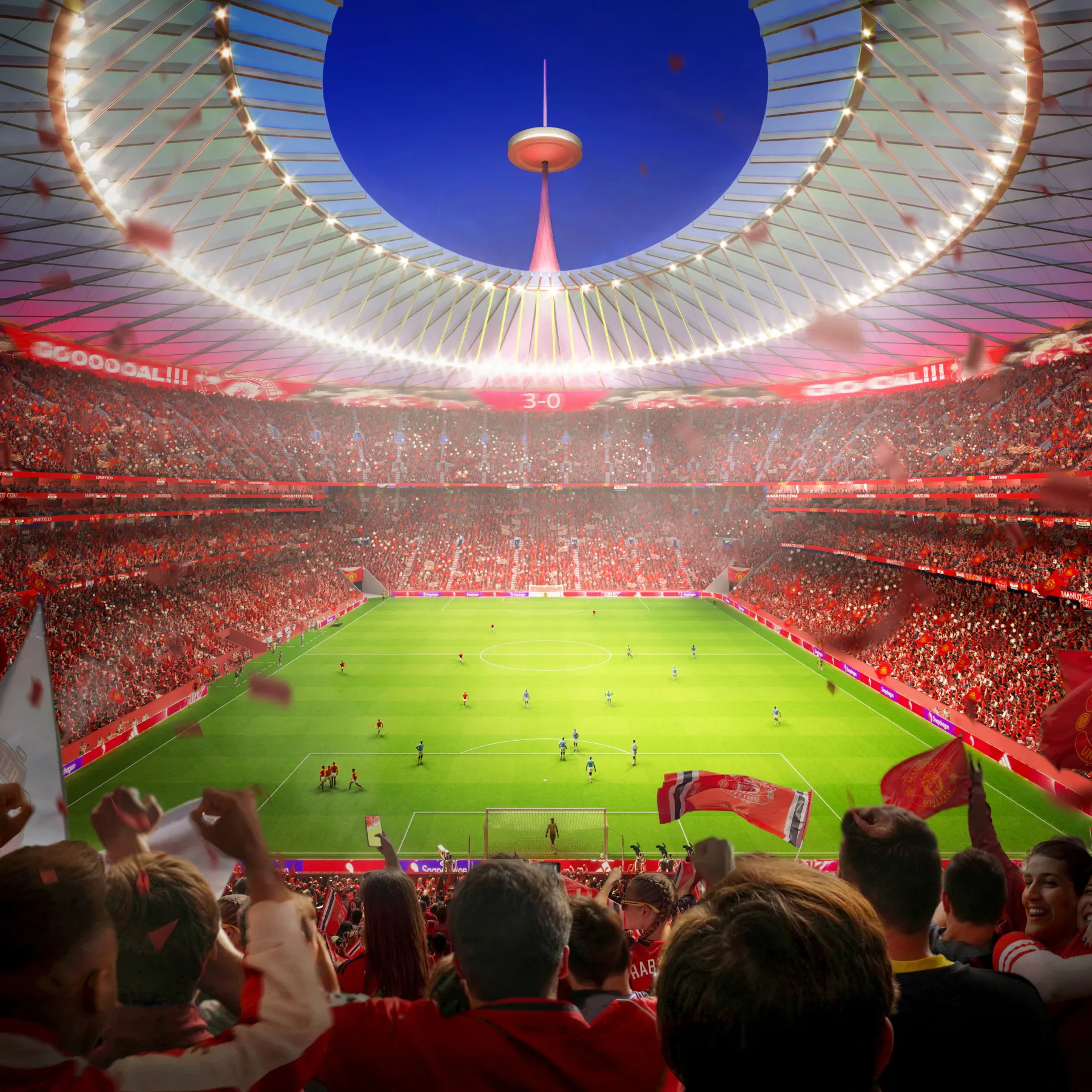 Manchester United’s rebuilding project is now extending beyond the pitch.
The club is pursuing plans for a proposed 100,000-capacity stadium and wider regeneration around Old Trafford, with the project potentially becoming one of the largest sporting infrastructure developments in British football.
That makes the Ferguson question even more relevant.
A new stadium can modernise the physical environment.
It cannot recreate a winning culture.
New training facilities can improve infrastructure.
They cannot guarantee elite recruitment.
A new executive structure can improve governance.
It cannot automatically produce a championship team.
Buildings are easier to replace than institutions.
That is precisely why Ferguson’s legacy remains so difficult to replicate.
What Manchester United Actually Need to Replace
The objective should not be to find another Ferguson.
There will not be another Ferguson.
The objective should be to reproduce the principles that made Ferguson’s Manchester United sustainable.
That means:
- A clear football identity that survives managerial changes.
- Recruitment based on squad architecture, not simply reputation.
- A stronger pathway from academy to first team.
- Long-term succession planning.
- Coaching continuity across age groups.
- Greater accountability for sporting decisions.
- A willingness to rebuild before decline becomes a crisis.
- An environment where elite standards are normal rather than occasional.
Those principles are transferable.
Ferguson’s personality is not.
Carrick’s Challenge Is Bigger Than Winning Games
 Carrick’s third-place finish was important.
But it does not prove that Manchester United have solved their problems.
In fact, the beginning of the 2026/27 season has already demonstrated how fragile progress can be.
United opened the new campaign with a 2-0 defeat at newly promoted Hull City.
That result immediately changed the mood.
The lesson is not that Carrick suddenly became a poor manager.
It is that Manchester United’s margin for error remains extremely small.
One bad recruitment window.
One injury crisis.
One tactical miscalculation.
One poor run.
And the pressure returns.
That is the challenge of rebuilding an institution that spent years losing its structural stability.
The Ferguson Return Should Be a Mirror, Not a Shortcut
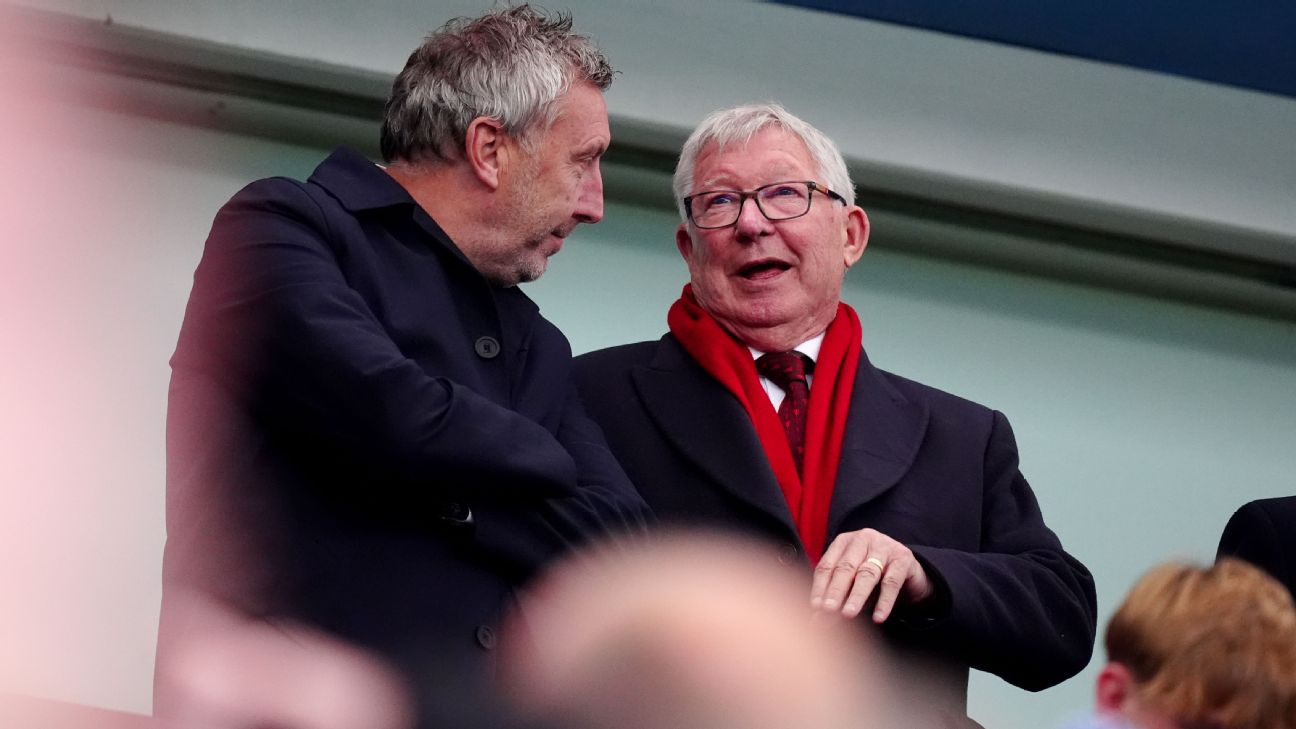 There is something almost poetic about Ferguson watching Manchester United from the stands again.
He represents what the club once was.
But he should not represent what the club is trying to become.
Trying to recreate the past would be a mistake.
The modern Premier League is different.
Manchester City operate with extraordinary financial and sporting infrastructure.
Liverpool have developed a sophisticated recruitment and coaching ecosystem.
Arsenal have spent years building continuity around Mikel Arteta.
Chelsea, despite their own instability, continue to operate on a fundamentally different ownership and squad-building model.
United therefore cannot simply reopen the Ferguson blueprint and expect it to work in 2026.
They need a new blueprint.
One that takes the strongest principles from Ferguson’s era — ambition, youth development, adaptability, standards and long-term thinking — and translates them into modern football.
What’s Next for Manchester United?
The real test for Carrick and United’s sporting leadership is not whether they can produce another short-term revival.
It is whether they can make progress repeatable.
That means the club must be able to lose a great player without losing its identity.
It must be able to change managers without changing its entire football philosophy.
It must be able to integrate a teenager without treating him as a gamble.
It must be able to spend £60m on a midfielder without making that player the solution to every structural weakness.
And it must be able to challenge for trophies without needing a miracle.
That was the hidden genius of Ferguson’s Manchester United.
He made excellence feel repeatable.
His return to Old Trafford therefore should not primarily be viewed as a story about an ageing legend coming home.
It should be viewed as a mirror held up to the club he built.
Manchester United do not need Sir Alex Ferguson to come back and manage another game.
They need to finally understand what made his Manchester United survive, evolve and win for so long — and build those principles into the club’s future.
Because the greatest post-Ferguson achievement would not be finding another Ferguson.
It would be building a Manchester United that no longer needs one.
What do you think? Has Manchester United finally started building a sustainable post-Ferguson identity under Michael Carrick, or is the club still searching for the structure Ferguson left behind? Share your view in the comments.