


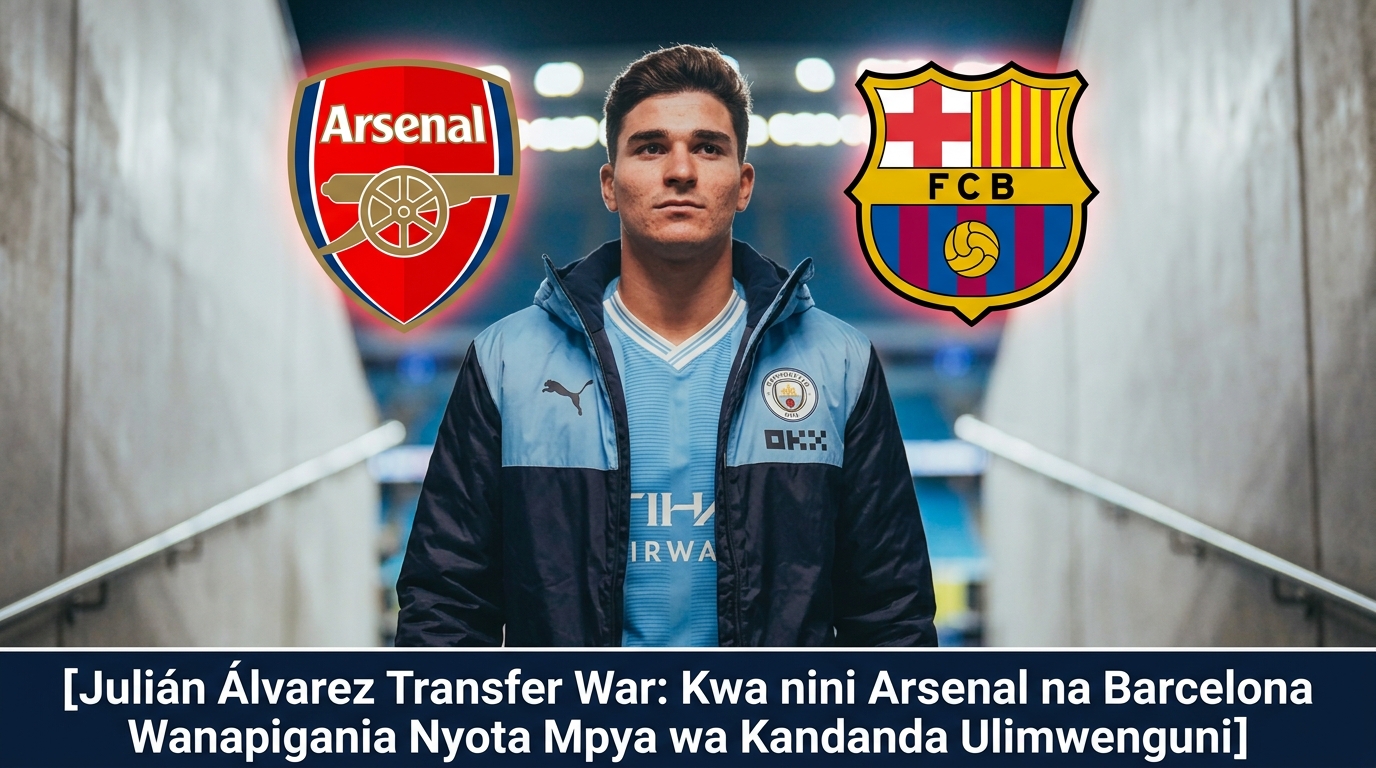
Barcelona’s Raphinha reinvention has changed the meaning of their failed pursuit of Julián Álvarez. Sporting director Deco said on Thursday that the Atlético Madrid forward is now part of the past after the Catalan club’s summer attempt did not produce a deal. What looked like a missing centre-forward has become a different kind of attacking project under Hansi Flick.
The immediate evidence is extraordinary but should still be treated as an early-season sample. Reuters reports Raphinha has scored 14 goals in eight matches in all competitions, including 12 in seven La Liga fixtures, since his move to centre-forward. The same report says Barcelona’s approach for Álvarez failed because Atlético maintained that he was not for sale.
The summer plan Barcelona could not complete
Barcelona entered the summer needing a centre-forward after Robert Lewandowski’s departure. Deco has described interest in both Álvarez and Lautaro Martínez. He said Inter made clear that their captain was unavailable, ending that line of enquiry, while Barcelona submitted an offer for Álvarez that Atlético would not accept. The club eventually brought in Gabriel Jesus as another attacking option.
That sequence matters because it shows Barcelona did not simply decide that a winger could replace a specialist striker from the beginning. They searched for a player with movement and link-up ability, ran into selling clubs unwilling to cooperate and then found a solution inside the squad. This is not the same story as a previously agreed Álvarez transfer collapsing at the last minute.
The transfer noise also needs context. A club can hold a preference while adapting its strategy when the economics stop making sense. Paying more is not always an answer, particularly when the seller is a direct domestic rival and the target’s role has become less urgent. Flexibility can be as important as ambition.
Why Raphinha works differently as Barcelona’s number nine
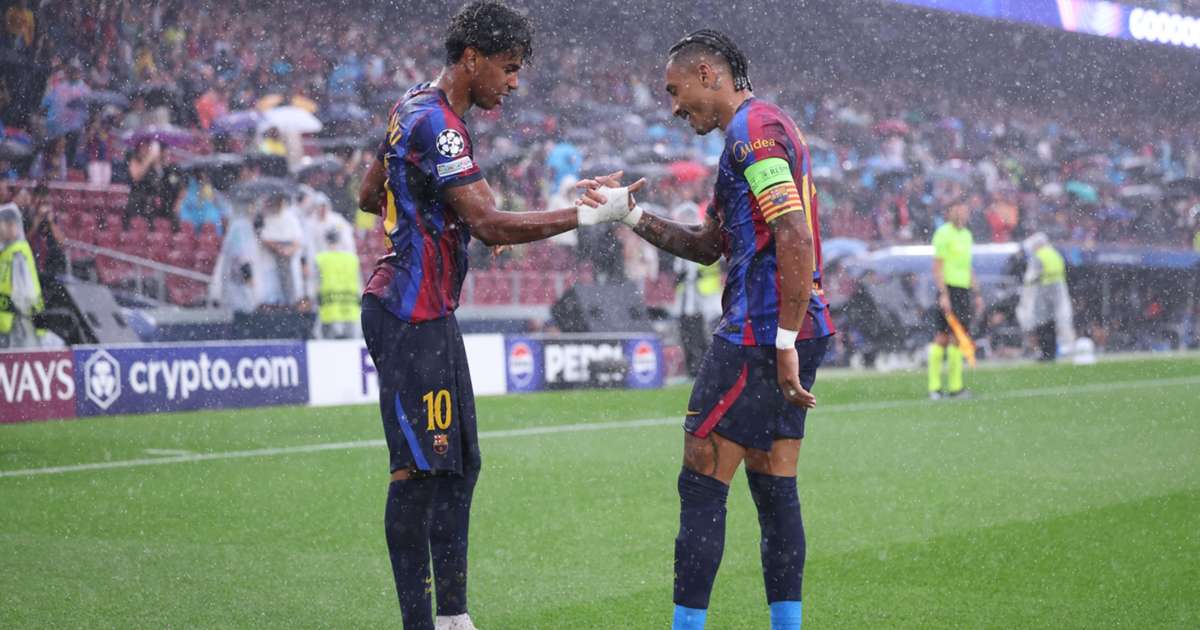
Raphinha is not operating as a traditional centre-forward waiting between two centre-backs. His starting position can be central, yet his attacking value comes from timing, acceleration and knowing when to leave the line. Deco noted that the role sometimes keeps the Brazilian away from the ball for longer periods and demands runs behind the defence at the right moment.
That is a meaningful trade-off for a player accustomed to receiving from wider or deeper areas. On the wing he can carry possession, combine with a full-back and face his marker. In the centre he must accept stretches when others control the ball, then attack a blind side the instant a passer turns forward. Goals can arrive from fewer touches but better touches.
The move also changes opponents’ reference points. A centre-back may be tempted to follow Raphinha into midfield, opening a lane for a winger. Stay home and the Brazilian can arrive between lines to bounce a pass into a runner. The movement is less about pretending to be a conventional striker than about forcing defenders to make uncomfortable choices.
What Hansi Flick gains from a more fluid attack
The biggest beneficiary may be the collective structure. Lamine Yamal can threaten from one side while midfield runners attack the space that Raphinha vacates. Barcelona can stretch a back line horizontally, then make a direct movement through the centre without relying on a fixed target. That variety makes opponents defend passing angles as well as individuals.
There is a defensive advantage in theory, too. A mobile front line can coordinate pressure earlier and recover positions faster after losing the ball. Whether Barcelona sustain that advantage against stronger opponents is still an open question, because an effective press depends on the distances behind the first line and on how quickly midfielders close the next receiver.
Results have made the experiment look effortless. Yet the challenge in a long campaign is whether the same runs remain sharp when matches arrive every few days, defences sit deeper and rivals adapt. Flick still needs alternative routes to goal, including crosses, set pieces and another player capable of occupying defenders when space disappears.

Does Deco’s Álvarez message close the transfer story?
Deco’s public comments are clearer than the speculation around him. He said Barcelona need to look ahead and described Álvarez as an option that is now behind the club. That is a statement of present intent; it does not establish what every future sporting director or transfer window will bring. It does, however, make a January move something a reporter should not present as an active negotiation without fresh evidence.
There is also Atlético’s perspective. They control a valuable striker’s contract and have their own sporting objectives. Barcelona’s interest did not remove that reality in the summer. Speculation about a lower price or a renewed bid needs to be identified as speculation unless an attributable source provides a concrete development.
Gabriel Jesus gives Flick another type of centre-forward option. Having two different profiles allows Barcelona to change the shape of their front line according to the opponent. Raphinha’s hot streak does not make depth unnecessary, but it does weaken the argument that the club must reopen the most expensive possible solution at once.

The next test for Barcelona’s new attacking identity
The next question is not how long Raphinha can maintain an implausibly high scoring rate. It is whether the structure continues creating good chances when his finishing normalises. A sustainable attack shares opportunity across its front line, uses possession to control transitions and finds solutions against opponents who refuse to leave open grass behind them.
For Barcelona, the most persuasive evidence will come across different match states: when they lead and must manage space, when they chase a goal against a low block and when they face a side capable of pressing their build-up. Raphinha’s movement can help in all three, but the supply, midfield positioning and recovery defence must work with him.
The Football Xtra view
Barcelona’s recruitment story now has two truths. The club wanted an external number nine, and an internal tactical change has created exceptional early results. Neither cancels the other. Deco’s remarks make the Álvarez pursuit a summer chapter, while Raphinha’s next months will decide how far the reinvention can carry Flick’s side.
Read here: Reuters’ reporting of Deco’s comments, AllFootball’s earlier Deco interview coverage, and our earlier Barcelona–Sevilla analysis.