Barcelona 3-1 Sevilla was supposed to be another test of whether Hansi Flick’s side could maintain its perfect start against a Sevilla team capable of making the Ramón Sánchez-Pizjuán uncomfortable for any opponent.
Instead, it became another demonstration of Barcelona’s growing attacking maturity.
Sevilla struck first through Youssouf Fofana and threatened to turn the game into Barcelona’s most uncomfortable examination of the young season. But Raphinha responded almost immediately, before completing a sensational hat-trick after the break. Lamine Yamal supplied two assists, while Barcelona gradually turned Sevilla’s resistance into another victory.
The result extended Barcelona’s perfect La Liga start to seven victories from seven matches. Across all competitions, the club says it has now won eight consecutive matches at the beginning of the campaign.
But the most interesting question is no longer whether Barcelona can score goals.
It is whether opponents are finding it increasingly difficult to contain the number of ways Flick’s attack can hurt them.
Barcelona 3-1 Sevilla Reveals a Different Level of Attacking Depth
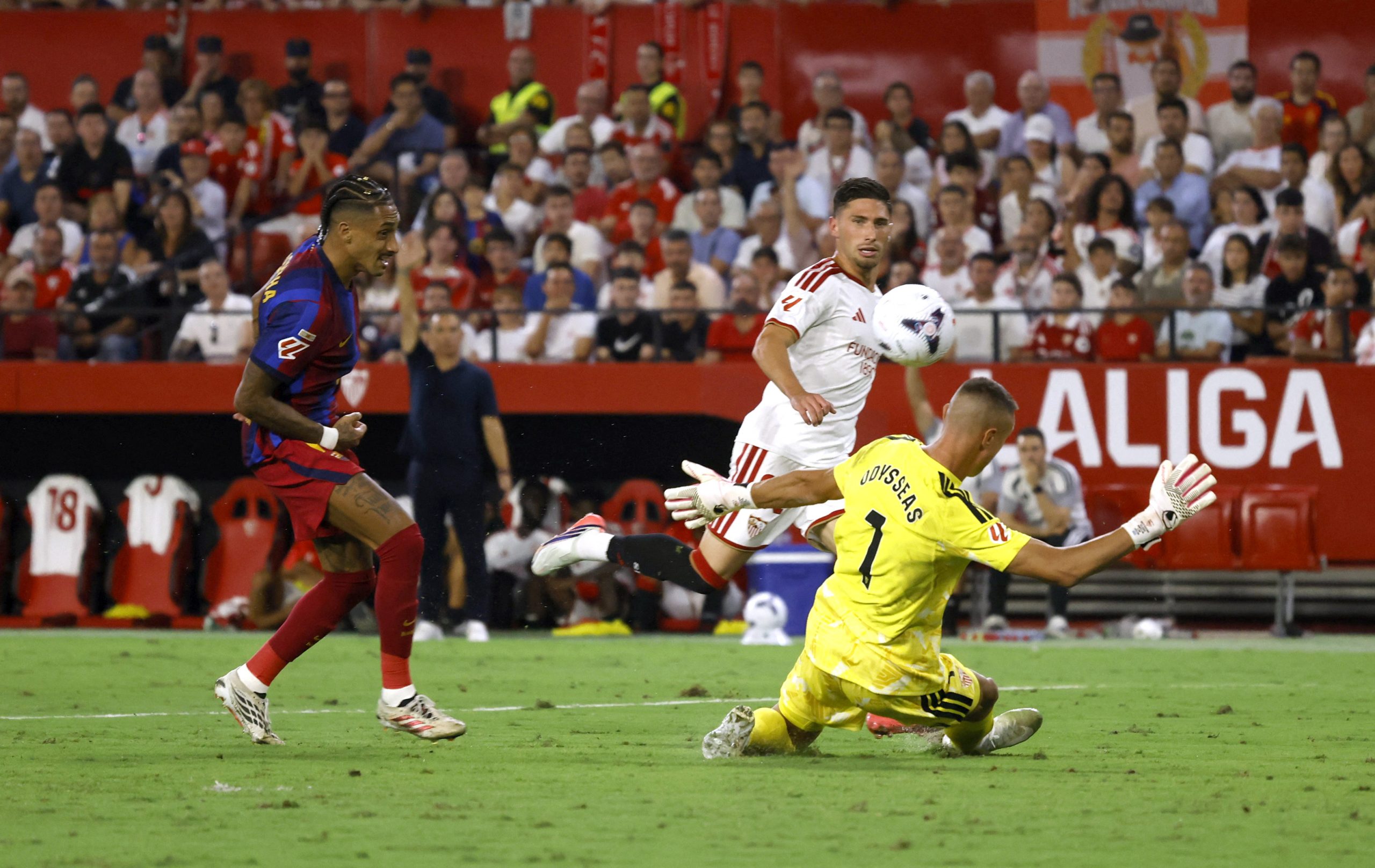 The obvious headline is Raphinha.
The Brazilian captain scored three times, producing a complete hat-trick: one goal with his right foot, one header and one with his left. His league tally has now reached 12 goals in seven appearances, an extraordinary start that has placed him at the centre of Barcelona’s attacking surge.
Yet focusing exclusively on Raphinha would miss the larger tactical story.
Barcelona are increasingly difficult to defend because their attacking threat does not come from one fixed route.
They can attack through individual dribbling.
They can attack through combination play.
They can attack through crosses.
They can attack through runners behind the defensive line.
And, perhaps most importantly, they can change the point of attack quickly when opponents successfully close one side of the pitch.
That variety was particularly visible in the second half.
Sevilla had managed to make Barcelona uncomfortable before the interval. The hosts were physical, aggressive and willing to attack directly. Their approach disrupted Barcelona’s rhythm and forced the visitors to defend transitions more often than Flick would have wanted.
But Barcelona did not panic.
They adjusted.
And once the game opened up, the quality of their attacking players became decisive.
Raphinha Is Changing the Shape of Flick’s Barcelona Attack
 One of the most fascinating developments this season has been Raphinha’s role.
Rather than simply operating as a conventional winger, the Brazilian has increasingly been used centrally.
Against Sevilla, that positioning once again paid enormous dividends.
His first goal came after he received Andreas Christensen’s pass, cut inside and finished calmly. His second came from a Lamine Yamal delivery, while his third arrived after Yamal slipped a pass behind the defence for Raphinha to run onto.
Three goals.
Three different types of finishing.
That matters tactically.
When Raphinha begins from a central position, he becomes harder for centre-backs to track because defenders cannot simply treat him as a wide player.
If a centre-back follows him, space can open elsewhere.
If the centre-back stays in position, Raphinha can attack the gap.
And if the opposition full-back moves inside to help, Barcelona can exploit the wings.
This creates a difficult defensive puzzle.
Raphinha’s Central Role Creates More Space for Yamal
Lamine Yamal is another major reason why Barcelona are becoming so difficult to contain.
The teenager did not score against Sevilla, but his influence was substantial.
He provided two assists for Raphinha and repeatedly threatened the Sevilla defence with his movement, dribbling and ability to receive the ball between defensive lines.
The relationship between Yamal and Raphinha is becoming particularly important.
When Raphinha moves centrally, Yamal can maintain width or drift inside depending on the defensive structure.
That creates uncertainty.
A defender may know where Raphinha is.
But knowing where he is does not necessarily mean knowing who should follow him.
That is the tactical advantage Barcelona are beginning to develop.
Barcelona’s Attack Has Multiple Solutions
 One of Flick’s biggest strengths is that his attacking structure does not depend on one specific player producing a moment of magic.
Against Sevilla, the first goal demonstrated individual quality.
The second demonstrated wide creativity.
The third demonstrated coordinated movement and passing through the defensive line.
That is a significant distinction.
Elite attacks are not simply productive because they have excellent players. They become extremely difficult to stop when those players can produce danger through different mechanisms.
Barcelona now possess that variety.
Consider the possibilities:
- Raphinha can attack centrally.
- Yamal can isolate defenders one-on-one.
- Midfielders can break defensive lines with passing.
- Barcelona can switch play quickly.
- Forwards can attack spaces behind the defensive line.
- The team can increase its tempo after regaining possession.
Sevilla successfully disrupted some of these mechanisms during the first half.
But they could not sustain it for 90 minutes.
SEE ALSO: Barcelona 28 Goals in Six Games: Why Their Defence Could Decide Everything
That is where Barcelona’s current level becomes particularly interesting.
The First Half Also Exposed Barcelona’s Defensive Problems
Despite the impressive result, the Barcelona 3-1 Sevilla scoreline should not hide the problems Flick’s team experienced.
Barcelona did not dominate every phase.
Sevilla actually created several dangerous moments, particularly when they attacked quickly and used direct play.
Fofana’s opening goal came in the 18th minute after Félix Correia delivered a dangerous cross that the midfielder converted.
There were also moments when Barcelona’s defensive structure looked vulnerable.
That should concern Flick.
The best European teams will not necessarily give Barcelona the same opportunities to recover after defensive mistakes.
A team such as Sevilla can punish Barcelona once or twice.
Champions League opponents may punish them even more severely.
The positive is that Barcelona showed the ability to respond rather than allowing the first goal to destabilise them.
That mental response could become one of the most important characteristics of Flick’s team.
Barcelona’s Response After Going Behind Was Significant
The reaction to conceding may have been more important than the goal itself.
Barcelona had started the game with confidence.
Then Sevilla scored.
At that moment, Barcelona could have become impatient.
Instead, they equalised only three minutes later through Raphinha.
That response changed the psychological balance of the match.
Sevilla had worked hard to create an advantage.
Barcelona erased it almost immediately.
After halftime, the visitors became increasingly dangerous.
Yamal went close early in the second half before Raphinha eventually headed Barcelona ahead from another Yamal delivery.
Then came the third.
Rodri helped break Sevilla’s first line before Yamal released Raphinha behind the defence. The Brazilian calmly lifted the ball over the advancing goalkeeper to complete his hat-trick.
That sequence tells us something about Flick’s football.
Barcelona do not necessarily need to dominate every minute.
They need to remain structurally capable of producing decisive moments when opportunities appear.
Is Flick’s Barcelona Attack Becoming Too Difficult to Stop?
 There is still a long way to go in the season.
Seven La Liga matches are not enough to establish whether Barcelona’s attack will remain at this level throughout an entire campaign.
But there are already signs that Flick has created something more sophisticated than simply an entertaining attacking team.
The biggest difference is flexibility.
Barcelona can manipulate defensive structures.
If opponents press high, there is space behind them.
If opponents sit deep, Yamal can attack isolated defenders while Raphinha occupies central positions.
If opponents concentrate on the wings, Barcelona can use combinations through midfield.
If opponents focus on Raphinha, Yamal becomes more influential.
And if they focus heavily on Yamal, other players can exploit the space.
That is the foundation of an elite attacking system.
Lamine Yamal and Raphinha Could Become Barcelona’s Defining Partnership
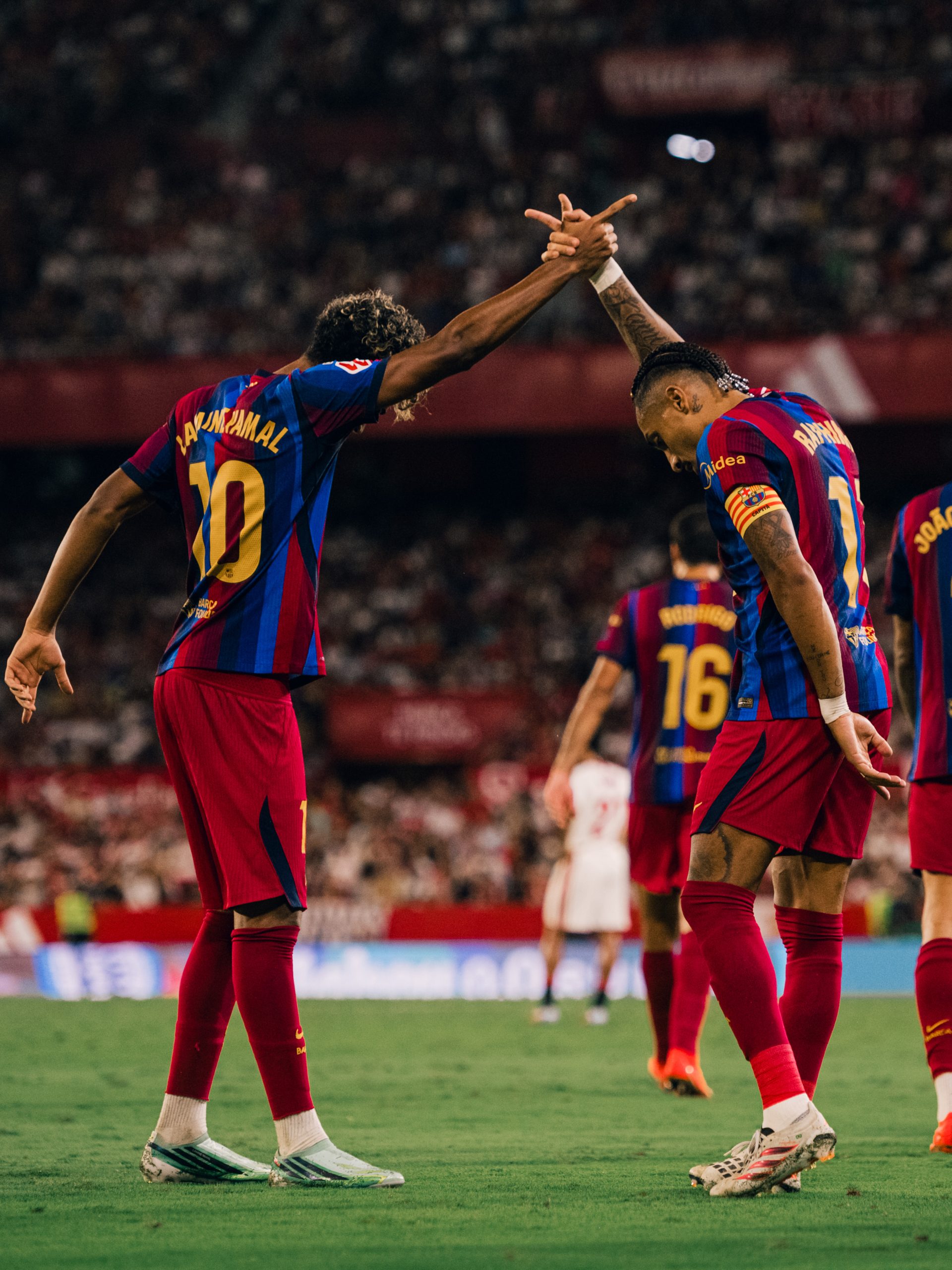 The statistics tell part of the story.
Raphinha now has 12 league goals after seven matches, while Yamal’s creative influence continues to grow.
But their chemistry is arguably more significant than their individual numbers.
Yamal is capable of attracting multiple defenders.
Raphinha is increasingly capable of attacking the space that movement creates.
That relationship can become devastating.
Against Sevilla, the second and third goals essentially demonstrated two versions of the same attacking concept.
For the second, Yamal provided the cross.
For the third, he provided the through ball.
Raphinha finished both.
That makes defensive preparation extremely complicated.
A team cannot simply prepare for Raphinha’s movement.
It must also consider the player delivering the final pass.
The Barcelona Defence Remains the Biggest Question
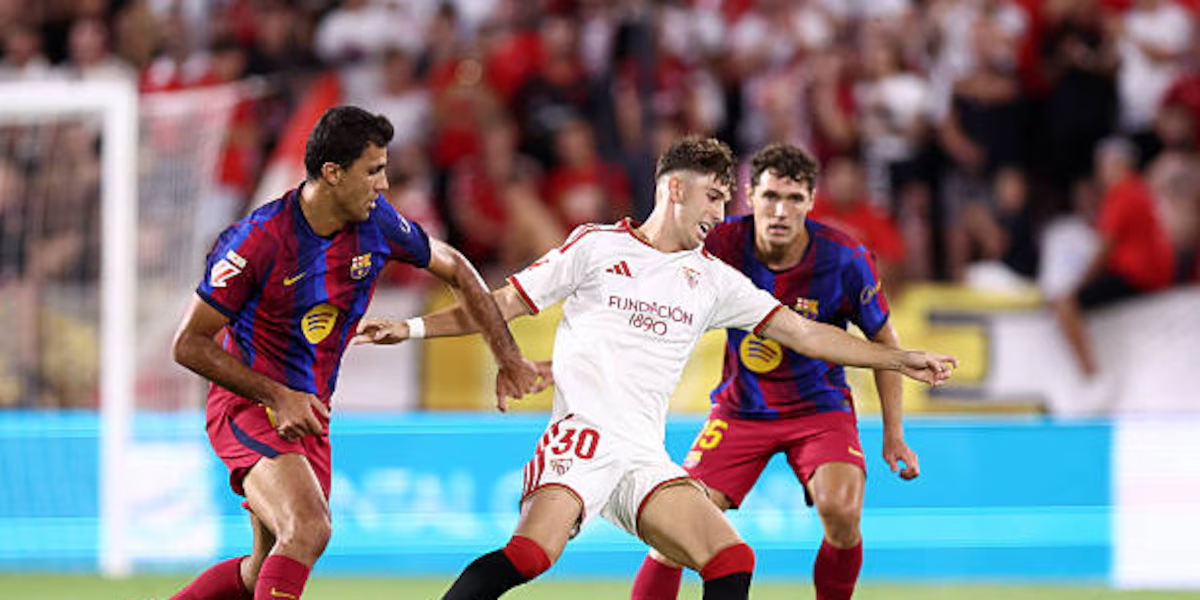 If Barcelona have a potential weakness, it may not be their ability to score.
It could be their ability to control dangerous opponents when the game becomes stretched.
Sevilla managed to create threatening moments despite eventually losing 3-1.
The defensive unit also suffered an injury setback when Andreas Christensen was forced off in the second half. Gerard Martín replaced him.
Flick will therefore need to balance attacking ambition with defensive control.
This becomes particularly important as the Champions League intensifies.
Domestic opponents may struggle to survive Barcelona’s attacking pressure.
Europe’s strongest teams will test the spaces Barcelona leave behind.
The question is whether Flick can maintain the attacking freedom without allowing opponents to repeatedly attack the same defensive weaknesses.
That could ultimately determine how far this Barcelona side goes.
What the Sevilla Win Really Tells Us About Barcelona
 The most encouraging element for Flick may be that Barcelona won despite not producing a flawless performance.
That distinction matters.
Great teams do not win only when everything goes according to plan.
They win when the match changes.
They win when opponents disrupt their rhythm.
They win when they concede first.
They win when the opposition makes the game physical.
And they find another route to victory.
That is what happened at the Ramón Sánchez-Pizjuán.
Barcelona were tested.
Sevilla made them uncomfortable.
But Flick’s team found solutions.
Raphinha supplied the finishing.
Yamal supplied the creativity.
The midfield eventually helped Barcelona regain control.
And the visitors left Seville with another three points.
What’s Next for Hansi Flick’s Barcelona?
The early numbers are extraordinary.
Barcelona have won all seven of their La Liga matches and eight competitive matches overall to begin the campaign, according to the club’s official report.
Raphinha has scored 12 league goals.
Yamal continues to develop into one of Barcelona’s most important creative players.
And Flick’s attacking structure is generating goals from multiple situations.
But the next stage of the season will demand something different.
Opponents will study Barcelona.
They will try to deny Yamal space.
They will attempt to isolate Raphinha.
They will press the build-up.
They will target the spaces behind Barcelona’s attacking full-backs.
They will force Flick to find solutions again and again.
That is why the Barcelona 3-1 Sevilla victory is more interesting than another three points.
It showed that Barcelona can be uncomfortable and still win.
It showed that Raphinha can hurt opponents centrally.
It showed that Yamal can influence matches without scoring.
And it showed that Flick’s attack has several different mechanisms for breaking a defensive structure.
The biggest question is no longer whether Barcelona can score.
It is whether Europe’s best defences can find a way to stop them consistently.
For now, the evidence from Seville suggests they have a very difficult problem to solve.
What do you think? Is Hansi Flick building the most dangerous attack in Europe, or will Barcelona’s defensive vulnerabilities eventually catch up with them?