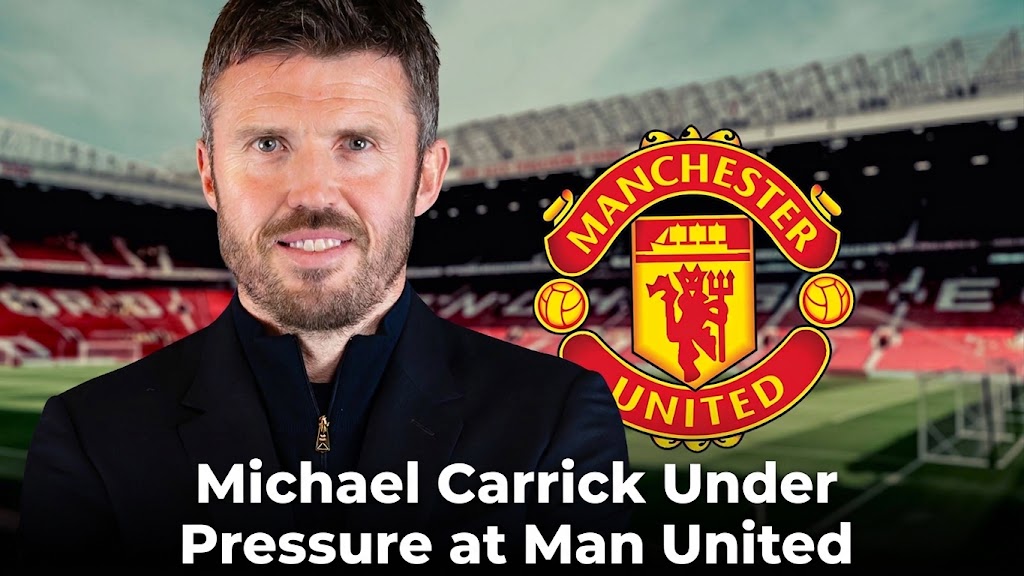
Michael Carrick under pressure is now one of the biggest talking points around Manchester United after a difficult opening to the 2026/27 campaign. Four Premier League matches have produced just four points, while Wednesday’s 3-2 Carabao Cup defeat to Brighton saw United surrender a 2-0 lead at Old Trafford.
The defeat added another layer to the growing scrutiny around Carrick. United had started brilliantly against Brighton, scoring twice inside the opening 10 minutes, but Brighton fought back with three unanswered goals to eliminate United from the competition.
Now the focus turns to the Premier League.
Fulham away, Tottenham at home and Leeds United away are Manchester United’s next three league fixtures. They offer Carrick an immediate opportunity to change the narrative, improve his team’s consistency and demonstrate that the problems of the opening weeks can be corrected.
The question is no longer simply whether United can produce one good performance.
Can Carrick make Manchester United consistently control football matches, protect leads and turn promising performances into points?
Michael Carrick Under Pressure After a Difficult Start
 The pressure on Carrick is not based on one result.
It is the accumulation of results.
United have taken only four points from their opening four league games, leaving them 13th in the table after Matchweek 4.
The sequence is particularly revealing:
Hull City 2-0 Manchester United — defeat
Manchester United 5-2 Ipswich Town — win
Everton 2-2 Manchester United — draw
Manchester United 0-1 Manchester City — defeat
There have been flashes of what Carrick wants.
The 5-2 victory over Ipswich demonstrated United’s attacking potential.
The performance against Manchester City also contained periods in which United controlled possession and territory, although they ultimately lost 1-0 despite City playing much of the match with 10 men after Phil Foden’s dismissal. Gary Neville subsequently described the Fulham fixture as a major pressure game for Carrick.
But the problem is consistency.
A team trying to establish a new identity cannot repeatedly alternate between impressive attacking spells and damaging collapses.
That is exactly why the Brighton result matters.
It was not simply elimination from a cup competition.
It was evidence that United still struggle to manage matches once circumstances change.
Michael Carrick Under Pressure Because United Cannot Protect Leads
 The most worrying aspect of the Brighton defeat was not that United conceded three goals.
It was how quickly control disappeared.
United were two goals ahead after 10 minutes.
The game should have moved toward a scenario in which Brighton were forced to take greater risks, leaving spaces for United’s forwards to exploit.
Instead, Brighton gradually regained momentum.
Kostoulas reduced the deficit before half-time. Gross equalised in the 65th minute. De Cuyper completed the comeback four minutes later.
That sequence exposes a problem that goes beyond formation.
Game management.
Elite teams understand that a 2-0 lead changes the nature of a match.
You do not necessarily need to attack with the same aggression.
You need to understand when to accelerate and when to slow the game down.
You need possession when the opposition is gaining confidence.
You need compactness when the opponent begins committing more players forward.
You need experienced players to recognise danger before it becomes an emergency.
United failed to do that against Brighton.
Carrick therefore has to find an answer quickly.
The Fulham Test: Michael Carrick Under Pressure Immediately
The first test arrives at Craven Cottage on 20 September.
Fulham have also had an uneven beginning to the campaign, but they enter the match after defeating West Ham 3-2 in the Carabao Cup. Their Premier League results include a 0-0 draw with Liverpool, a 2-3 defeat to Crystal Palace and a 0-1 defeat at Sunderland.
This is precisely the kind of match United need to win if they want to calm the situation.
But Fulham present a tactical problem.
United will be expected to control possession, while Fulham can remain compact and attack spaces when United commit numbers forward.
That means Carrick must solve three problems:
1. United must create without becoming vulnerable
The 5-2 Ipswich victory demonstrated how dangerous United can become when their attackers receive space.
But against Fulham, patience may be more important.
United need to move the defensive block from side to side before accelerating through the final third.
2. The midfield must control transitions
United cannot allow Fulham to turn every recovery into a counterattack.
That requires better positioning behind the ball.
When full-backs move forward, someone must protect the central zone.
When midfielders join attacks, the defensive structure must remain intact.
3. United need to respond after setbacks
This is perhaps the biggest psychological football test.
If Fulham score first, how will United respond?
That question has become increasingly relevant after the Brighton collapse.
Tottenham Will Provide a Completely Different Examination
After Fulham comes Tottenham at Old Trafford on 10 October.
That match could be significantly more revealing because Tottenham’s attacking approach should provide United with more space.
Against teams that defend deeper, United must demonstrate patience.
Against a more aggressive opponent, they should have opportunities to attack transitions.
That could suit players such as Benjamin Šeško, whose physical presence gives United a different dimension in the final third. Carrick has previously praised the Slovenian’s ability to provide a different kind of threat.
But Tottenham could also expose United’s defensive transition.
If United attack with too many players and lose possession, Tottenham will have opportunities to run into open spaces.
This makes the match a fascinating test of Carrick’s tactical balance.
Can United attack aggressively without becoming structurally vulnerable?
That is one of the defining questions surrounding this team.
Leeds Away Could Be the Most Uncomfortable of the Three
 The third match is an away trip to Leeds United on 18 October.
That fixture could test something completely different.
Away matches against intense opponents often become physical and chaotic.
There may be fewer opportunities for controlled possession.
There may be long periods without the ball.
Second balls become important.
Set pieces become important.
Transitions become important.
For Carrick, this is where the team’s competitive personality will be examined.
United cannot depend entirely on technical superiority.
They need to demonstrate resilience.
The ability to win ugly is often what separates a team with an attractive tactical idea from a team capable of maintaining results over an entire season.
Michael Carrick Under Pressure Does Not Mean the Entire Project Has Failed
There is an important distinction to make.
Carrick’s current pressure should not erase the broader context of his tenure.
He did not arrive at Manchester United yesterday.
Since taking over in January, he had overseen 13 wins, four draws and four defeats in his first 21 Premier League matches before this season’s difficult opening.
That record explains why the current situation should be analysed carefully.
The question is not whether Carrick suddenly became incapable of managing Manchester United.
The more useful question is whether the current squad is responding sufficiently well to his methods.
That distinction matters.
Managers need time to establish tactical automatisms.
Players need time to understand positioning.
New signings need time to adapt.
But Manchester United operate in an environment where time is rarely unlimited.
Results remain the ultimate measurement.
The Carrick Project Needs More Than One Big Performance
 One of United’s biggest problems over the past several seasons has been inconsistency.
A strong performance creates optimism.
A poor result immediately reopens questions about the manager, recruitment and squad construction.
Carrick therefore needs something more valuable than one impressive afternoon.
He needs a sequence.
That is why Fulham, Tottenham and Leeds matter.
Three consecutive league matches provide enough evidence to assess whether United are becoming more stable.
The key indicators should include:
- Points: Can United build momentum?
- Goals conceded: Can they become more difficult to break down?
- Game management: Can they protect leads?
- Chance creation: Are they producing enough high-quality opportunities?
- Midfield control: Can they dictate the rhythm of matches?
- Transitions: Are they protecting themselves when possession is lost?
- Consistency: Can performances remain at a similar level from one match to the next?
These are more meaningful indicators than simply asking whether Carrick should remain or leave.
Manchester United’s Injury Situation Adds Another Layer
Carrick’s selection options are also influenced by injuries.
Carlos Baleba, the summer signing from Brighton, has not yet made his United debut, although reports indicate that his return is moving closer.
Manuel Ugarte is also recovering from the ligament injury suffered during the World Cup and is not expected back until 2027.
Those absences matter because midfield balance is central to Carrick’s tactical problem.
United need players capable of:
- recovering possession;
- covering space behind attacking midfielders;
- progressing the ball;
- resisting pressure;
- and maintaining structure during transitions.
Baleba’s eventual return could therefore give Carrick another option in an area where United have struggled for consistency.
But he cannot be expected to solve everything immediately.
The Young Players Could Become Carrick’s Unexpected Advantage
The Brighton defeat contained one of the few genuinely encouraging stories.
Shea Lacey scored on his first senior start.
The teenager produced the moment that put United 1-0 ahead and demonstrated the type of academy pathway that supporters want to see at Old Trafford.
His emergence also creates an interesting selection question.
Does Carrick continue trusting young players when experienced alternatives are available?
The answer could be important.
Young players bring energy and unpredictability, but they can also make mistakes.
Lacey’s goal demonstrated his quality.
United now need to help him develop without placing the responsibility for fixing the team’s problems on his shoulders.
That distinction will be important for Carrick.
What Manchester United Need From the Next Three Games
 The immediate objective should not be described as winning all three at any cost.
Football is more complicated than that.
What United need is evidence of structural improvement.
If they win at Fulham because of a late individual moment but repeat the same defensive problems, the victory may provide only temporary relief.
If they draw but demonstrate superior control, better defensive transitions and improved chance creation, that performance could tell Carrick more about his team’s development.
Of course, results remain crucial.
But the three-game sequence should be judged through both lenses.
The ideal scenario
United beat Fulham, establish control against Tottenham and produce a mature away performance at Leeds.
That would dramatically change the atmosphere.
The warning scenario
United struggle at Fulham, concede another avoidable lead against Tottenham and become overwhelmed at Leeds.
That would intensify the questions around Carrick’s methods.
The most revealing scenario
Mixed results accompanied by clear tactical improvement.
SEE ALSO: Manchester United vs Sabah: The Champions League Test That Could Expose Carrick’s Real United
That could indicate that the team is progressing even if the points total does not immediately reflect it.
Old Trafford Is Waiting for a Response
The reaction to Brighton was significant.
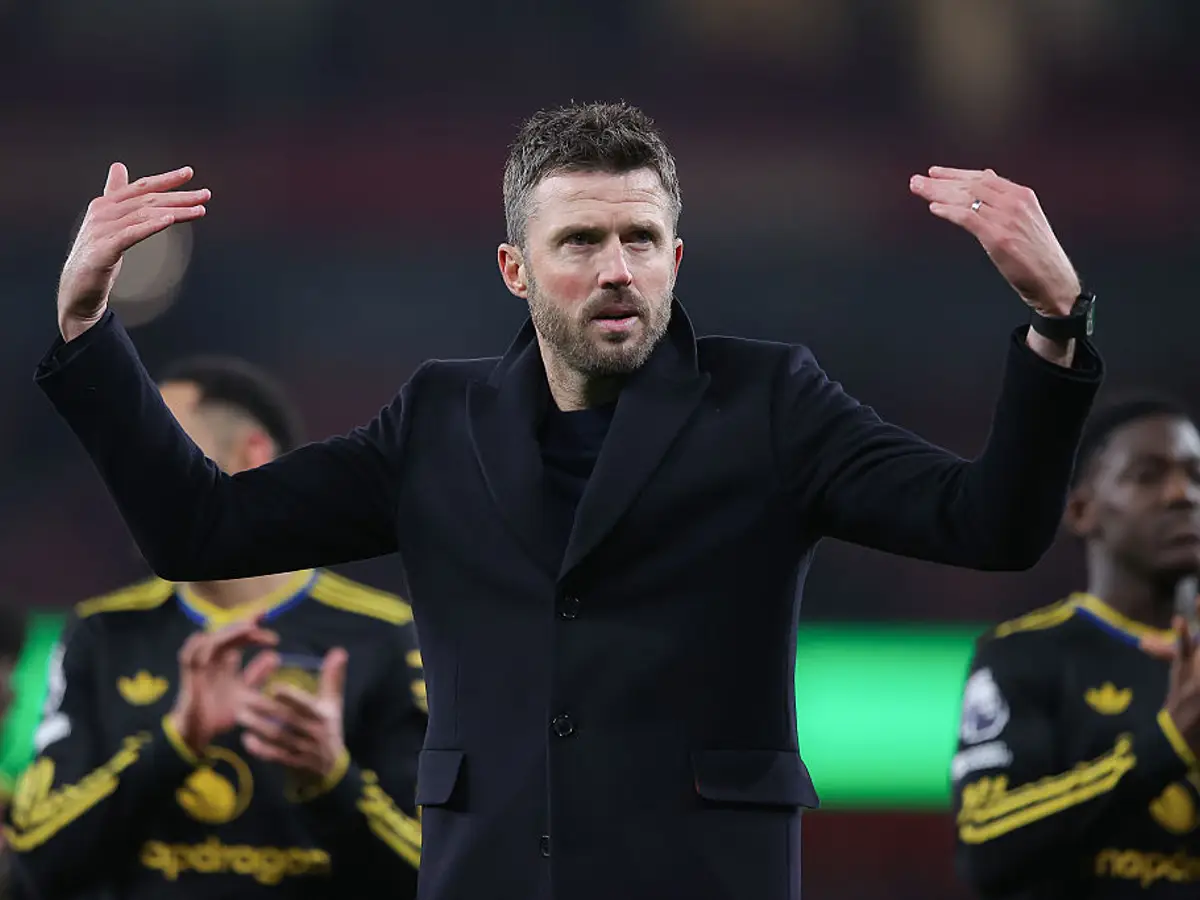
United supporters booed the team at full-time after watching a 2-0 advantage disappear. Carrick acknowledged the frustration and said the team needed to “flip” the situation and start winning again.
That is the challenge now.
Manchester United do not need another speech.
They need evidence.
Evidence that they can protect a lead.
Evidence that they can control matches.
Evidence that they can respond to setbacks.
Evidence that the attacking talent can operate within a coherent structure.
And evidence that Carrick’s Manchester United are moving somewhere.
What’s Next for Michael Carrick?
 The next three league fixtures provide a natural checkpoint.
Fulham away — September 20.
Tottenham at home — October 10.
Leeds United away — October 18.
For Michael Carrick, the importance of this period is not simply about external criticism.
It is about demonstrating that the football has direction.
Manchester United’s opening four league matches have produced too few points. The Brighton collapse then added another layer of concern. Carrick has accepted responsibility, but responsibility now has to be followed by a response.
The encouraging part is that the season is still young.
There are 34 Premier League matches remaining after the opening four.
There is time for injured players to return.
There is time for new signings to settle.
There is time for young players to develop.
And there is time for Carrick to correct the problems that have appeared.
But Manchester United cannot allow that time to become an excuse for repeating the same mistakes.
The next three games will not necessarily decide Michael Carrick’s entire Manchester United future. But they could reveal whether his team is capable of changing the direction of its season.
And at Old Trafford, that distinction can become very important very quickly.
What’s your view? Is Manchester United’s problem primarily tactical, squad-related, or simply a matter of poor early-season form? Let us know in the comments.