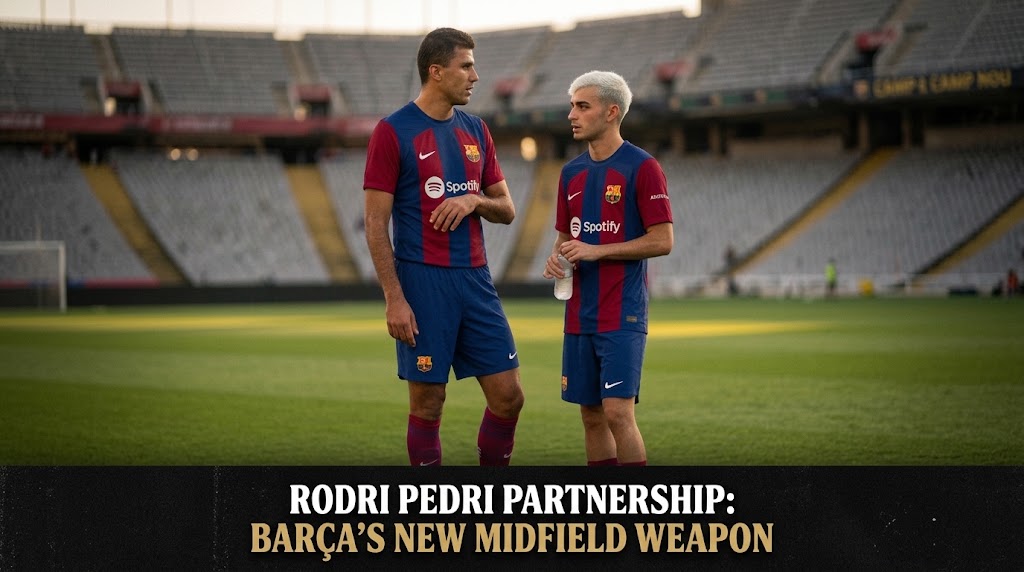
Barcelona may have solved one of football’s oldest tactical problems: how to control a game without sacrificing creativity.
For years, elite midfield construction has demanded a difficult compromise. Give your most creative midfielder complete freedom and you risk leaving the team exposed. Ask him to protect the defence and control every transition, and you may take away the very qualities that make him special.
The Rodri Pedri partnership could change that equation at Barcelona.
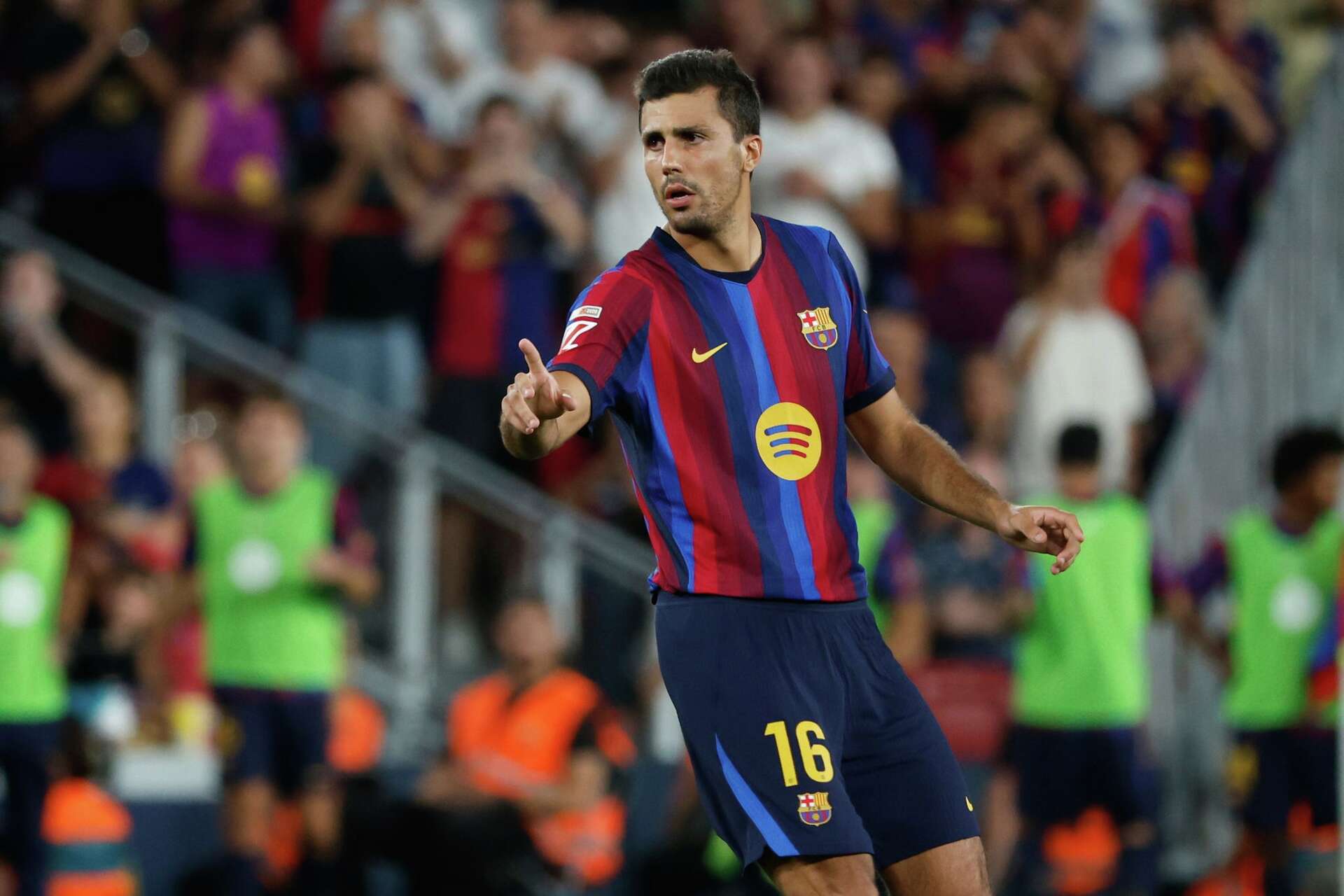
Rodri has arrived from Manchester City after a trophy-filled seven-year spell at the Etihad, where he made 298 appearances and helped the club win 14 major trophies. Barcelona have secured the 30-year-old until 2030, bringing one of the world’s most accomplished defensive midfielders into a team already built around the technical brilliance of Pedri.
And this is what makes the move so fascinating.
Rodri does not simply add another midfielder to Hansi Flick’s squad. He potentially changes what Pedri is allowed to become.
Flick has already identified the attraction. Before Rodri’s first competitive appearances, the Barcelona coach said the Spaniard’s presence alongside Pedri would give the team “more control of the game.”
That sentence could ultimately become the blueprint for Barcelona’s next era.
The Rodri Pedri Partnership Is About More Than Possession
 Barcelona have always valued possession.
But possession itself is not the objective. Control is.
That distinction matters.
A team can have 65 percent possession and still be vulnerable because its midfield is unable to control transitions, protect central spaces or dictate the rhythm after losing the ball.
This is where Rodri changes the calculation.
At Manchester City, Rodri became much more than a conventional No.6. He could receive the ball under pressure, slow the game down, accelerate it when necessary, cover defensive spaces and move forward to influence attacks.
Barcelona are now asking whether those qualities can provide the platform for Pedri to operate higher and with greater freedom.
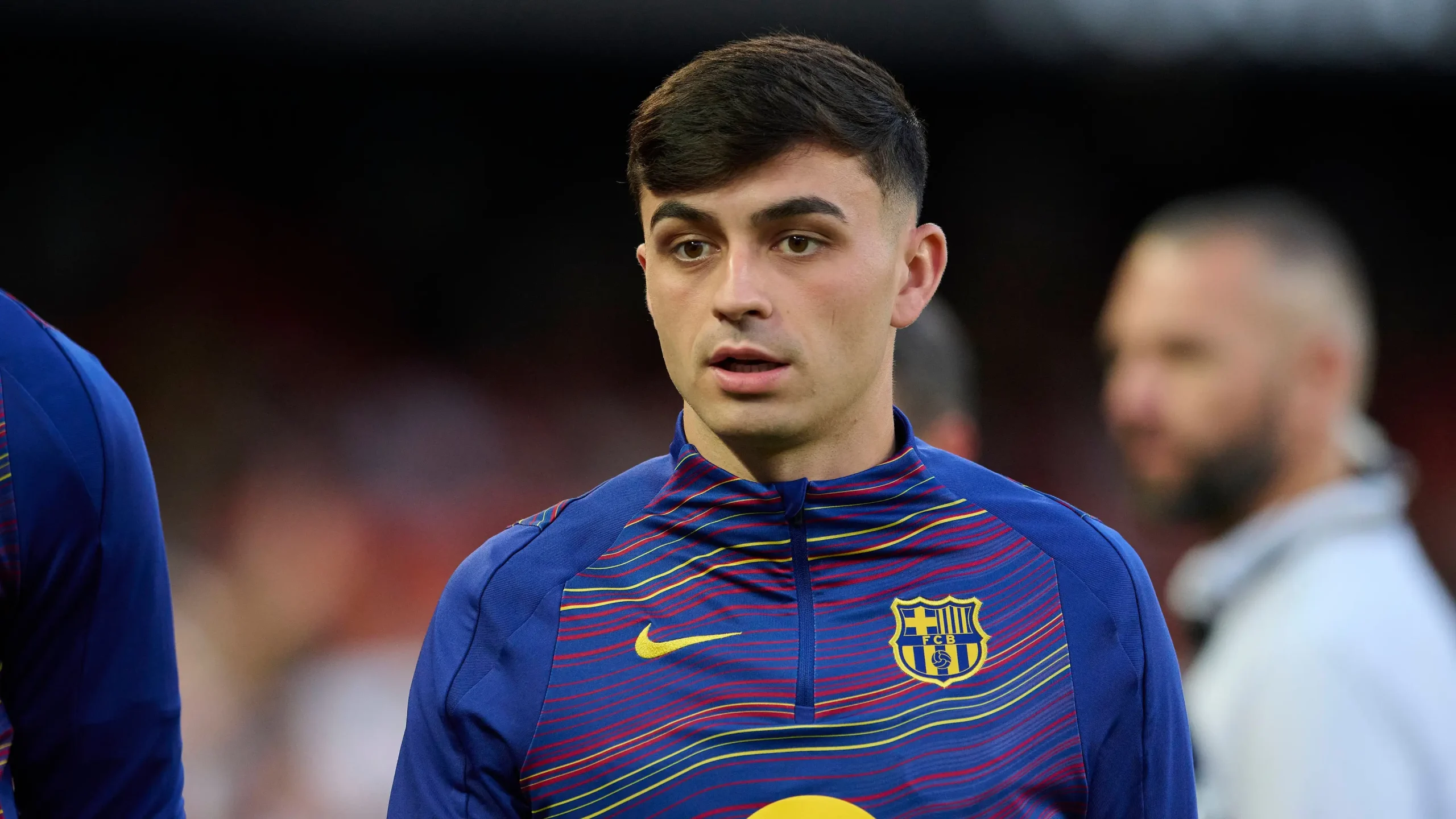
Pedri has already established himself as one of the world’s elite midfielders. Barcelona’s official profile describes his ability to drive at opponents and play passes that break defensive lines.
The numbers behind his development are equally significant.
Since arriving from Las Palmas as a teenager, Pedri has become a central figure in Barcelona’s midfield. He has won multiple La Liga titles, Copa del Rey trophies and Spanish Super Cups, while also becoming a key member of Spain’s national team.
The question is no longer whether Pedri is talented.
The question is how much more dangerous Pedri can become when someone else carries the burden of controlling the space behind him.
Rodri Gives Pedri Something Every Creative Midfielder Wants
 Freedom.
Not freedom to ignore defensive responsibilities.
Freedom to choose when to attack.
That distinction is crucial.
Pedri’s greatest qualities emerge when he can receive between the lines, manipulate defenders, turn away from pressure and connect midfield with the final third.
But modern football rarely allows elite attacking midfielders to live permanently in those zones.
They must press.
They must recover.
They must cover.
They must track runners.
They must help their full-backs.
And when they constantly perform those tasks, their attacking energy inevitably becomes a tactical resource that must be rationed.
Rodri potentially changes that.
If Barcelona can establish Rodri as the stabilising reference point behind the ball, Pedri can spend more time thinking about what happens after the first line of pressure has been broken.
That could be devastating.
Why Rodri Is the Perfect Complement to Pedri
 The brilliance of the Rodri Pedri partnership
is that the two players do not need to perform the same job.
In fact, they should not.
Rodri’s greatest value comes from his ability to organise the game from deeper areas.
Pedri’s greatest value comes from manipulating space further forward.
That creates a natural division of labour.
Rodri: The Controller
Rodri can operate as the midfield anchor.
His responsibilities would include:
- Receiving the first pass from the defenders
- Providing an outlet against high pressing
- Protecting the centre-backs
- Controlling the tempo
- Covering attacking full-backs
- Recycling possession
- Breaking up opposition transitions
- Moving the ball into Pedri’s preferred zones
Pedri: The Manipulator
Pedri can then become the player who turns control into penetration.
His role could involve:
- Finding pockets between midfield and defence
- Breaking defensive lines
- Combining with Lamine Yamal
- Carrying the ball through pressure
- Creating numerical advantages
- Arriving around the penalty area
- Connecting the midfield with the forwards
This is why the partnership is potentially more important than either player individually.
Rodri creates the platform. Pedri exploits it.
The Biggest Tactical Question: Can Barcelona Control Transitions?
This may be the most important issue of all.
Barcelona’s attacking structure naturally pushes players forward.
When the ball is lost, that can leave spaces behind the midfield.
Against weaker opposition, Barcelona can often recover possession quickly.
Against Europe’s strongest teams, however, one poorly controlled transition can completely change a match.
Rodri’s presence gives Flick an additional layer of protection.
Imagine Barcelona attacking with both full-backs high.
Pedri is positioned around the edge of the attacking midfield zone.
Lamine Yamal is isolated against a full-back.
Another midfielder moves into the half-space.
The ball is lost.
Instead of Pedri immediately having to sprint 30 or 40 metres backward, Rodri becomes the first defensive reference.
That can allow Barcelona to press more aggressively while still maintaining structural protection.
This is the hidden value of the Rodri Pedri partnership.
SEE ALSO: Barcelona Rodri Transfer: Why £65m Could Cost €200m
It is not simply about what happens when Barcelona have the ball.
It is about what happens the second they lose it.
The Spanish Connection Could Become Barcelona’s Tactical Identity
 There is also something symbolically powerful about the partnership.
Rodri and Pedri represent two generations of Spanish midfield football.
Pedri is the technical prodigy who emerged from Las Palmas and quickly became one of Barcelona’s most important players.
Rodri developed through Atlético Madrid and Villarreal before becoming the controlling force of Manchester City’s midfield.
Both understand the Spanish interpretation of football.
Angles.
Tempo.
Positioning.
Third-man combinations.
Press resistance.
Possession as a defensive weapon.
That shared football language could reduce the time required to build chemistry.
And Barcelona need that chemistry quickly.
The club is not rebuilding from scratch.
It is trying to turn a talented squad into a European superpower.
Flick’s Biggest Challenge: Getting the Balance Right
 There is one obvious danger.
Too much talent in midfield does not automatically create a great midfield.
Barcelona have Pedri, Rodri, Frenkie de Jong, Gavi, Fermín López, Dani Olmo and Marc Bernal among their midfield options. The club’s confirmed 2026/27 squad numbers reflect the depth of the department, with Rodri taking No.16 while Pedri retains No.8.
That creates a selection problem for Flick.
Who plays?
Who sits?
Which games require more physicality?
Which games require more creativity?
When should Barcelona use a double pivot?
When should Pedri operate as the advanced midfielder?
And can Rodri remain effective if Barcelona ask him to cover enormous spaces?
These questions will determine whether the partnership becomes revolutionary or merely aesthetically pleasing.
The Formation Could Be More Flexible Than It Looks
On paper, Barcelona could use a conventional 4-3-3.
Rodri at the base.
Pedri as one of the interiors.
Another midfielder providing balance.
But football does not remain on paper.
In possession, the structure could transform into something closer to a 3-2-4-1.
One full-back could move inside.
Rodri could drop between or alongside defenders.
Pedri could push higher.
The wingers could occupy wide positions.
That would create multiple passing lanes around the opposition’s defensive block.
And this is where Pedri becomes particularly dangerous.
Rather than receiving the ball 40 metres from goal, he could increasingly receive it in the spaces where defenders are forced to make difficult decisions.
Step toward Pedri?
Leave space behind.
Stay deep?
Allow him to turn.
Send a midfielder?
Create another passing lane for Barcelona.
That is the tactical dilemma Barcelona want to manufacture.
Pedri’s Evolution Makes the Partnership Even More Exciting
 There is another reason this could work.
Pedri is no longer the teenager who arrived at Barcelona in 2020.
He has become a more complete midfielder.
Barcelona’s own historical record of his development shows how quickly he became indispensable. In his first season, he made 52 appearances for the club and won the Golden Boy and Kopa Trophy.
He has also improved defensively.
In April 2025, Barcelona highlighted a remarkable stretch in which Pedri recorded personal-best recovery figures, including 18 recoveries against Mallorca.
That matters because it means Pedri does not need to be protected from defensive work.
Instead, Rodri could allow him to choose his defensive moments more intelligently.
That is a major difference.
The Partnership Could Also Transform Lamine Yamal
 The biggest winner might not even be Pedri.
It could be Lamine Yamal.
Barcelona’s young superstar thrives when he receives the ball with space and time to attack defenders.
A stable midfield behind him can make that possible more frequently.
Rodri can help Barcelona sustain possession.
Pedri can connect midfield to the final third.
Yamal can then receive the ball in situations where he can attack an isolated defender.
The chain becomes:
Rodri controls → Pedri connects → Yamal destroys.
That is the kind of sequence that can turn Barcelona from a very good team into an elite European side.
Why This Could Matter in the Champions League
Domestic dominance is not enough for Barcelona.
The real examination will come in Europe.
Champions League football punishes midfield weaknesses more severely than almost any other competition.
A team can dominate 70 percent of possession and still lose because it cannot handle transitions.
A team can create 20 chances and still be eliminated because it loses control for ten minutes.
This is precisely why the Rodri Pedri partnership could become so important.
Against Europe’s strongest midfielders, Barcelona need more than technical quality.
They need resistance.
They need composure.
They need control.
They need a midfielder capable of stopping chaos before it begins.
Rodri has spent years operating at that level.
Barcelona May Finally Have the Midfield Architecture They Have Been Missing
The bigger picture is therefore more interesting than one partnership.
Barcelona are building a team with multiple generations of elite talent.
Lamine Yamal represents extraordinary youth.
Pedri represents technical intelligence and creativity.
Rodri represents experience, control and tactical maturity.
Behind them are talented young defenders and midfielders who can continue developing within the system.
That combination gives Flick something every elite coach wants:
a team capable of evolving without losing its identity.
And that could be the real beginning of Barcelona’s next superteam.
What’s Next for the Rodri Pedri Partnership?
 The partnership will not be judged by how attractive it looks in possession.
It will be judged by the difficult moments.
When Barcelona are pressed.
When they lose the ball.
When an opponent counter-attacks.
When the Champions League knockout rounds become chaotic.
When Pedri has to decide whether to attack or hold his position.
When Rodri is asked to defend enormous spaces.
Those moments will reveal whether Barcelona have genuinely discovered a new midfield formula.
But the early signs are compelling.
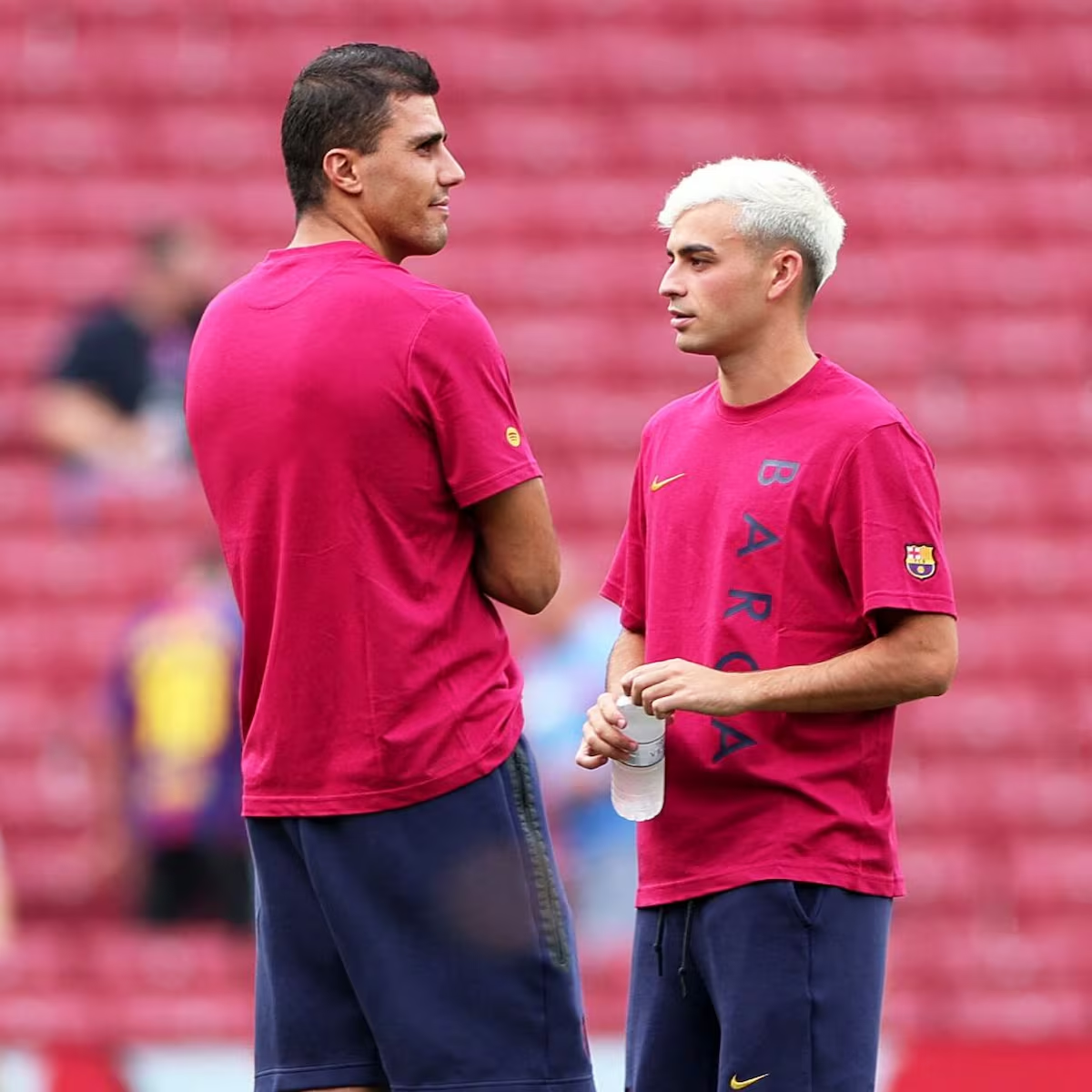
Rodri has already been integrated into the squad, and Flick has publicly identified his ability to give the team greater control alongside Pedri.
Barcelona have not simply signed another star.
They may have signed the missing piece that allows another star to reach an even higher level.
And that is why the Rodri Pedri partnership deserves attention.
Because if Rodri provides the control and Pedri provides the imagination, Barcelona may have created something more dangerous than a midfield duo.
They may have created the engine of their next European era.
The question now is not whether Rodri and Pedri can play together. It is how good Barcelona can become once they learn exactly what these two players can do for each other.
Would this midfield be enough to make Barcelona genuine Champions League favourites? Let us know what you think.