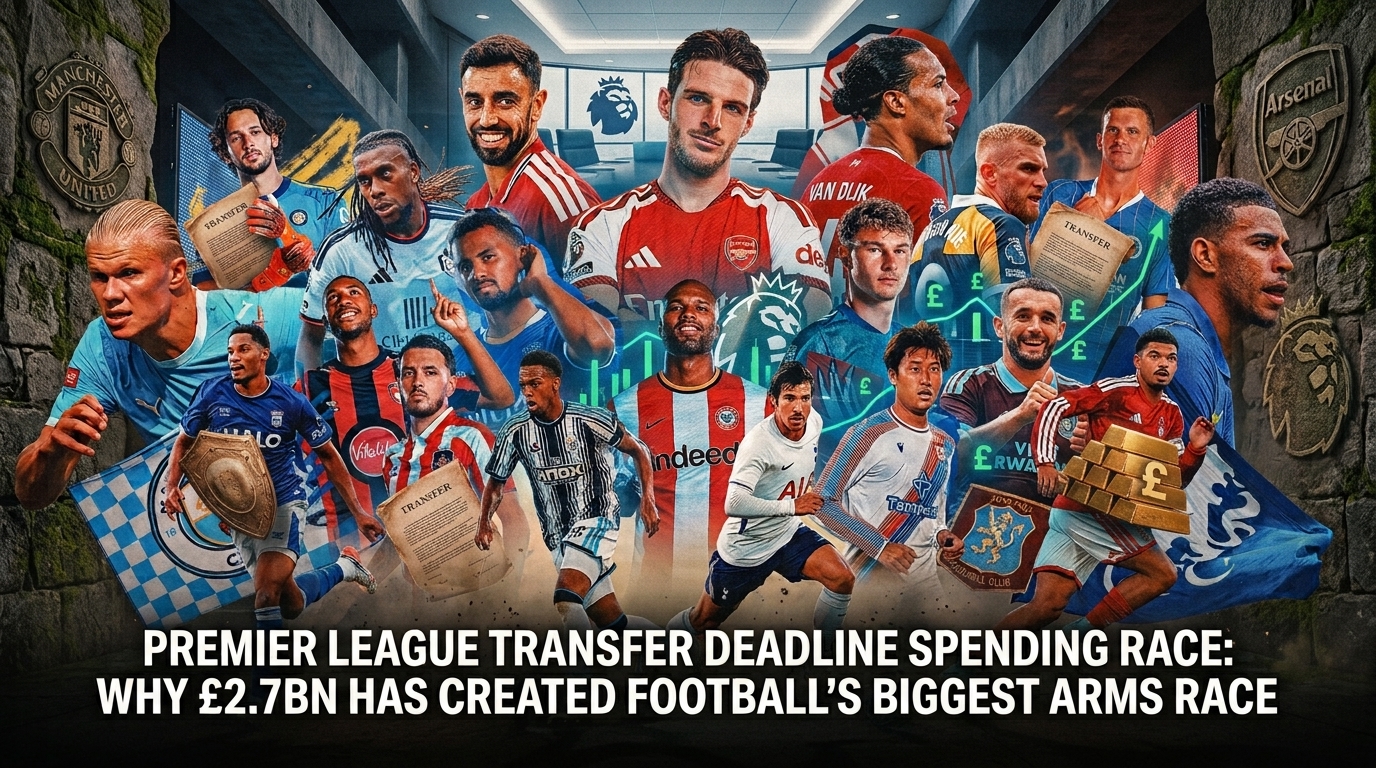
Premier league transfer activity has reached a historic level in 2026, with English clubs turning the final days of the summer window into a multi-billion-pound battle for global dominance.
Every year, the transfer market creates excitement, but this season the scale is different. Premier League clubs are no longer simply signing players — they are investing in long-term sporting projects, commercial growth and competitive advantage.
With billions already committed before deadline day, clubs such as Chelsea, Manchester City, Arsenal and Tottenham are fighting a financial and tactical war that could reshape the balance of power in English football.
The biggest question is no longer:
“Which club spent the most money?”
The real question is:
“Which Premier League transfer strategy will create sustainable success?”
Premier League Transfer Deadline Spending Race: Inside Football’s New Financial Era
 The Premier League Has Created A Transfer Economy Nobody Can Match
For decades, European football was controlled by traditional giants:
- Real Madrid
- Barcelona
- Bayern Munich
- Juventus
- AC Milan
But the financial centre of gravity has moved.
Today, Premier League clubs possess unmatched commercial strength through:
- Broadcasting revenue
- Global sponsorship deals
- Stadium income
- International markets
That financial advantage allows English clubs to pay transfer fees that reshape the global market.
The 2026 summer window has once again demonstrated this power, with Premier League spending approaching historic levels.
A £100 million transfer is no longer considered impossible.
It has become part of the elite football economy.
Chelsea: The Biggest Spenders But Also The Biggest Pressure Story
 Chelsea have become the symbol of modern football investment.
Their aggressive recruitment strategy has continued with major spending, including the reported £117 million acquisition of Morgan Rogers.
However, spending alone does not guarantee success.
The Chelsea challenge is balancing:
1. Squad depth
Chelsea have accumulated enormous talent pools, creating competition but also difficult squad management.
2. Player development
The club must convert expensive young players into consistent performers.
3. Financial efficiency
Modern regulations mean clubs cannot simply spend endlessly without considering revenue and squad costs.
The question facing Chelsea:
Are they building the next Manchester City-style dynasty, or creating a squad that becomes impossible to manage?
Tottenham’s £300m+ Gamble: A Club Trying To Escape The Middle Ground
 Tottenham’s transfer strategy represents something different.
For years, Spurs were criticised for lacking the final financial push needed to compete with England’s biggest clubs.
That approach has changed.
Their recruitment has focused on:
- Immediate quality
- Physical Premier League experience
- Players capable of competing at Champions League level
Major investments such as Sandro Tonali underline their ambition.
But Tottenham face the same challenge as every aggressive spender:
Big transfers create bigger expectations.
Fans no longer judge a club spending hundreds of millions as a project.
They expect trophies.
Manchester City: The Art Of Spending Without Losing Control
 Manchester City’s approach is arguably the most sophisticated.
Instead of simply buying players, City operate a cycle:
Buy → Develop → Compete → Sell → Reinvest
Their ability to generate major income from player sales separates them from many rivals.
Reports suggest City have generated significant funds through departures while continuing to strengthen key areas.
Their reported interest in Enzo Fernández demonstrates their willingness to continue elite-level recruitment even after major squad changes.
The City philosophy:
A player is not only a football asset.
A player is also a financial asset.
Arsenal: Spending To Protect A New Status
 Arsenal’s transfer strategy is different.
Unlike clubs chasing a rebuild, Arsenal are protecting success.
Their recruitment has focused on:
- Increasing squad quality
- Improving midfield control
- Adding defensive security
The arrival of Bruno Guimarães has been viewed as a statement signing aimed at strengthening their competitive level.
For Arsenal, the challenge is not becoming competitive.
They already are.
The challenge is maintaining dominance.
History shows that winning one title is difficult.
Building an era is much harder.
The Hidden Battle: Spending vs Smart Recruitment
The biggest misconception in football is that spending automatically creates success.
History proves otherwise.
Examples:
Successful spending:
- Manchester City’s targeted squad building
- Real Madrid’s long-term superstar strategy
Failed spending: - Clubs paying huge fees without tactical planning
The future winners will not necessarily be:
The clubs who spend the most.
They will be:
The clubs who spend with the clearest football identity.
Why Deadline Day Could Still Change Everything
 The final days of the transfer window traditionally create unexpected moves.
Clubs suddenly face:
- Injuries
- Squad weaknesses
- Player pressure
- Financial opportunities
Potential late-window deals involving elite players could reshape title races and European qualification battles.
One signing can change:
- A team’s tactics
- A manager’s future
- A club’s financial direction
Football’s New Reality: The Transfer Market Has Become A Strategic War
The 2026 transfer window reveals a major shift.
Football clubs are no longer simply purchasing talent.
They are purchasing:
- Competitive advantage
- Commercial growth
- Global attention
- Future resale value
The Premier League’s financial dominance has created an environment where every club is forced to evolve.
SEE ALSO; The New Football Transfer: Why Clubs Are No Longer Buying Players — They’re Buying Future Assets
Conclusion: Who Wins The £2.7bn Transfer Race?
The biggest spender will not necessarily lift the trophy.
The smartest spender might.
Chelsea have shown ambition. Tottenham have shown urgency. Arsenal have shown maturity. Manchester City have shown strategic control.
The final judgement will not come from transfer fees.
It will come from performances.
Because in modern football, the ultimate currency is still the same:
Winning.
What do you think? Which Premier League club has handled the 2026 transfer window better — Chelsea’s aggressive approach, City’s strategy, or Arsenal’s targeted recruitment? Share your opinion.