There is now a date for the final goodbye.
October 6, 2026.
At Buenos Aires’ Monumental Stadium, Lionel Messi will wear the Argentina shirt for the last time when the world champions face Benin in a farewell friendly designed specifically to close one of the most extraordinary international careers football has ever seen.
The Messi final Argentina match comes only weeks after the 39-year-old announced his retirement from international football. The decision had appeared to close the book on his Argentina career after the 2026 World Cup final against Spain, but the Argentine Football Association has now created one final chapter: Messi will return home, in front of Argentine supporters, for one last appearance.
It is not a comeback.
It is a farewell.
And that distinction matters.
Messi’s final competitive appearance for Argentina was the 2026 World Cup final, where Spain defeated Argentina 1-0 after extra time. But the ending many Argentines will remember most vividly will not be that night in North America.
It will be the night Messi walks out at the Monumental one more time.
After more than two decades, Argentina’s No. 10 is preparing to say goodbye on his own country’s soil.
Messi Final Argentina Match Is the Ending Argentina Never Had
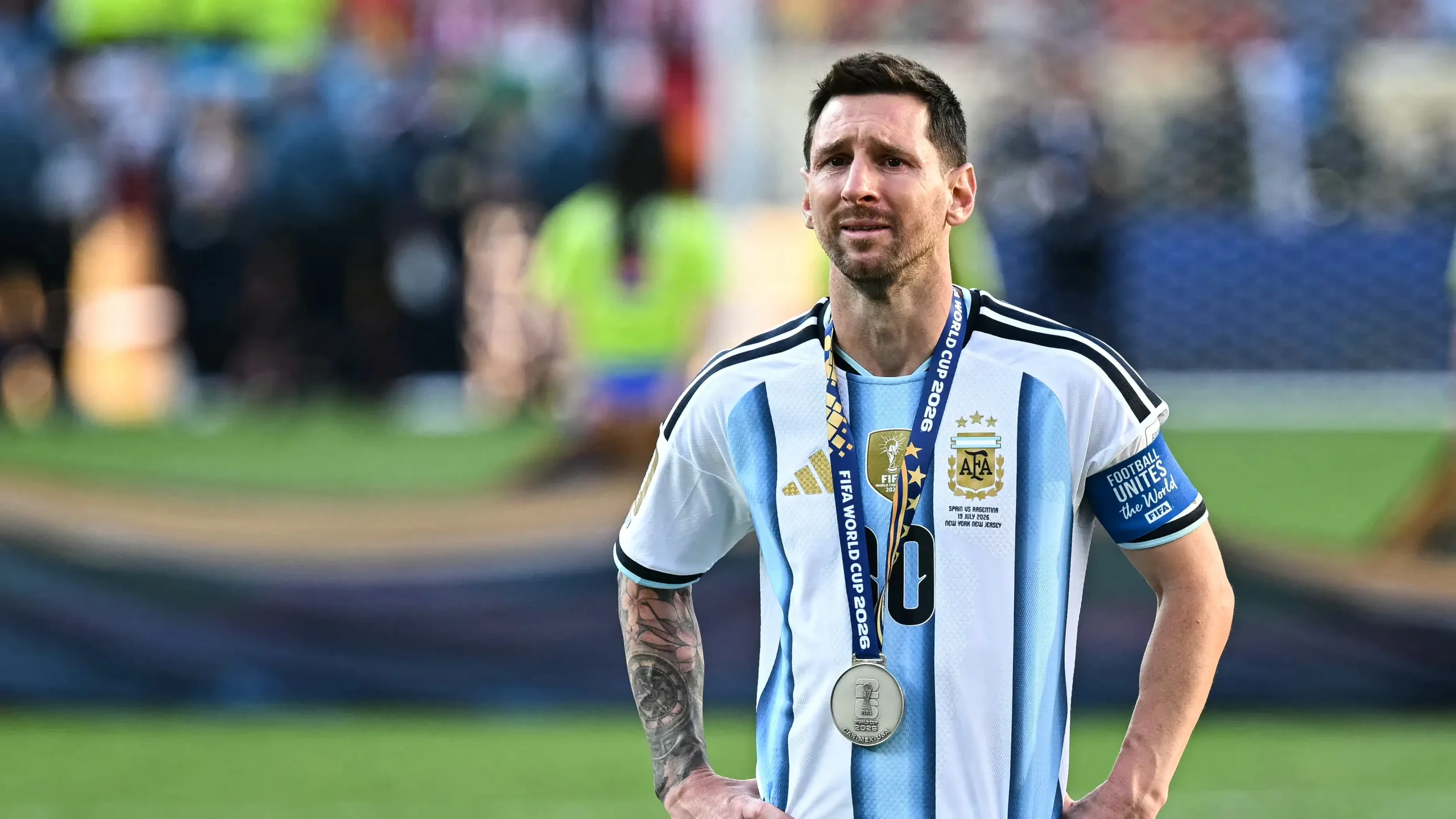 Football rarely gives its greatest players the ending they deserve.
Messi’s international story was almost certainly finished on July 19, when Argentina lost the 2026 World Cup final to Spain.
That was the natural sporting ending.
A World Cup final.
The captain.
The No. 10.
The biggest stage in football.
But it was also an emotionally difficult way to close the story.
Argentina had arrived in the final as defending champions after Messi had already fulfilled the dream that had defined much of his career: winning the World Cup in Qatar in 2022.
Instead of lifting another trophy, Argentina lost narrowly to Spain.
Messi walked away from that final knowing that his last competitive appearance for Argentina had come in defeat. Reuters described his international retirement as the conclusion of a career that had transformed him from a criticised young player into one of Argentina’s most important sporting figures.
Now, the AFA has given him something different.
A home farewell.
A stadium full of Argentines.
And the opportunity to leave international football without the final image being solely defined by defeat.
From Teenage Messi to Argentina’s Greatest Modern Leader
 The scale of Messi’s international career is difficult to comprehend.
He made his senior Argentina debut in 2005, meaning his journey with the national team has stretched across more than two decades. That makes the original “18 years” framing too narrow for a fact-checked 2026 article.
Within that period, Messi experienced almost every possible emotion.
There was the teenage prodigy.
The player compared relentlessly with Diego Maradona.
The captain criticised for not delivering an international trophy.
The man who lost major finals.
The player who briefly retired from international football.
And finally, the captain who returned to lead Argentina to the biggest trophies in the game.
By the time of his retirement announcement, Messi had accumulated 207 appearances and 125 goals for Argentina, according to the latest reporting on his farewell.
Those numbers alone tell part of the story.
The trophies tell another.
Messi and the Pain Before the Glory
For much of Messi’s early Argentina career, the story was not about winning.
It was about what he had failed to win.
Argentina reached the 2014 World Cup final but lost to Germany.
Then came consecutive Copa América final defeats in 2015 and 2016.
The 2016 defeat was particularly painful.
After Argentina lost the Copa América Centenario final to Chile on penalties, Messi missed his penalty and subsequently announced his retirement from international football.
At that moment, the relationship between Messi and Argentina appeared broken.
He had achieved almost everything possible at club level.
But international football continued to escape him.
That period is crucial when examining his legacy because the Messi of 2016 and the Messi of 2026 are almost two different football stories.
The first was a superstar searching desperately for international validation.
The second was a champion who had already changed the history of Argentine football.
The Return That Changed Everything
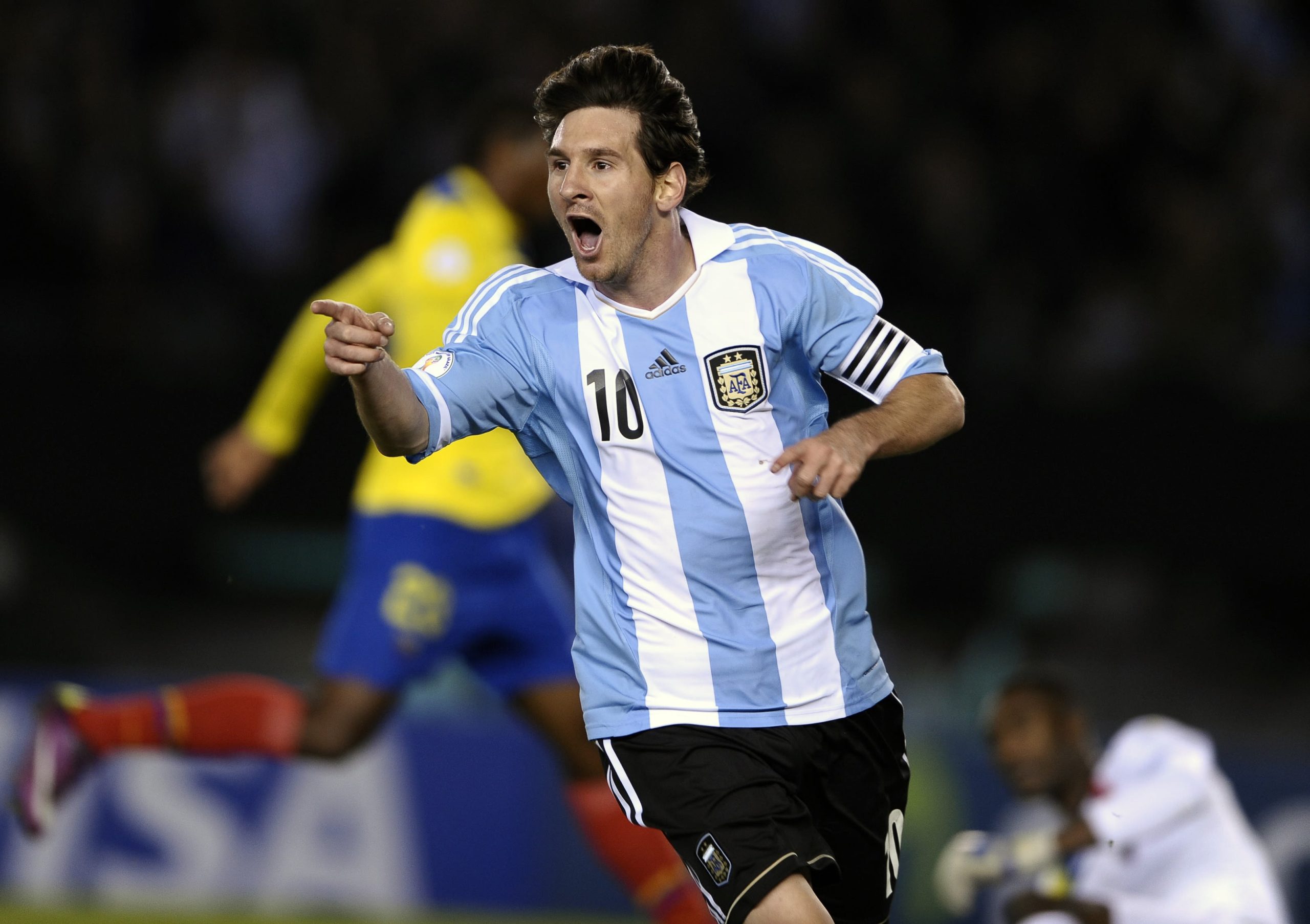 Messi reversed his international retirement and returned to Argentina.
That decision eventually changed the trajectory of his national-team career.
Argentina won the 2021 Copa América, beating Brazil in the final at the Maracanã.
For Messi, it was more than another trophy.
It was his first major senior international title with Argentina.
The emotional significance was enormous because the victory arrived after years of criticism and disappointment.
Then came the 2022 Finalissima, when Argentina defeated Italy.
And then came Qatar.
The 2022 World Cup transformed Messi’s international legacy permanently.
Argentina defeated France on penalties in one of the most dramatic World Cup finals ever played.
Messi scored twice in the final and converted his penalty in the shootout.
He finished the tournament as Argentina’s leader, captain and central attacking figure.
Most importantly, he finally lifted the trophy that had followed him throughout his career.
FIFA records Messi as a World Cup winner with Argentina in 2022 and also highlights his wider collection of international achievements, including the Copa América and Finalissima.
Messi Did Not Stop After Winning the World Cup
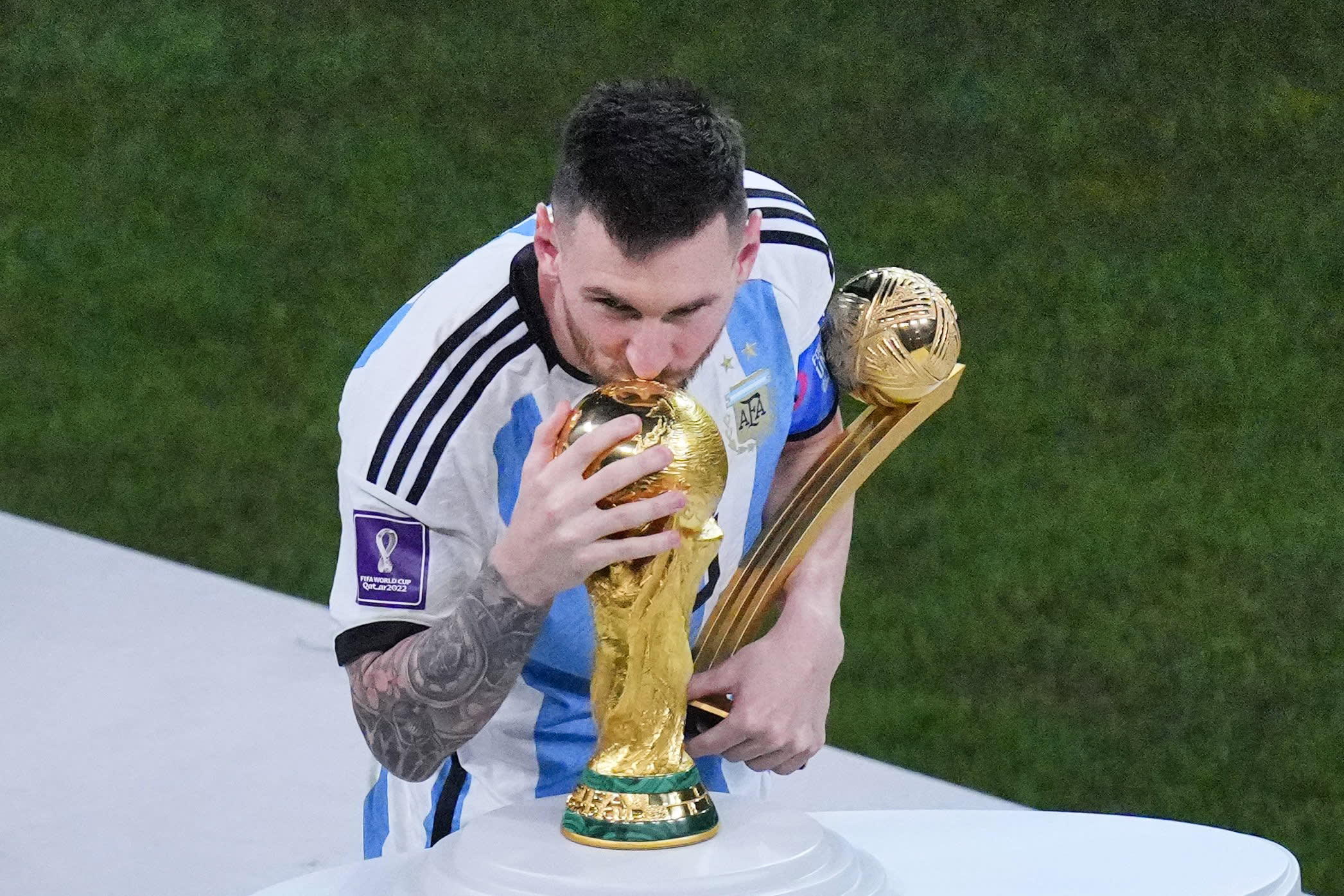 One of the most remarkable aspects of Messi’s final international chapter is that he did not disappear after winning Qatar.
He continued.
He continued creating.
He continued scoring.
He continued leading.
And he continued playing for Argentina into his late 30s.
That longevity is one of the reasons the Messi final Argentina match represents more than the retirement of a superstar.
It represents the closing of an entire football generation.
Messi’s international career has crossed several eras.
He played alongside Javier Mascherano.
He played with Ángel Di María.
He shared Argentina teams with Sergio Agüero.
He eventually became the senior figure alongside players such as Rodrigo De Paul, Nicolás Otamendi and Ángel Correa.
And by 2026, he was playing alongside a new generation that included players such as Julián Álvarez, Enzo Fernández, Alexis Mac Allister and Franco Mastantuono.
That is the extraordinary length of the journey.
The 2026 World Cup Was the Final Competitive Chapter
 Messi’s decision to retire came after the 2026 World Cup.
Argentina reached the final again but lost 1-0 to Spain.
That defeat meant Messi narrowly missed the opportunity to become a two-time World Cup champion.
But his individual tournament remained historically significant.
FIFA’s official World Cup statistics list Messi with eight goals and four assists during the 2026 tournament, placing him among the leading contributors.
That is extraordinary considering his age.
At 39, Messi was still influencing matches at the highest international level.
He was no longer the same player who could repeatedly sprint beyond defenders for 90 minutes.
He did not need to be.
His game had evolved.
His intelligence became more important.
His positioning became more economical.
His passing became an even greater weapon.
His ability to control the rhythm of attacks remained elite.
This evolution is arguably one of the most important parts of his international legacy.
Messi Changed Before Argentina Changed
One of the biggest misconceptions about Messi’s Argentina career is that the national team simply became better around him.
The reality is more interesting.
Messi changed too.
Early in his career, he was often expected to solve everything himself.
He had to create.
He had to dribble.
He had to score.
He had to carry the ball.
He had to produce the decisive moment.
As he aged, his influence became more strategic.
He began operating more selectively.
Instead of constantly searching for the ball, he could choose when to drop into midfield.
Instead of beating three defenders every possession, he could eliminate a defensive line with one pass.
Instead of constantly running beyond the striker, he could manipulate defenders by occupying the space behind midfield.
That evolution helped Argentina become less dependent on individual brilliance while still benefiting enormously from Messi’s presence.
Reuters noted that during his later international career Messi adapted his playing style with age while Argentina developed into a resilient side that was no longer entirely dependent on him.
That may be one of his greatest contributions.
He did not simply become older.
He became a different kind of leader.
The Messi Final Argentina Match Will Also Be a Celebration of the 2022 Generation
The AFA has indicated that members of Argentina’s 2022 World Cup-winning squad and their families will be invited to the farewell.
That adds another layer to the occasion.
The players who helped Messi achieve the trophy he had spent so much of his career chasing will be there to witness his final Argentina appearance.
Names such as:
- Ángel Di María
- Rodrigo De Paul
- Emiliano Martínez
- Nicolás Otamendi
- Enzo Fernández
- Alexis Mac Allister
- Julián Álvarez
formed part of the generation that helped Argentina become a dominant force again.
For Messi, the night will therefore not only be about saying goodbye.
It will also be about remembering.
The defeats.
The criticism.
The comeback.
Copa América.
Finalissima.
Qatar 2022.
And the journey that followed.
Why Benin Is the Perfect Opponent for a Farewell
Argentina’s final match of the international window will be against Benin at the Monumental.
It will be a friendly rather than a competitive fixture.
That is important.
There is no qualification pressure.
No knockout-round consequence.
No trophy waiting at the end.
The purpose is ceremonial.
Argentina’s schedule also includes Bolivia on September 30 and Burkina Faso on October 3 before the Benin match on October 6. According to the AFA announcement reported by Reuters, Messi, Rodrigo De Paul and Giovani Lo Celso are set to participate in the final friendly against Benin.
The structure allows the occasion to exist for what it is:
Messi’s farewell.
Not another tactical experiment.
Not another qualification campaign.
Not another tournament.
Just one final Argentina shirt.
What Will Argentina Look Like Without Messi?
This is where the farewell becomes more than an emotional story.
It is also a football story.
Argentina must now build a national team that exists beyond its greatest player.
That process has already begun.
Players such as Julián Álvarez, Lautaro Martínez, Enzo Fernández, Alexis Mac Allister, Rodrigo De Paul and younger talents such as Franco Mastantuono and Nicolás Paz represent different pieces of Argentina’s next generation. The latest squad announcement includes a mixture of established World Cup players and emerging talents.
The challenge is not simply replacing Messi’s goals.
That is almost impossible.
The challenge is replacing his decision-making.
Who controls the rhythm?
Who creates the final pass?
Who gives Argentina an escape route when opponents press?
Who can receive between the lines?
Who attracts two defenders?
Who decides when to accelerate and when to slow the game down?
These are much harder questions.
A team can replace a goalscorer.
Replacing a player who influences almost every phase of an attack is a completely different problem.
Argentina’s Next Era Will Not Be a Messi Replica
The temptation after every legendary player’s retirement is to search for his replacement.
Argentina should resist that temptation.
There will not be another Messi.
There does not need to be.
The next Argentina team will have to develop its own identity.
That could mean more collective attacking responsibility.
It could mean different midfield structures.
It could mean greater emphasis on Álvarez and Lautaro.
It could mean younger creative players taking larger roles.
And it could eventually produce another great Argentina team—but one that looks fundamentally different from Messi’s.
That is the natural cycle of international football.
Every generation eventually gives way to another.
The Monumental Will Not Just Say Goodbye to a Player
When Messi walks onto the Monumental pitch on October 6, the reaction will probably be bigger than the normal response to a footballer entering a friendly.
Because Argentina’s relationship with Messi has never been normal.
For years, he represented both hope and frustration.
He was celebrated.
He was criticised.
He was compared with Maradona.
He was blamed for defeats.
He was defended by millions.
And eventually, he became the captain who delivered the trophies Argentina had been waiting for.
The Monumental will therefore not simply be saying goodbye to Lionel Messi.
It will be saying goodbye to an era of Argentine football.
An era that began when a young player arrived on the international scene and ended more than two decades later with the same player still wearing the No. 10 shirt.
From Maradona’s Shadow to Messi’s Own Legacy
 For much of Messi’s career, comparisons with Diego Maradona were unavoidable.
Every World Cup brought the same question.
Could Messi become as important to Argentina as Maradona?
Winning Qatar 2022 changed the conversation.
Messi no longer needed to spend his career answering that question.
He had his World Cup.
He had his Copa América titles.
He had the captaincy.
He had the records.
And he had the emotional connection with Argentine supporters that had once seemed impossible.
The debate over who was greater will continue because football debates never truly end.
But Messi’s international story no longer requires another argument.
His record speaks for itself.
What October 6 Will Mean for Football
The significance of the Messi final Argentina match extends far beyond Argentina.
For fans around the world, it will be another reminder that an extraordinary generation is disappearing.
Cristiano Ronaldo’s international future remains a separate story.
Luka Modrić is approaching the final stages of his career.
Other players from Messi’s generation have already retired.
And Messi himself is now preparing to close the Argentina chapter.
For fans who grew up watching him in Barcelona colours, then watched him struggle with Argentina before witnessing the transformation into a World Cup-winning captain, the farewell will feel personal.
It is the end of something familiar.
The Final Image Should Not Be the Defeat to Spain
Perhaps this is why the farewell against Benin matters so much.
Messi’s final competitive match was a World Cup final defeat.
That is historically significant, but it is not the image Argentina wants to leave as the definitive ending.
Instead, the Monumental offers a different final frame.
Messi in Argentina colours.
Argentine supporters singing.
The players who shared the greatest triumph of his career nearby.
The No. 10 shirt.
The captain’s armband.
And one final walk around the pitch.
There may be tears.
There will certainly be applause.
But above all, there will be recognition.
Recognition that Argentina’s greatest modern football story has reached its final page.
Messi Final Argentina Match: The End of the Last Tango
The Messi final Argentina match will take place on October 6 against Benin, but its meaning will stretch far beyond 90 minutes.
It will close a career that survived criticism, heartbreak, retirement, redemption and ultimate glory.
Messi leaves international football with 207 appearances, 125 goals, two Copa América titles and a World Cup, having represented Argentina for more than 20 years.
He leaves as a World Cup champion.
He leaves as Argentina’s captain.
And he leaves having transformed the narrative that once followed him.
The teenager who was once asked why he could not win with Argentina eventually became the man who delivered the World Cup.
Now, there is only one thing left.
One final shirt.
One final stadium.
One final night.
October 6 at the Monumental.
Argentina vs Benin.
Lionel Messi’s last dance.
And when the final whistle eventually comes, football will not simply be saying goodbye to Argentina’s No. 10.
It will be closing one of the longest, most dramatic and most successful international eras of the modern game.
The next generation will inherit Argentina. Bu