
Jude Bellingham carried England through a brutal afternoon in Miami Gardens, but the victory came with a warning attached. Norway arrived with patience, skill and real belief in their first World Cup quarter-final, and for long stretches they looked the more coherent side. England, by contrast, leaned heavily on their talisman and looked uncomfortable in the oppressive Florida heat.
Table of Contents
The Miami heat and the match situation
The setting mattered as much as the football. This was not a normal quarter-final. The air sat heavy over the pitch, draining tempo and sharpness, and England seemed especially exposed to it. Norway adapted better for long spells, while England struggled to impose control or sustain rhythm. In a game shaped by conditions as much as tactics, the margins were narrow and the stress was constant.
For readers following the wider tournament context, the conditions in Florida were a reminder that World Cup football is rarely decided by ability alone. The atmosphere, the travel, the humidity and the recovery demands all feed into the performance. Even the best-prepared teams can lose a little speed in thought and movement when the climate becomes part of the contest. The official FIFA competition format and match environment are outlined on the FIFA World Cup tournament page, which helps explain why endurance and squad depth matter so much in knockouts.
England appeared to feel that strain. Their passing became flatter, their pressing less aggressive and their movement less coordinated. That gave Norway more confidence to build attacks and settle into the game. What should have been a platform for England to dominate possession instead turned into a cautious, difficult battle that demanded individual intervention.
The first half in particular showed how little margin there was for error. Every loose touch became a transition opportunity, every delayed pass allowed Norway to set their shape, and every recovery run cost more energy than it normally would. In those conditions, the difference between a functional side and a fluid one becomes much easier to see. England were functional in moments, but rarely fluid, and that made the contest harder than it needed to be.
That is important because tournament football does not always reward the side with the better name or the more obvious star power. The games that decide the later rounds tend to hinge on who can manage the small things: the second ball, the rest defence, the timing of the press, the ability to slow the game when needed. Norway managed more of those details than England for long stretches, and that is why the match felt so uneasy despite England’s eventual success.
Jude Bellingham World Cup and England’s dependence
What stood out most was how quickly the match became about one player. Bellingham provided the lift England needed when the game threatened to drift away from them, but the wider picture was less encouraging. Too often, England looked like a side waiting for their star man to solve problems that should have been shared around the team.
That is the danger in knockout football. A brilliant individual can get a team over the line once, even twice, but the deeper questions remain. England had enough to progress, yet the performance suggested a team still searching for balance, especially when forced into a contest where energy, patience and structure mattered as much as talent.
This is where the phrase Jude Bellingham World Cup starts to mean more than a headline. It is not only about goals, tackles or moments of drive. It also captures the sense that England’s best route through pressure often runs through one player’s influence. That can be a strength in a short tournament, but it can also become a burden if the rest of the team does not carry enough of the load.
Bellingham’s game is built on timing, power and an ability to arrive in the decisive spaces. He can turn a flat match into an active one with a single surge, and he can shift momentum by dragging teammates with him. But no tournament is won by one footballer alone. If England want to go deeper, they need others to create, protect the ball, and manage phases of the game when Bellingham is marked closely or simply denied the right moment.
The most worrying part for England was not that Bellingham played well. It was that his excellence felt necessary just to keep the team stable. That is a dangerous place to be because it raises the cost of any off-day from the rest of the squad. If the midfield cannot control the rhythm, and if the forward line cannot stretch opponents consistently, then every match begins to feel like a rescue mission.
There is a wider tactical truth here too. A side built around one dominant force can look irresistible when the game suits it, but brittle when the opponent removes easy space. Norway did exactly that for long periods. They compressed central areas, slowed England’s forward progress and made every attacking move require another layer of problem-solving. In that sort of match, even a top-level player cannot do everything on his own, which is why Jude Bellingham World Cup becomes a useful shorthand for both hope and dependence.
 England’s best passages came when the ball moved quickly enough to prevent Norway from resetting their structure. When that happened, Bellingham could burst into gaps, combine with runners and make the contest tilt. When it did not happen, England looked static, and the game became a test of patience they did not always answer well. That rhythm issue matters because it is exactly the sort of problem that returns in later knockout rounds, when opponents are stronger, the stakes are higher and the conditions are even less forgiving.
It is also worth remembering that Bellingham’s influence is not just technical. He changes the emotional temperature of a match. Teammates look to him when the game becomes flat, and that can lift a whole side. But it can also encourage overreliance. If one player is always the spark, the rest of the team can begin to wait for the spark instead of creating it for themselves. England must avoid that trap.
That is why the discussion around Jude Bellingham World Cup should not be reduced to whether he was excellent or not. The more pressing issue is whether England have built enough around him to make his excellence a bonus rather than a necessity. Tournament winners usually answer that question with collective actions, not individual rescue acts. England are not quite there yet based on this performance.
Norway’s organisation and confidence
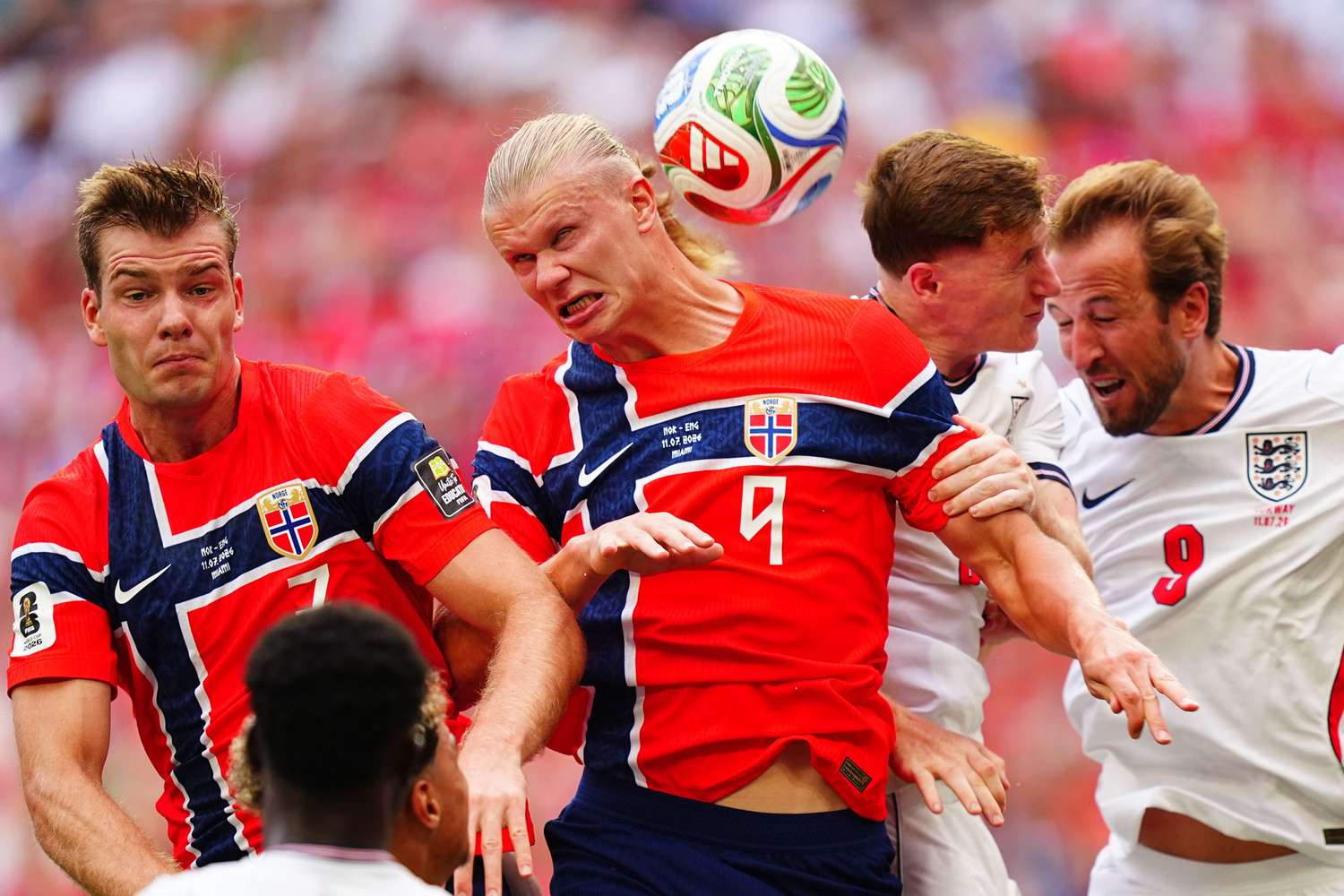 Norway deserve credit for making it so awkward. They were organised, composed and brave on the ball, and they never looked overwhelmed by the occasion. For a first quarter-final, their football had enough quality to trouble England at every level of the pitch.
They did not play like a side content to sit back and hope. Instead, Norway used the ball with enough calm to stop England from settling into any defensive rhythm. Their movement across midfield helped them escape pressure, and their willingness to commit players forward meant England could not simply wait for mistakes. Even when they were pinned back, they still carried the threat of a team that believed it belonged on the same stage.
That belief matters. In a knockout match, especially in difficult weather, a team that trusts its structure can often make a better game of it than a more gifted opponent who is forcing the issue. Norway were the cleaner side for long stretches because they did the ordinary things well: passing cleanly, recovering shape, and staying patient when the momentum shifted away from them.
England’s response was to lean more heavily on individual quality. That worked enough to keep them alive, but it did not fully solve the underlying problem of control. When the game became stretched, Norway were often the side that looked more settled. Their confidence made England think twice, and that hesitation added to the sense that this was no routine route through the bracket.
The match also highlighted how important compactness becomes in knockout football. Norway’s distances between the lines were often excellent, which meant England had to work for every forward movement. They denied easy pockets to receive in, forced England wide at the wrong times and reduced the number of clean central combinations available to them. That kind of discipline does not always produce the most eye-catching football, but it often produces the most effective tournament football.
What made Norway so difficult was that they did not panic after losing territory. Some teams retreat and become passive when pinned back, but Norway stayed connected and resisted the urge to chase the match. That composure is usually the sign of a side that has matured quickly. England felt the effect of that maturity because they were not allowed to turn possession into momentum with the ease they expected.
What the game really revealed
Beyond the immediate drama, the match revealed something more structural about England’s tournament profile. This was a game where the performance level and the result did not feel fully aligned. England won because they had the quality to find a way, but the process was messy enough to raise questions about sustainability.
That matters because a World Cup does not reward isolated moments in the way domestic football sometimes can. The next opponent tends to be smarter, the recovery time shorter and the punishment for tactical imbalance much harsher. England’s dependence on Bellingham may have been survivable in Miami Gardens; it might not be survivable against a side with more ruthless finishing or cleaner control in possession.
So the real issue is not whether Jude Bellingham World Cup stories should celebrate one player’s brilliance. They should. He was decisive and influential. The issue is whether England can produce another layer of performance around him. Can they create calmer spells? Can they protect themselves when the game becomes stretched? Can they make the match feel theirs without waiting for one player to tilt it?
Those are the questions elite tournament teams answer early. They are not always answered with glamour. Often, they come down to where the full-backs stand in possession, how the midfield screens transitions and whether the wide players are making the right runs to pin defenders back. Against Norway, England did some of that well, but not enough to make the game feel under control.
The same applies to game management. A team with real tournament pedigree knows when to slow things down, when to keep the ball, and when to accept a quiet five-minute spell without forcing the issue. England did not always show that calm. They were too often pulled into the sort of open game that Norway could live with. That is why the win felt precarious even after the decisive moments fell their way.
One of the clearest lessons is that talent alone does not settle a quarter-final in Florida heat. The conditions amplify every weakness. If the midfield loses a step, the whole team looks stretched. If the press is late, the defence is exposed. If the attacking moves lack width or support, Bellingham ends up having to bridge too many gaps. The performance told us that England still need to share those tasks more evenly.
It also told us something encouraging, though. Even in a match that felt awkward and demanding, England still found a route through. That is not nothing. Tournament winners often survive awkward games before they start to look fully convincing. The trick is to learn from the awkwardness rather than dismiss it.
A warning wrapped inside a win
England will take the result and move on, but they cannot ignore the warning signs. The reliance on Bellingham was obvious, and the struggle to manage the heat and the game state was just as clear. On another day, against a more ruthless opponent, that combination could have been punished.
That is why the story of this match goes beyond the scoreline. The headline may read as a victory, but the performance also acted as a stress test. It exposed how much England depend on moments of brilliance when the game turns messy. It also showed that a team can be physically and emotionally stretched even while holding an advantage on the field.
The knockout path gets harder from here. England have the biggest individual match-winner on the pitch, but if they want to keep going deep into the tournament, they will need more than one standout figure and a few moments of rescue. The next step will demand greater control, more resilience and a team performance that can stand up under pressure.
That broader lesson is the real value of the match. England did not merely survive. They were forced to confront the limits of a game plan that leans too heavily on one player’s authority. The best tournament teams usually share the load. They can defend without panic, attack without forcing the issue and adapt when the weather, the opponent or the moment changes the feel of the contest.
For England, that means the supporting cast has to matter more. Midfield runners need to offer cleaner passing lanes. Wide players need to create easier exits under pressure. The back line needs to be calmer when possession breaks down. None of that removes the importance of Bellingham. It simply places his brilliance within a structure that does not collapse when he is not the central answer.
It is also worth remembering how quickly a World Cup campaign can change tone. One tight win can feel like proof of resilience, while a more balanced but narrower performance can expose how fragile the overall setup is. The best teams learn from both. England’s task now is to understand why this game felt so dependent on a single source of inspiration and to make sure the next round does not require the same kind of rescue.
For a deeper read on the post-match framing, the original report from The Guardian’s coverage of Jude Bellingham and England against Norway captures the same central tension: a superb individual performance set against a team display that still needs more collective control.
England may still feel encouraged by the fact that they found a way through. Tournament football rewards that survival instinct. But the best sides do not just survive. They take the lesson, correct the flaw and come back looking harder to shake. If England are to turn this campaign into something more than a series of narrow escapes, they will have to prove that the team can function even when the match no longer bends so neatly around Bellingham’s talent.
That is the key lesson from this Jude Bellingham World Cup performance: the brilliance is real, but it cannot be the whole plan. England need other players to take responsibility, need a calmer structure in possession and need better answers when opponents make the game uncomfortable. Norway showed that the challenge is already there. The rest of the tournament will show whether England have learned enough from it.
In that sense, Jude Bellingham World Cup remains both a strength and a challenge. He is the player most likely to tilt the balance in England’s favour, but the team cannot keep asking him to do the heavy lifting every time the game becomes uncomfortable. Norway exposed enough to make that point impossible to miss, and the rest of the tournament will punish any side that ignores it.
England still have the quality to go further. What they do not yet have, at least from this performance, is the certainty that their structure will hold when the pressure rises and the conditions become difficult. That is the lesson hidden inside a win, and it may end up being the most important part of their World Cup story.
For anyone tracking the wider arc of the competition, this is exactly the kind of match that shapes a team’s identity. Not every warning comes in defeat. Sometimes it arrives in a victory that feels too dependent on one player to be comfortable. England got through, but the message was loud and clear: the more they ask of Bellingham, the more they must give the rest of the side to keep the whole operation balanced.