Harry Kane arrived at the Allianz Arena carrying the most prestigious individual award in world football, but his celebration ended with a frustrating reminder that individual brilliance does not always guarantee collective success. What should have been a perfect night for Bayern Munich became a dramatic Bundesliga encounter as Borussia Dortmund fought back to secure a 2–2 draw.
The Harry Kane Ballon d’Or celebration created an extraordinary atmosphere before kick-off. Thousands of Bayern supporters welcomed their star striker as he presented the golden trophy to the Allianz Arena crowd. However, the excitement quickly turned into tension when Kane missed a second-half penalty, Bayern failed to protect their advantage, and substitute Fábio Silva scored a dramatic late equaliser.
For Kane, it was an evening of contrasting emotions. He received recognition for his outstanding individual achievements, contributed an assist for Dayot Upamecano’s goal and experienced the disappointment of missing a crucial penalty. For Bayern, the result exposed questions about defensive concentration and their ability to control important matches.
The Harry Kane Ballon d’Or story was therefore about much more than a trophy presentation. It became a story about expectations, pressure, missed opportunities and the demanding reality of competing for the Bundesliga title.
Harry Kane Ballon dOr: A Golden Celebration Before Der Klassiker
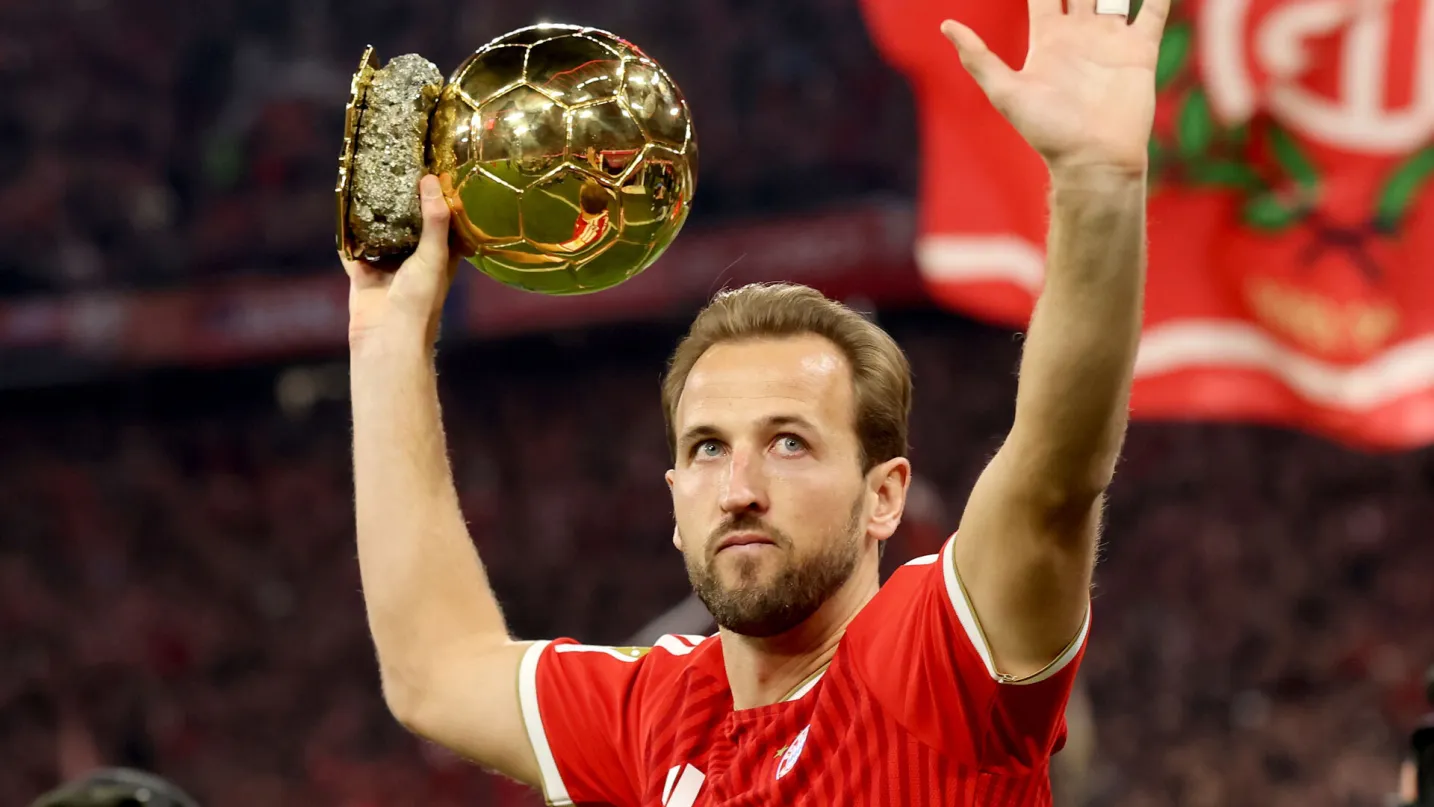
 The Allianz Arena witnessed a special moment before Bayern Munich faced Borussia Dortmund. Kane walked onto the pitch carrying his Ballon d’Or, accompanied by his wife and children, as the home supporters celebrated his remarkable achievement.
The ceremony was particularly significant because Kane became the first Englishman to win the Ballon d’Or since Michael Owen in 2001. His achievement also represented a major moment for Bayern Munich, who had not had a player win the award for several decades.
The Harry Kane Ballon d’Or presentation demonstrated the importance of his contribution to the club and the wider football community. Bayern’s leadership joined the celebration, while the supporters had an opportunity to recognise a player who had become central to the team’s ambitions.
The occasion also carried a powerful message for the Bundesliga. Having one of the world’s most recognised footballers playing in Germany helps strengthen the league’s international profile, attracts attention from global audiences and reinforces Bayern’s status as one of Europe’s biggest football institutions.
Kane expressed his pride at being a Bayern player and his ambition to win more trophies with the club. That ambition was important because the Ballon d’Or is an individual achievement, while Bayern’s identity is built around collective success.
There was no better test of that ambition than a meeting with Borussia Dortmund.
Der Klassiker is one of German football’s biggest fixtures. It is a match in which reputation, form and individual awards become secondary once the referee blows the opening whistle. Kane had received his personal recognition, but he still had to deliver against a determined rival.
1. Bayern Started Strongly but Dortmund Refused to Disappear
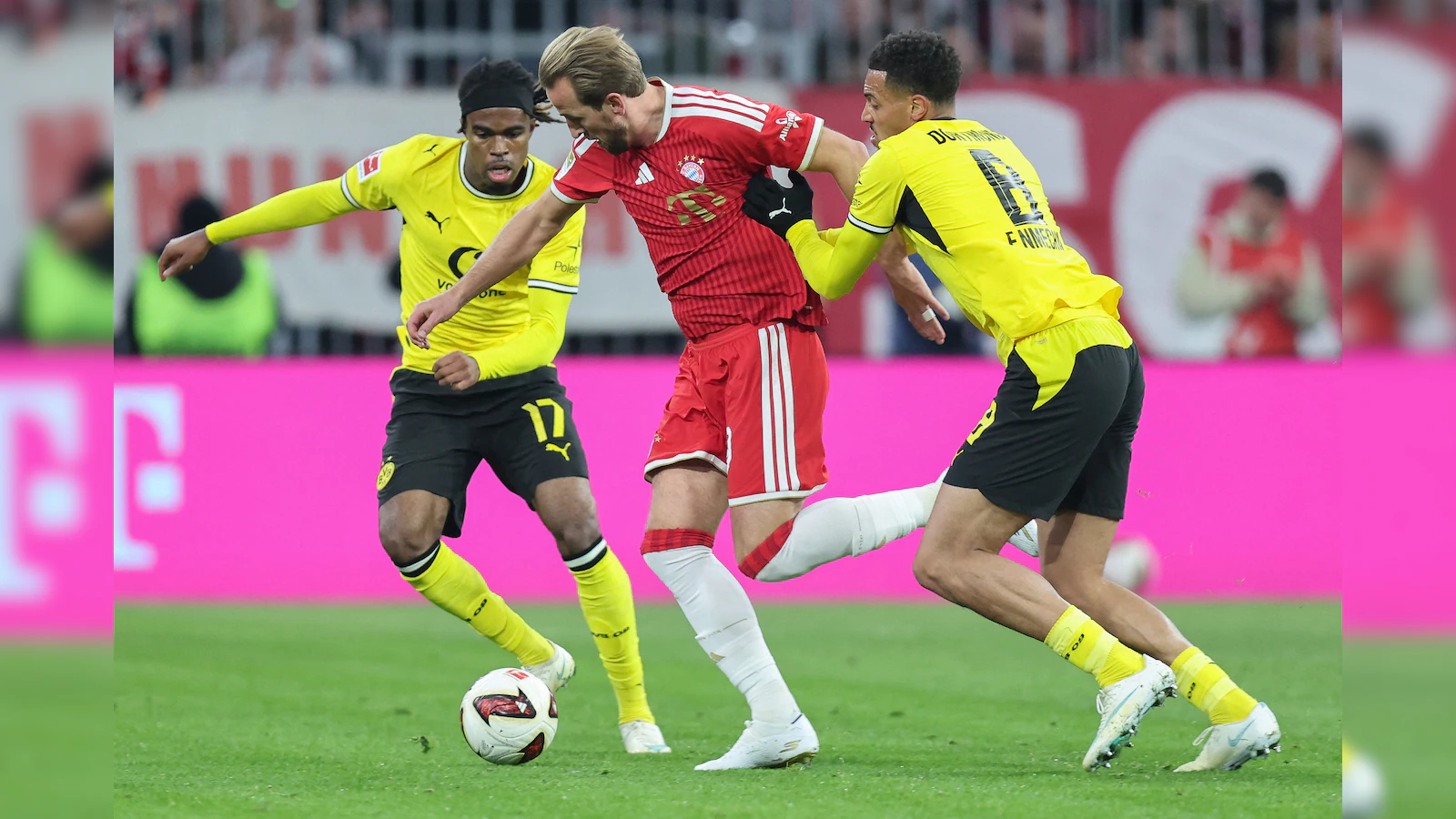 Bayern began the match with attacking intent, looking to use their home advantage and establish control. Their early pressure produced opportunities, including a Michael Olise effort that struck the post in the opening stages.
Dortmund also showed that they were not prepared to spend the entire evening defending. The visitors threatened Bayern’s goal and briefly appeared to take the lead through Jobe Bellingham, although the goal was ruled out following a VAR review.
The first half eventually produced Bayern’s breakthrough in the 38th minute. Olise created the opportunity for Konrad Laimer, who finished to put the hosts ahead.
That goal appeared to reward Bayern’s attacking approach. They had moved the ball with confidence, found space in dangerous areas and forced Dortmund to defend for extended periods.
However, the first goal did not settle the contest.
The Harry Kane Ballon d’Or occasion had increased expectations around Bayern, but Dortmund’s response showed why Der Klassiker rarely follows a predictable script. The visitors remained organised and continued looking for opportunities to exploit Bayern’s defensive structure.
Bayern entered the break with an advantage, but the match was far from finished.
2. Harry Kane Ballon d’Or: How the Missed Penalty Changed the Match
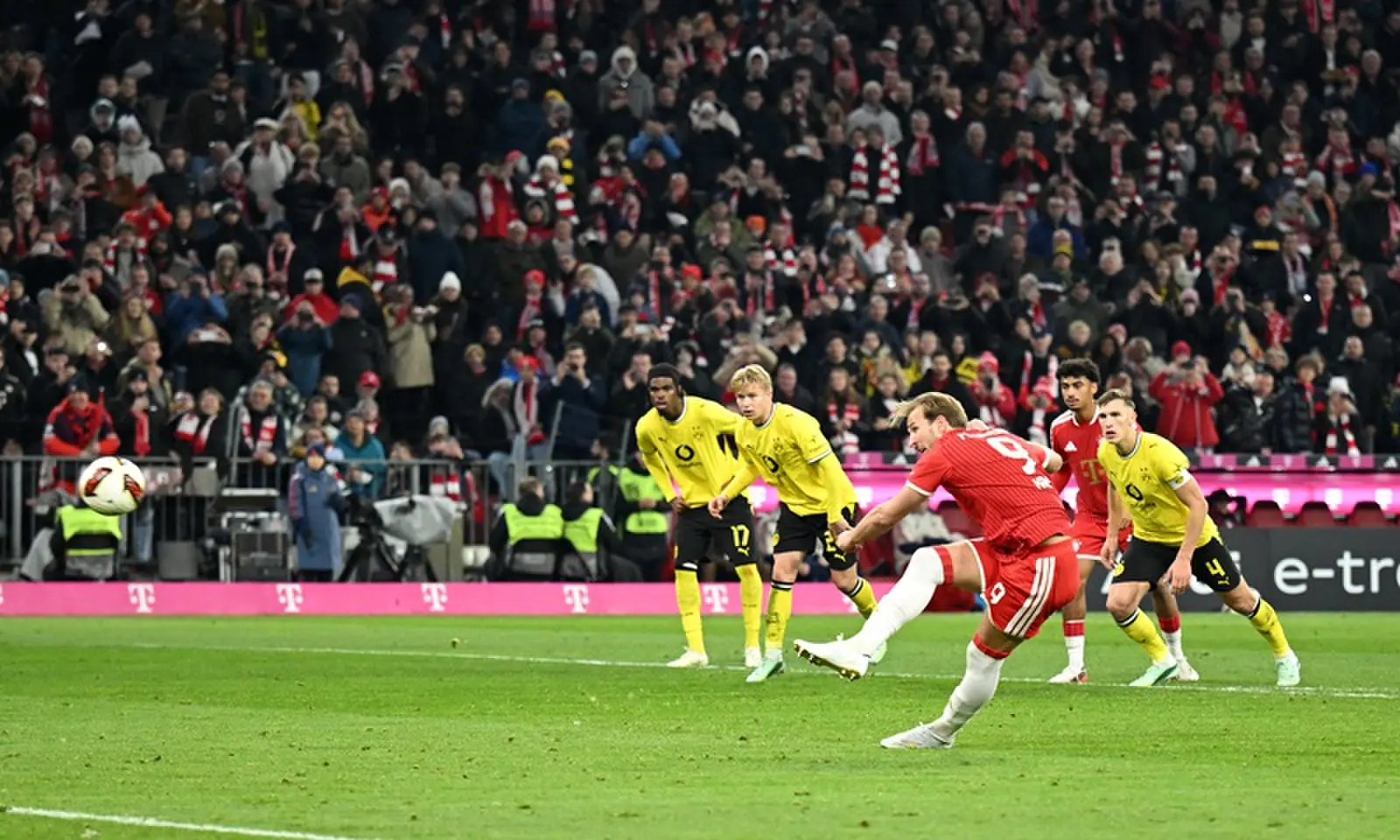 One of the defining moments of the match arrived in the 56th minute.
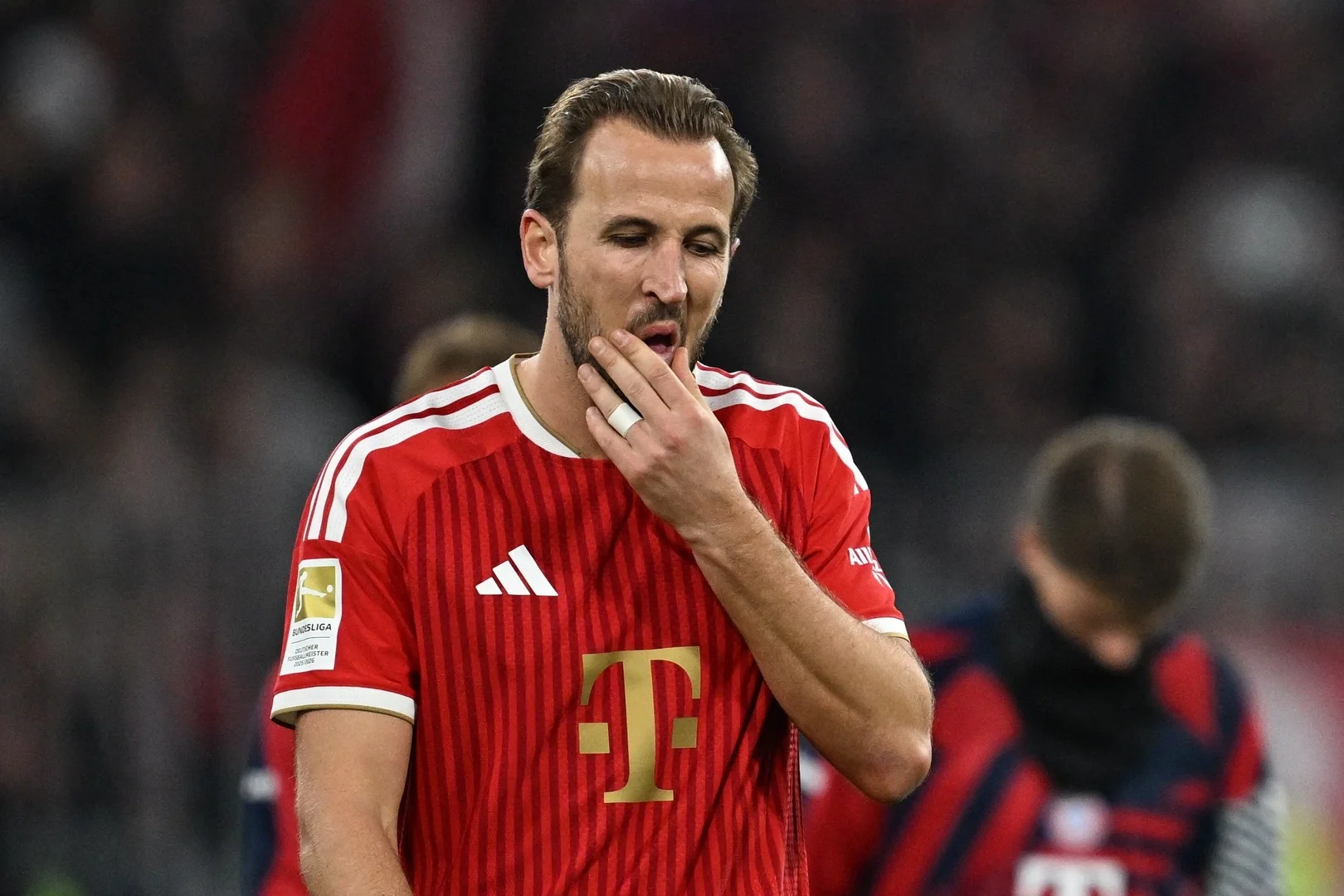
Bayern were awarded a penalty following a handball incident involving Felix Nmecha. Kane stepped forward with an opportunity to double the home side’s lead and potentially put the match beyond Dortmund’s reach.
The England captain struck the crossbar.
It was a dramatic moment because Bayern had been given an opportunity to establish a two-goal advantage. Instead, Dortmund remained within reach and received a psychological boost.
For Kane, the miss was particularly painful because the **Harry Kane Ballon d’Or** celebration had placed him at the centre of attention. He had entered the stadium as the reigning individual award winner, but the penalty reminded everyone that even the best players experience difficult moments.
A missed penalty does not automatically mean a poor performance. Kane remained involved in Bayern’s attacking play and would later contribute to another goal. Nevertheless, the timing of the miss was significant.
Bayern had the opportunity to control the final stages of the match. By failing to convert the penalty, they allowed Dortmund to believe that a comeback was possible.
In elite football, psychological momentum can be just as important as possession and territorial control. Dortmund recognised that the game remained open and increased their determination to attack.
3. Guirassy Punishes Bayern’s Defensive Mistake
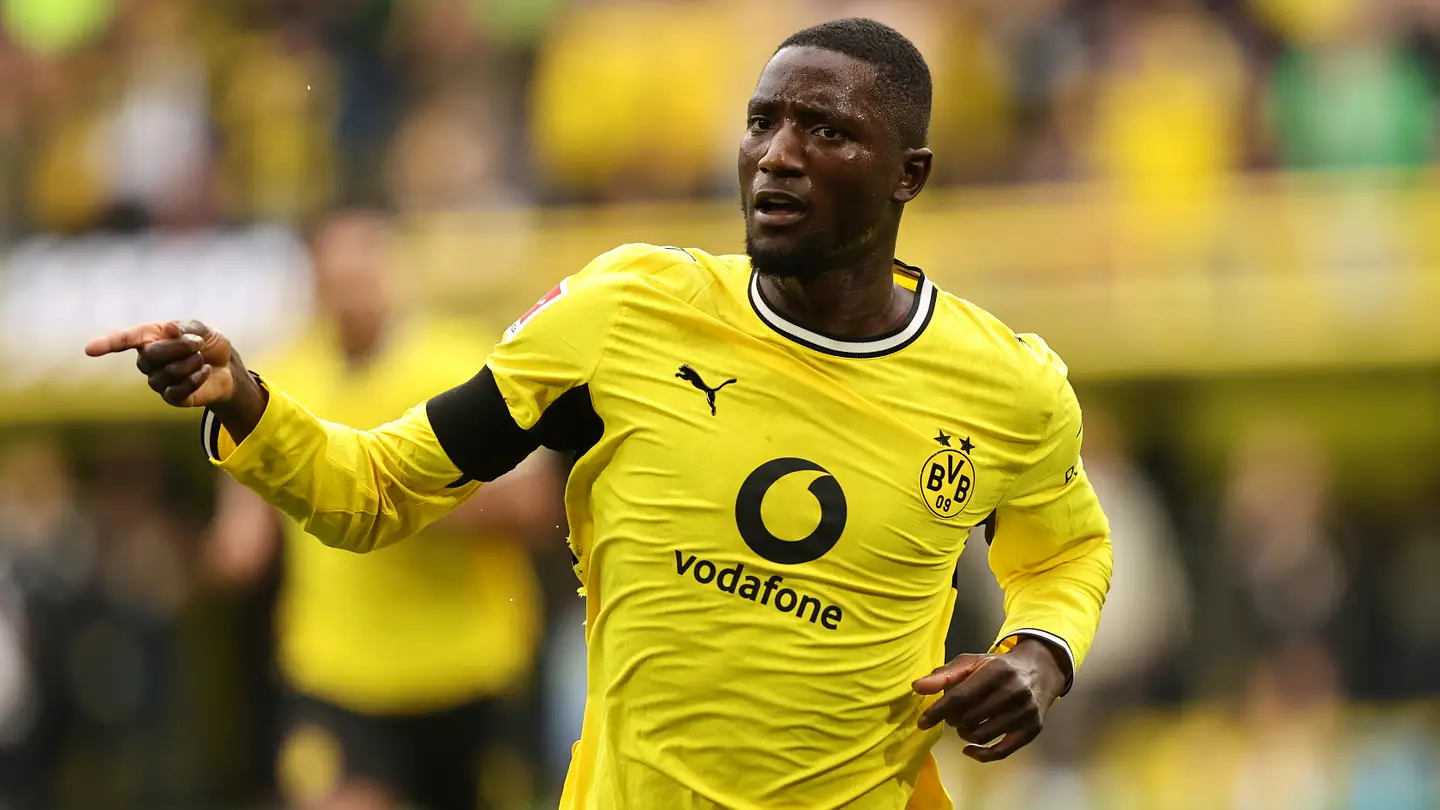 Dortmund’s equaliser arrived in the 60th minute, only four minutes after Kane’s missed penalty.
Nico Schlotterbeck won possession from Michael Olise and initiated a quick attacking move. Carney Chukwuemeka then helped create the opportunity for Serhou Guirassy, who finished to make the score 1–1.
The sequence exposed an important weakness in Bayern’s performance.
Bayern had enjoyed significant attacking possession, but losing the ball in dangerous areas created an opportunity for Dortmund to attack before the home side could reorganise.
This is one of the risks associated with an aggressive attacking system. When several players move forward, the team must maintain enough defensive protection to deal with counterattacks.
Dortmund did not need to dominate possession throughout the match. They needed to recognise the right moment to attack and execute their opportunity with precision.
Guirassy’s equaliser demonstrated that Bayern could not afford to become careless simply because they were controlling large portions of the game.
The Harry Kane Ballon d’Or narrative was now becoming increasingly complicated. The celebration had been followed by a missed penalty and a Dortmund goal, leaving Bayern under pressure to respond.
4. Kane Responds With an Assist as Upamecano Restores Bayern’s Lead
Kane did not allow the penalty miss to completely define his performance.
Bayern responded quickly, and the striker played an important role in restoring their advantage.
In the 66th minute, Joshua Kimmich delivered a cross into the penalty area. Kane connected with the ball and directed it across goal, allowing Dayot Upamecano to finish from close range.
The goal demonstrated another dimension of Kane’s contribution.
Although he is widely recognised as a goalscorer, his ability to link play, create opportunities and bring teammates into attacking situations is equally important to Bayern’s system.
The Harry Kane Ballon d’Or discussion should therefore consider more than the missed penalty. His assist showed that he remained influential even after experiencing a disappointing moment.
Bayern had regained the lead and appeared to have another opportunity to secure an important victory over their domestic rivals.
However, the hosts still had to manage the remaining minutes correctly.
Dortmund continued to push forward, and Bayern’s failure to completely eliminate the visitors’ attacking threat eventually became decisive.
5. Fábio Silva’s Late Equaliser Turns Celebration Into Frustration
Just when Bayern appeared close to securing all three points, Dortmund produced another decisive moment.
In the 89th minute, a corner created danger inside Bayern’s penalty area. The home side failed to clear the situation effectively, allowing substitute Fábio Silva to find the opportunity he needed.
Silva fired home to make it 2–2.
The goal changed the mood inside the Allianz Arena. Bayern had been ahead twice, but Dortmund had found a way back on both occasions.
The late equaliser was important for more than the result. It demonstrated Dortmund’s determination and highlighted Bayern’s difficulties in managing defensive situations under pressure.
For Dortmund, the point represented a valuable reward for refusing to surrender. For Bayern, it was a frustrating conclusion to a match in which they had created enough opportunities to win.
The Harry Kane Ballon d’Or celebration had promised a memorable evening, but Silva’s late goal ensured that the final discussion would focus on the dropped points rather than the trophy presentation.
Bayern almost found a winner in stoppage time when Lennart Karl struck the crossbar, but Dortmund held on.
The final score remained 2–2.
Tactical Analysis: Why Bayern Could Not Turn Dominance Into Victory
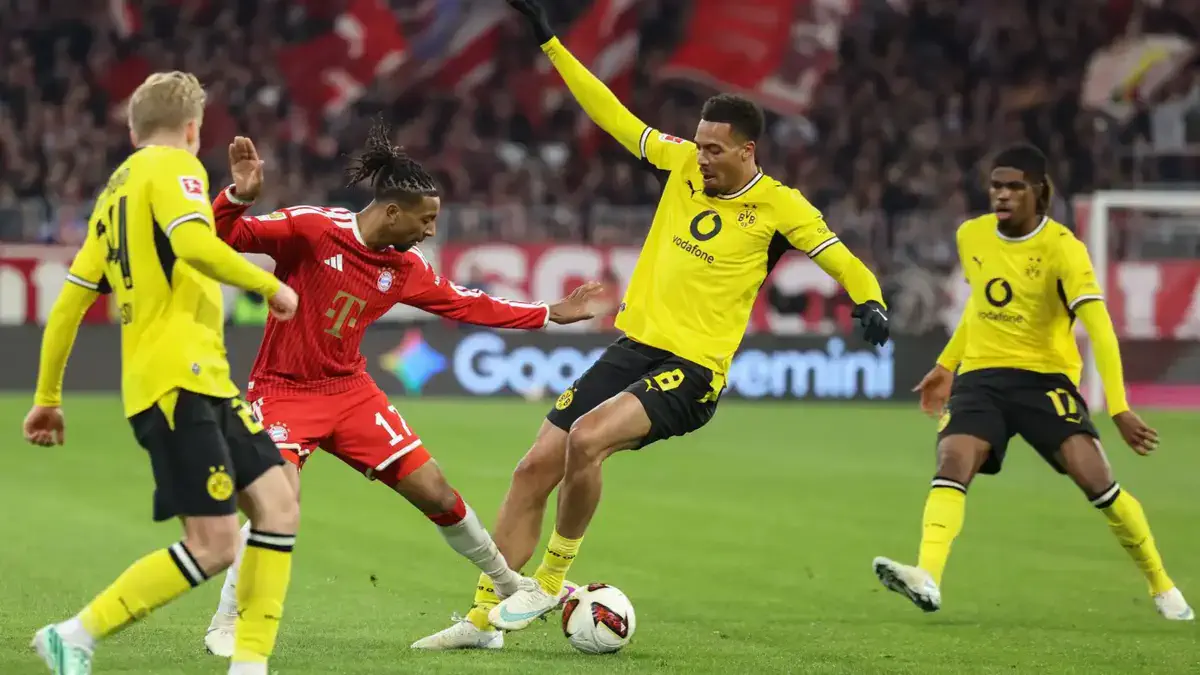 The statistics reveal an important difference between Bayern’s attacking output and their final result.
Bayern recorded 23 shots compared with Dortmund’s 12. They also enjoyed approximately 55.5 per cent possession and completed more successful passes.
Those numbers indicate that Bayern controlled significant periods of the match. They created opportunities, pushed Dortmund backwards and repeatedly threatened the visitors’ defensive line.
However, attacking dominance does not guarantee victory.
Bayern struck the woodwork on several occasions, including Kane’s penalty and Olise’s early effort. Their inability to convert important opportunities kept Dortmund in the contest.
There were also defensive concerns.
Bayern’s attacking structure created opportunities but carried risks
Bayern’s willingness to commit players forward helped them create chances. Their passing combinations and movement in the final third put Dortmund under pressure.
However, the same attacking ambition required effective protection behind the ball.
When Olise lost possession before Guirassy’s equaliser, Bayern were punished by Dortmund’s ability to transition quickly. This is an area that the coaching staff will want to examine.
A team competing for major trophies must know when to attack aggressively and when to protect its defensive structure.
Dortmund’s resilience was the difference
Dortmund demonstrated that they could remain competitive even when Bayern controlled possession.
Their ability to exploit transitions, remain dangerous after conceding and attack set pieces gave them multiple routes back into the match.
Silva’s late equaliser was especially important because it came from Bayern’s inability to clear the danger effectively.
The lesson is clear: Bayern may have produced the stronger attacking performance, but Dortmund managed key moments with greater efficiency.
Harry Kane Ballon d’Or: What the Night Reveals About Individual Greatness
The most compelling aspect of this match was the contrast between Kane’s individual recognition and the collective demands placed on Bayern.
The Ballon d’Or recognises sustained excellence. It is not awarded because of one performance, one goal or one memorable evening. It reflects a player’s influence over a wider period.
The Harry Kane Ballon d’Or achievement was therefore a major milestone, but it did not protect him from criticism after missing a penalty.
SEE ALSO: Ballon d’Or 2026: Harry Kane’s Stunning Triumph as Mbappé and Yamal Miss Out!
That is part of the reality of being an elite footballer.
Supporters celebrate players when they produce extraordinary performances, but they also expect them to take responsibility when the biggest moments arrive.
Kane’s penalty miss will attract attention, particularly because it came during a match against Bayern’s biggest domestic rival. Yet it would be unfair to judge his entire contribution through that single incident.
He provided the assist for Upamecano’s goal and continued to participate in Bayern’s attacking combinations.
His performance was mixed rather than disastrous.
The wider lesson is that individual awards and team trophies measure different things. The Harry Kane Ballon d’Or represents personal excellence, while Bayern’s Bundesliga ambitions depend on collective discipline, defensive concentration and consistency across an entire season.
Kane can win individual recognition, but he still needs his teammates to help Bayern turn strong performances into victories.
What the 2–2 Draw Means for the Bundesliga Title Race
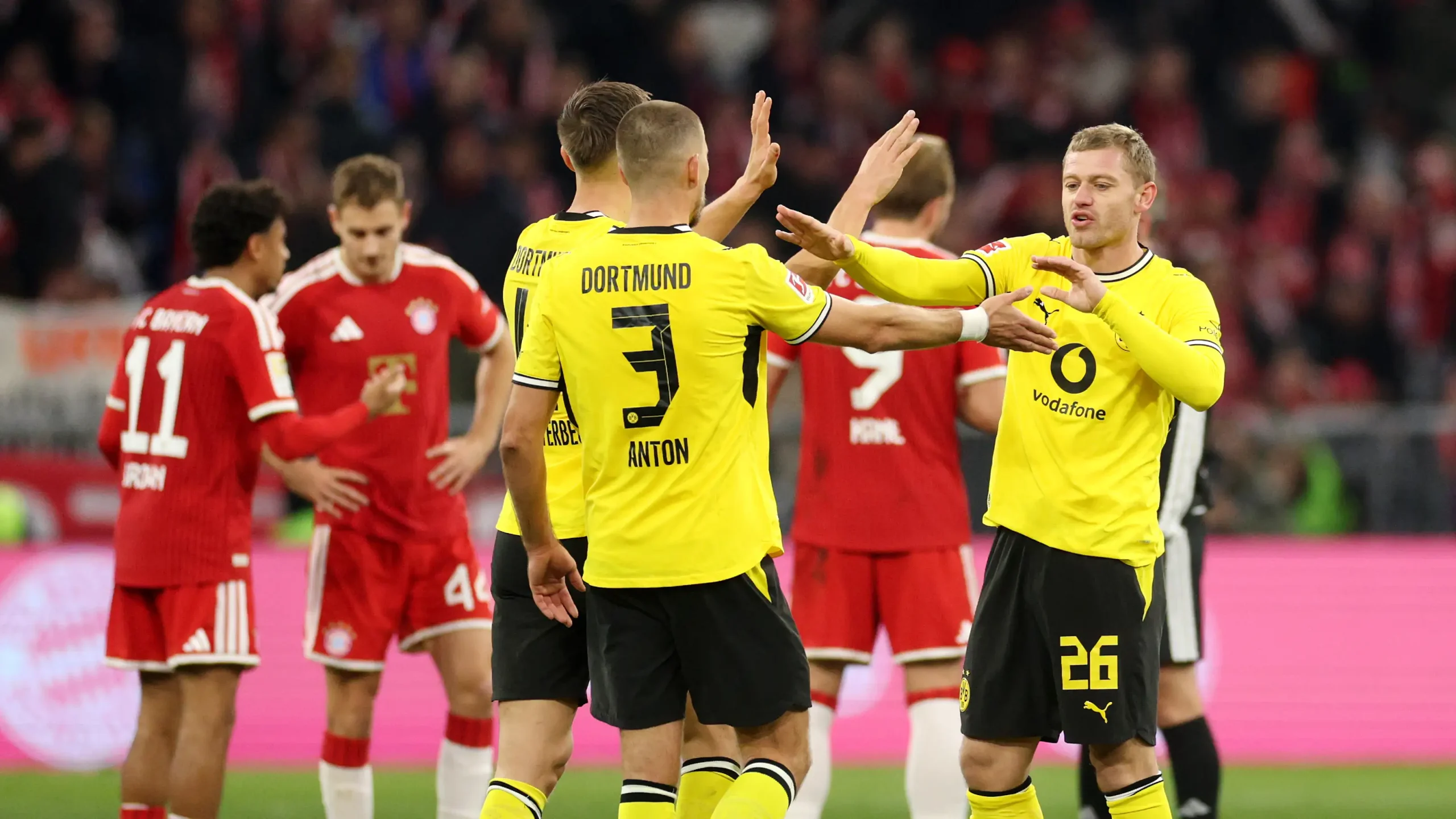 The result carried consequences for both clubs.
Bayern missed an opportunity to defeat a major title rival and create greater separation in the Bundesliga standings. Dortmund, meanwhile, demonstrated that they could compete at the Allianz Arena and recover from difficult moments.
The draw also reinforced the importance of consistency.
A title challenge is not decided by one match, but dropped points against direct rivals can become significant when the season reaches its decisive stages.
Bayern will be disappointed because they created enough opportunities to win. Their attacking statistics suggest that the team remains dangerous, but the defensive mistakes and missed chances provide areas for improvement.
Dortmund can take encouragement from their performance. They showed patience, exploited Bayern’s mistakes and remained competitive until the final whistle.
The Harry Kane Ballon d’Or celebration may have been the headline before kick-off, but the Bundesliga title race remains the bigger objective for both teams.
Harry Kane Ballon d’Or: What the Result Means for Bayern’s Title Race
Kane’s next challenge is to turn the disappointment of this match into motivation.
The missed penalty will be discussed, but his contribution to Bayern’s attacking play remains important. His movement, finishing ability, link-up play and experience make him central to the club’s ambitions.
For Bayern’s coaching staff, the priority should be improving the team’s defensive transitions and concentration during set pieces.
The match against Dortmund demonstrated that even a team with significant attacking quality can lose control of a game through a small number of defensive errors.
Bayern must also improve their efficiency in front of goal. Creating 23 shots is encouraging, but the most important statistic remains the number of goals scored compared with the opportunities created.
Dortmund, on the other hand, will want to build on the confidence gained from taking a point away from Munich.
Their late equaliser demonstrated that they possess the determination to challenge Bayern, although maintaining that level over a full Bundesliga campaign will require consistency.
Final Verdict: The Ballon d’Or Was Kane’s, but the Night Belonged to the Drama
Harry Kane’s special presentation at the Allianz Arena was a celebration of individual excellence and an important moment for Bayern Munich.
However, the 2–2 draw against Borussia Dortmund showed that football is ultimately a collective sport.
Kane experienced the highs and lows of the evening. He displayed the Ballon d’Or, missed a penalty and provided an assist. Bayern took the lead twice but could not prevent Dortmund from fighting back.
The result was a reminder that trophies are won through more than individual brilliance. Bayern must combine attacking quality with defensive discipline if they want to achieve their ambitions this season.
The Harry Kane Ballon d’Or story will continue to attract attention, but the striker’s biggest challenge is helping Bayern turn individual recognition into collective success.
What do you think cost Bayern the victory: Kane’s missed penalty, their defensive mistakes or Dortmund’s determination? Share your opinion in the comments and follow The Football Xtra for more expert football analysis.