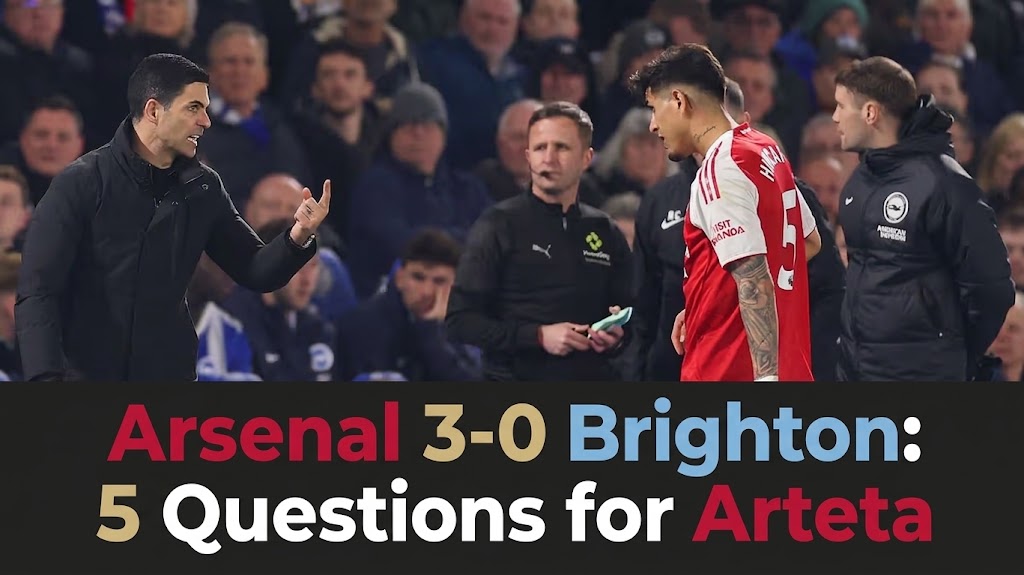
Arsenal 3-0 Brighton was not simply the first defeat of the Premier League champions’ title defence. It was a performance that exposed several questions Mikel Arteta will now have to address after Brighton dismantled Arsenal at the Amex Stadium.
After winning their opening four league matches and conceding only once, Arsenal arrived on the south coast with a perfect record and growing confidence. Instead, they left with their biggest Premier League defeat in more than three years.
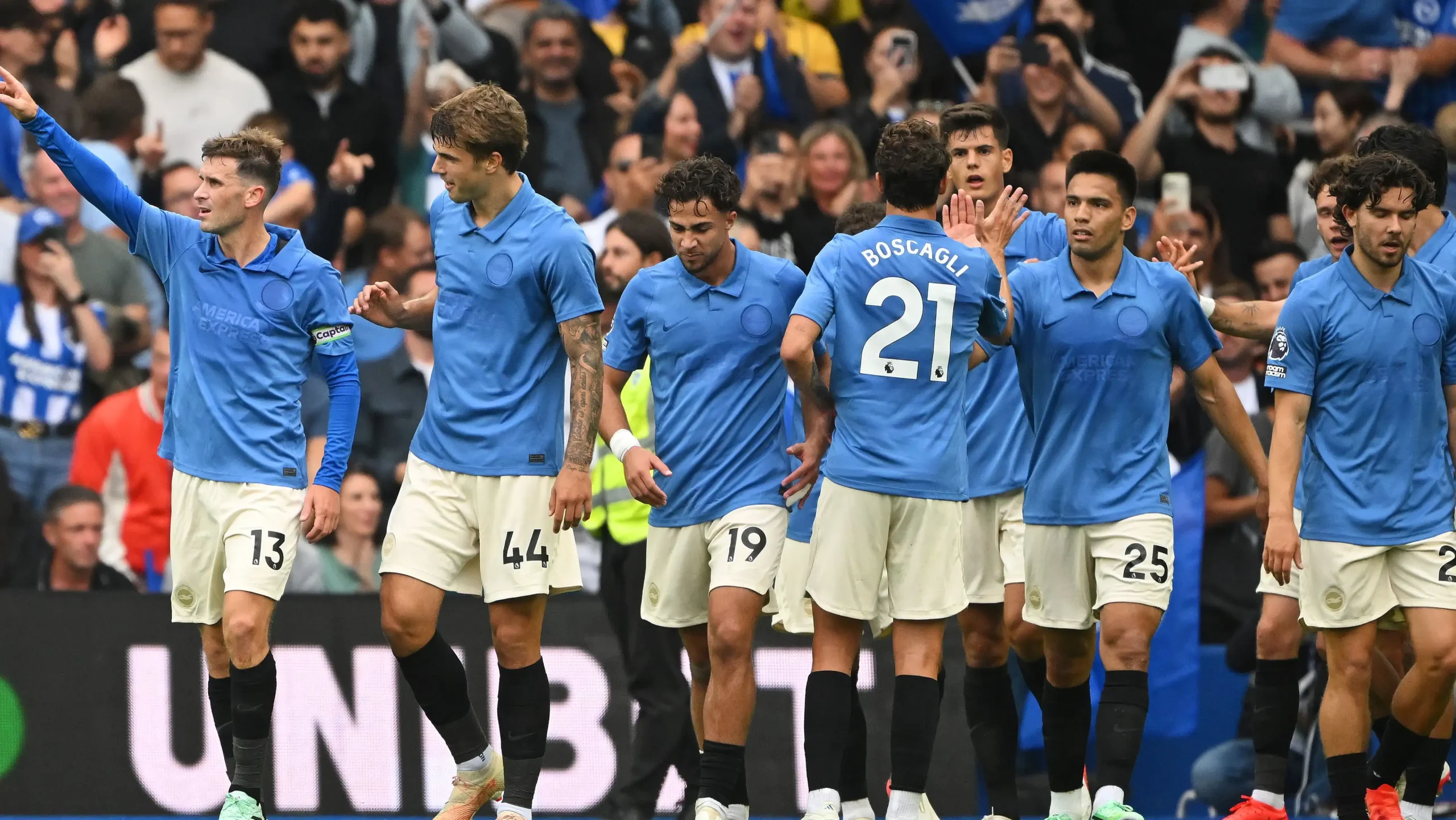
Brighton deserved the victory. Pascal Groß, Charalampos Kostoulas and Chema Andrés scored the goals, while Fabian Hürzeler’s side combined pressing intensity, physical competitiveness and ruthless finishing to punish Arsenal.
The numbers tell part of the story. Arsenal had 60% possession and completed significantly more passes, but Brighton produced five shots on target compared with Arsenal’s two. Brighton also created four big chances to Arsenal’s two.
That contrast is important.
Arsenal had the ball. Brighton had the control.
And that leads to the five questions Arteta must answer.
Arsenal 3-0 Brighton: What Happened to the Champions’ Defensive Control?
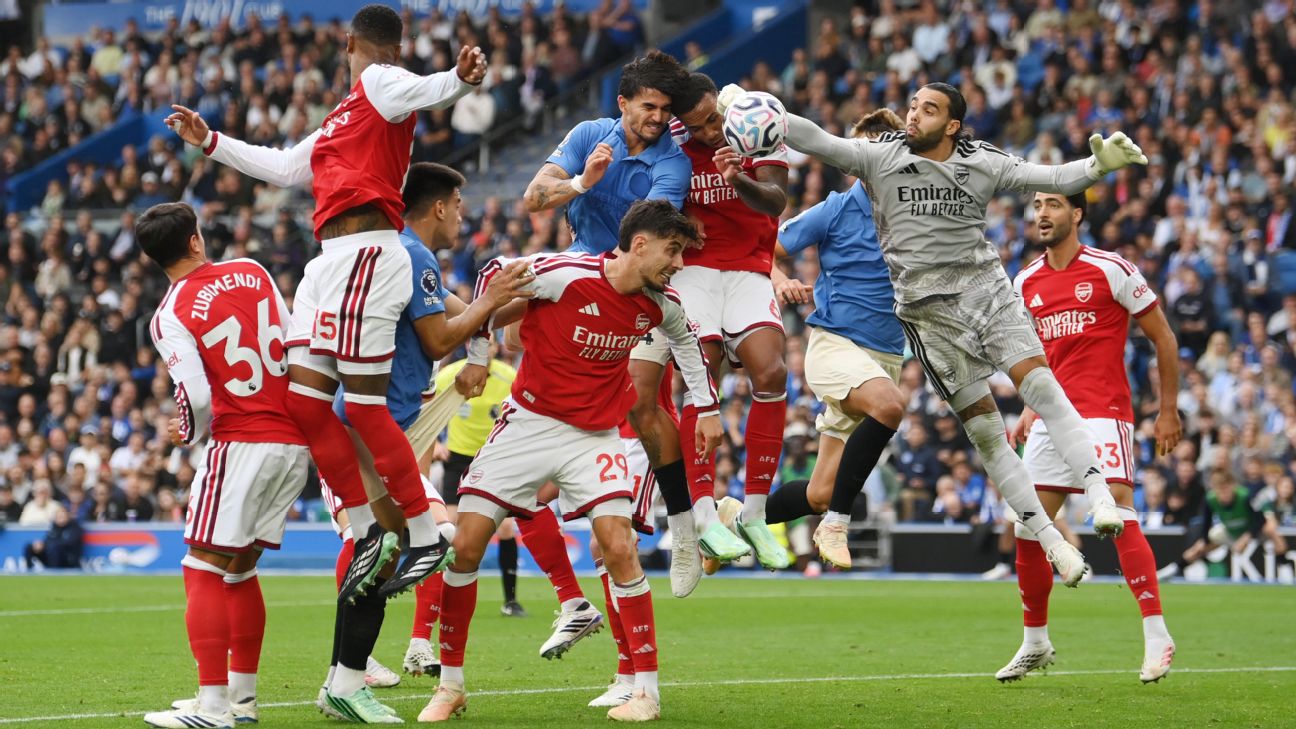 Arsenal’s defensive organisation has been one of the defining characteristics of Arteta’s team.
During their opening four league matches, the champions conceded just one goal. Their ability to control space, defend transitions and protect the central areas had helped establish Arsenal as one of the most difficult sides to break down.
Against Brighton, that structure disappeared.
The opening goal from Groß exposed a team that was not sufficiently aggressive or coordinated in the defensive phase. Brighton were able to progress the ball and attack the space around Arsenal’s midfield without being consistently disrupted.
The second goal made the problem even clearer.
Kostoulas found the net shortly before half-time, leaving Arsenal facing a 2-0 deficit at a moment when they desperately needed to regain control of the contest.
Then came the third.
Andrés headed home from a corner nine minutes after the restart, turning a difficult afternoon into a comprehensive defeat. Set pieces are normally an area in which Arsenal have developed considerable defensive reliability, making the concession particularly significant.
Arteta himself pointed to technical errors and lost duels after the game.
That matters because Arsenal’s defensive success is not based exclusively on individual quality. It depends on collective concentration.
When that concentration drops, the entire structure becomes vulnerable.
Arsenal 3-0 Brighton: Why Did Possession Produce So Little?
 One of the most revealing aspects of the match was the difference between possession and effectiveness.
Arsenal controlled approximately 60% of the ball and completed 418 accurate passes compared with Brighton’s 256. Yet the hosts finished with more shots on target and a higher number of big chances.
This is where the match becomes more interesting than the scoreline.
Possession itself is not control.
A team can have the ball without controlling the dangerous areas of the pitch.
Brighton were comfortable allowing Arsenal to have periods of possession because they remained compact and waited for opportunities to attack the spaces Arsenal left behind.
Arsenal’s possession frequently became predictable.
The ball could move from one side to another, but Brighton’s defensive block remained capable of protecting the central areas. When Arsenal attempted to accelerate the attack, Brighton were ready to contest the second ball or exploit the transition.
This created a frustrating cycle for the visitors.
Arsenal had the ball.
Brighton had the clearer moments.
That distinction should concern Arteta more than the possession percentage itself.
Brighton’s Pressing Exposed Arsenal’s Build-Up
 The third question is perhaps the most important from a tactical perspective:
Can Arsenal maintain their preferred build-up structure when an opponent refuses to give them comfortable progression?
Brighton provided the answer.
They did not simply sit deep and defend their penalty area. They applied pressure at important moments and competed aggressively when Arsenal attempted to move through midfield.
The result was a series of technical mistakes and disrupted attacking sequences.
Arteta admitted after the match that Brighton were the better side, particularly during the early stages, and highlighted technical errors and lost duels.
That is significant because Arsenal’s system depends heavily on technical security.
The centre-backs must be comfortable receiving under pressure.
The midfielders must provide reliable passing options.
The attacking players must position themselves between defensive lines.
And the team must react immediately if possession is lost.
Brighton disrupted several of those connections.
Instead of allowing Arsenal to dictate the rhythm, the hosts repeatedly forced the visitors into uncomfortable decisions.
For a side aspiring to defend the Premier League title, that is one of the clearest lessons from the game.
Arsenal 3-0 Brighton: Did the Midfield Lose the Battle?
 The midfield was another decisive area.
Arsenal have invested heavily in creating a midfield capable of combining physicality, technical quality and positional intelligence. But against Brighton, that unit struggled to impose itself.
Declan Rice remained an important presence, but Arsenal lacked the collective control normally associated with their midfield.
Bruno Guimarães and Jurrien Timber were replaced around the hour mark by Mikel Merino and Martin Zubimendi as Arteta attempted to change the game’s momentum.
By then, however, Brighton were already 3-0 ahead.
The problem was not simply personnel.
It was the ability to win the small battles that determine whether possession becomes territorial control.
Brighton competed for second balls.
They attacked quickly after turnovers.
They moved the ball into forward areas without needing long periods of possession.
Arsenal, meanwhile, were frequently forced to attack against a set defensive structure.
That is a difficult situation for any team.
It becomes even more difficult when the opponent is winning the physical and tactical battles immediately after possession changes hands.
Arsenal 3-0 Brighton: Where Was the Threat in the Final Third?
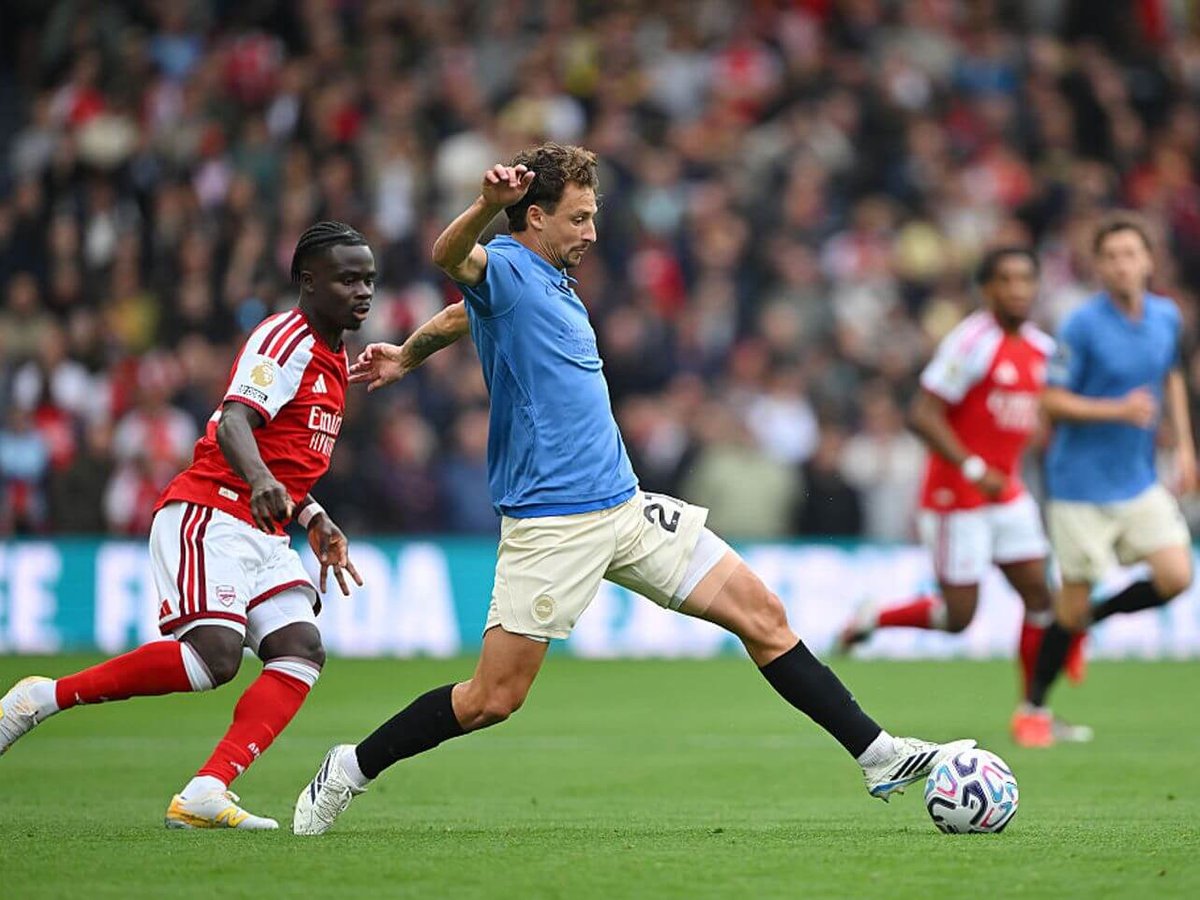 Arsenal’s attack also deserves serious examination.
Bukayo Saka started the game, while Martin Ødegaard and Kai Havertz were among the attacking options selected from the beginning. Viktor Gyökeres and Eberechi Eze were introduced later, but Arsenal were unable to produce the response Arteta wanted.
The statistics are particularly revealing.
Arsenal managed only two shots on target.
That is a surprisingly low number for a team that controlled 60% of possession.
Brighton goalkeeper Bart Verbruggen had relatively little to do until a late Havertz opportunity, which he saved in a one-on-one situation.
This suggests Arsenal’s problem was not simply finishing.
They struggled to consistently create the kind of high-quality situations that make finishing relevant.
Their attacking structure lacked penetration.
Brighton’s defensive organisation prevented Arsenal from receiving comfortably in dangerous central positions, while the hosts were able to defend wide areas without losing their overall shape.
For Arteta, the challenge is now to understand why an attack that looked so controlled in the opening weeks became so predictable against Brighton.
The Set-Piece Problem Cannot Be Ignored
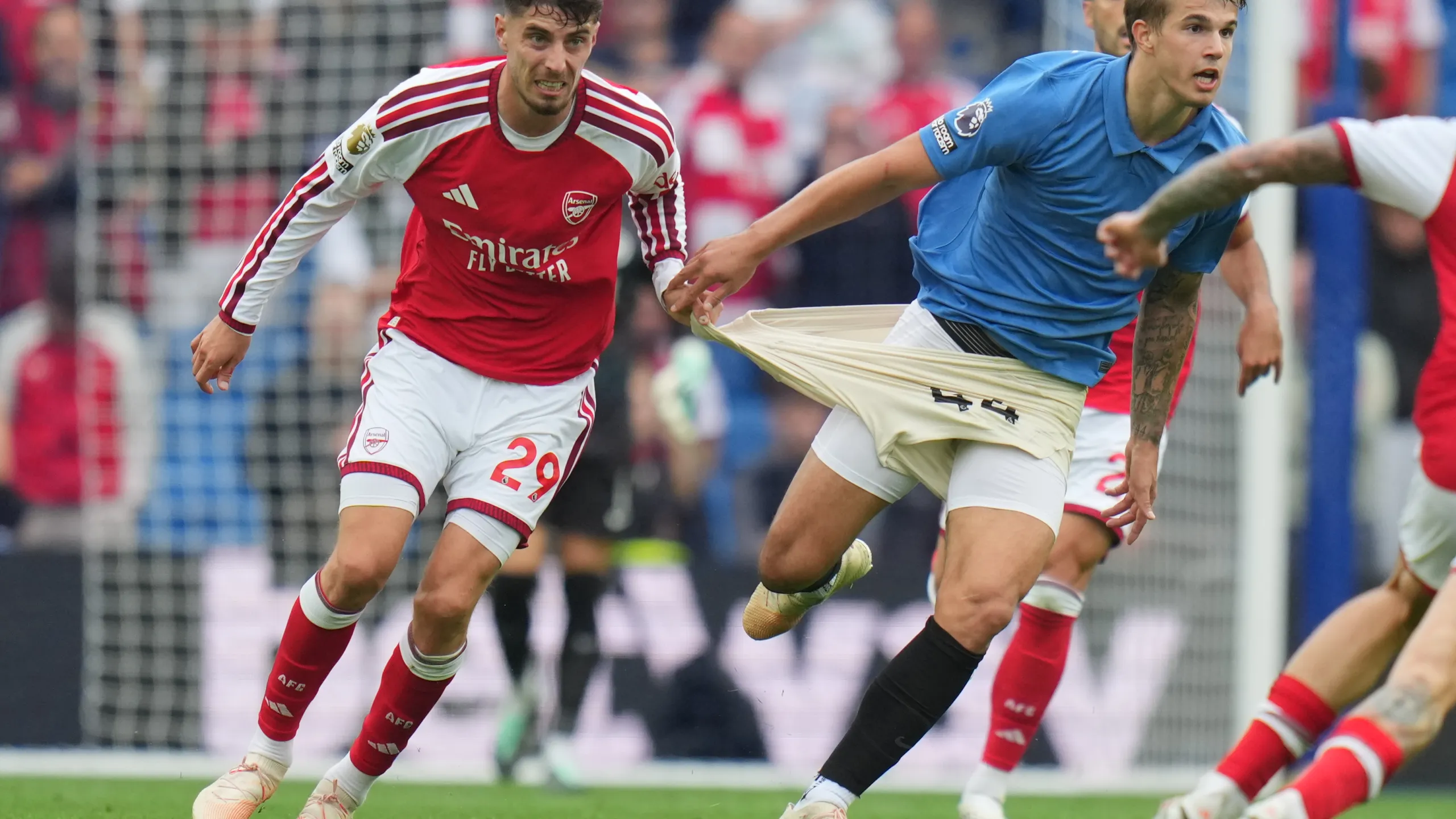 If Arsenal want to defend their Premier League crown, set pieces will remain an important part of their identity.
That makes the third Brighton goal particularly uncomfortable.
Andrés headed home from a corner to make it 3-0.
Arsenal have built a reputation for being dangerous from set pieces and disciplined when defending them.
Therefore, conceding from a corner in a match where they were already struggling physically and technically was more than just another goal.
It reflected the broader story of the afternoon.
Brighton were more aggressive.
Brighton were more decisive.
Brighton attacked the important moments better.
Arteta will not necessarily treat one conceded set piece as evidence of a systemic problem. But the context makes it worth investigating.
Was the marking correct?
Was the first contact challenged strongly enough?
Were Arsenal prepared for Brighton’s delivery?
Did concentration drop because the team was already under pressure?
Those are the details that will matter during the review.
Arsenal’s Perfect Start Was Never Going to Last Forever
There is another important perspective.
One defeat does not erase four victories.
Arsenal still have 12 points from five Premier League matches, and they remain second in the table on goal difference behind Manchester City, who have also collected 12 points from four matches. Brighton moved to third with 10 points.
Therefore, the correct reaction is not to treat the 3-0 defeat as proof that Arsenal’s title defence has collapsed.
It has not.
The more interesting question is what Arteta does with the information.
Championship-winning teams are not defined by never having a bad performance.
They are defined by how quickly they identify and correct problems.
Arsenal now have a clear reference point.
They know Brighton can press them.
They know technical errors can become dangerous.
They know possession can become meaningless if it does not produce penetration.
And they know their defensive standards cannot drop against an opponent capable of attacking quickly.
What Mikel Arteta Must Change
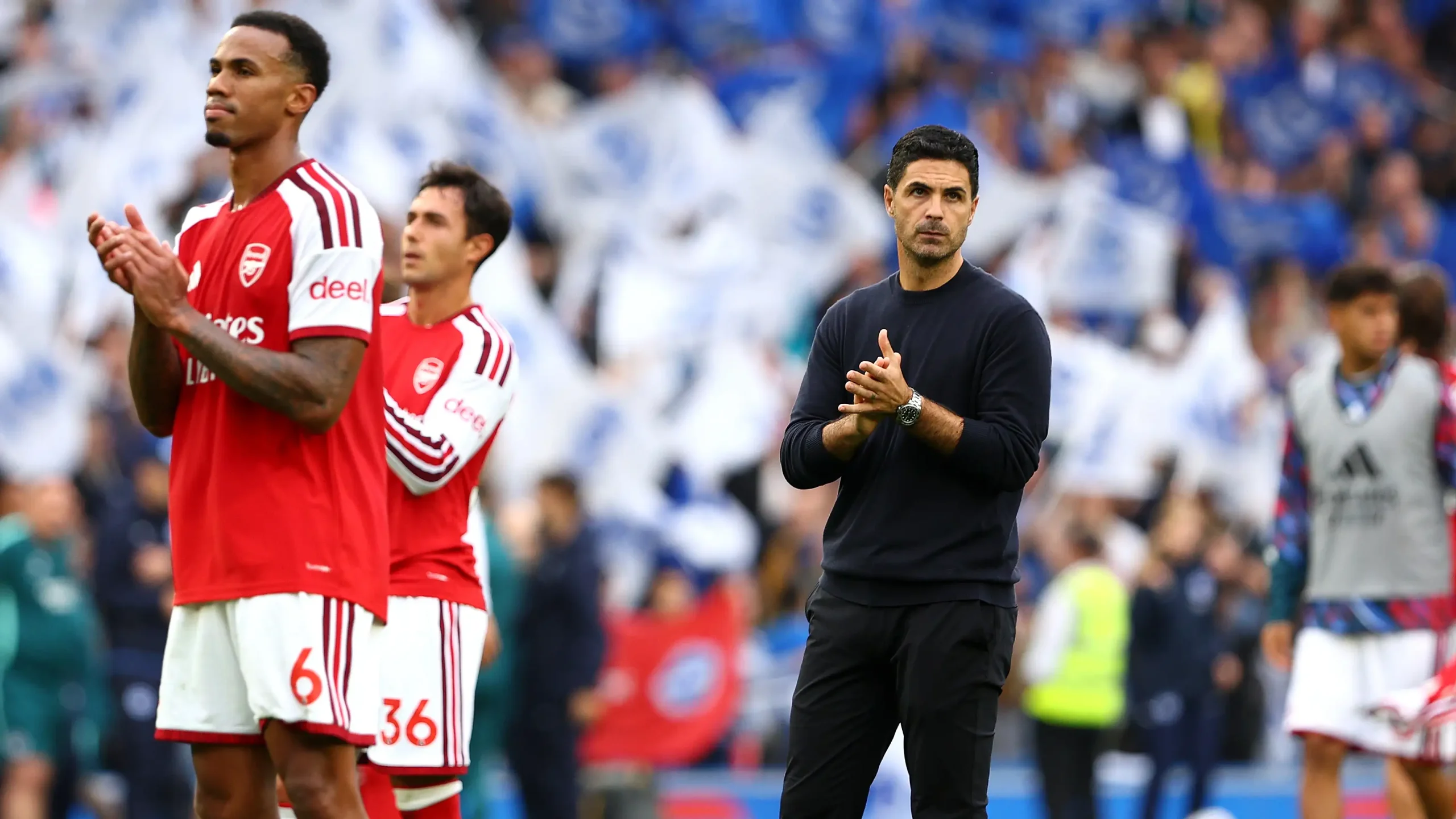 Arteta does not need to redesign Arsenal’s entire football philosophy because of one defeat.
But he may need to make adjustments.
1. Improve the response to aggressive pressing
Arsenal need more reliable solutions when opponents attack their build-up aggressively.
That could involve different positioning from midfielders, quicker circulation or more direct alternatives when the short-passing route is blocked.
2. Increase attacking unpredictability
If opponents can comfortably predict where Arsenal’s next pass is going, they can organise their defensive block.
Arsenal need more movement between the lines and greater variation in their attacking patterns.
3. Restore defensive aggression
The champions cannot afford to lose too many individual duels.
The defensive structure only works when every player contributes to it.
4. Protect transitions
When Arsenal lose possession, the reaction must be immediate.
Brighton demonstrated how quickly a turnover can become an attacking opportunity.
5. Treat the defeat as information, not panic
This may ultimately be the most important point.
The defeat is significant, but the season is still young.
Arteta has a squad deep enough to make tactical adjustments, and the team’s opening four league victories demonstrated that the underlying structure remains strong.
The Bigger Warning Behind Arsenal 3-0 Brighton
The danger for Arsenal is not that they lost one match.
The danger would be failing to understand why they lost it.
Brighton did not win simply because Arsenal were unlucky.
They were more aggressive, more efficient and more effective in the decisive moments.
Arteta acknowledged that Brighton deserved the victory and described the result as a lesson for his players. He also pointed to the team’s strong record over a longer period, suggesting the defeat should be viewed in context rather than as a reason for panic.
SEE ALSO: Arsenal vs Brighton: The Champions Face Their First Real Test of the New Season
That balance is important.
Arsenal’s title defence has suffered its first major setback, but the response could tell us far more about this team than the defeat itself.
Every champion eventually faces a match in which the opponent makes them uncomfortable.
Brighton did exactly that.
Now Arteta has to make sure the next opponent does not discover the same blueprint.
What’s Next for Arsenal?
 The Arsenal 3-0 Brighton defeat has changed the tone around the champions, but it has not changed the entire season.
Arsenal still have 12 points from five league games.
What has changed is the number of questions.
Can they handle aggressive pressing better?
Can their midfield regain control?
Can the attack become more unpredictable?
Can their defensive concentration return?
And perhaps most importantly, can Arteta turn one humiliating afternoon into a tactical lesson rather than a recurring weakness?
Those answers will shape what comes next.
For Arsenal, the Brighton defeat is not necessarily the beginning of a crisis.
It is the first serious warning.
The champions now have to show what they learned.