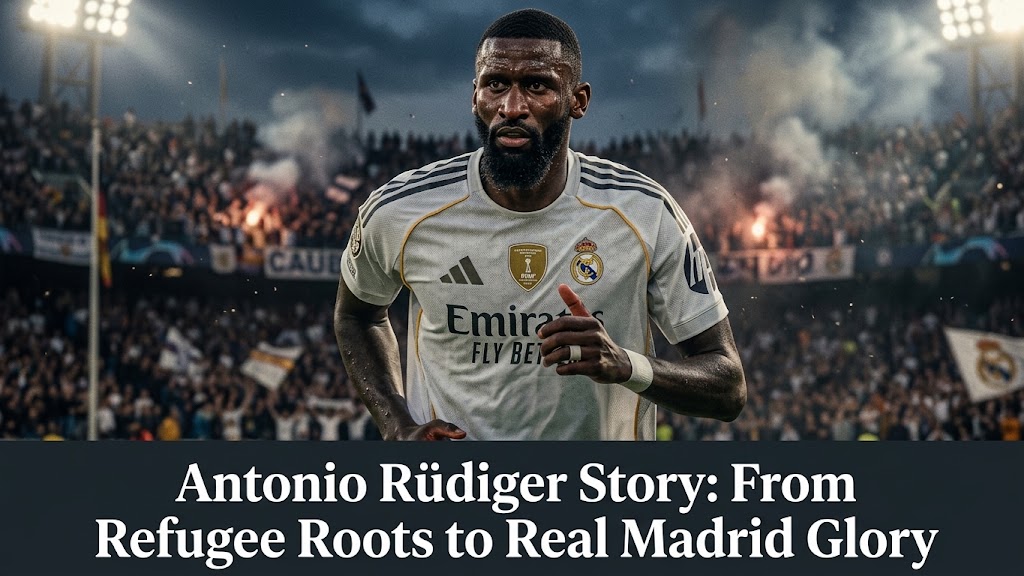
Before the Champions League nights, before Real Madrid, before the trophies and the spotlight, Antonio Rüdiger was a child growing up with a lesson that football would later teach him again and again: nothing is guaranteed.
Rüdiger was born in Berlin in 1993 to parents who had fled conflict in Sierra Leone in search of safety and a better future. He grew up in Neukölln, an environment that he has described as formative to the person and footballer he became. Today, he is a Real Madrid defender, a Germany international and a Champions League winner. But the story behind the famous No. 22 shirt began long before the Bernabéu.
The most interesting thing about the Antonio Rüdiger story is that his famous intensity was not manufactured for television.
It was forged in childhood.
He has spoken openly about his family’s financial struggles and the pressure he felt from a very young age to help change their circumstances. In his own account for The Players’ Tribune, Rüdiger recalled a moment when he asked his mother for a few euros and realised that she simply could not afford to give him the money. He said that, even as a child, the experience made him feel that he had to become responsible and help his family find a better future.
That is the part of the Rüdiger story that changes everything.
The noise, the aggression, the celebrations and the fearless defending are easy to see.
The motivation underneath them is harder to see.
For Rüdiger, football was never only about becoming famous. In his own words, it was initially a route to provide for his family and eventually take them out of the difficult circumstances in which they had grown up.
The Family Story Behind Antonio Rüdiger’s Warrior Mentality
To understand Rüdiger the footballer, it is necessary to understand Rüdiger the son.
His parents came to Germany from Sierra Leone after fleeing conflict. Their journey was about safety, stability and the possibility of building a different future. Decades later, their son would become one of the most recognisable defenders in world football. UNHCR has highlighted Rüdiger as part of its symbolic “Gamechanging Team” of players whose childhoods or family histories were shaped by displacement.
In 2026, Rüdiger described representing Germany as a full-circle moment because of the journey his parents made from Sierra Leone. He also linked his football career to a responsibility beyond the pitch, saying his family history motivates his work through his foundation in Sierra Leone and causes supporting access to education, sport and healthcare.
That is an important distinction.
Rüdiger’s story is not simply one of escaping hardship.
It is also one of carrying history forward.
The player millions of fans see on television is performing at the highest level of European football. But the person underneath carries a family story rooted in displacement, sacrifice and starting again.
That background helps explain why he has repeatedly spoken about responsibility rather than simply success.
Neukölln: Where Football Became More Than a Game
 Rüdiger grew up in Berlin’s Neukölln district, and he has repeatedly described the area as an important part of his development.
In his Players’ Tribune account, he recalled playing football on concrete pitches against older boys. The environment was competitive, physical and unforgiving. He said those older players eventually called him “Rambo”, a nickname that says almost as much about his mentality as any scouting report ever could.
That detail matters because the defender’s identity has always been tied to confrontation.
He does not merely tolerate physical battles.
He embraces them.
But it would be too simplistic to say that growing up in a tough neighbourhood automatically creates a great footballer. Plenty of talented players grow up in difficult environments without reaching elite football.
What Neukölln gave Rüdiger was not a guaranteed future.
It gave him an environment in which personality, competitiveness and resilience could develop alongside his technical ability.
His story suggests that the mentality came first.
Football later gave that mentality a stage.
The Moment Football Became a Responsibility
One of the most revealing elements of the Antonio Rüdiger story is that his relationship with football was initially practical rather than romantic.
Many young players dream about scoring the winning goal in a Champions League final.
Rüdiger has explained that, when he was young, his motivation was more straightforward: football could provide a way to improve his family’s life.
That changes the meaning of ambition.
For some players, losing a place in the starting XI is disappointment.
For a player whose sporting journey is tied to family sacrifice, setbacks can feel different.
There is pressure.
There is urgency.
And perhaps most importantly, there is a refusal to waste opportunity.
That mentality eventually became one of Rüdiger’s greatest competitive advantages.
Stuttgart: The First Door Opens
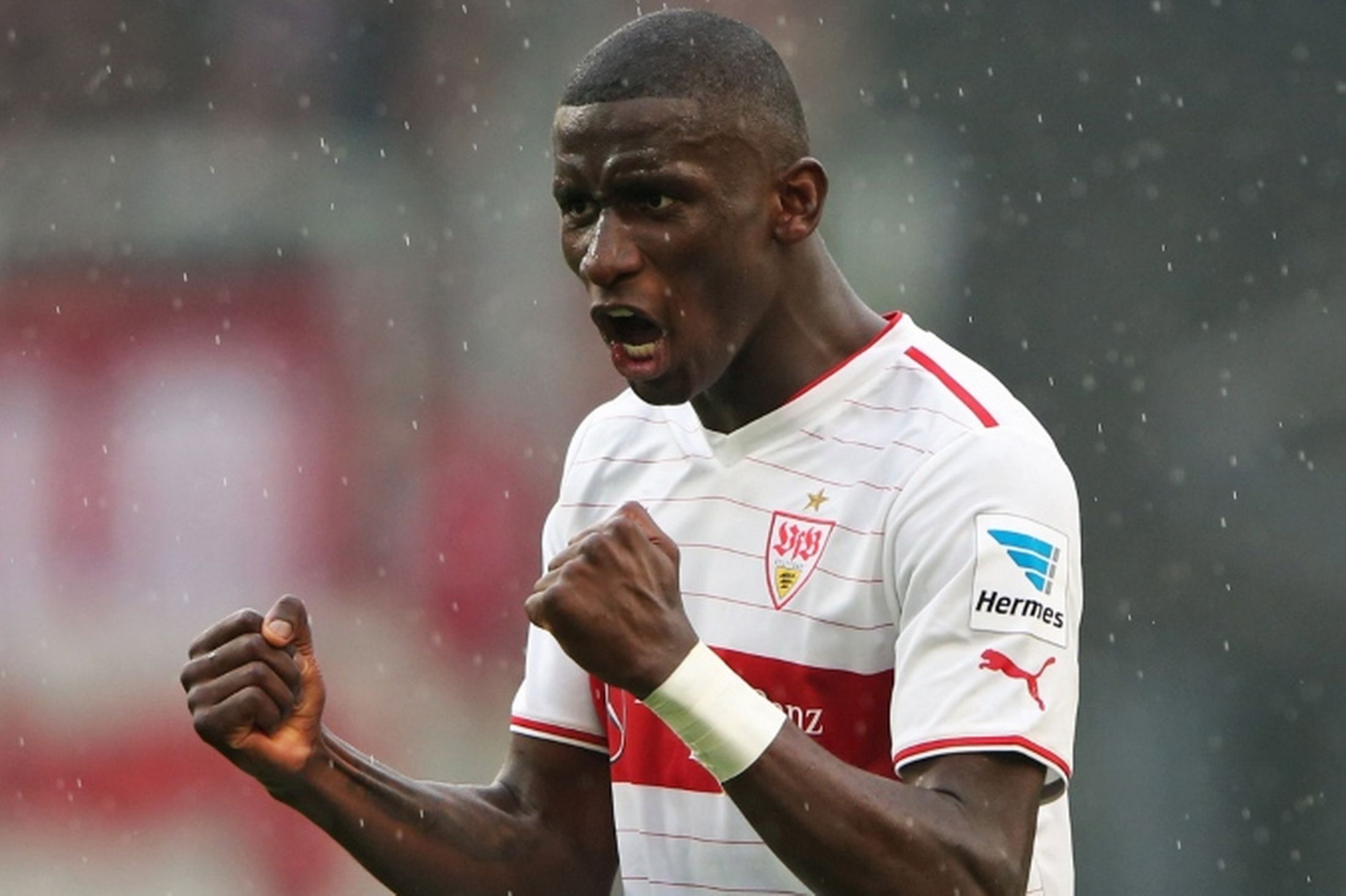 Rüdiger’s professional route began with Stuttgart.
He made his Bundesliga debut at only 18, beginning a European career that would later take him to Italy, England and Spain. Real Madrid’s official profile lists his senior career as Stuttgart from 2011 to 2015, Roma from 2015 to 2017, Chelsea from 2017 to 2022 and Real Madrid from 2022 onward.
The significance of Stuttgart was not simply that Rüdiger became a professional.
It was the beginning of his transformation from a highly competitive young player into an elite defender.
Bundesliga football demanded tactical discipline.
European football would demand even more.
The player who had learned to compete on concrete pitches now had to learn how to compete against some of the best attackers in the world.
Roma: Learning the Tactical Side of Defending
 His move to Roma in 2015 provided another important stage in his education.
Italian football has historically placed enormous emphasis on defensive positioning, reading situations and tactical detail.
For a physically gifted defender, Italy offered something different from raw athletic competition.
It offered football education.
Rüdiger was not simply learning how to win duels.
He was learning when to step out, when to hold the line, how to read an attack and how to combine physical aggression with tactical responsibility.
That evolution mattered.
Because the future Real Madrid defender needed more than strength.
He needed intelligence.
Chelsea: The Club That Unlocked the Personality
 Rüdiger joined Chelsea in 2017 and spent five seasons in London.
Real Madrid’s official account notes that he became a key figure in Chelsea’s Champions League-winning team and helped the club win the Champions League, Europa League, Club World Cup, UEFA Super Cup and FA Cup. In the 2021/22 season, he made 54 appearances and scored five goals for Chelsea.
But the most important development at Chelsea may have been psychological.
In his Players’ Tribune letter to Chelsea, Rüdiger recalled the arrival of Thomas Tuchel as a turning point. Tuchel did not simply talk tactics. He asked Rüdiger about himself, about where his aggression came from and about his background. Rüdiger said that being understood as a person gave him a new lease of life at the club.
That is one of the deepest lessons in his career.
Great coaching is not always about changing a player’s technique.
Sometimes it is about understanding the personality already inside the player.
Tuchel did not remove Rüdiger’s aggression.
He gave it direction.
Why Rüdiger’s Aggression Became a Superpower
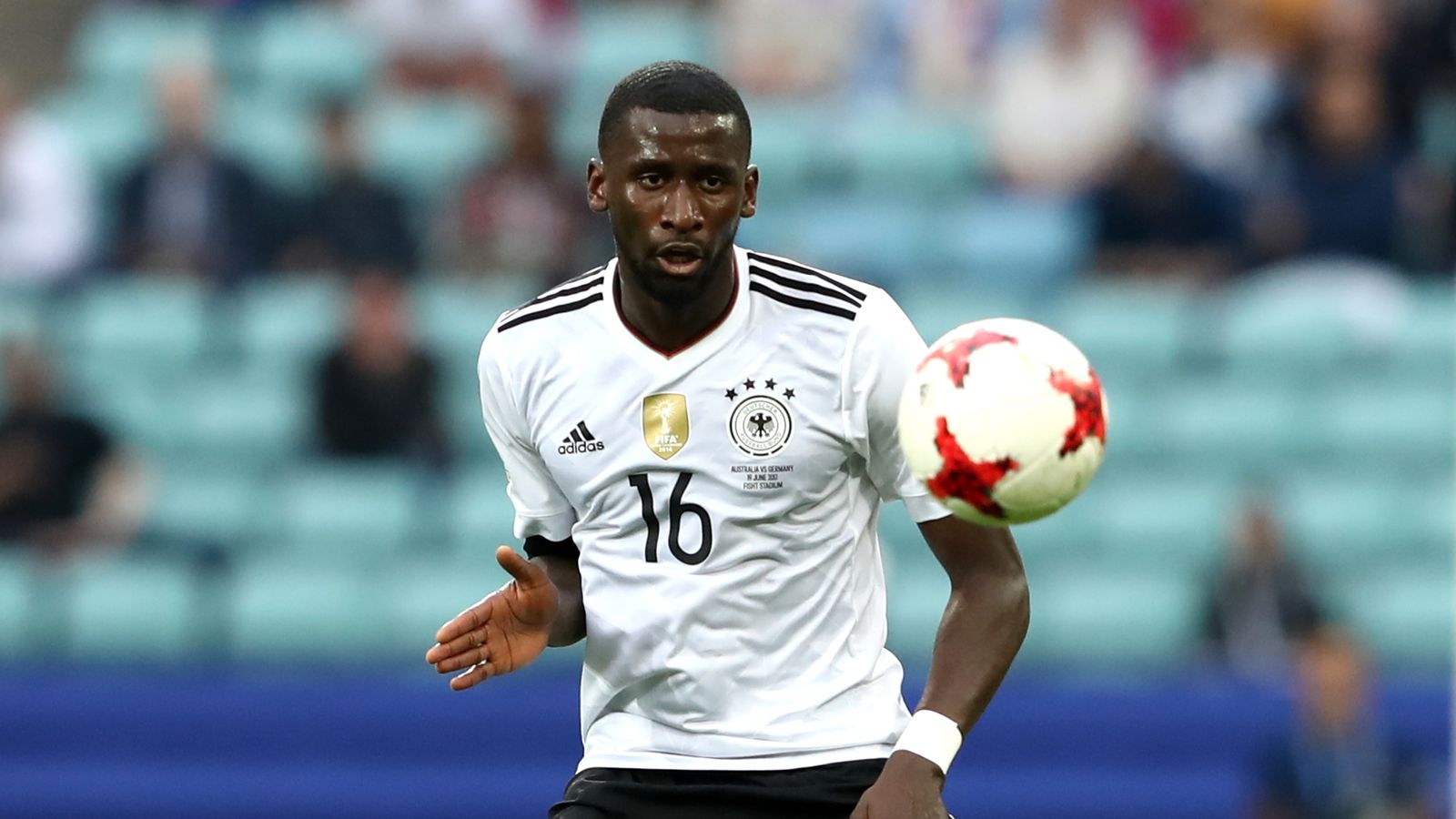 The word “aggressive” is often used negatively in football.
But in elite defending, controlled aggression can be an advantage.
Rüdiger uses his physical presence to:
- dominate duels
- disrupt forwards
- defend large spaces
- intimidate attackers
- recover ground quickly
His personality also affects opponents psychologically.
A defender who constantly competes, communicates and refuses to retreat can alter the behaviour of an attacker.
That does not mean aggression alone makes an elite defender.
It means Rüdiger learned to turn personality into a tactical tool.
The same characteristic that might have looked chaotic in youth football became an asset at the highest level.
Real Madrid: When the Dream Became Reality
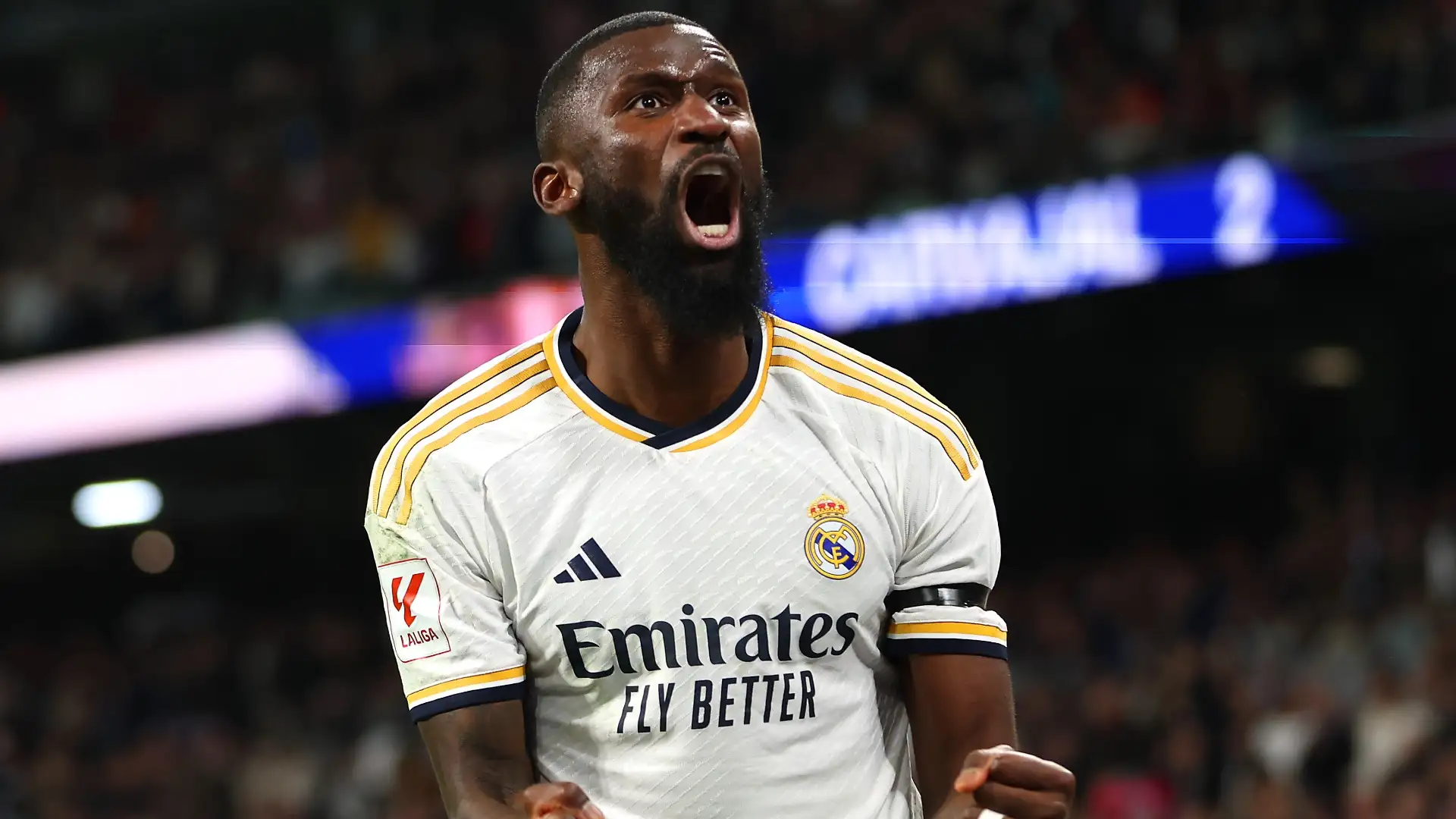 Rüdiger joined Real Madrid in 2022 after leaving Chelsea.
It was the biggest stage of his career.
Real Madrid’s official records show the scale of what followed. The club states that, by March 2026, Rüdiger had won eight trophies as a Madrid player, including a Champions League, two Club World Cups, two UEFA Super Cups, LaLiga, the Copa del Rey and the Spanish Super Cup.
His current contract was also extended in June 2026, with Real Madrid confirming that he is tied to the club until June 30, 2027.
That is the football version of the journey coming full circle.
SEE ALSO: Real Madrid Lost to Betis: The Cruel Truth Behind the 1-0 Defeat
The child whose parents arrived in Germany seeking safety eventually became a player representing Germany and playing for Real Madrid.
And that symbolism is difficult to ignore.
More Than a Defender: The Rüdiger Brand
 Modern footballers are also brands.
Rüdiger has developed a public identity that is instantly recognisable.
He is expressive.
He is unpredictable.
He is emotional.
He is theatrical.
But beneath that personality lies an increasingly powerful off-field identity.
In 2026, UNHCR featured him as one of the players in its Gamechanging Team, highlighting his family history and his work through his foundation in Sierra Leone.
This gives Rüdiger a different kind of influence.
His platform is not only used to celebrate football success.
It is also connected to questions of displacement, education, opportunity and racism.
That matters because athletes increasingly shape conversations beyond sport.
Rüdiger’s life gives him credibility when talking about those issues.
He has lived the contradiction between being the child of people forced to leave their home and becoming a star in one of the world’s most famous football clubs.
The Hidden Psychology of the “Warrior”
Call Rüdiger a warrior and you risk reducing his story to a football cliché.
The reality is more interesting.
His mentality appears to have several layers:
Responsibility
His early understanding of family hardship gave his football a purpose beyond personal fame.
Competitiveness
Playing against older children and growing through physically demanding environments helped sharpen his refusal to back down.
Adaptability
Stuttgart, Roma, Chelsea and Real Madrid required different football cultures and tactical demands.
Identity
Rather than hiding his personality, Rüdiger turned it into part of his competitive advantage.
Purpose Beyond Football
His later work connected his public profile to causes involving young people and his family’s homeland.
That combination is what makes his journey compelling.
The Real Lesson From Antonio Rüdiger’s Journey
There is a temptation to look at a Real Madrid player and assume the journey was inevitable.
It was not.
Rüdiger’s career contains several stages where the final destination was far from guaranteed.
His parents had to leave Sierra Leone.
His family had to build a new life.
He grew up in Berlin.
He learned football in environments where physical and mental toughness mattered.
He progressed through Stuttgart.
He developed at Roma.
He became a Champions League winner with Chelsea.
Then came Real Madrid.
At every stage, the next opportunity had to be earned.
That is why the phrase “warrior mentality” is more than a nickname in his case.
It is a description of a career built on refusing to allow difficult beginnings to dictate the ending.
What Antonio Rüdiger Represents to the Next Generation
Perhaps the most powerful part of the Rüdiger story is what it means to young players who do not begin with perfect circumstances.
Not every child has access to an elite academy.
Not every family has financial security.
Not every career develops in a straight line.
Rüdiger’s journey demonstrates that a player’s path can be complicated without being doomed.
It also shows why representation matters.
A child from a migrant or refugee family can grow up to represent a major football nation.
A player whose family once sought safety can later become a global symbol of resilience.
That does not erase the difficulties that came before.
It gives them meaning.
Conclusion: The Story Behind the Noise
Antonio Rüdiger is one of football’s most recognisable defenders because of what happens when the ball starts moving.
But the most fascinating part of his story happened long before the first whistle.
It happened in the family decisions that brought his parents from Sierra Leone to Germany.
It happened in Berlin.
It happened on concrete pitches in Neukölln.
It happened in the moment a young boy realised that football could become more than a game — it could become a way to change his family’s future.
Today, Rüdiger plays for Real Madrid, has won the Champions League and multiple major trophies, and has extended his contract with the club through June 2027.
But perhaps his greatest achievement is not any individual trophy.
It is the transformation.
A family that once fled conflict built a new life in Germany. Their son turned that new life into a football career. And the child who learned resilience before he learned fame became the defender the world now knows as Antonio Rüdiger.
That is why his “warrior mentality” cannot be fully explained by football.
Football did not create the warrior. It simply gave him a stadium in which to reveal him.