
Liverpool have a midfield decision that could become one of the most important parts of their long-term squad planning. Alexis Mac Allister has made his disappointment clear after the club failed to offer him a new contract, and the situation is becoming increasingly difficult to ignore.
The Alexis Mac Allister Liverpool future question is no longer simply about whether the Argentine deserves improved terms. It concerns how Liverpool intend to build their midfield, protect the value of an important player and maintain a competitive squad under Andoni Iraola.
Mac Allister’s current contract runs until June 2028. However, reports indicate that Liverpool are not rushing to negotiate an extension, despite the midfielder’s desire to remain at Anfield and his recent contributions to the team.
The timing matters. At 27, Mac Allister is entering an important stage of his career. He is experienced enough to influence a team competing for major trophies, but still has several seasons ahead of him at the highest level.
For Liverpool, delaying a decision could create unnecessary uncertainty. Offering him a new deal could provide stability, while allowing the situation to continue without a clear direction may eventually force the club into a difficult transfer decision.
The Alexis Mac Allister Liverpool future debate therefore deserves attention because it connects three major questions: player value, midfield balance and Liverpool’s long-term sporting strategy.
Alexis Mac Allister Liverpool Future: Why Contract Talks Have Become a Major Issue
 Mac Allister joined Liverpool from Brighton in June 2023 after the club activated a release clause reported at approximately £35 million. His arrival was considered an important addition to a midfield that required technical quality, intelligence and greater control in possession.
Since then, he has developed into one of the team’s most versatile midfielders.
However, the contract situation became public in September 2026 when Mac Allister admitted that Liverpool had informed him they were not in a position to offer a new deal.
Speaking about the situation, he said he felt very sad that an extension had not been offered. He also confirmed that he had opportunities to leave during the summer but decided to remain at Anfield.
His comments were particularly revealing because he acknowledged that teammates Dominik Szoboszlai and Ryan Gravenberch had received new contracts.
Mac Allister congratulated both players but admitted that seeing them renew their agreements made his own situation more disappointing.
Importantly, he also insisted that he would continue giving everything for Liverpool.
That distinction matters. His comments expressed frustration rather than a public demand to leave.
Recent reporting has suggested that Liverpool have not closed the door on a future extension. However, the club is reportedly not in a hurry to begin negotiations, leaving the situation unresolved.
The Alexis Mac Allister Liverpool future issue is therefore a developing contract question, not evidence that a transfer has already been agreed.
Why Mac Allister Is So Important to Liverpool’s Midfield
 To understand why Liverpool must consider this situation carefully, it is necessary to examine what Mac Allister contributes tactically.
He is not simply a midfielder who moves the ball from defence to attack. His greatest value comes from his understanding of space, his ability to receive possession under pressure and his capacity to perform different responsibilities depending on the team’s formation.
Mac Allister can operate as a deeper midfielder, where he helps organise possession and connect the defensive line with the attacking players.
He can also play further forward, using his passing range and positional awareness to influence the final third.
This flexibility gives Liverpool valuable tactical options.
1. His ability to control possession
One of Mac Allister’s strongest qualities is his composure when receiving the ball.
Against teams that press aggressively, midfielders must be able to receive possession with limited space and identify the correct passing option quickly.
Mac Allister is particularly effective in this area because he combines technical security with an understanding of where teammates are positioned.
He can receive the ball facing his own goal, turn away from pressure and find a forward pass without unnecessarily slowing down the attack.
This helps Liverpool maintain possession while reducing the risk of losing the ball in dangerous central areas.
If the Alexis Mac Allister Liverpool future eventually involves a departure, replacing this quality would be an important recruitment challenge.
Liverpool would not simply need another player capable of completing passes. They would need someone who understands how to control the rhythm of a match.
2. His versatility between defensive and attacking midfield roles
Mac Allister’s ability to play different midfield positions is another major advantage.
When operating deeper, he can help Liverpool progress possession from the defensive line. When positioned higher, he can support attacking combinations and arrive around the penalty area.
This flexibility becomes especially useful when Liverpool face opponents with different tactical approaches.
Against a low defensive block, the team may require more creativity and forward movement. Against an aggressive pressing side, it may need a midfielder who can receive the ball under pressure and help establish control.
Mac Allister offers both qualities.
The Alexis Mac Allister Liverpool future discussion must therefore consider the difficulty of replacing a player who offers several tactical functions rather than one clearly defined role.
3. His understanding of pressing and defensive positioning
Modern Premier League football demands more than technical ability.
Midfielders must understand when to press, when to protect the defensive line and when to prevent opponents from progressing through central areas.
Mac Allister’s intelligence allows him to contribute to these different phases.
He is not necessarily the most physically dominant midfielder in the league, but his positional awareness can help Liverpool maintain defensive organisation.
This becomes particularly important when the full-backs move forward and the midfield must protect the spaces left behind.
A replacement would need to understand these responsibilities as well as possess the technical quality required to play for Liverpool.
What Do His Recent Statistics Tell Us?
 Statistics provide useful context, although they should never be interpreted without considering a player’s role and the team’s overall performance.
According to Opta Analyst, Mac Allister had made nine Premier League appearances and played 668 minutes in the 2026/27 campaign at the latest available league snapshot. He had not registered a league goal or assist at that point.
He played 37 Premier League matches during the previous campaign, scoring twice and providing four assists.
Those numbers do not fully represent his importance.
A midfielder operating deeper in the build-up phase will not necessarily produce the same attacking statistics as a number ten or a forward.
His contribution must also be assessed through passing, possession retention, defensive positioning and the ability to help Liverpool progress the ball.
There is also evidence of improved attacking output in the current campaign. A report published by This Is Anfield on 21 October credited him with four goals and one assist across competitions at that stage.
That report also highlighted his significant playing time under Iraola.
The different statistical snapshots underline why competition-specific figures and dates must be identified when evaluating his performance.
For Liverpool, the central question is whether his overall contribution justifies a long-term contract commitment.
The Alexis Mac Allister Liverpool future decision should not be based exclusively on goals and assists. His value is also connected to the tactical balance he provides.
Why Liverpool Renewed Szoboszlai and Gravenberch but Have Not Renewed Mac Allister
 One of the most sensitive aspects of this situation is the contrast between Mac Allister’s contract position and the extensions given to Szoboszlai and Gravenberch.
From the player’s perspective, it is understandable that the difference has created disappointment.
All three midfielders are important to Liverpool, but their profiles and responsibilities are not identical.
Szoboszlai offers energy, pressing intensity, forward running and the ability to operate in advanced midfield positions.
Gravenberch provides physical presence, ball carrying and the ability to progress possession through the middle.
Mac Allister brings a different combination of control, positional intelligence and passing quality.
Liverpool’s decision to extend the contracts of the other two players does not automatically mean that the club considers Mac Allister less important.
Contract negotiations also involve financial considerations, age profiles, existing salaries, remaining contract years and the club’s long-term squad structure.
The Alexis Mac Allister Liverpool future situation may therefore reflect a broader financial and sporting calculation rather than a simple judgement of his footballing ability.
However, the club must understand the message that prolonged uncertainty can send to an important first-team player.
A footballer who believes he is contributing at a high level will naturally want clarity about his future.
Three Options Liverpool Must Consider
Liverpool have three broad choices as they approach the next stages of Mac Allister’s contract situation.
Option 1: Offer a new long-term contract
The most straightforward solution would be to reach an agreement over an extension.
This would provide security for the player and protect Liverpool from allowing an important midfielder to enter the final stages of his contract without a clear plan.
It would also demonstrate that the club considers him part of its long-term sporting project.
The challenge would be agreeing on salary, contract length and performance-related conditions.
Liverpool must ensure that any new agreement fits their wage structure while reflecting Mac Allister’s importance to the team.
If both sides reach an agreement, the Alexis Mac Allister Liverpool future question could be resolved without a disruptive transfer saga.
Option 2: Sell him while his contract still carries significant value
If Liverpool decide that they cannot reach an agreement, selling Mac Allister could become a realistic option.
A transfer would allow the club to receive a fee rather than risk losing him closer to the expiry of his contract.
However, such a decision would create an immediate sporting challenge.
Replacing Mac Allister would require a player with the technical quality and tactical understanding to operate in Liverpool’s midfield.
The club would also need to consider whether the transfer fee received would be sufficient to secure a suitable replacement.
Selling an important midfielder without a clear recruitment plan could weaken the team rather than improve it.
There is no confirmed sale decision at present, but it remains one of the options Liverpool must evaluate.
Option 3: Continue with the current contract
Liverpool could also decide to postpone the decision and allow Mac Allister to continue performing under his existing agreement.
This would give the club additional time to assess his performances and determine whether he remains central to its future plans.
However, this approach carries risk.
As the contract moves closer to its final year, Liverpool’s negotiating position could become less favourable.
Other clubs may also become increasingly interested if they believe the player could become available at a reduced price.
For that reason, continuing without a clear long-term plan would not necessarily be the most sensible option.
How a Mac Allister Departure Could Reshape Liverpool’s Midfield
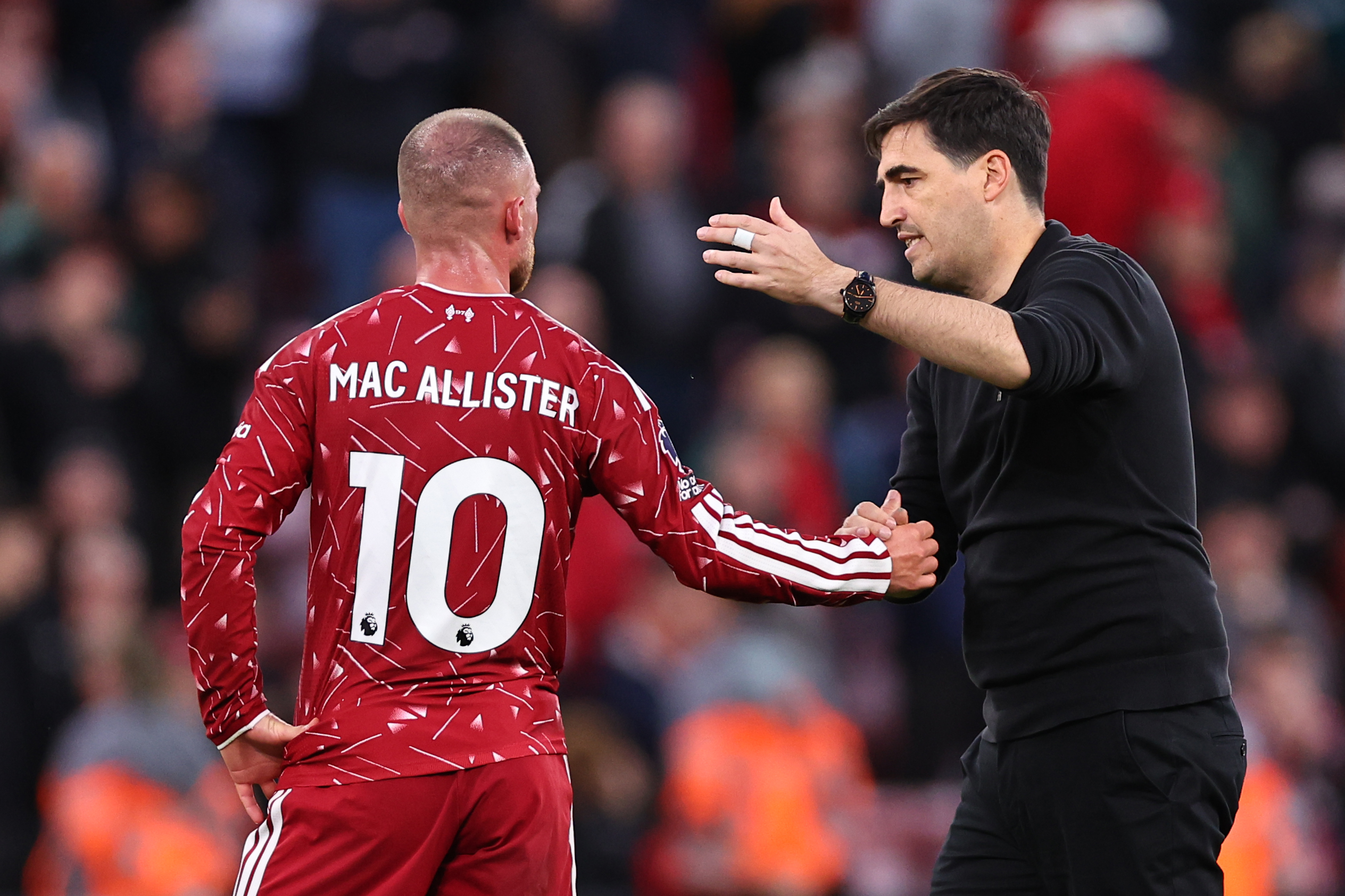 The tactical consequences of losing Mac Allister could be significant.
Liverpool would have to reconsider how they distribute responsibility across the midfield.
Without him, the club could place greater emphasis on Szoboszlai’s ability to control possession, Gravenberch’s ball progression or a new signing’s ability to operate as a deep-lying playmaker.
However, each alternative would require tactical adjustments.
A more physical midfielder might improve Liverpool’s ability to win duels but could offer less composure in tight spaces.
A more creative midfielder might increase attacking output but leave the team vulnerable during defensive transitions.
A specialist defensive midfielder could protect the back line but might not provide the same passing range.
This is why replacing Mac Allister cannot be treated as a simple recruitment exercise.
The club would need to identify exactly which qualities it wants to retain and which tactical responsibilities could be redistributed among existing players.
The Alexis Mac Allister Liverpool future question is therefore directly connected to the club’s wider midfield strategy.
Could Real Madrid or Manchester City Return for Mac Allister?
 Mac Allister confirmed that he had opportunities to leave Liverpool during the summer of 2026. Real Madrid and Manchester City were among the clubs linked with him in the reporting surrounding his comments.
However, there is an important distinction between reported interest and a formal transfer offer.
There is no verified agreement indicating that either club has submitted a successful bid or reached an agreement with Liverpool.
Both clubs would nevertheless represent interesting possibilities from a tactical perspective.
Real Madrid have traditionally valued midfielders who combine technical ability, tactical intelligence and the capacity to operate in different positions.
Mac Allister’s composure and passing range would suit a possession-based environment.
Manchester City also value midfielders who can control tempo, receive under pressure and help maintain positional structure.
However, any potential move would depend on recruitment priorities, financial conditions, squad availability and the player’s own preferences.
For now, these clubs should be treated as reported or potential destinations rather than confirmed transfer contenders.
The Alexis Mac Allister Liverpool future story remains centred on Liverpool’s contract decision.
What Should Liverpool Do?
 From a sporting perspective, Liverpool should avoid allowing uncertainty to continue without a clear strategy.
Mac Allister is an experienced international midfielder who understands the demands of elite football. At 27, he is not an ageing player approaching the end of his career.
He also has a skill set that is difficult to reproduce through one straightforward transfer.
If the coaching staff considers him central to the team’s long-term plans, offering an extension would provide stability.
SEE ALSO: Fenerbahce 3-2 Liverpool: 5 Costly Defensive Failures That Exposed the Reds in Istanbul
If Liverpool believe that his role is likely to change significantly, the club should communicate its position and assess the transfer market before his contract loses more value.
The worst possible outcome would be allowing the situation to become a distraction for the player and the wider squad.
A successful football club must make difficult decisions early enough to protect both sporting performance and financial value.
Liverpool have already demonstrated that they are prepared to invest in the long-term futures of important midfielders. The question now is whether Mac Allister belongs in that same long-term plan.
What’s Next for Alexis Mac Allister and Liverpool?
The coming months could become decisive.
Liverpool must assess his performances, the coaching staff’s tactical requirements and the financial implications of offering a new contract.
Mac Allister, meanwhile, has made his position clear: he wants to contribute, compete for trophies and continue giving his best for the club.
There is no confirmed transfer agreement, no official announcement of a departure and no reason to assume that the relationship between player and club has broken down.
Nevertheless, the Alexis Mac Allister Liverpool future situation deserves close attention because the consequences could extend beyond one contract.
It could influence Liverpool’s midfield recruitment, wage structure, tactical identity and ability to maintain a competitive squad over the next several seasons.
The club must decide whether it wants to build its future around a midfielder who already understands its demands or pursue a different direction.
For The Football Xtra, the biggest question is not whether Liverpool can replace Mac Allister in the transfer market. It is whether they can replace everything he contributes to the team’s midfield without weakening the balance of the side.
What do you think Liverpool should do? Should the club offer Alexis Mac Allister a new contract, consider selling him while his value remains high, or continue with the current agreement? Share your opinion in the comments.