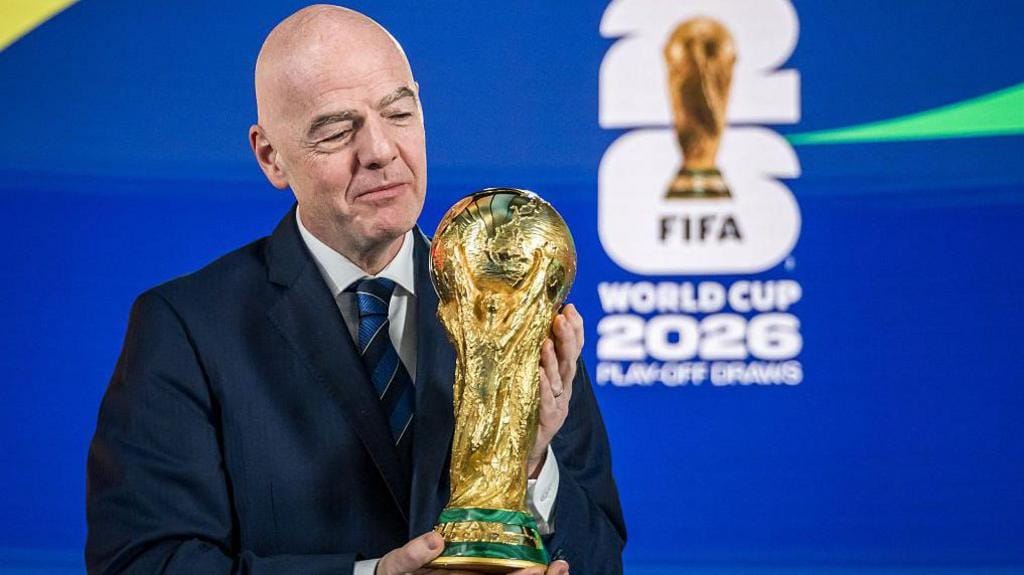
Plans for a 64-Team World Cup are back in the spotlight after FIFA president Gianni Infantino suggested the governing body could examine another expansion before the 2030 tournament. The idea has revived debate over how far the World Cup can grow, who it is meant to serve, and whether the competition is drifting away from its original balance.
Infantino described the move from 48 to 64 teams as something that “could make sense,” signalling that the conversation is no longer hypothetical. The remarks matter because the 48-team format is only just being introduced, yet the next possible step is already being discussed. If the idea advances, the 64-Team World Cup could become one of the defining governance stories in international football over the next few years.
Table of Contents
64-Team World Cup on FIFA’s Radar
The FIFA president said the issue will be reviewed by the relevant committees after this World Cup, framing it as part of a wider effort to make the tournament more representative on a global scale. That process suggests the idea is being handled as a serious policy question rather than a passing comment.
His argument was clear: a World Cup should be built for the entire football world, not just for the traditional power centres in Europe and South America. That line of thinking has underpinned FIFA’s recent expansion push, and it now appears the next step is already being discussed.
The current 48-team format is still new, but Infantino has already labelled it a huge success. If that assessment holds inside FIFA’s decision-making circles, the case for one more expansion before 2030 may gather pace. In practical terms, the 64-Team World Cup would represent another major shift in how the tournament is organised, marketed and qualified for.
For context, FIFA has already published details of its broader tournament planning and governance structure across official channels, and the World Cup itself remains the sport’s defining global event. Readers can also follow FIFA’s own competition pages and updates via the official FIFA World Cup tournament information.
The latest remarks matter because they come before the 2030 cycle has even fully taken shape. That makes the 64-Team World Cup discussion less about a distant possibility and more about a decision that could influence how football’s flagship event is designed, sold and scheduled in the years ahead.
Why the Expansion Debate Matters
The discussion around a 64-team format is not simply about adding more matches. It touches on the structure of international football, the distribution of places across confederations, and the commercial ambitions that increasingly shape the modern game. Every expansion changes the pathway to the finals, and every change creates winners and losers.
For smaller nations, the appeal is obvious. More slots would raise the chance of qualification and give additional teams a platform on the sport’s biggest stage. For some federations, that means more investment, more visibility and a stronger case for developing domestic football structures.
For established powers, however, the picture is more complicated. A larger field can dilute the competitive intensity of qualification and, depending on how the draw is structured, could produce more one-sided group stages. Supporters of tradition argue that the World Cup has already expanded enough and that too much growth risks weakening the tournament’s prestige.
There is also the logistical side. A bigger event means more fixtures, more travel and more demands on host nations. That issue will matter even more as the 2030 tournament approaches, especially if the football calendar continues to face pressure from club competitions, continental tournaments and player workload concerns.
In short, the 64-Team World Cup debate is about far more than simple arithmetic. It is about what kind of global tournament FIFA wants to protect and what kind of tournament it wants to build next.
It is also about timing. Expanding once can be defended as a one-off adjustment to football’s global reach. Expanding again so soon after the previous change raises a different question: how many structural shifts can the tournament absorb before fans stop seeing it as the same competition?
That question is central to the current debate because the World Cup has always traded on a delicate balance between inclusivity and exclusivity. When too many teams are added too quickly, the tournament can begin to feel overextended. When too few are invited, however, FIFA is criticised for protecting old hierarchies. The pressure to satisfy both sides is what makes the 64-Team World Cup such a contentious idea.
Bigger Tournament, Bigger Stakes
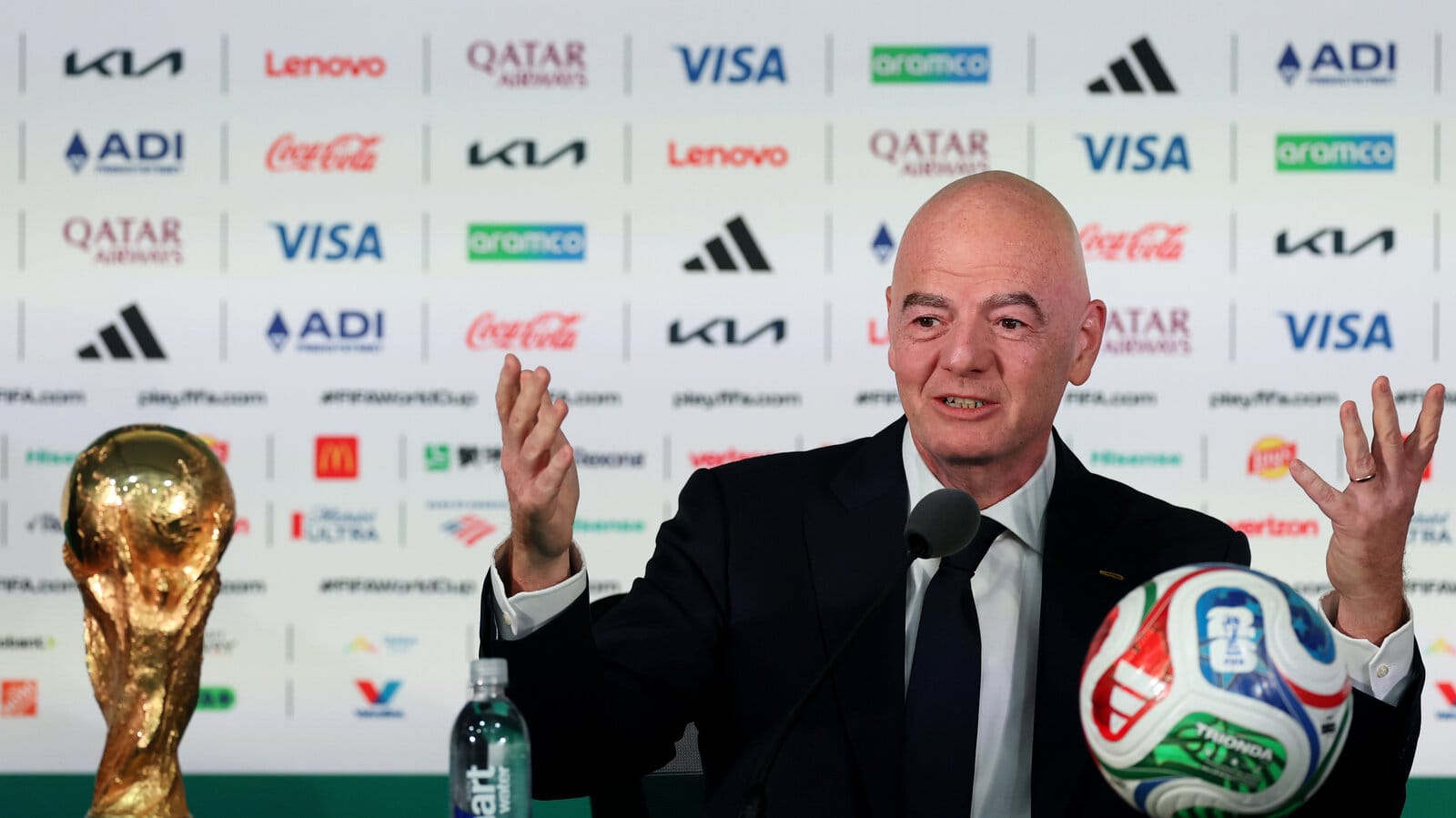 A rise to 64 teams would reshape the World Cup again, pushing the competition even further into new territory. It would create more opportunities for nations that rarely reach the biggest stage, while also deepening the debate about how far the tournament can grow without losing its edge.
One of the strongest arguments in favour of expansion is representation. FIFA has repeatedly presented itself as the guardian of a truly global sport, and more places at the finals would, in theory, make that message easier to defend. A larger tournament could also bring more supporters, more national stories and more marketable moments from regions that are often underrepresented at elite level.
But the trade-off is real. More teams can mean more mismatches, more dead rubber games and potentially more pressure on the credibility of the group phase. That is why any move toward a 64-team format would have to be paired with careful planning around seeding, scheduling and qualification design.
There is also a financial dimension. World Cup expansion can increase broadcasting inventory, sponsorship inventory and ticketing opportunities. That is one reason proposals of this kind tend to remain on the table inside FIFA. The organisation has long understood that global reach and commercial growth often move together.
Still, the footballing argument should not be ignored. A tournament is only as strong as its matches, and too much expansion can create the impression that qualification standards are being lowered. That is the central tension in any discussion of the 64-Team World Cup: inclusion versus dilution, reach versus quality.
For a recent example of how serious this trust-and-governance debate has become around FIFA leadership, see this related analysis on Infantino’s World Cup faith gamble and FIFA’s trust crisis.
If FIFA does push forward, one of the most important issues will be format design. A 64-team tournament might require more groups, a different knockout structure or a longer schedule. Each option would carry consequences for fairness, fatigue and the overall rhythm of the event. That is why the proposal cannot be judged only as a political signal; it also has to be tested as a competition model.
Supporters of the current plan for the 2026-era format argue that football’s popularity has spread far beyond the traditional elite and that the World Cup should reflect that growth. Critics counter that the best tournaments are not simply the largest ones. They are the ones that combine global reach with competitive tension. The 64-Team World Cup would have to prove it can do both.
A Wider Pattern of FIFA Decisions
The latest comments also fit into a broader pattern. Under Infantino, FIFA has often pushed the boundaries of what the World Cup can be, whether through format changes, expanded participation or long-term global strategy. Supporters say that approach reflects ambition and inclusivity. Critics say it shows a willingness to keep stretching the tournament in pursuit of power and profit.
That split is important because the World Cup is not just another competition. It is the central event in world football, and every structural change reverberates far beyond the host nation or final. When FIFA changes the format, it alters qualification races, television planning, domestic calendars and the expectations of fans across all continents.
The present conversation is also taking place in an era of heightened scrutiny. Fans are more aware than ever of governance issues, calendar congestion and the long-term health of the sport. So when the idea of a 64-team expansion is floated, it is judged not only on its own merits but also against FIFA’s wider record.
That is why the debate feels so significant. It is not just whether the World Cup can fit eight more teams. It is whether FIFA can justify another expansion so soon after the last one and still convince fans that the competition remains the same elite event they expect.
At the same time, the organisation’s decision-making process tends to move slowly, with committee review, stakeholder consultation and political balancing all playing a role. That means the story is likely to continue for months rather than days, especially if more officials begin commenting on the idea.
The subject has already attracted wide coverage in the football press, including reporting from The Guardian’s report on Infantino’s 64-team expansion remarks, which set out the latest context around FIFA’s internal discussion.
What makes this especially delicate is that FIFA has presented previous changes as responses to global demand. That framing can work if each expansion is clearly justified by footballing growth. It becomes harder to defend when the sport is still digesting the effects of the previous reform. The long-term reputation of the 64-Team World Cup would depend heavily on whether fans, broadcasters and national associations feel the change improves the competition rather than simply enlarging it.
What Happens Next
The immediate next step is a review after the current World Cup, when the relevant committees are expected to examine the proposal in more detail. That does not guarantee a decision, but it does show that the idea has moved beyond speculation.
If the proposal advances, FIFA would then have to answer several practical questions. How would the extra places be distributed? Would qualification formats need to change across every confederation? Would the final tournament need a new group-stage structure, or even an extra knockout round? These details would shape how realistic the plan really is.
Host planning would also become more complicated. More teams mean more venues, more staffing and potentially a longer event window. Any nation or joint bid connected with 2030 would need to account for those demands well in advance.
For fans, the issue cuts both ways. A larger World Cup offers more nations, more stories and more chances for surprise runs. Yet it can also feel like one more step away from the clean, high-stakes knockout drama that made the tournament famous.
That is why the idea continues to divide opinion. Supporters see an expanded World Cup as a natural reflection of football’s global growth. Skeptics see a competition that may already be stretching its identity.
Either way, the comments have made one thing clear: the discussion is not over. The 64-Team World Cup is now part of FIFA’s future planning conversation, and the road to 2030 may already be heading toward another structural change in the sport’s biggest event.
In the short term, the most important thing to watch is whether the idea stays at the level of informal discussion or becomes a formal proposal with defined numbers, timelines and confederation input. Once that happens, the conversation around the 64-Team World Cup will shift from speculation to negotiation, which is where the real political battle inside FIFA would begin.
For now, the storyline is simple: FIFA is still expanding the World Cup’s horizon, and Infantino is signalling that the next leap may arrive sooner than many expected. Whether that becomes a bold new chapter or a step too far will depend on how convincingly the governing body can answer the questions of fairness, quality and sustainability.