
Mikel Merino World Cup hero rise is turning late appearances into decisive moments for Spain, and the latest example came against Belgium, where the Arsenal midfielder once again delivered when the match was already deep into its closing stages. After a match-winning impact from the bench against Portugal, Merino might have expected to be involved earlier than the 85th minute. Instead, he had to wait until the 86th. It made little difference. Another late cameo brought another decisive goal, underlining how quickly he has become one of Spain’s most reliable finishers from the bench.
According to Sky Sports, Merino’s rise is being shaped by more than a single good run of form. It is also a story of resilience, timing and the value of a player who can change a game without needing long minutes to settle into it. In international football, where margins are tiny and substitutions often decide outcomes, that kind of profile can be priceless.
For readers interested in how squad depth, transfer planning and player value work across the game, it is worth reading How European Football Transfers Work: A Simple Guide for Fans. It helps explain why players who deliver in limited minutes can still be highly prized.
A late introduction, a familiar outcome
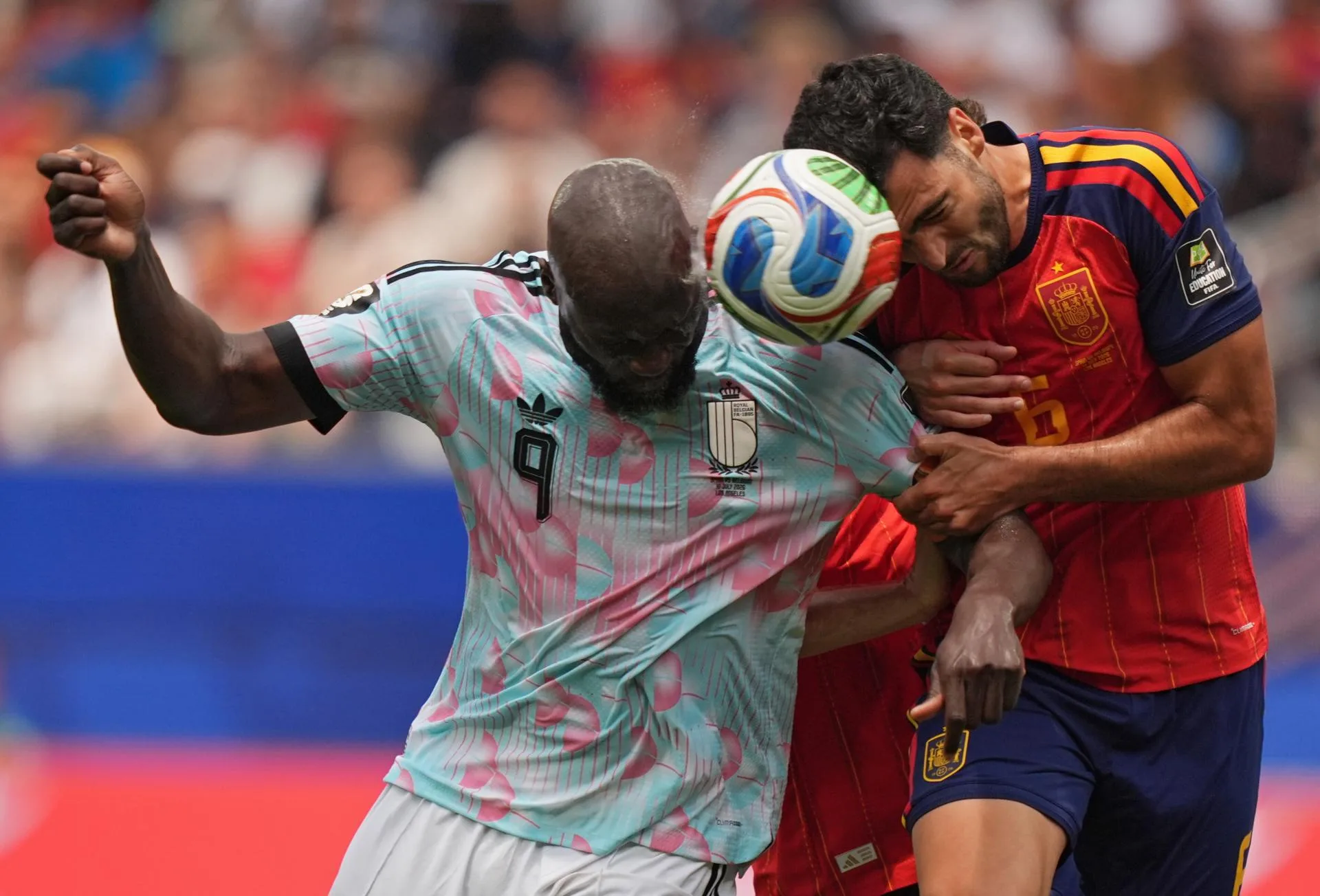
Spain’s game against Belgium offered a familiar script for Merino. He was not thrown into the action early enough to dominate the rhythm of the contest for a full half, but he still found a way to tilt it in Spain’s favour. The detail that he appeared in the 86th minute rather than the 85th may sound trivial, yet it speaks to a broader truth about his recent impact: whenever he is trusted, he tends to repay that trust quickly.
That is exactly what happened after his match-winning contribution from the bench against Portugal. A player who can step off the touchline and instantly influence a result gives a manager flexibility that goes beyond basic rotation. It changes the entire shape of a match plan. If a side is searching for a late goal, a late press, or simply a different kind of presence in the box, Merino now looks like a dependable answer.
For Spain, the significance is not only that he scored. It is that he scored in the exact kind of situation where composure, timing and an instinct for the decisive moment matter most. Late goals are never simply about luck. They are often the product of tactical patience, good game reading and players who understand when to attack space. Merino appears to be doing that better than anyone expected, which is why the Mikel Merino World Cup hero rise keeps fitting the story so well.
Mikel Merino World Cup hero rise and his injury comeback
 The Sky Sports source also frames Merino’s rise against the backdrop of an injury setback that left him using a mobility scooter. That detail matters because it makes the recent sequence feel even more striking. A player who has had to rebuild rhythm and confidence after an injury problem has to regain more than fitness. He has to recover sharpness, trust in his body and the feeling that he can still arrive in the right area at the right time.
Merino’s recent performances suggest that the process has not only restored him, but may also have sharpened his game. Some players return from injury cautiously, trying to avoid the moments that once brought success but now feel risky. Others emerge with a clearer understanding of what they can still do well. Merino appears to have embraced the latter. That is why Mikel Merino World Cup hero rise is more than a catchy headline; it reflects a genuine comeback arc.
There is also something notable about the way these moments are arriving. His contributions are not being spread out over a full match in the conventional sense. They are concentrated, condensed and final. That kind of efficiency is valuable at any level, but especially for a team like Spain, where squad depth and competition for places are constant. If a player can remain ready, then enter and decide a match almost immediately, he becomes more than a backup. He becomes a weapon.
For readers interested in how squad depth, transfer planning and player value work across the game, it is worth reading How European Football Transfers Work: A Simple Guide for Fans. It helps explain why players who deliver in limited minutes can still be highly prized.
That same idea helps explain why the Mikel Merino World Cup hero rise is attracting so much attention. Spain are not simply celebrating one finish; they are seeing proof that a recovered player can become a decisive tool again. In a tournament setting, that kind of trust can shape selection choices, substitution timing and even the pace of a team’s attacking patterns.
Why Merino’s role matters for Spain
Spain’s use of Merino tells us something important about modern international football: the bench is no longer a place for passengers. It is where games are won. When a midfielder can come on late and score a decisive goal, he gives his team an edge that is difficult to replicate through tactics alone.
Merino’s importance is enhanced by the fact that he is not being used as a specialist striker in the classic sense. He is an Arsenal midfielder by trade, but he is contributing in a way that goes beyond simply recycling possession. He is arriving in the decisive zone and finishing attacks. That gives Spain a more varied attacking profile because it adds another route to goal.
In a tournament or qualification environment, that is a major competitive advantage. Opponents prepare for patterns. They study starting line-ups and anticipate how a team may build through the thirds. What they cannot always prepare for is a substitute who arrives late, changes the energy of the match and makes a difference in the final few minutes. Merino is becoming that kind of player, and the growing Mikel Merino World Cup hero rise narrative is built on exactly that sort of reliability.
There is also a psychological effect. When a side knows it has a bench option capable of producing in tight moments, it keeps belief alive deep into games. Players continue to run, press and create because they trust that a breakthrough may still come. That kind of confidence can alter the mood in the dressing room and on the pitch.
For Spain, the Mikel Merino World Cup hero rise also sends a message to future opponents: closing stages are no longer safe. A team that can introduce a late threat with genuine scoring instincts forces defenders to stay alert for longer, and that can create space elsewhere on the pitch. Even when Merino does not touch the ball often, his presence changes how the game is managed.
The value of decisiveness in modern football
Merino’s current run is a reminder that football is often defined by small sample sizes. A player does not always need 90 dominant minutes to influence public perception or coaching trust. Sometimes two decisive cameos can matter more than several steady performances.
That has both tactical and business implications. Spain have found a player whose late-game output can change results, and the Mikel Merino World Cup hero rise story now sits at the intersection of form, fitness and squad value.
Tactical value
From a tactical standpoint, Merino offers Spain a late-game profile that can be hard to defend. He is coming in against tired legs, when midfield runners are harder to track and defensive lines are less stable. That is the perfect environment for a player who understands timing.
A late substitute who scores does not just make headlines. He changes how future opponents prepare. Coaches will look at the final stages of Spain matches and ask which defensive match-ups are vulnerable when Merino enters. Even without knowing every detail of Spain’s broader plans, the message is clear: if he is on the bench, he can matter in the final phase.
That can also affect in-game management. A manager may preserve him for the closing stretch precisely because his skill set is most dangerous against tired opposition. In that sense, the “late cameo” is not a compromise. It may be the ideal use of his abilities.
Another reason the Mikel Merino World Cup hero rise stands out is that it combines timing with repeatability. One lucky finish can be dismissed. Two late, decisive contributions in quick succession suggest a pattern, and patterns are what coaches trust. Spain now have a clearer idea of the type of impact he can provide, which makes his role easier to define and harder to ignore.
Business and squad-value angle
There is also a business side to this story. International form influences a player’s profile, and players who become decisive in major matches tend to carry greater strategic value for their clubs and national teams. Merino is already an Arsenal midfielder, but performances like these reinforce why such players are valuable assets: they can perform in different systems, in different competitive contexts and under pressure.
For a club like Arsenal, having a player who can return from an injury setback and then produce in high-stakes international matches is a positive sign. It suggests depth, adaptability and resilience. In an era where clubs monitor fitness, usage patterns and squad efficiency closely, that matters. The Mikel Merino World Cup hero rise therefore has club-level implications too, not just national-team significance.
At the same time, there is an understated economic logic to all of this. Players who can influence results from the bench often help teams maximize resources. They are not only useful when starting; they improve the overall return on a squad by turning limited minutes into concrete outcomes. That makes them especially important in seasons crowded by domestic and international demands.
Those limited minutes are also part of why the Mikel Merino World Cup hero rise is so compelling. It is not a story about a player dominating every week for months on end. It is a story about efficiency, a return to form and the ability to deliver when the sample size is small but the stakes are high.
How Merino has changed the conversation
The broader conversation around Merino has clearly shifted. Before these late goals, he may have been discussed primarily as a dependable midfielder. Now, he is being talked about in the language of decisive moments, bench impact and match-winning intervention.
That change can happen quickly in football. A player goes from being an option to being a solution. And once a manager sees proof that a player can affect results from limited minutes, the trust deepens. Even if he does not start every match, his role becomes clearer and his importance increases.
There is also a reputational element. Late goals in international football carry a special weight because they are remembered. Fans remember the scorer who comes on and delivers when the game is tight. Teammates remember it too. That can build momentum within a squad and create a sense that a player is “due” to make something happen whenever he enters the field.
In Merino’s case, the phrase “another late cameo, another decisive goal” captures the pattern perfectly. The timing may vary by a minute or two, but the result does not. He arrives late and changes the outcome. That is why the Mikel Merino World Cup hero rise storyline has resonated so quickly.
It also helps explain why fans and analysts are now viewing him differently. The Mikel Merino World Cup hero rise is no longer just a clever description of a hot streak; it is becoming shorthand for a broader transformation in how Spain can use him. A substitute who consistently affects the scoreline changes the tone of the entire squad conversation.
What this means for Spain and Arsenal
 Spain will now know that Merino can be trusted in the moments that matter most. That is valuable whether he starts or comes on later. His role may continue to be shaped by game state, opposition and the manager’s plan, but the evidence is becoming hard to ignore: he is a player who can decide matches from the bench.
That opens up several possibilities.
- He can be used to attack tired defenses late.
- He can be brought on to add technical quality and scoring threat in midfield.
- He can be saved for the most decisive stages of a match, when control and composure matter more than tempo.
- He can also serve as a reference point for Spain’s other attacking players, who can look for his late runs and finishing instinct.
For opponents, this creates a problem. A late substitution usually introduces fresh legs. Merino offers something more than that. He brings a proven threat in the final minutes. That makes his introduction more than a tactical adjustment; it becomes a warning.
Although the source focus is on Spain, Merino’s international form is also relevant to Arsenal. A club’s midfield options are shaped not only by club matches but by the confidence and sharpness players build on international duty. If a midfielder is scoring decisive goals for his country, that can strengthen his standing and elevate the expectations around him when he returns to club football.
For Arsenal, that is positive in at least two ways. First, it confirms that Merino remains capable of delivering in pressure situations. Second, it suggests that his match rhythm is returning well enough for him to make a difference quickly. In short, the Mikel Merino World Cup hero rise is a story that can benefit both Spain and Arsenal at the same time.
For a broader look at the competitions that shape elite European careers, Champions League Explained: Format, Money and Why It Defines European Football offers useful context on why players with big-match influence are so highly valued.
The bigger picture behind the headline
This is more than a single goal story. It is a case study in how quickly a football narrative can evolve. A midfielder who was recovering from an injury setback is now being described as a decisive presence for Spain. A player who may have expected a slightly earlier introduction against Belgium instead had to wait until the 86th minute and still left his mark.
That pattern matters because it captures the essence of elite football: readiness, timing and execution. Not every contribution needs to be spectacular for 90 minutes. Sometimes the most valuable thing a player can do is wait, read the moment and finish the job in the final stages.
Merino is doing exactly that, and the Mikel Merino World Cup hero rise is now a fitting description of how fast a player’s reputation can change when he keeps delivering when it matters most.
For Spain, the story is encouraging because it suggests their squad has another reliable late-game option. For Merino, it is a reminder that recovery and performance can come together quickly when confidence returns. For Arsenal, it is proof that the midfielder’s qualities still translate under pressure. The Mikel Merino World Cup hero rise therefore carries meaning far beyond one match or one competition.