Some football goals are remembered for their importance. Others survive in the memory because of their extraordinary technical quality. Diego Gómez produced both spectacle and precision when he scored from approximately 51 metres during Brighton & Hove Albion’s emphatic 5–0 victory over Crystal Palace on 18 October 2026.
The Diego Gómez goal was more than an audacious attempt from the halfway line. It was a demonstration of awareness, decision-making and execution at a moment when most players would have chosen the safer option of keeping possession.
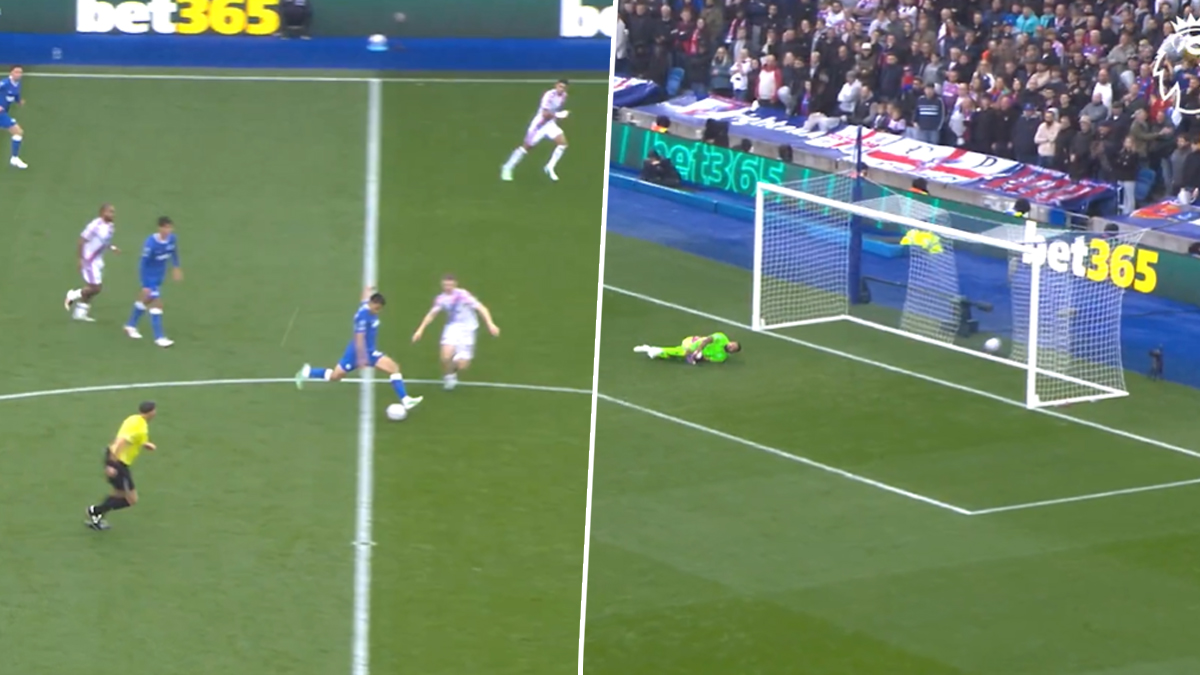
The Paraguayan midfielder spotted Crystal Palace goalkeeper Walter Benítez away from his goal line, took a touch and launched a spectacular shot over the retreating goalkeeper. The ball travelled from just inside Palace’s half and found the net in the seventh minute, giving Brighton a 2–0 lead. ([Reuters](https://www.reuters.com/sports/soccer/brightons-gomez-scores-spectacular-goal-halfway-line-2026-10-18/))
The strike was the longest-range Premier League goal since Wayne Rooney scored from approximately 57.7 metres for Everton against West Ham United in November 2017, according to Opta’s statistical analysis. Gómez’s effort ranks among the competition’s longest-range goals recorded since the 2006–07 season. ([Opta Analyst](https://theanalyst.com/articles/brighton-vs-crystal-palace-stats-premier-league-10-2026))
Yet the goal has also raised a legitimate tactical question: should Benítez have been better positioned, or was he simply beaten by exceptional vision and execution?
The answer requires more than watching the ball sail into the net. It requires examining the circumstances that created the opportunity, the responsibilities of a modern goalkeeper and the technical quality needed to score from such an extraordinary distance.
Brighton vs Crystal Palace: The Perfect Setting for a Wonder Goal
 The context of the match made Gómez’s strike even more significant.
Brighton entered the encounter looking to strengthen their position near the top of the Premier League table. Crystal Palace, meanwhile, were seeking a competitive response against their local rivals after experiencing difficulties at the beginning of the campaign.
The home side wasted little time establishing control.
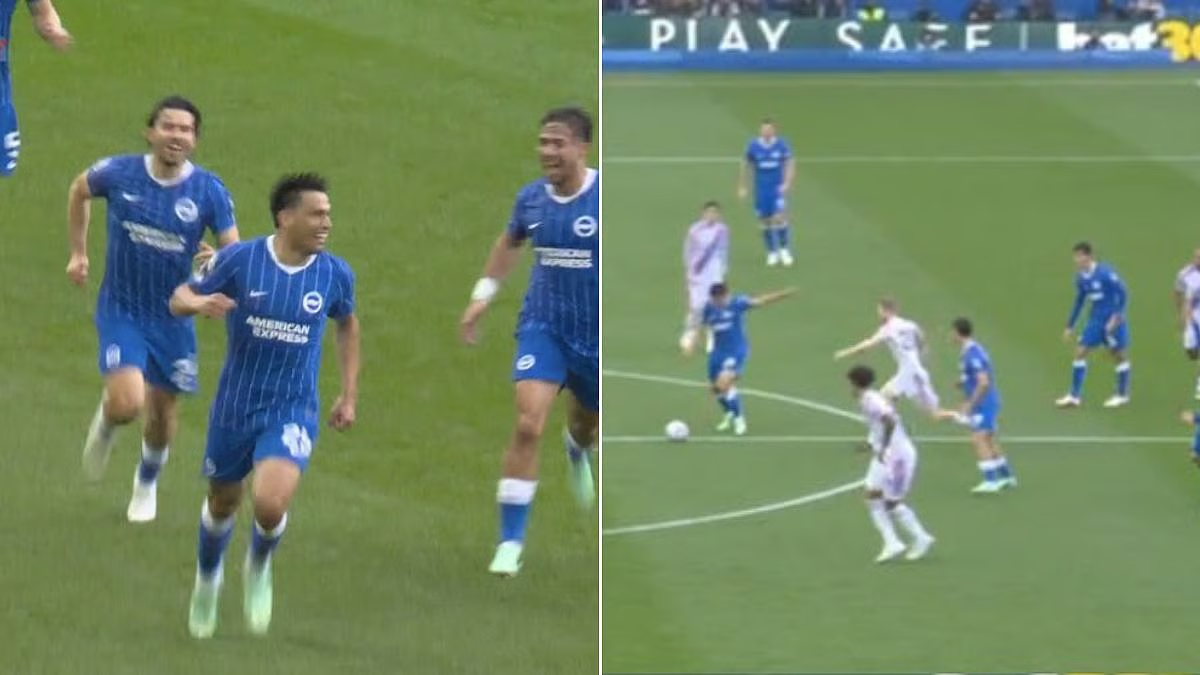
Pascal Groß delivered a dangerous free-kick that was headed into his own net by Palace defender Jaydee Canvot in the fourth minute. Three minutes later, Adam Wharton lost possession, allowing Olivier Boscagli to feed Gómez near the halfway line. Gómez recognised Benítez’s position and attempted the shot that became the defining moment of the afternoon.
Before Palace could recover, Yasin Ayari scored Brighton’s third goal in the 10th minute.
Brighton had established a three-goal advantage inside the opening 10 minutes, leaving Palace with an enormous challenge for the remainder of the match. Charalampos Kostoulas added a fourth shortly after half-time, while substitute Jack Hinshelwood completed the scoring in the 84th minute. ([Brighton official match report](https://www.brightonandhovealbion.com/media-article/mft-match-report-premier-league-albion-v-crystal-palace))
The final score was 5–0, matching Brighton’s previous biggest victory over Palace, achieved in 1956. The result also delivered Fabian Hürzeler’s first victory over the club’s local rivals. ([The Guardian](https://www.theguardian.com/football/2026/oct/18/brighton-crystal-palace-premier-league-match-report))
Although five goals contributed to the result, Gómez’s strike stood apart because of the combination of distance, timing and technical execution required.
It was not a speculative clearance that accidentally found the net. The midfielder had to recognise a developing situation, judge the goalkeeper’s position and make a highly unusual decision in a fraction of a second.
1. The Vision: Gómez Recognised the Goalkeeper’s Position
 The first remarkable aspect of the Diego Gómez goal was not the power of the shot. It was the midfielder’s awareness of what was happening around him.
When possession reached Gómez near the halfway line, Benítez was positioned away from his goal line. Gómez immediately recognised the possibility of shooting over the goalkeeper rather than attempting to progress the ball through midfield.
That recognition is fundamental to high-level football.
Players constantly receive information about the positions of teammates, opponents, available passing lanes and the location of the ball. The best decisions often come from identifying an opportunity before it becomes obvious to everyone else.
Gómez understood that he had a brief window in which the goalkeeper’s position made a long-range attempt worthwhile.
Waiting for another touch, searching for a teammate or carrying the ball forward could have allowed Benítez to recover his position. By acting immediately, the Brighton midfielder exploited the temporary space between the goalkeeper and the goal.
Speaking to Sky Sports after the match, Gómez explained that he had noticed the goalkeeper was slightly advanced when he received possession. He also described his emotional reaction to scoring, saying that he did not know where to run or what to do in celebration. ([Reuters](https://www.reuters.com/sports/soccer/brightons-gomez-scores-spectacular-goal-halfway-line-2026-10-18/))
His reaction underlined the extraordinary nature of the moment.
However, the goal was not entirely disconnected from preparation. Gómez also explained that the team’s intensity and training habits had helped create the circumstances in which the opportunity could be recognised and executed.
The lesson is simple: technical ability becomes most valuable when a player recognises the right moment to use it.
2. The Technique: Why the Diego Gómez Goal Was So Difficult to Execute
 Scoring from approximately 51 metres is not merely a question of kicking the ball as hard as possible.
The player must generate sufficient power to cover the distance while controlling the trajectory so that the ball clears the goalkeeper but still drops beneath the crossbar.
Too little height would allow the goalkeeper to intercept the attempt. Too much height could send the ball beyond the goal. An excessively powerful strike might travel over the bar, while insufficient power could allow the goalkeeper to recover.
Gómez found the necessary balance.
He took one touch before striking the ball from just inside Palace’s half. The attempt travelled over Benítez as the goalkeeper tried to retreat, eventually dropping into the net. Reuters described the execution as spectacular, while Opta’s analysis confirmed the extraordinary distance covered. ([Reuters](https://www.reuters.com/sports/soccer/brightons-gomez-scores-spectacular-goal-halfway-line-2026-10-18/); [Opta Analyst](https://theanalyst.com/articles/brighton-vs-crystal-palace-stats-premier-league-10-2026))
There were several technical demands involved:
- Contact with the ball: The strike needed sufficient force and accuracy to travel the full distance.
- Trajectory: The ball had to clear the goalkeeper without travelling too high.
- Timing:Gómez had to release the shot before Benítez could adjust his position.
- Composure: He needed to execute a difficult technique despite the unusual circumstances.
The remarkable element is that all these requirements had to be satisfied in one movement.
It is possible to practise shooting from distance, but reproducing the same outcome under match pressure requires a combination of technique, awareness and confidence.
Gómez’s attempt was especially difficult because he had only a brief opportunity to judge the goalkeeper’s position and the distance to the goal.
That is what distinguishes a purposeful long-range effort from a hopeful clearance.
Was Walter Benítez to Blame for the Goal?
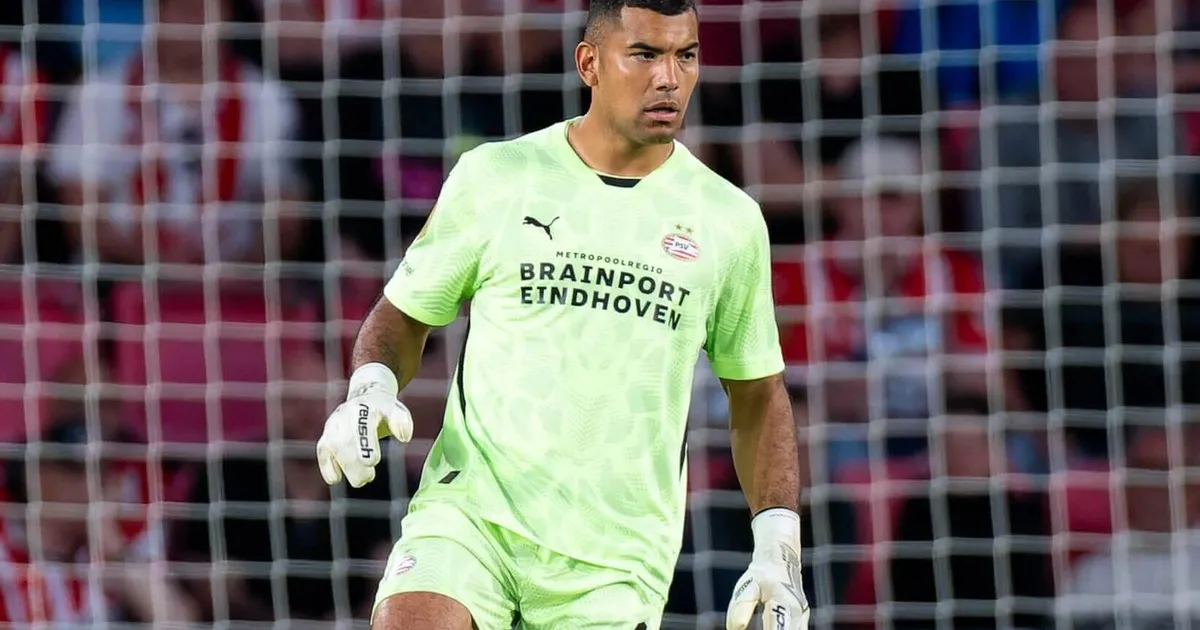 The question of Benítez’s positioning has generated considerable debate, but the available evidence does not support automatically classifying the goal as a goalkeeping error.
Modern goalkeepers are often expected to operate as sweepers behind a high defensive line. Instead of remaining close to the goal line throughout the match, they position themselves further forward so they can intercept through-balls and help their teams maintain a compact structure.
This approach can be highly effective.
If a goalkeeper remains too deep while his defenders push forward, opponents may exploit the space behind the defensive line with long passes and forward runs. By advancing, the goalkeeper can narrow that space and intervene before the opposition reaches the penalty area.
SEE ALSO: Brighton Champions League Push: Why This Start Looks Sustainable
However, the strategy introduces a risk.
An advanced goalkeeper leaves a larger area of the goal exposed to a player capable of recognising the situation and attempting a long-range shot. The farther forward the goalkeeper moves, the more ground he must cover if the ball is lifted over him.
That is the vulnerability Gómez exploited.
Former goalkeeper Shay Given, speaking as a BBC pundit, defended Benítez’s positioning after the match. Given explained that goalkeepers are often required to remain advanced to deal with through-balls when their teams play a high defensive line. He argued that Benítez’s position was reasonable and praised the quality of Gómez’s execution. ([Reuters](https://www.reuters.com/sports/soccer/brightons-gomez-scores-spectacular-goal-halfway-line-2026-10-18/))
Given’s assessment is important because it distinguishes between a tactical risk and a basic technical mistake.
A goalkeeper can make a sensible decision within the team’s system and still be punished by an exceptional action. Not every goal conceded from distance proves that the goalkeeper was positioned incorrectly.
There is, nevertheless, room for criticism.
Goalkeepers must continually assess the possibility of opponents attempting long-range shots, particularly when possession is lost in central areas. The more visible the opportunity, the greater the importance of being prepared to retreat.
Benítez could not anticipate exactly what Gómez would produce, but the goal illustrates why advanced positioning demands constant awareness.
The strongest conclusion is that Gómez executed an extraordinary shot against a goalkeeper whose advanced position was tactically understandable. The goal does not, by itself, prove that Benítez committed a major error.
3. The Tactical Trigger: How Brighton Created the Opportunity
Although Gómez deserves most of the attention, the goal emerged from a wider pattern of events involving both teams.
Brighton had already taken the lead through Canvot’s own goal. Palace were therefore under pressure to regain control, and the subsequent loss of possession by Wharton created an opening for the hosts.
Boscagli’s pass then found Gómez near the halfway line, where the midfielder had time to assess the goalkeeper’s position and attempt the extraordinary strike. ([The Guardian](https://www.theguardian.com/football/2026/oct/18/brighton-crystal-palace-premier-league-match-report))
This sequence reveals an important distinction between individual brilliance and tactical context.
Gómez was responsible for the decision and execution, but Palace’s possession loss created the opportunity. Once the ball was surrendered in a dangerous area, Brighton were able to attack before the opposition could restore its defensive organisation.
That is one of the central objectives of modern pressing football: create turnovers and exploit them quickly.
Brighton have shown a willingness to attack aggressively, support forward runs and move the ball into dangerous areas with minimal hesitation. The combination of intensity and technical quality was visible throughout the 5–0 victory.
The strike also demonstrated why defenders must remain alert to threats beyond conventional attacking patterns.
When a team loses the ball, its players cannot assume the immediate danger is limited to a forward pass or a dribble towards goal. Against a technically capable opponent, the next action may be an unexpected shot from considerable distance.
Palace’s midfield needed to react quickly after losing possession, but Gómez’s immediate decision gave them little time to reorganise.
The Numbers Behind the Wonder Goal
 The statistical context helps explain why the effort attracted such widespread attention.
Opta’s analysis places Gómez’s shot at approximately 51.3 metres, making it the longest-range Premier League goal since Rooney’s 57.7-metre strike for Everton against West Ham in November 2017. It also ranks among the eight longest-range goals recorded in the Premier League since the beginning of the 2006–07 season. ([Opta Analyst](https://theanalyst.com/articles/brighton-vs-crystal-palace-stats-premier-league-10-2026))
Gómez had already attempted four shots from more than 50 metres during his Premier League career, but this was the first to result in a goal.
That detail is revealing.
Long-range shooting can be a legitimate way to exploit an advanced goalkeeper, but it has a very low probability of success when compared with attempts from closer range. The fact that Gómez had tried similar efforts before suggests that he was willing to recognise the possibility rather than treating the idea as completely unrealistic.
The outcome, however, depended on exceptional execution.
Brighton’s overall performance also deserves attention.
The Seagulls scored 23 league goals across their opening seven matches, their most productive start at that stage across the top four tiers of English football. Opta noted that only three teams in Premier League history had scored more goals across their first seven games of a season. Brighton had also won their previous four league matches by an aggregate score of 15–0. ([Opta Analyst](https://theanalyst.com/articles/brighton-vs-crystal-palace-stats-premier-league-10-2026))
The 5–0 victory demonstrated that Gómez’s goal was part of a dominant team performance rather than an isolated moment in an otherwise unconvincing display.
Brighton scored three times inside the opening 10 minutes, becoming the ninth Premier League side to achieve that feat and the first since Newcastle United against Tottenham in April 2023. ([Opta Analyst](https://theanalyst.com/articles/brighton-vs-crystal-palace-stats-premier-league-10-2026))
These figures place the wonder goal within a broader story of Brighton’s attacking form.
Fabian Hürzeler’s Influence on Brighton’s Attacking Confidence
 Brighton’s performance offered evidence of the collective work undertaken by Hürzeler and his players.
The manager has encouraged a style that combines pressing intensity, movement between the lines and a willingness to attack when spaces emerge. Against Palace, Brighton repeatedly exploited defensive uncertainty and moved the ball into promising areas before their opponents could establish a stable shape.
Their attacking quality was particularly visible in the first half.
Groß’s delivery contributed to the opening goal, Boscagli helped create the opportunity for Gómez, and Ayari finished another attack to establish the 3–0 advantage. Kostoulas and Hinshelwood then completed the scoring after the interval.
Five different scorers contributed to a performance that demonstrated the depth of Brighton’s attacking threat. ([Brighton official match report](https://www.brightonandhovealbion.com/media-article/mft-match-report-premier-league-albion-v-crystal-palace))
The ability to spread goals across the team is valuable because it makes Brighton less dependent on one attacking player.
Gómez’s strike deserved the headlines, but the result also reflected the quality of the team’s movement, the delivery into dangerous areas and the way Brighton responded after winning possession.
Hürzeler’s tactical approach has also encouraged his players to recognise opportunities that might otherwise be ignored. An attempt from the halfway line can appear reckless if judged only by its distance, but it becomes more understandable when the goalkeeper is advanced and the player has the technique to exploit that position.
The challenge is maintaining discipline.
Not every long-range opportunity deserves a shot. Players must still evaluate whether passing, retaining possession or advancing the ball would provide a higher probability of success.
Gómez’s goal was exceptional precisely because the circumstances justified an unusual decision and the execution matched the ambition.
The Rivalry Context: A Moment That Will Define the M23 Derby
Brighton’s victory was especially meaningful because of the rivalry between the clubs.
The Seagulls had not beaten Palace since February 2024, when Brighton won 4–1 under Roberto De Zerbi. Their latest victory therefore ended a run of four matches without a win against their rivals from south London. ([The Guardian](https://www.theguardian.com/football/2026/oct/18/brighton-crystal-palace-premier-league-match-report))
The 5–0 result provided a rare opportunity for Brighton supporters to celebrate a dominant derby performance.
Hürzeler acknowledged the importance of the occasion after the match, explaining that he felt proud of his players and the way they had remained united during a difficult period. His comments reflected the significance of defeating a local rival after previous criticism. ([The Guardian](https://www.theguardian.com/football/2026/oct/18/brighton-crystal-palace-premier-league-match-report))
Gómez’s strike became the defining image of the match because it combined technical brilliance with the emotional intensity of a derby.
For Brighton supporters, the goal represented more than an extraordinary finish. It symbolised a performance in which their team overwhelmed a rival and delivered a result that would remain memorable long after the final whistle.
For Palace, the match raised serious questions about defensive organisation and the team’s ability to recover after early setbacks.
Their three goals conceded inside the opening 10 minutes left them with little chance of mounting a comeback. Brighton continued to create opportunities after half-time, eventually adding two further goals.
Yet the historical significance of the result should not obscure the longer-term challenge facing both clubs. Brighton must continue producing consistent performances, while Palace need to improve their defensive organisation and response to pressure.
The Football Xtra Verdict: Magic, Mistake or Both?
 Diego Gómez’s 51-metre strike was one of the standout goals of the Premier League season because it combined vision, timing and technical precision in extraordinary circumstances.
The midfielder recognised that Benítez was away from his goal line and made a decision that many players would have considered too risky. His execution was exceptional, lifting the ball over the retreating goalkeeper and into the net from just inside the opposition half.
However, it would be unfair to reduce the goal to a simple goalkeeping error.
Benítez was operating within a modern tactical environment where goalkeepers must frequently advance to support the defensive line and intercept passes behind the defence. His positioning carried a risk, but Shay Given’s assessment suggests that it was not necessarily a mistake.
The defining factor was Gómez’s ability to identify and exploit that risk.
Brighton’s wider performance also deserves recognition. Their 5–0 victory reflected the quality of their attacking play, the effectiveness of their movement and the intensity with which they pressured Palace. The long-range goal was spectacular, but it was one element of an outstanding collective performance.
The final verdict: Walter Benítez’s positioning created the opportunity, but Diego Gómez’s vision and technique turned it into a moment of brilliance.
That distinction matters because football is often decided by players recognising opportunities that exist for only a few seconds. Gómez did exactly that, producing a goal that will remain among the most memorable moments of Brighton’s season.
Can the Paraguayan midfielder produce another moment of similar quality, and should Benítez have positioned himself differently?
Share your thoughts in the comments and follow The Football Xtra for more Premier League analysis, player features and tactical breakdowns.