Manchester City went to Anfield and delivered a commanding 3–0 Premier League victory over Liverpool. Three days later, Paris Saint-Germain exposed a different side of Enzo Maresca’s team, racing into a three-goal lead before surviving a second-half fightback to win 4–2 at the Etihad Stadium. The contrast was striking: City looked disciplined against Liverpool, yet vulnerable against Europe’s reigning champions. The result exposed three Manchester City tactical problems that Maresca must address before they become a recurring weakness in the Premier League title race.
The defeat was not simply a story of PSG’s attacking quality. It was also a lesson in how quickly an aggressive tactical system can unravel when the opponent beats the press, controls the central spaces and attacks the gaps behind the defence.
City still have attacking power, and their second-half response showed resilience. But the first-half collapse raised a difficult question: can Maresca preserve City’s attacking identity while making them more difficult to exploit?
Manchester City Tactical Problems: What PSG Exposed
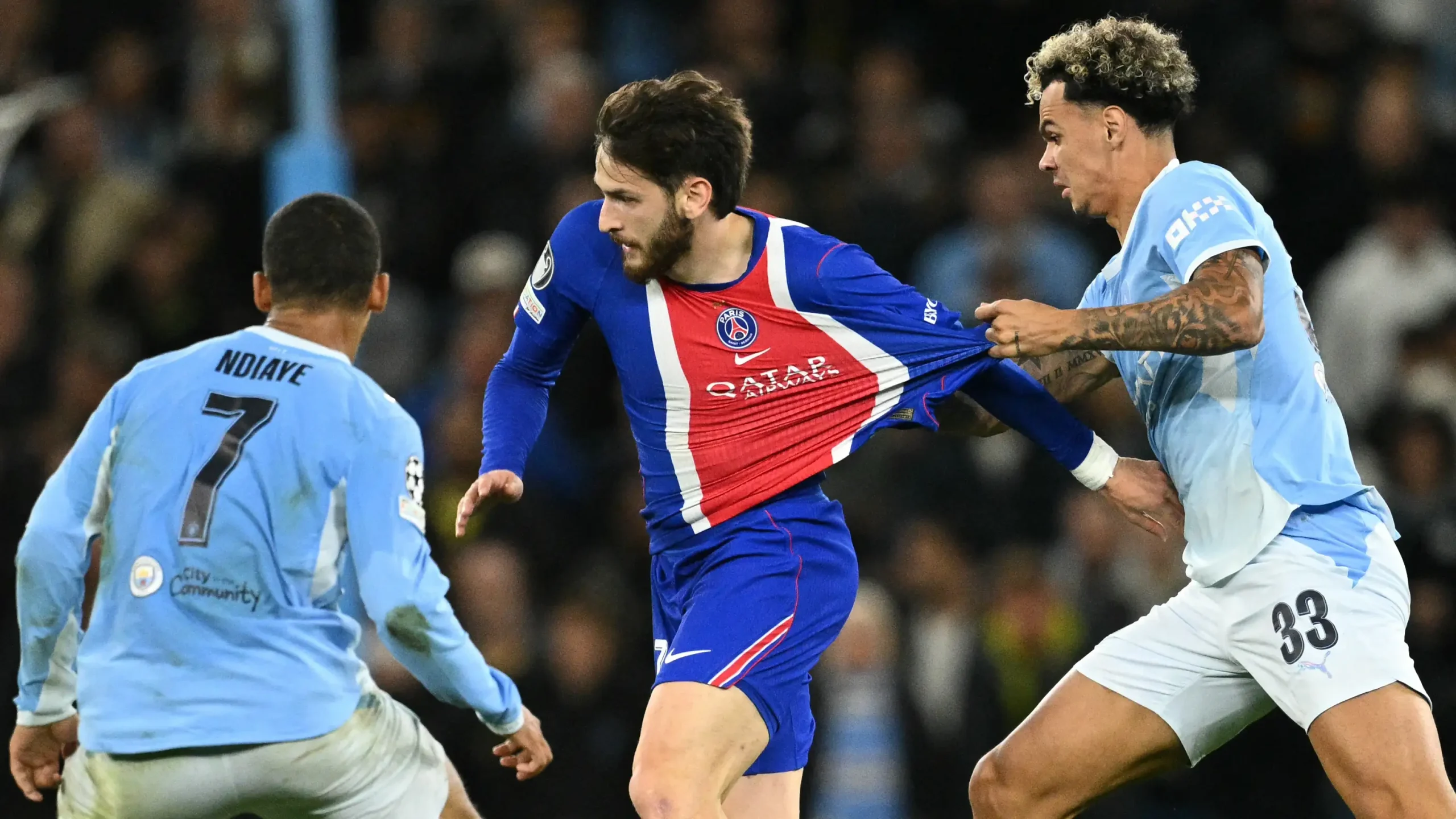
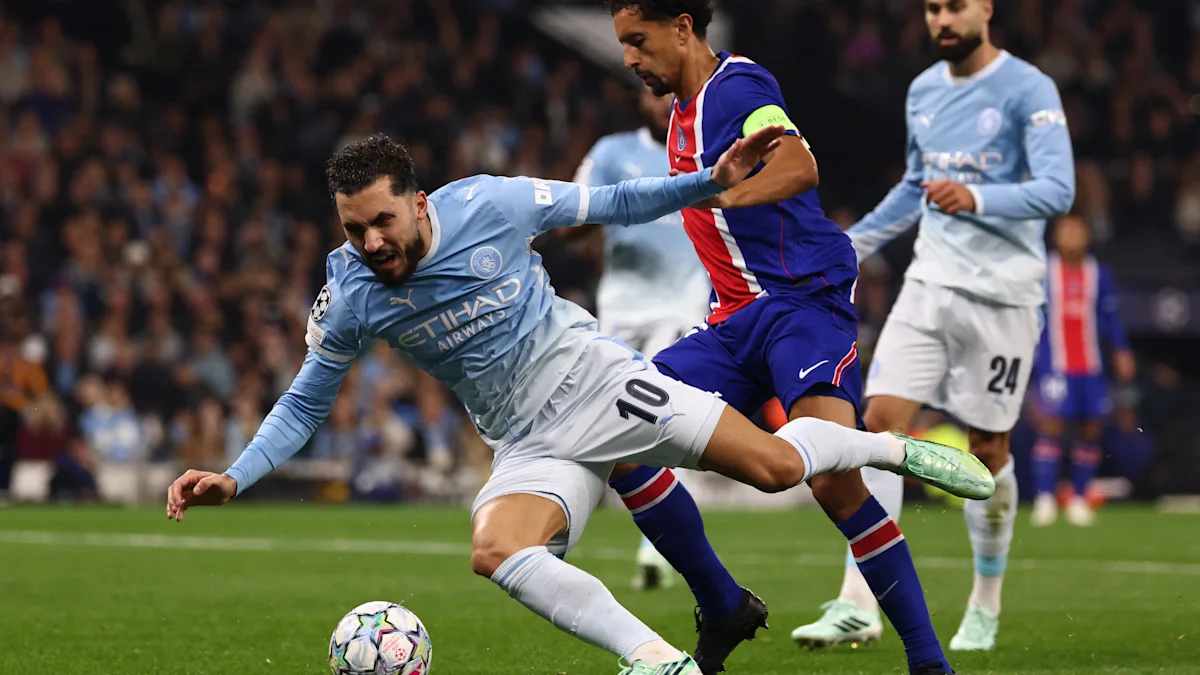
 City lost 4–2 on 14 October, with Désiré Doué, Ousmane Dembélé and Vitinha putting PSG 3–0 ahead in the first half. Erling Haaland scored twice after the break, but Maghnes Akliouche restored PSG’s three-goal cushion before City’s late pressure. Gianluigi Donnarumma then saved a penalty from Ferran Torres. [Manchester City’s official match report](https://www.mancity.com/news/mens/city-v-psg-14-october-match-report-63927601).
The scoreline mattered, but the pattern of the match was more revealing. PSG punished City early, while City improved after tactical changes at half-time. That contrast offers a useful starting point for understanding the problems.
1. An Aggressive High Press Left Space Behind
City’s first major problem was the space created by their pressing approach.
Maresca’s side attempted to apply pressure high up the pitch and build attacks through a possession-heavy structure. Such a strategy can pin opponents back, win the ball close to goal and create sustained attacking pressure. However, it requires the midfield and defence to remain connected.
Against PSG, that connection was not reliable enough during the opening period.
PSG moved the ball forward quickly when City’s press was bypassed. Rather than allowing City to recover their defensive shape, the French side looked to exploit the spaces around and behind the back line. Their pace and direct running made those transitions particularly dangerous.
A tactical analysis published by GOAL highlighted the gaps between City’s midfield and defensive lines, as well as PSG’s ability to isolate defenders in one-on-one situations. [Read GOAL’s tactical breakdown](https://www.goal.com/en-us/lists/manchester-city-vs-paris-saint-germain-the-tactics-board-luis-enrique-s-transition-machine-dismantles-city-s-high-line/bltfde9af6a2228e106).
The problem is not necessarily the high line itself. It is what happens when the press fails.
A high defensive line can be effective when the team pressures the ball, blocks passing lanes and prevents opponents from turning freely. But when the first wave of pressure is beaten, defenders can be left facing attackers running towards goal with limited protection.
PSG demonstrated how dangerous that situation can become.
For Maresca, the solution does not have to mean abandoning an attacking philosophy. It could mean improving the timing of pressing triggers, ensuring midfielders cover the passing lanes and asking the defence to adjust its positioning when the ball cannot be won immediately.
Key takeaway: City need a more dependable defensive plan for the moments immediately after losing possession or having their press bypassed.
2. Defensive Transitions Became a Major Weakness
The second problem was closely connected to the first: City struggled to manage the transition from attack to defence.
Possession-based teams often commit several players forward to create numerical advantages around the opposition penalty area. When the ball is lost, however, those same attacking positions can leave fewer players available to stop a counterattack.
That risk became clear against PSG.
Luis Enrique’s team combined quick forward passes with intelligent movement, forcing City’s defenders to react while retreating. The danger was not just the speed of individual attackers. It was the way PSG used that speed to attack spaces before City could reorganise.
The distinction matters because defensive transitions are a collective responsibility. Centre-backs can defend their penalty area well and still be exposed if the midfield fails to slow the counterattack or close the passing lanes.
City also faced a difficult choice when chasing the game. After falling behind, they had to commit more players forward and accept additional defensive risk. Luis Enrique acknowledged that City’s response created significant problems for PSG, but explained that the visitors had to manage the risks of a team pushing forward after falling three goals behind. [The Guardian’s post-match report](https://www.theguardian.com/football/2026/oct/14/enzo-maresca-insists-manchester-city-are-close-to-psg-despite-home-defeat).
That helps explain why the second half looked different: City were more aggressive, created more pressure and came closer to a comeback, but the game’s structure also became more open.
The lesson for Maresca is to distinguish between calculated attacking risk and unnecessary exposure.
City need enough players behind the ball to protect against counters, particularly when their full-backs advance. They also need a clear response when possession changes hands: pressure the ball if possible, block the forward pass if not, and recover into a compact shape when neither option succeeds.
This becomes especially important against Premier League opponents who may not dominate possession but can still threaten through direct running and quick forward passes.
Key takeaway: City’s attack can remain ambitious, but their defensive structure must be prepared for the possibility that the next pass will belong to the opposition.
3. Midfield Control Was Not Consistent Enough
The third issue was City’s ability to control the centre of the pitch.
Possession alone does not guarantee midfield dominance. A team can have plenty of the ball while struggling to progress through central areas, protect its defenders or prevent opponents from launching dangerous attacks.
Against PSG, City found it difficult to establish the control they wanted during the first half. PSG’s midfield movement and compact defensive organisation helped them disrupt City’s build-up and launch attacks when opportunities appeared.
The difference became more noticeable after half-time.
According to Squawka’s post-match analysis, Maresca’s substitutions—including the introduction of Ayyoub Bouaddi—helped City gain greater control in midfield. The tactical changes improved their ability to progress the ball and sustain pressure, although they could not erase the damage already done. [Read Squawka’s match analysis](https://www.squawka.com/en/features/post-match-analysis-man-city-vs-psg-14-10-26/).
That second-half improvement is important. It suggests City’s difficulties were not simply a matter of lacking individual quality. The way the team was structured, and how players occupied the central spaces, also affected the performance.
When midfielders are unable to connect defence with attack, the forwards can become isolated. When they push too far forward without adequate cover, the defenders become exposed. A successful midfield structure must perform both jobs.
Maresca therefore has a tactical question to answer: how can City maintain enough players between the lines to create chances without losing protection in front of their centre-backs?
The answer may involve adjusting player roles, changing the balance between attack-minded and defensive midfielders, or using substitutions earlier when the opposition is gaining control. The best solution will depend on the opponent and the players available.
What matters is that the team can change the rhythm of a match before a difficult opening spell becomes a major deficit.
Key takeaway: City need midfield control that works both with the ball and without it. Their second-half improvement against PSG provides a possible starting point.
What the PSG Defeat Means for City’s Premier League Campaign
 One Champions League defeat does not prove that City’s entire season is in danger. Their domestic form offers an important counterpoint.
On 11 October, City defeated Liverpool 3–0 at Anfield, with goals from Haaland, Jérémy Doku and Rayan Cherki. That victory gave them six wins from six Premier League matches and 18 points, three ahead of Arsenal at that stage. [Reuters’ report on the Liverpool match](https://www.reuters.com/sports/soccer/man-city-silence-hostile-anfield-with-3-0-win-over-liverpool-2026-10-11/).
SEE ALSO: Manchester City Financial Verdict: The Brutal Reality Beyond the 3–0 Liverpool Win
The two performances should be read together.
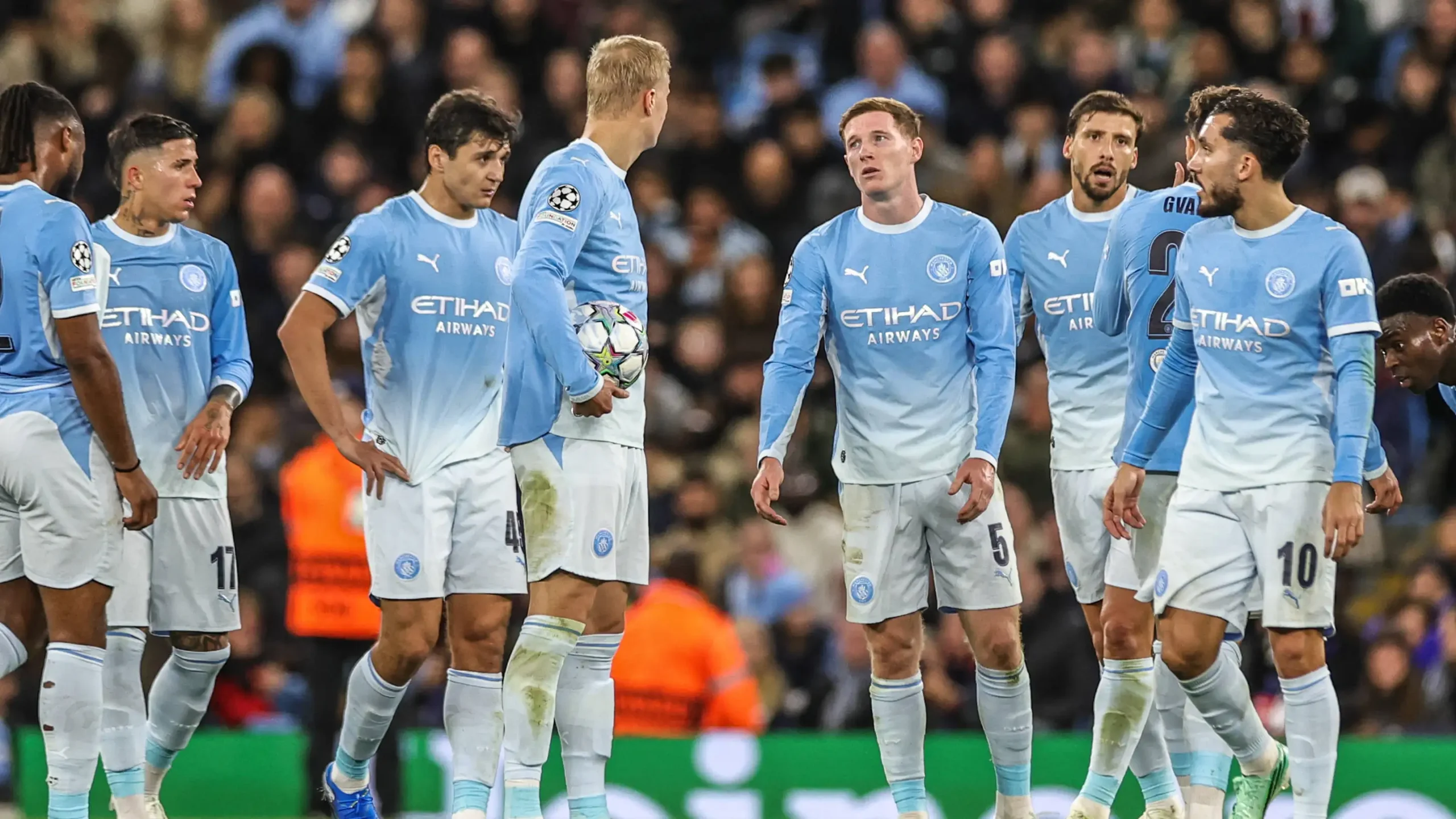
At Liverpool, City showed resilience under pressure and took control after the hosts were reduced to ten men. Against PSG, they struggled to contain a more incisive attacking side in the opening half-hour before improving after the interval.
The comparison does not mean City have suddenly become a poor team. Instead, it highlights the difference between producing a strong result and controlling every phase of a match.
The Premier League is a long competition, and tactical weaknesses become more damaging when opponents repeatedly identify and exploit them. If City continue to leave space behind their press, lose midfield control or react too slowly after turnovers, stronger opponents may punish those moments.
Equally, if Maresca can improve the team’s balance without sacrificing its attacking threat, the PSG defeat could become a valuable lesson rather than the beginning of a wider problem.
What Must Enzo Maresca Fix Next?
 Three priorities stand out.
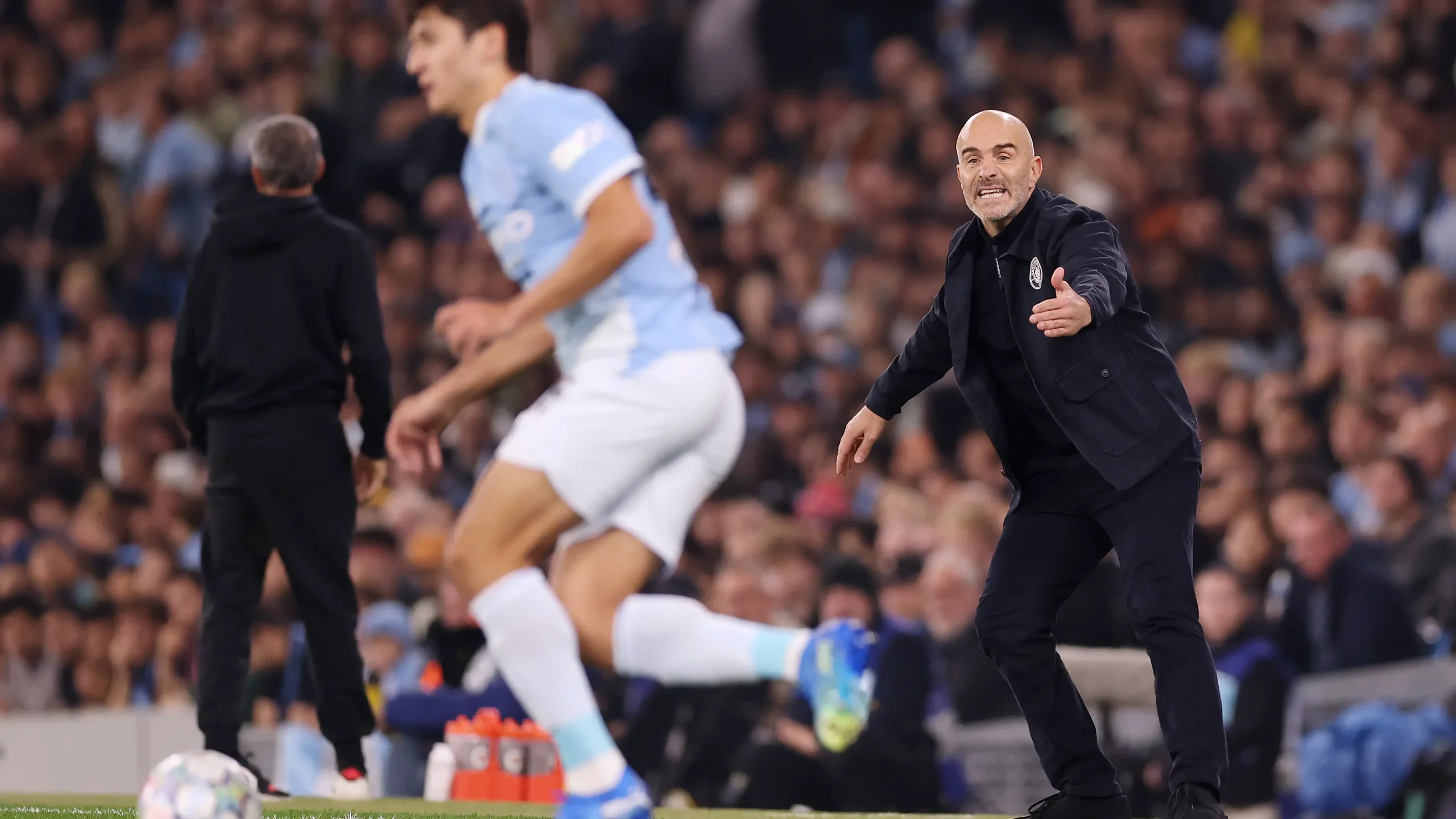
First, City need better protection when their high press is beaten. That means improving the distances between the forwards, midfielders and defenders.
Second, they must manage defensive transitions more effectively. Attacking numbers should be balanced against the need to stop counterattacks before they reach the back line.
Third, Maresca needs a midfield structure that can provide both progression and protection. The improvement after the break against PSG suggests that tactical adjustments can make a difference.
City’s next Premier League match is scheduled against Ipswich on Saturday, 17 October. It will provide another opportunity to assess how the team responds following the European setback. [Check Manchester City’s fixtures](https://www.premierleague.com/en/clubs/43/manchester/overview).
Conclusion: A Warning, Not a Verdict
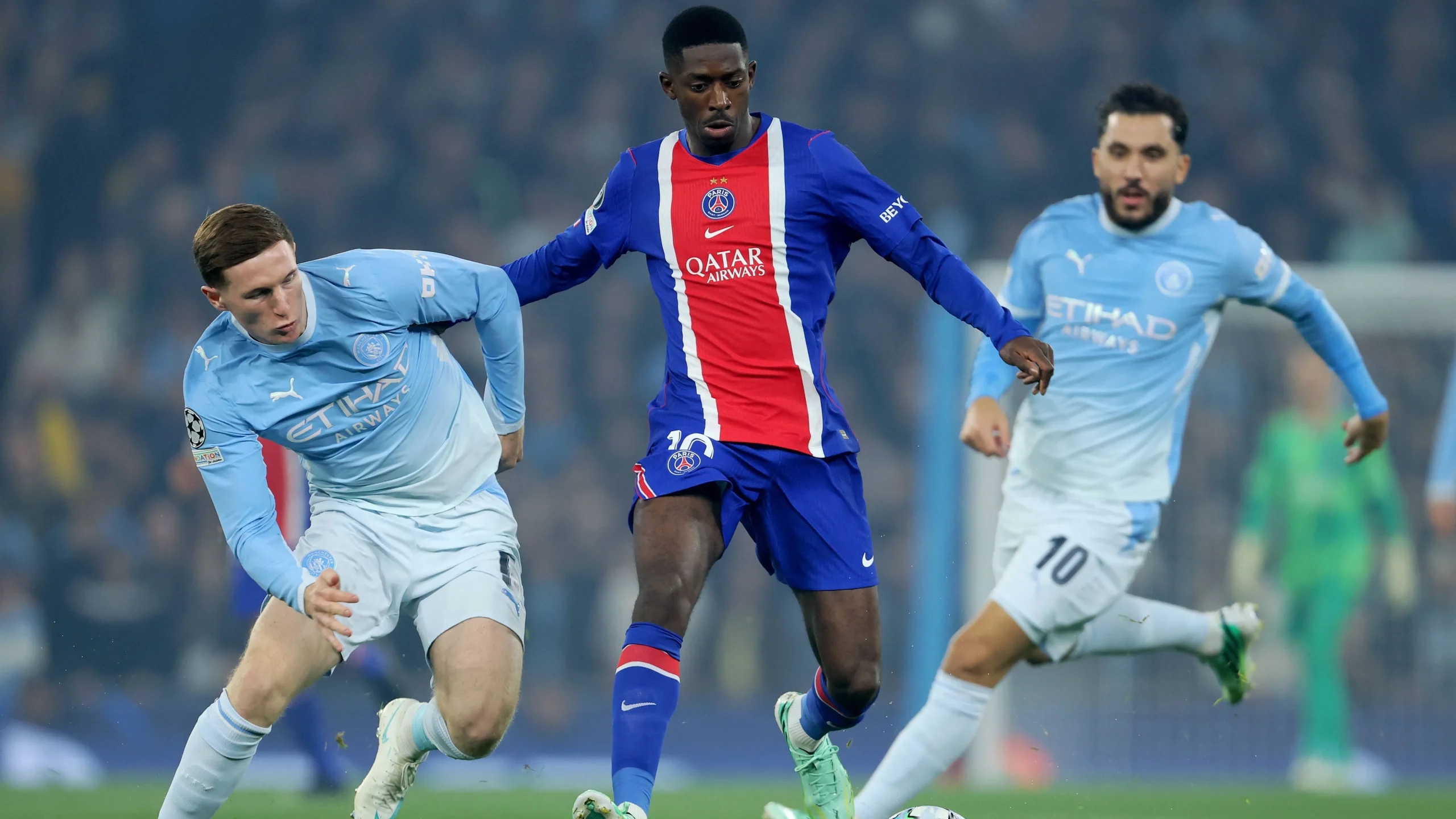 Manchester City’s 4–2 defeat to PSG exposed three areas that deserve attention: an aggressive high press that can leave space behind, defensive transitions that become dangerous when the team loses its shape, and midfield control that was not consistent enough in the first half.
But the second-half response also offered encouragement. City created pressure, Haaland scored twice, and the tactical changes improved their performance.
The challenge now is consistency. A title contender cannot always expect to recover after conceding three goals in a European first half. Maresca must make sure City’s attacking ambition is supported by a structure capable of handling the moments when possession disappears.
For The Football Xtra, the key question is not whether City can score enough goals. It is whether they can control matches without leaving themselves so exposed.
What do you think? Can Enzo Maresca correct these tactical weaknesses before they affect City’s Premier League title challenge? Share your opinion and follow The Football Xtra for more tactical analysis.