
Cole Palmer’s withdrawal from the latest England squad has moved beyond the usual club-versus-country discussion. It has become part of a much larger argument about how many matches elite footballers can realistically absorb before the calendar begins deciding availability for managers.
Palmer was one of five players to pull out after being selected by Thomas Tuchel. Declan Rice, Tino Livramento, Kobbie Mainoo and Marcus Rashford also withdrew, leaving England to make late adjustments during a four-match Nations League window.
The Professional Footballers’ Association has now used Palmer’s situation as an example of a system that is asking too much of players. The important point is not whether every withdrawal has the same medical explanation. It is that the pattern is becoming difficult to ignore.

Palmer’s schedule explains why the debate is growing
Palmer is central to Chelsea’s attack and one of England’s most valuable creative players. That status brings minutes, travel and responsibility. It also means that every summer competition, expanded club tournament and international window is added to a season in which rest is already limited.
PFA chief executive Maheta Malongo described Palmer as a victim of the calendar and argued that players are increasingly being placed in an unfair position between club obligations and national-team duty. His wider criticism was aimed at the structure of the football calendar rather than one England camp.
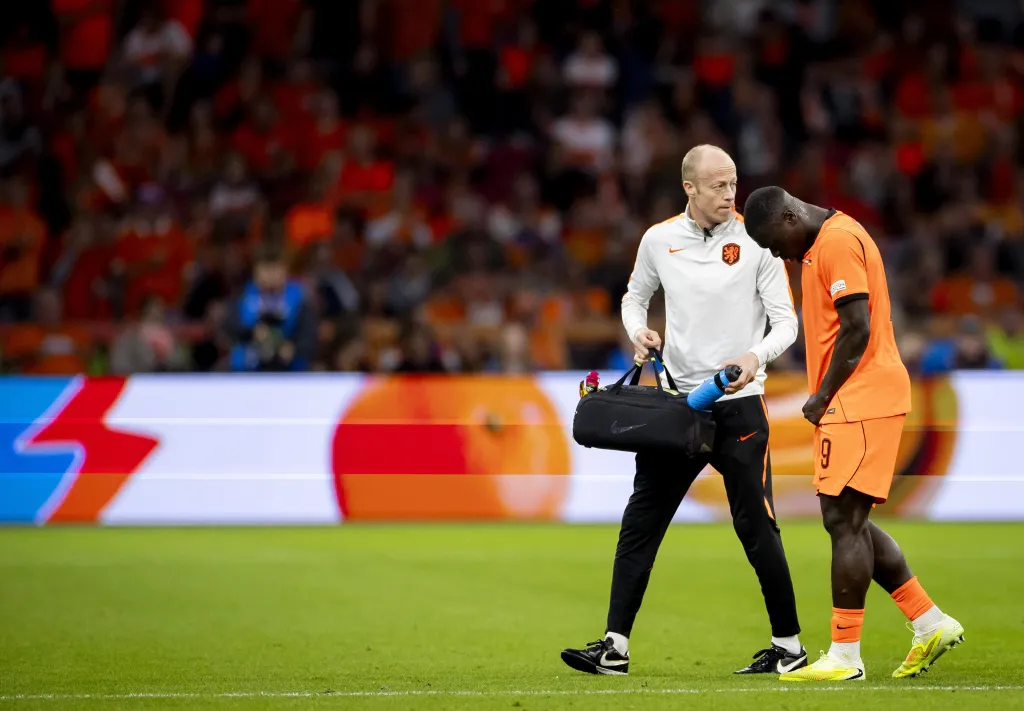
The warning is difficult to dismiss because the same international period has produced fitness concerns elsewhere. Kai Havertz required treatment while playing for Germany, Brian Brobbey suffered an injury with the Netherlands, and Kylian Mbappé returned to Real Madrid after hurting his knee with France.

Load management is now part of team selection
Football used to treat rotation mainly as a tactical choice. At the highest level it is increasingly a medical and performance decision. Coaches are not only asking which player gives them the best chance of winning the next match; they are asking which player can safely complete the next block of matches.
That changes the meaning of international selection. Tuchel can name his preferred squad, but the group that actually trains together may look different by the time the first match arrives. The withdrawal of Rice and Palmer forced England to call up replacements, while other senior players were managed across the window.
We explored that immediate problem in our earlier story on what Cole Palmer’s absence means for England. The bigger issue is that the disruption is no longer unusual enough to be treated as bad luck.
Managers also face a difficult information problem. Clubs hold daily physical data, understand each player’s workload and carry the financial consequences of a long-term injury. National teams receive the player for a short period and need competitive results immediately. Both sides have legitimate incentives, but those incentives do not always point in the same direction.

The calendar has expanded faster than recovery time
The number of elite competitions has grown, but the human body has not. Expanded international tournaments, a larger Club World Cup, European competition formats and domestic schedules all compete for the same weeks.
That does not mean every injury can be blamed on fixture congestion. Football is a contact sport, and muscle, joint and impact injuries will always occur. The concern is cumulative risk. Fatigue can affect sprint mechanics, concentration, recovery and the ability to tolerate repeated high-intensity actions.
For players like Palmer, the problem is not one isolated month. It is the sequence of seasons. A long club campaign runs into a summer tournament, which runs into pre-season, which leads directly into another club campaign. When the next international break arrives, the player may be technically fit but still carrying accumulated fatigue.
This is why “load management” has become a normal phrase in football. It is not necessarily evidence that a player does not want to represent his country. It can be evidence that clubs and national teams are trying to prevent a manageable issue becoming a serious one.
England are dealing with the problem in real time
Tuchel’s England are trying to establish a new cycle after the World Cup, which makes continuity especially valuable. Yet the coach has already had to rotate, rest players and integrate replacements while facing opponents such as Spain and Czechia.
That is the contradiction. International managers need repetition to build a team, but the calendar encourages them to protect the very players they need for that repetition.
Palmer’s case has become a useful symbol because his talent makes his absence obvious. The same pressure exists lower down squads, where players may be less visible but are still moving between club and country with little genuine recovery time.
The argument is therefore bigger than whether one Chelsea player could have managed another match. It is about whether football’s competition structure leaves enough room for its best players to remain available often enough for the competitions themselves to retain their quality.
Read Here: The Sun’s report on the PFA’s concerns over Palmer and the football calendar.