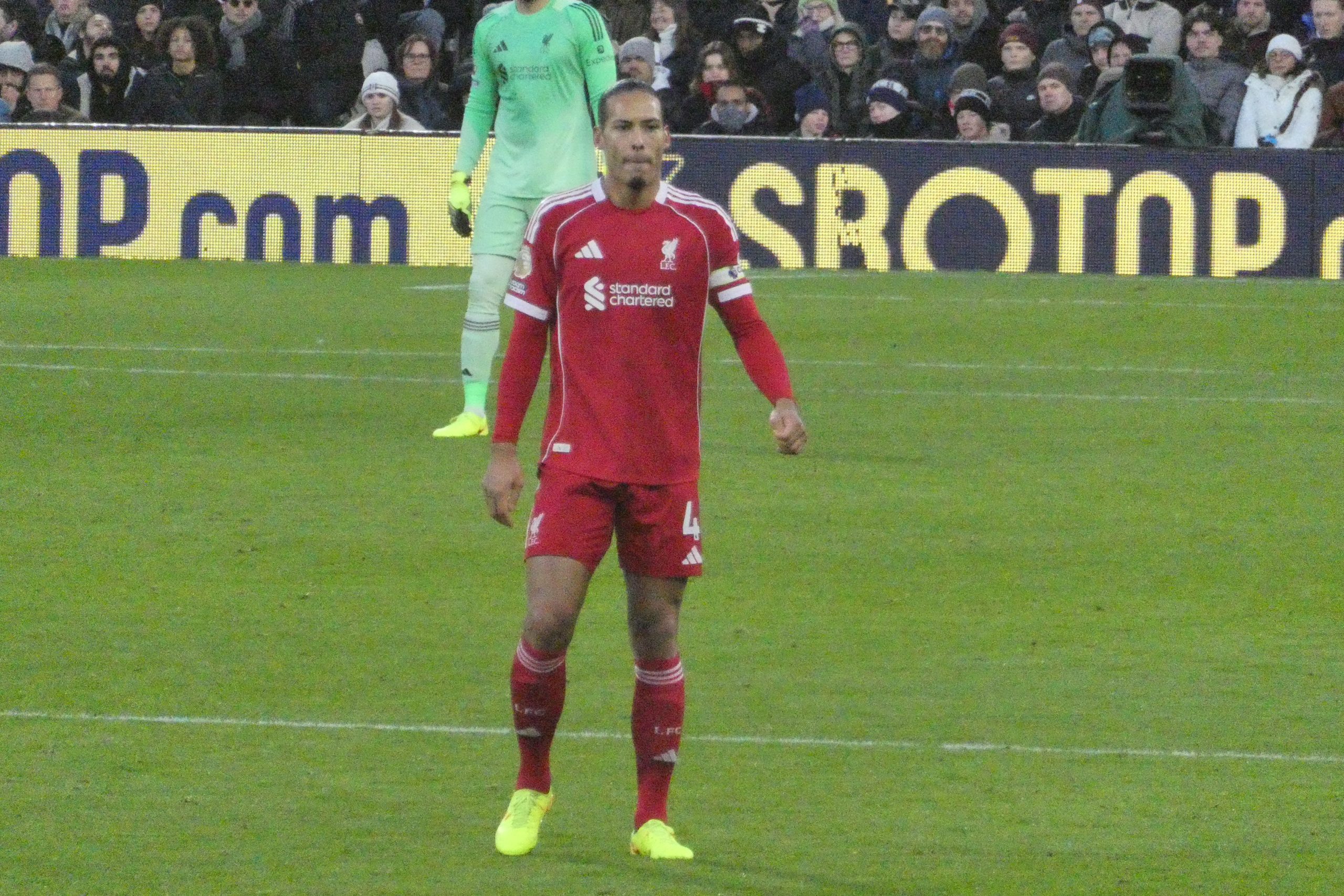
Virgil van Dijk’s future has returned to the transfer conversation at exactly the moment Liverpool knew it eventually would.
GOAL reported on Sunday that the Liverpool captain has been offered to Barcelona, with his contract moving towards its final months. The same report says Hansi Flick is not convinced that a move for the Dutch defender is the right direction for Barça, with the coach said to prefer younger options for the next phase of his defence.
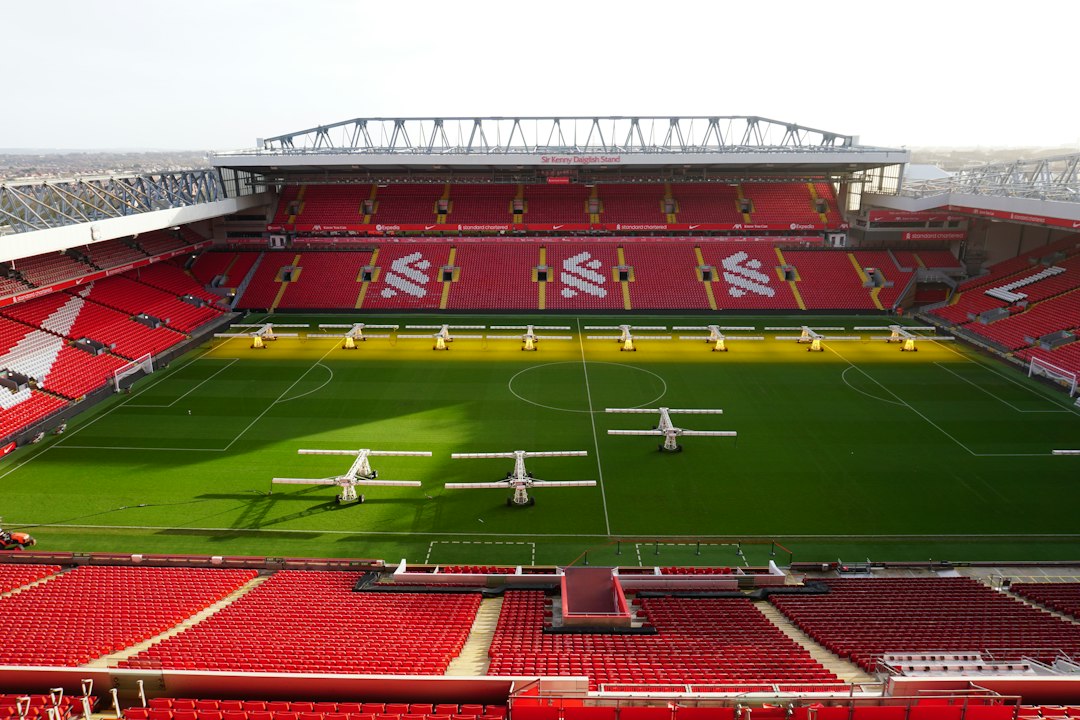
The Barcelona angle is interesting, and it helped push Van Dijk into Google’s trending searches in the UK. But for Liverpool the more important question is not whether one particular club wants him. It is how the club manages the end of an era without weakening the team that has to compete immediately.
Van Dijk’s contract changes Liverpool’s leverage
A defender of Van Dijk’s standing would normally command a major transfer fee. A contract running down changes the economics completely. If he reaches the end of the season without a new agreement, Liverpool lose the protection that comes with controlling a player’s registration beyond the current campaign.
That does not automatically mean he will leave, and a reported approach or offer is not the same thing as a completed negotiation. Barcelona’s own position matters too. GOAL’s report says Flick is looking more towards younger defenders, which is understandable for a club trying to balance immediate quality with squad planning.
For Liverpool, however, the uncertainty itself is significant. Van Dijk is not simply another centre-back. He remains the defensive reference point, captain and one of the players around whom standards have been built.
The Jacquet factor is impossible to ignore
Liverpool’s planning has already started to move beyond a one-player defence. The arrival and development of Jérémy Jacquet has given the club a young centre-back who can be part of the next cycle. Van Dijk himself has publicly encouraged the youngster to stay calm and keep working.
That fits with what The Football Xtra examined in our analysis of Liverpool’s new defence: the point of recruiting younger defenders is not to replace Van Dijk overnight, but to reduce the shock when that transition eventually comes.
The challenge is timing. Move too early and Liverpool could sacrifice elite leadership while Van Dijk is still capable of performing at the highest level. Move too late and the team can become dependent on a veteran right up to the moment he is no longer there.
Why Barcelona would be a complicated fit
From Barcelona’s perspective, Van Dijk would bring obvious qualities: aerial dominance, composure in possession, experience of defending high up the pitch and the authority to organise a back line. On a free transfer, those attributes can look attractive.
But “free” transfers are never genuinely free. Salary, signing-on fees, agent costs and the length of the contract all matter. At 35 and heading towards the latter stage of his career, Van Dijk would represent a very different investment from signing a defender entering his prime.

That helps explain why reports of Flick’s preference for younger alternatives are credible within Barcelona’s broader squad-building logic. The Catalan club may admire the player without deciding that he is the correct use of its resources.
Liverpool’s decision is bigger than Barcelona
Liverpool cannot build their strategy around whether Barcelona, Milan or another European club makes an offer. They need their own answer. If Van Dijk is to stay, the contract has to make sense for both the player and a squad that is becoming younger around him. If he is to leave, the next hierarchy of defenders must be clear before the new season begins.
The club has already faced similar questions elsewhere in the squad. Our Liverpool squad-depth analysis showed why the strength of the second line matters when major players are unavailable or rotated. The same logic applies to the centre of defence.
There is also a wider recruitment picture. Liverpool have continued to invest in elite technical quality, including Florian Wirtz, whose adaptation we covered in our analysis of his first months at Anfield. Keeping that level of ambition requires the defence to evolve without losing stability.
A succession plan cannot wait for the final answer
Van Dijk being linked with Barcelona is a headline. Liverpool’s succession planning is the story underneath it.
Even if the Barcelona route goes nowhere, the contract clock continues. Liverpool have to decide how much of the next cycle should still be built around their captain, and how quickly players such as Jacquet should be trusted with greater responsibility.
Van Dijk has given Liverpool years of certainty at centre-back. The coming months may be defined by how well the club prepares for a period when certainty is no longer guaranteed.
Read Here: GOAL — Van Dijk and Barcelona report | GOAL — Liverpool’s defensive planning
Featured image: Virgil van Dijk and Alisson Becker, Wikimedia Commons (CC0).