Lamine Yamal does not want to beg for the Ballon d’Or. He believes his football should do the talking.
That confidence is understandable. At just 19, the Barcelona forward has already become one of the most influential young players in world football, won major domestic honours and played a significant role in Spain’s World Cup triumph. He has now been officially nominated among the 30 candidates for the Ballon d’Or 2026, but he enters a race that may be considerably more complicated than the hype surrounding his name suggests.
Asked whether he believes he deserves the award, Yamal refused to hide his ambition. He said he believes he has a very good chance of winning, but added that he would not campaign or “beg” for the prize. His argument is simple: he is proud of what he achieved with Barcelona and Spain, and the decision ultimately belongs to the voters.
That statement has immediately intensified the debate.
Because this year’s Ballon d’Or race is not simply about who produced the most spectacular highlights.
It is about who best satisfies the actual criteria used to determine the award.
And when those criteria are applied objectively, Yamal has a serious case — but so do Harry Kane, Erling Haaland, Kylian Mbappé, Ousmane Dembélé, Lionel Messi and several other elite nominees.
So the real question is not whether Yamal deserves to be nominated.
He clearly does.
The real question is:
Does Lamine Yamal have the strongest Ballon d’Or case of them all?
Ballon d’Or 2026: What Are the Official Criteria?
 Before choosing a favourite, it is important to understand what the Ballon d’Or is actually supposed to reward.
According to the official 2026 regulations, the voting criteria are ranked in this order:
1. Individual performances, including decisive and impressive character
2. Team performances and achievements
3. Class and fair play
The winner is selected by an international jury of specialist journalists, with one representative from each of the top 100 FIFA-ranked men’s national associations. Each voter selects ten players in order of merit, with points awarded from 15 for first place down to one point for tenth.
That is extremely important.
It means the Ballon d’Or is not officially awarded simply to the player with the most goals.
It is not automatically awarded to the player who wins the biggest trophy.
And it is not supposed to be a popularity contest.
The strongest candidate should ideally combine individual brilliance, decisive influence and team success, while maintaining sporting class and fair play.
That creates the framework through which Yamal, Kane, Haaland, Mbappé and the other contenders should be judged.
Lamine Yamal’s Ballon d’Or Case: More Than Just Hype
 Yamal’s strongest argument begins with his importance to Barcelona.
The Spanish winger was named La Liga Player of the Season for 2025/26, after producing 16 goals and 11 assists in the league. Barcelona highlighted that no other La Liga player registered more assists during the campaign.
Those numbers are important, but they do not fully explain his influence.
Yamal’s value comes from the way he changes the geometry of the opposition’s defence.
He attracts multiple defenders.
He creates one-versus-one situations.
He carries the ball through pressure.
He produces chances from seemingly impossible positions.
And, increasingly, he has become a player opponents must design their defensive game plan around.
That matters when applying the Ballon d’Or’s first criterion: individual performance and decisive character.
Yamal does not simply participate in Barcelona’s attacking football.
He frequently becomes the reason it works.
Yamal’s Champions League Numbers Strengthen His Case
The Champions League is where Yamal’s candidacy becomes even more interesting.
According to UEFA’s statistical record, Yamal had accumulated 33 Champions League appearances, 11 goals and nine assists by July 2026. He has also broken a remarkable number of age-related records in the competition.
During the 2025/26 Champions League campaign specifically, he recorded six goals and four assists, giving him 10 goal contributions in the competition.
That is significant.
Why?
Because the Ballon d’Or is not simply about producing numbers against weaker opposition.
The Champions League provides the biggest club-stage examination in European football.
Yamal has already shown that he can influence matches at that level.
He became the youngest player to score in a Champions League semi-final, while continuing to produce against elite opposition.
His case therefore cannot be dismissed as simply the result of playing in Barcelona’s domestic system.
The World Cup Changes the Ballon d’Or Debate
 The 2026 Ballon d’Or is unusual because the voting period includes the FIFA World Cup.
That means international performances carry enormous weight in this year’s race.
And Spain’s World Cup triumph gives Yamal another major argument.
He was part of the Spanish side that went all the way to the final and defeated Argentina 1-0 after extra time. His tournament statistics show that he started every knockout-stage match, including the final.
This is precisely where Yamal’s case becomes difficult to separate from the broader success of Spain.
A Ballon d’Or candidate who combines domestic success with international glory automatically gains a powerful argument under the second official criterion: team performance and achievements.
But there is an important distinction.
Spain won the World Cup.
The question is how much of that success should be attributed specifically to Yamal.
That is where the debate becomes much more complicated.
Harry Kane Has the Numbers Yamal Cannot Ignore
 If Yamal represents the case for influence, creativity and all-round attacking quality, Harry Kane represents the case for overwhelming production.
And this is where the Ballon d’Or race becomes extremely difficult.
Kane finished the 2025/26 season with an extraordinary 73 goals and eight assists in 65 appearances for Bayern Munich and England. Bundesliga’s official analysis described it as the second-highest scoring season by any player since the turn of the millennium, behind only Lionel Messi’s 82-goal 2011/12 campaign.
Kane also won the European Golden Shoe, finished as the Bundesliga’s top scorer with 36 league goals and helped Bayern win major domestic honours.
Then came the World Cup.
Kane scored six goals for England during the tournament.
Suddenly, his Ballon d’Or argument becomes enormous.
Individual production?
Elite.
Team achievements?
Strong.
International impact?
Strong.
Consistency?
Exceptional.
If the award is primarily about the individual who had the best overall season, Kane has perhaps the cleanest statistical argument of all.
Yamal vs Kane: Creativity Against Ruthlessness
 This may ultimately become the central debate.
Yamal creates chaos. Kane creates goals.
Yamal’s game is based on dribbling, chance creation, combination play and individual invention.
Kane’s game is based on finishing, movement, link-up play and extraordinary scoring consistency.
Both can influence games.
But they do it differently.
And this is where the official Ballon d’Or criteria become useful.
If voters prioritise individual brilliance and decisive impact, Yamal has a powerful case.
If they prioritise production and direct match-winning output, Kane becomes extremely difficult to defeat.
The numbers favour Kane.
The aesthetic and creative influence argument favours Yamal.
The team-success argument is more complicated.
And that is why this race is far from settled.
What About Erling Haaland?
 Haaland cannot be removed from the conversation simply because Kane has stronger overall numbers.
The Manchester City striker scored 58 goals during the 2025/26 season, according to Reuters, while also producing a major World Cup campaign for Norway.
His international story is particularly important.
Norway reached the World Cup quarter-finals for the first time in their history, with Haaland scoring seven times during the tournament.
That gives Haaland an argument built around something Ballon d’Or voters historically value heavily:
goals plus historical team achievement.
Norway’s run was not expected to match the traditional powers.
Haaland was central to it.
But compared with Kane, the question becomes whether Haaland’s overall trophy haul and individual numbers were enough to overcome the Englishman’s extraordinary campaign.
And compared with Yamal, the question becomes whether raw goals outweigh creative influence and broader playmaking impact.
Kylian Mbappé Remains a Serious Threat
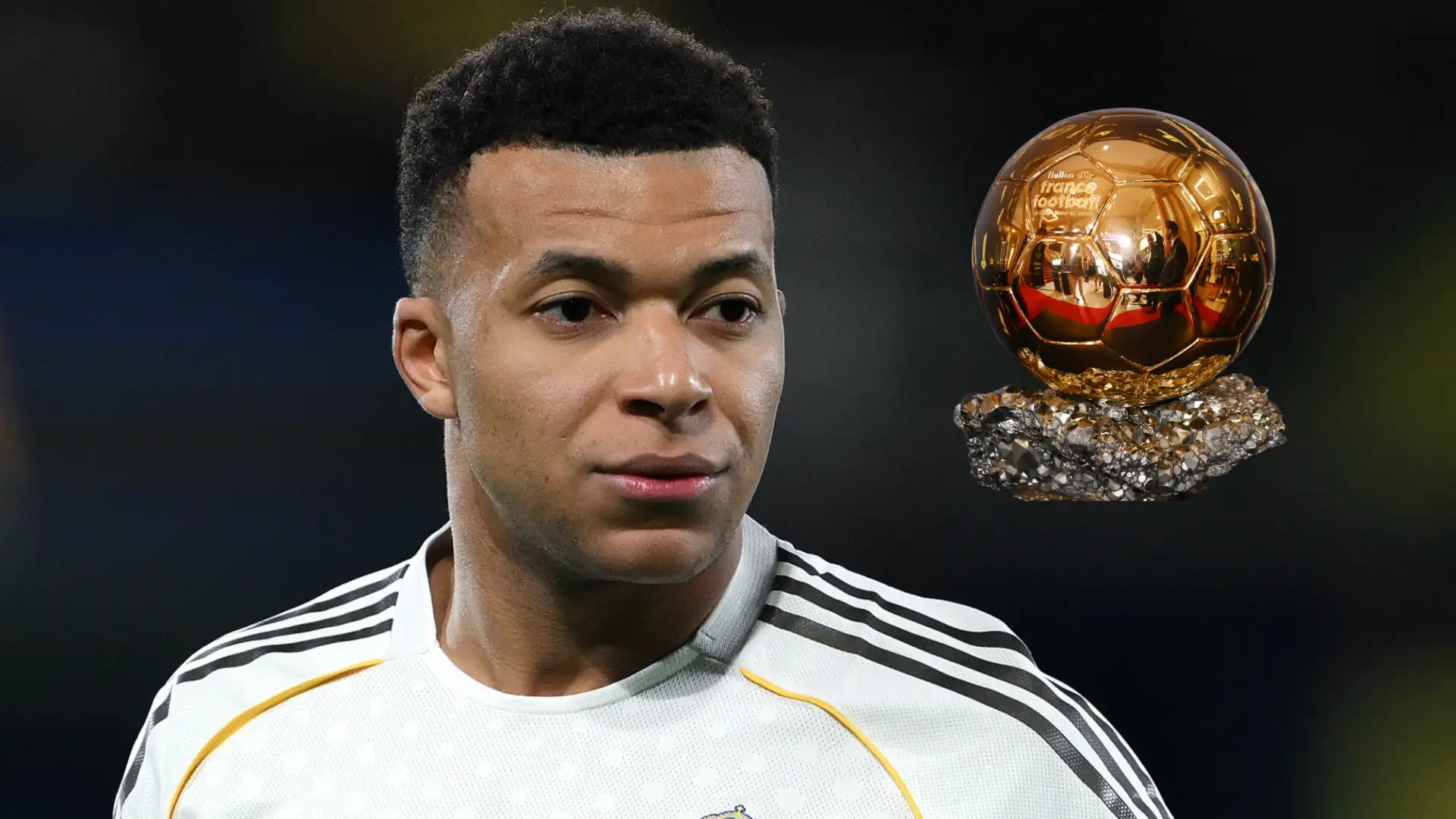 Then there is Kylian Mbappé.
The Real Madrid forward remains one of the most dangerous candidates because he combines elite scoring numbers with enormous individual influence.
He also became the all-time leading scorer in World Cup history during the 2026 tournament, according to reporting surrounding the nominations.
His problem is not talent.
His problem is competition.
SEE ALSO: José Mourinho: “The Ballon d’Or should go to players we miss for eternity”
The Ballon d’Or shortlist contains too many candidates with extraordinary seasons.
Kane has the numbers.
Yamal has the creativity and major team success.
Haaland has the goals and Norway’s historic World Cup run.
Mbappé has the global profile and individual brilliance.
That means even a phenomenal season may not be enough.
Ousmane Dembélé Has a Different Problem
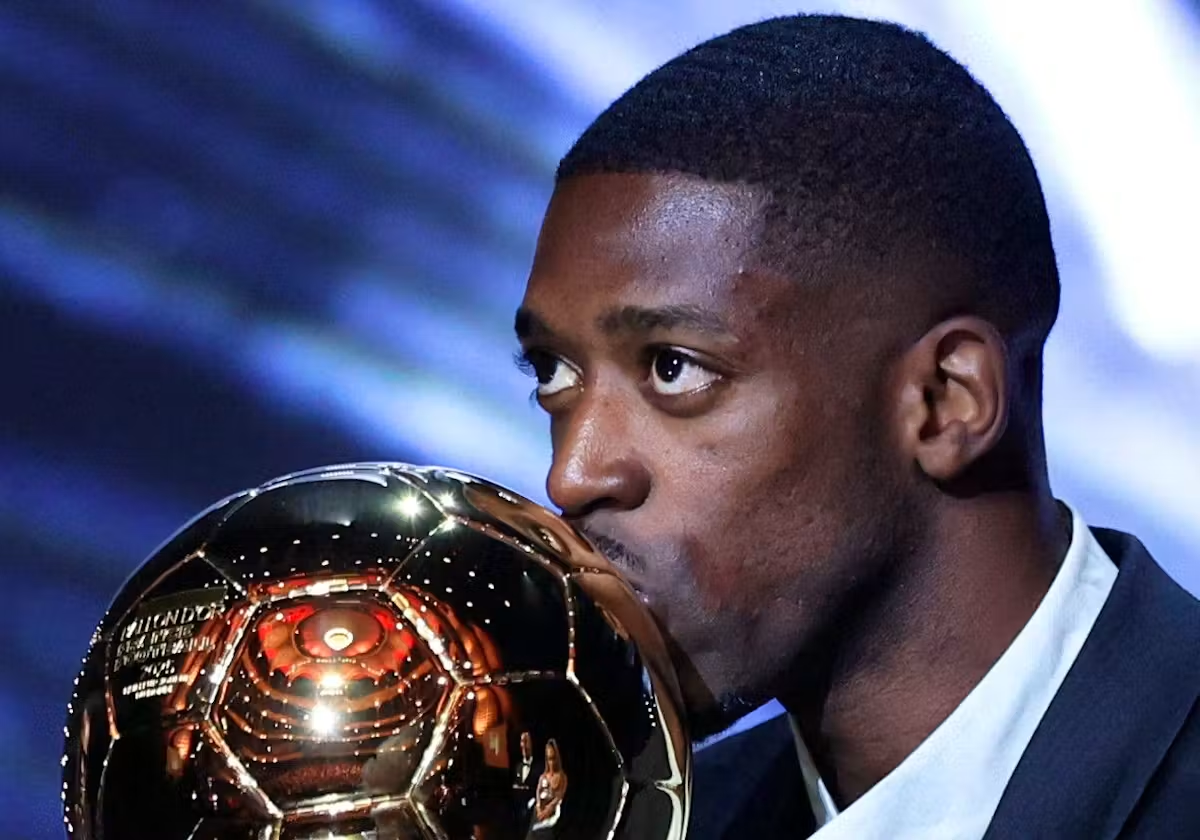 Dembélé enters the race as the 2025 Ballon d’Or winner.
That makes him an important reference point.
But defending the award is notoriously difficult because voters naturally compare the current campaign with the previous winner’s peak season.
Dembélé is officially nominated again, alongside other PSG players including Achraf Hakimi, Nuno Mendes, Vitinha and others.
His advantage is obvious:
He already knows what it takes to convince the voters.
But Yamal, Kane and Haaland can make an argument that their 2025/26 campaigns were more compelling under the current criteria.
And Then There Is Lionel Messi
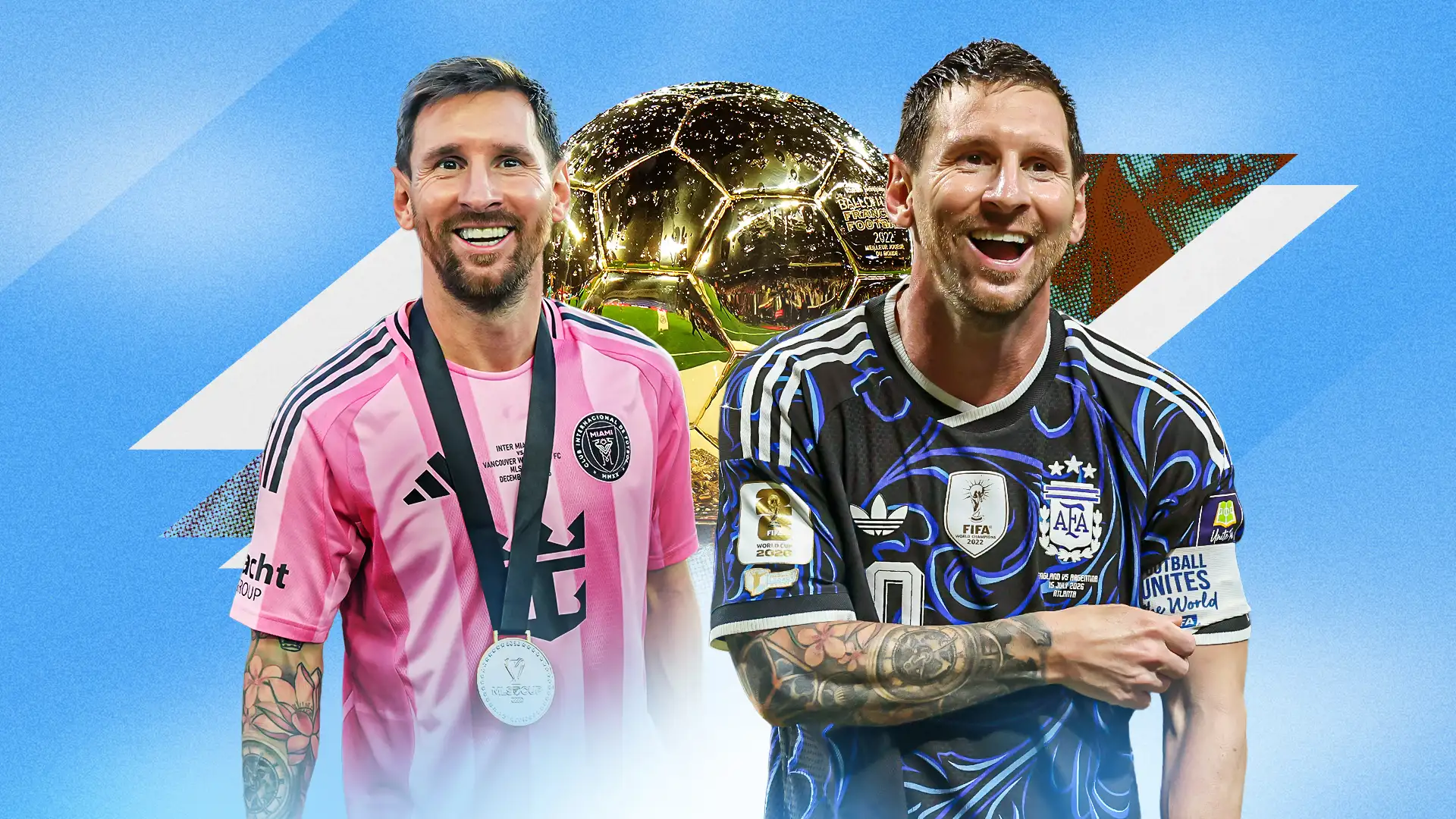 No Ballon d’Or discussion can completely ignore Lionel Messi.
The eight-time winner remains on the shortlist after another extraordinary statistical season.
Reuters reports that Messi produced 75 goal contributions in 49 matches for Inter Miami and Argentina, while helping Argentina reach the World Cup final.
But Messi faces a different challenge.
The question is no longer whether he can produce extraordinary numbers.
He clearly can.
The question is whether those numbers carry enough weight against candidates performing at the highest level in Europe’s elite competitions and producing major international tournament campaigns.
At this stage, Messi’s inclusion is a reminder of his extraordinary longevity.
But it does not automatically make him the favourite.
The Most Important Question: Does Yamal Actually Deserve It?
Yes — Yamal absolutely deserves to be in the conversation.
But that is different from saying he deserves to win.
His case is built on several powerful foundations:
- La Liga Player of the Season
- 16 league goals
- 11 league assists
- Major creative influence
- 10 Champions League goal contributions
- World Cup winner with Spain
- Major individual performances against elite opposition
- Extraordinary age-relative achievements
The problem is that Kane’s case may simply be stronger when the entire season is considered.
Kane’s 73 goals and eight assists across club and country are extraordinary. He also won the European Golden Shoe and major domestic honours, while scoring six goals at the World Cup.
That is not a marginal difference.
That is an enormous statistical season.
The Ballon d’Or Should Not Become a Popularity Contest
This is where Yamal’s statement becomes particularly interesting.
He said he would not beg for the award.
That is probably the correct approach.
The Ballon d’Or should not be decided by who gives the best interview.
It should not be decided by who has the biggest social-media following.
It should not be decided because a player is young and exciting.
And it should not be decided because the football world wants a particular storyline.
The award should be decided according to the performance of the players.
Yamal’s age should therefore neither help nor hurt him.
His reputation should not matter.
His Barcelona status should not matter.
What matters is what he actually did between the beginning and end of the voting period.
And on that basis, he has built a legitimate case.
Our Ballon d’Or 2026 Power Ranking
Based on the official criteria — individual performance, decisive influence and team achievement — the race can be viewed like this:
1. Harry Kane — Strongest Overall Case
Kane’s statistical production is simply extraordinary.
73 goals + 8 assists in 65 games, European Golden Shoe, major domestic honours and six World Cup goals give him an exceptionally complete résumé.
2. Lamine Yamal — Strongest Creative Case
Yamal’s combination of individual influence, La Liga dominance, Champions League production and World Cup success makes him perhaps the most exciting alternative.
His argument becomes particularly strong if voters value overall influence rather than pure goal totals.
3. Erling Haaland — Elite Goalscoring Case
58 goals and a historic Norway World Cup campaign keep him firmly among the favourites.
4. Kylian Mbappé — Superstar Case
His individual quality and World Cup scoring record make him impossible to ignore, but the overall résumé faces stiff competition.
5. Ousmane Dembélé — Defending Champion
The reigning winner has the pedigree, but retaining the award requires another exceptionally persuasive campaign.
6. Lionel Messi — The Legendary Wild Card
His numbers remain astonishing, but the context of his campaign makes the path to a ninth Ballon d’Or more difficult.
So, Who Should Win the Ballon d’Or 2026?
If the vote happened purely on goals, Kane would have an overwhelming case.
If it were based on creative influence and technical brilliance, Yamal would have a stronger argument.
If it were based on goals plus historic international impact, Haaland would enter the conversation.
And if the emphasis were placed on global individual dominance, Mbappé and Messi would remain difficult to dismiss.
But the official criteria require a combination.
And that is why Harry Kane currently has the strongest overall case.
Yamal is close enough to make this a genuine race, but Kane’s statistical production is difficult to overcome.
The teenager’s best argument is that football is not simply about goals.
It is about what happens to a team when one player is on the pitch.
Yamal changes how opponents defend.
He creates opportunities.
He breaks defensive structures.
He produces moments that cannot easily be measured by goals and assists alone.
That is why his candidacy should be taken seriously.
The Final Verdict: Yamal Has Earned the Debate — Kane Has Earned the Edge
Lamine Yamal’s refusal to beg for the Ballon d’Or is perhaps exactly how a serious candidate should approach the award.
Let the football speak.
And Yamal’s football has spoken loudly.
He has been one of the most influential players in Barcelona’s campaign, produced elite numbers for his age, performed on the Champions League stage and helped Spain reach the summit of international football.
But the Ballon d’Or is not awarded for potential.
It is awarded for what happened during the season.
And when the complete season is placed under the official criteria, Harry Kane currently has the strongest claim to the crown.
That does not make Yamal’s candidacy weak.
It makes the competition exceptional.
The most fascinating part of this Ballon d’Or race is that there is no obvious candidate who can completely eliminate the others.
Kane has the numbers.
Yamal has the influence.
Haaland has the goals and historic Norway story.
Mbappé has the superstar performances.
Dembélé has the defending-champion status.
Messi has the extraordinary longevity and statistical production.
On October 26, when the Ballon d’Or ceremony arrives at London’s Palladium for the award’s 70th anniversary, the question will finally have an answer.
Until then, Yamal does not need to beg.
He has already made his case on the pitch.
The only question left is whether the voters believe his case was better than Kane’s.
And right now, Kane has the edge — but Yamal is close enough to make this one of the most fascinating Ballon d’Or races in years.
What do you think? Should the Ballon d’Or 2026 go to Lamine Yamal, Harry Kane, Haaland or another nominee? Let us know in the comments.