
Manchester City vs Brighton delivered a stunning Premier League result as Brighton secured a 1–0 victory at the Etihad Stadium on 31 October 2026, exposing defensive weaknesses and punishing City’s failure to convert their attacking opportunities.
Yasin Ayari’s 11th-minute strike was enough to hand Brighton a statement victory and inflict City’s second consecutive Premier League defeat. The result also strengthened Brighton’s position among the division’s leading sides, moving Fabian Hürzeler’s team to third with 19 points from nine matches. City remained on 21 points, but Arsenal had the opportunity to overtake them with a result against Liverpool.
The result raises an important question: how did a side with City’s attacking quality and territorial control fail to break down Brighton? The answer goes beyond one defensive mistake. Brighton were alert to City’s weaknesses, protected their penalty area intelligently and made the decisive moments count.
Here are five reasons Brighton exposed Manchester City at the Etihad.
1. Manchester City vs Brighton: How One Defensive Error Changed the Game
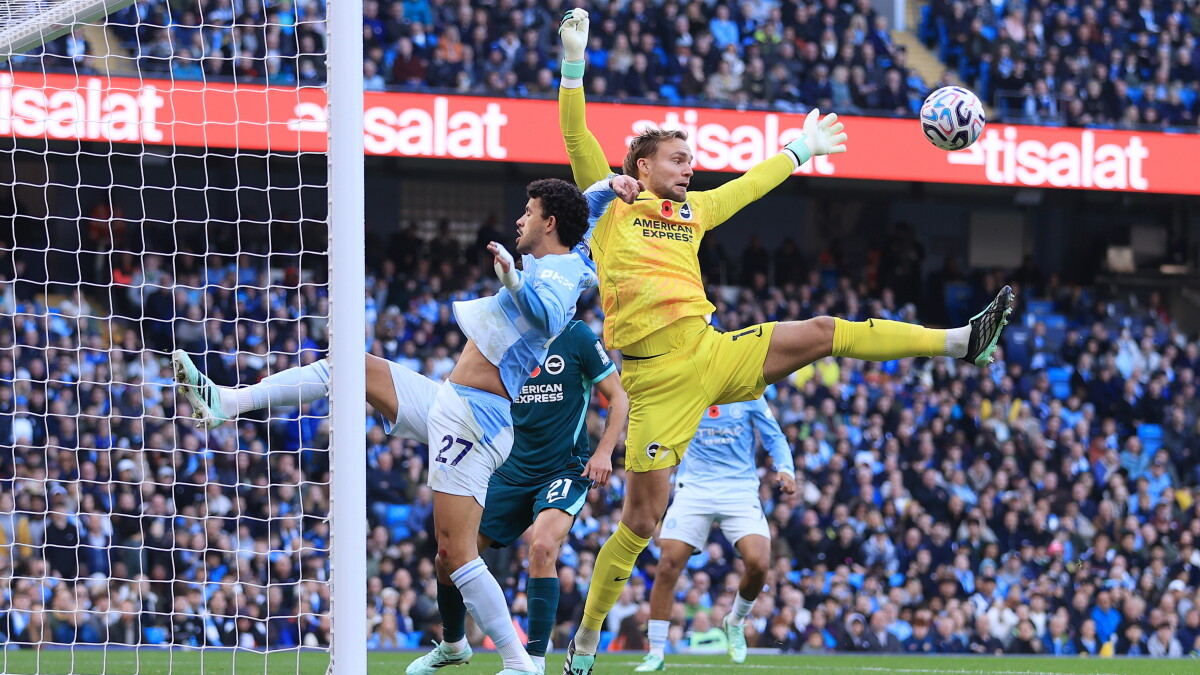 The decisive moment arrived in the 11th minute, and it was a goal City will analyse repeatedly.
Brighton had started aggressively, attempting to win possession high up the pitch and prevent City from settling into their usual rhythm. Their early pressure did not immediately produce a clear scoring opportunity, but it helped establish the tone of the contest.
The breakthrough came after a free-kick awarded against Elliot Anderson. Lewis Dunk moved the ball towards Diego Gómez, who helped develop the attack down Brighton’s right. Gómez delivered a cross into the penalty area, but Matheus Nunes failed to make the necessary clearance.
The ball returned into the danger area through Maxim De Cuyper, and Ayari found himself in the right position to finish from close range. Gianluigi Donnarumma was left stranded as Brighton took the lead.
It was a simple goal in its final execution, but its importance was enormous.
City had spent the opening minutes trying to control the game. Instead, one defensive breakdown forced them to chase the contest against an opponent who could now concentrate on protecting its advantage.
The mistake also highlighted the importance of defensive concentration when facing a team comfortable attacking quickly. Against Brighton, a moment of hesitation can be enough to change the entire tactical picture.
There is a distinction between conceding a goal because an opponent produces an extraordinary piece of individual quality and conceding because basic defensive responsibilities are not completed. This was closer to the second category.
City’s defenders had to deal with the cross, the second ball and Ayari’s movement. They failed to resolve the danger at the first opportunity.
That failure placed Brighton in the ideal position: they could defend with greater numbers, choose their pressing moments and wait for City to take risks.
2. Manchester City vs Brighton: Why City’s Attack Failed
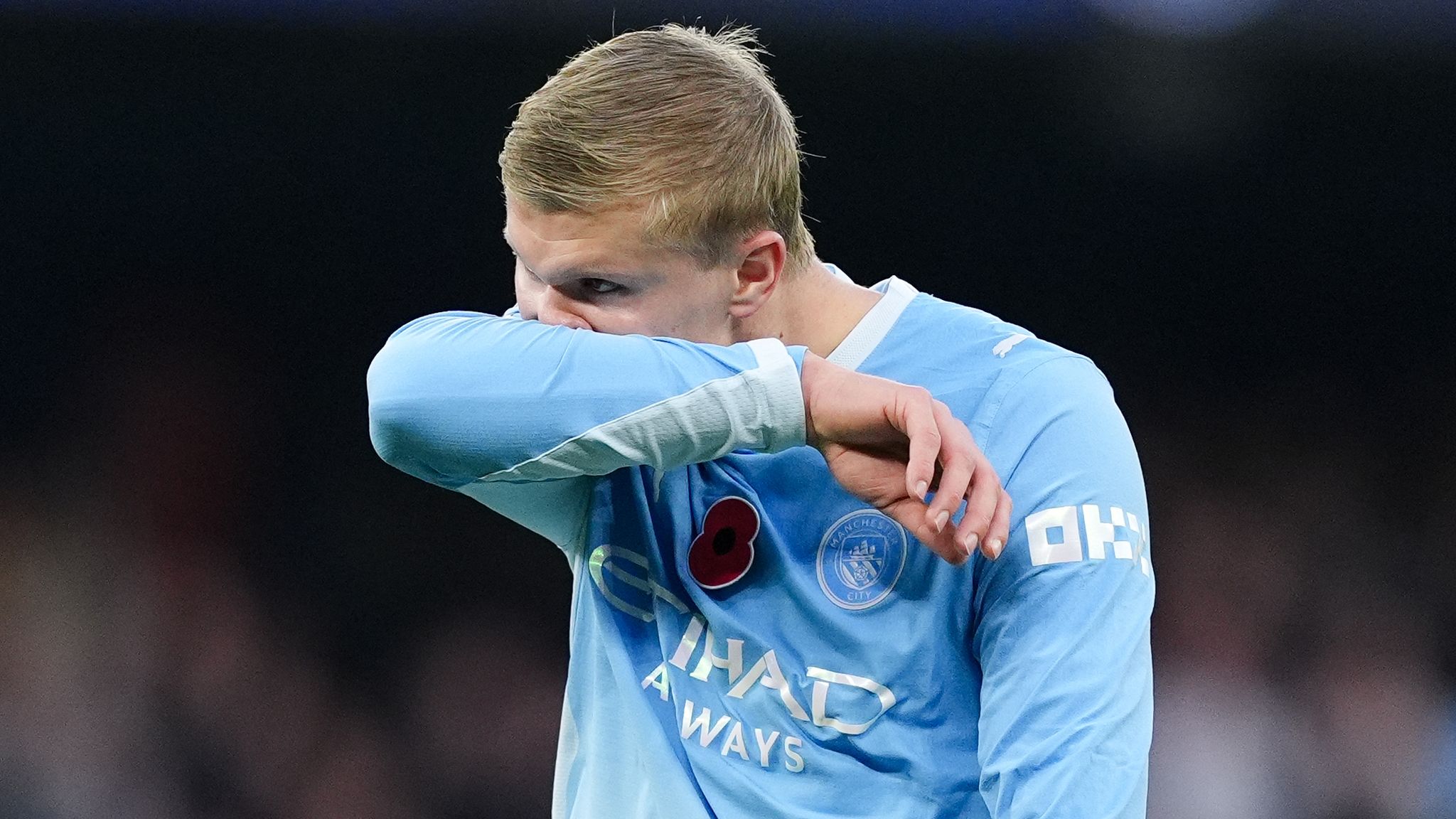 One of Brighton’s most important decisions was to avoid allowing City to build comfortably from the opening minutes.
Hürzeler’s team attempted to win possession high and pin City back during the early exchanges. This approach was significant because City’s attacking structure depends heavily on controlled progression through midfield and the ability to move opponents away from their defensive positions.
When a team presses effectively, it can prevent the opposition from establishing those patterns. Even when the press does not immediately produce a shot, it can force hurried passes, uncomfortable clearances and defensive mistakes.
Brighton did not need to dominate every minute to make their pressing strategy valuable. They needed to disrupt City’s rhythm sufficiently to create opportunities and prevent the home side from dictating the match entirely on its own terms.
The early goal made that strategy even more effective.
After taking the lead, Brighton could be selective about when to press and when to retreat into a more compact defensive structure. They did not have to chase possession for the sake of it. Instead, they could protect the central areas and make City work around them.
This is one of the most difficult situations for a possession-oriented team. The opponent is not necessarily trying to win the ball everywhere. It is trying to control where the ball can go and which spaces remain available.
City still produced some attractive attacking sequences. Elliot Anderson helped create opportunities, while Jérémy Doku’s movement caused problems on the flank. But Brighton’s willingness to defend with discipline prevented those moments from becoming a sustained flow of clear chances.
The lesson is that possession alone does not guarantee control. A team can have the ball frequently and still struggle to dictate the most important spaces on the pitch.
3. What Manchester City vs Brighton Means for the Premier League Title Race
 It would be inaccurate to suggest that City created nothing. They had moments when the equaliser was there to be taken.
Iliman Ndiaye came close after meeting an Elliot Anderson delivery, but his header went narrowly wide. He later produced an impressive individual run from the right, only to see his effort stopped by Bart Verbruggen.
Jérémy Doku also caused problems with his direct running, while Erling Haaland had opportunities to influence the result. Josko Gvardiol and Enzo Fernández were among the other players involved in City’s attacking response.
SEE ALSO; Man City vs Brighton: 5 Dangerous Tactical Traps That Could Cost City
The issue was that City could not turn enough of these promising situations into a goal.
This distinction matters. Against a team defending a narrow lead, a missed opportunity is not simply a wasted attack. It can strengthen the opponent’s belief that its defensive approach is working.
Every time Brighton survived a dangerous City move, the visitors gained another reason to trust their organisation. Every unsuccessful attack also increased the pressure on the home side to find a solution.
City’s frustration became more visible as the match progressed. Their attacks continued, but Brighton remained difficult to break down.
The most painful moment arrived in the closing stages when Nico O’Reilly failed to direct a close-range header into the net. It was the type of opportunity that can rescue a point even when a team has not performed at its best.
For a side competing near the top of the Premier League, these moments matter enormously.
City do not need to score from every opportunity, but they must be more clinical when opponents successfully limit the number of clear openings. Brighton showed how dangerous it can be to leave a narrow lead alive until the final whistle.
4. Brighton’s defensive organisation frustrated Erling Haaland
 Haaland’s presence normally forces opponents to make difficult defensive decisions.
Defenders must monitor his movement in the penalty area, protect the space between centre-backs and full-backs, and remain alert to deliveries from wide areas. If they focus too heavily on the Norwegian striker, City can exploit the space through other attackers.
Brighton had to manage those threats while protecting a one-goal advantage.
Their defensive performance was not based on one player stopping Haaland. It required collective concentration: defenders protecting the central channel, midfielders helping to limit access into dangerous areas and the goalkeeper remaining alert when City managed to create an opening.
The Guardian’s match report noted that City’s central problem was not simply a lack of attacking movement. It was the failure to create enough for Haaland and to apply the decisive finish when opportunities did arrive.
That is an important point for Maresca.
Haaland is most dangerous when he receives the ball in positions where he can attack the goal quickly. If the opposition forces City to circulate possession around the defensive block without consistently accessing the penalty area, the striker can become isolated from the wider attacking structure.
City therefore need more than crosses and hopeful passes. They need combinations that draw defenders out of position, create space between the centre-backs and deliver the ball at the right moment.
Brighton did not have to make Haaland disappear from the game completely. They had to limit the quality and frequency of the service reaching him.
That is a collective defensive achievement, and it was a major part of the visitors’ victory.
5. Brighton managed the game better after taking the lead
 The fifth reason was perhaps the most decisive: Brighton understood how the match had changed after Ayari scored.
A goal in the opening 11 minutes gave the visitors a strategic advantage. They could defend deeper when necessary, remain compact and look for opportunities to attack the spaces City left behind.
This required discipline because City continued to push forward. The home side had enough technical quality to move the ball quickly, and its attacking players repeatedly threatened to create an equaliser.
Brighton, however, did not panic.
The visitors also had chances to extend their advantage. De Cuyper missed a major opportunity shortly after half-time, while Donnarumma was required to make important interventions as Brighton threatened on the counterattack.
Those moments demonstrated that Brighton were not simply defending passively. They remained capable of turning defensive situations into attacking opportunities.
As the second half progressed, City introduced Rayan Cherki, who helped create an opportunity for Nunes. Verbruggen made the save. Phil Foden was also brought on as Maresca searched for a breakthrough.
Brighton continued to repel City’s attacks.
This is where game management becomes a decisive quality. Protecting a 1–0 lead against Manchester City at the Etihad requires more than defending crosses. It demands concentration, communication, intelligent positioning and the ability to make good decisions under pressure.
Brighton delivered those qualities for long enough to secure the three points.
What the defeat means for Manchester City’s Premier League title ambitions
The immediate consequence is clear: City have lost consecutive Premier League matches after their defeat to Aston Villa ended their perfect league record the previous week.
Despite the setback, the league table does not yet suggest a crisis. City remained on 21 points from nine matches, level with Arsenal, who had played one fewer game. Brighton moved to 19 points and third place.
However, the result increases the importance of City’s response.
The Premier League title race is rarely decided by one defeat in October. It is shaped by patterns: how teams respond to setbacks, how consistently they collect points and whether their performances remain convincing when opponents adapt to their strengths.
For Maresca, the challenge is to ensure that two defeats do not become a longer period of uncertainty.
There are three areas that deserve attention:
Defensive concentration: City must avoid giving opponents inexpensive opportunities, particularly in the opening stages.
Attacking efficiency: Promising moves need to produce more accurate finishes and better-quality chances for Haaland.
Control without predictability: City must find ways to break down compact defensive structures rather than relying on possession and individual brilliance alone.
The upcoming Champions League fixture against RB Leipzig on 4 November offers an immediate opportunity to respond, before City return to Premier League action against Nottingham Forest.
The reaction to this defeat will be more revealing than the result itself.
Brighton’s victory sends a warning to the Premier League
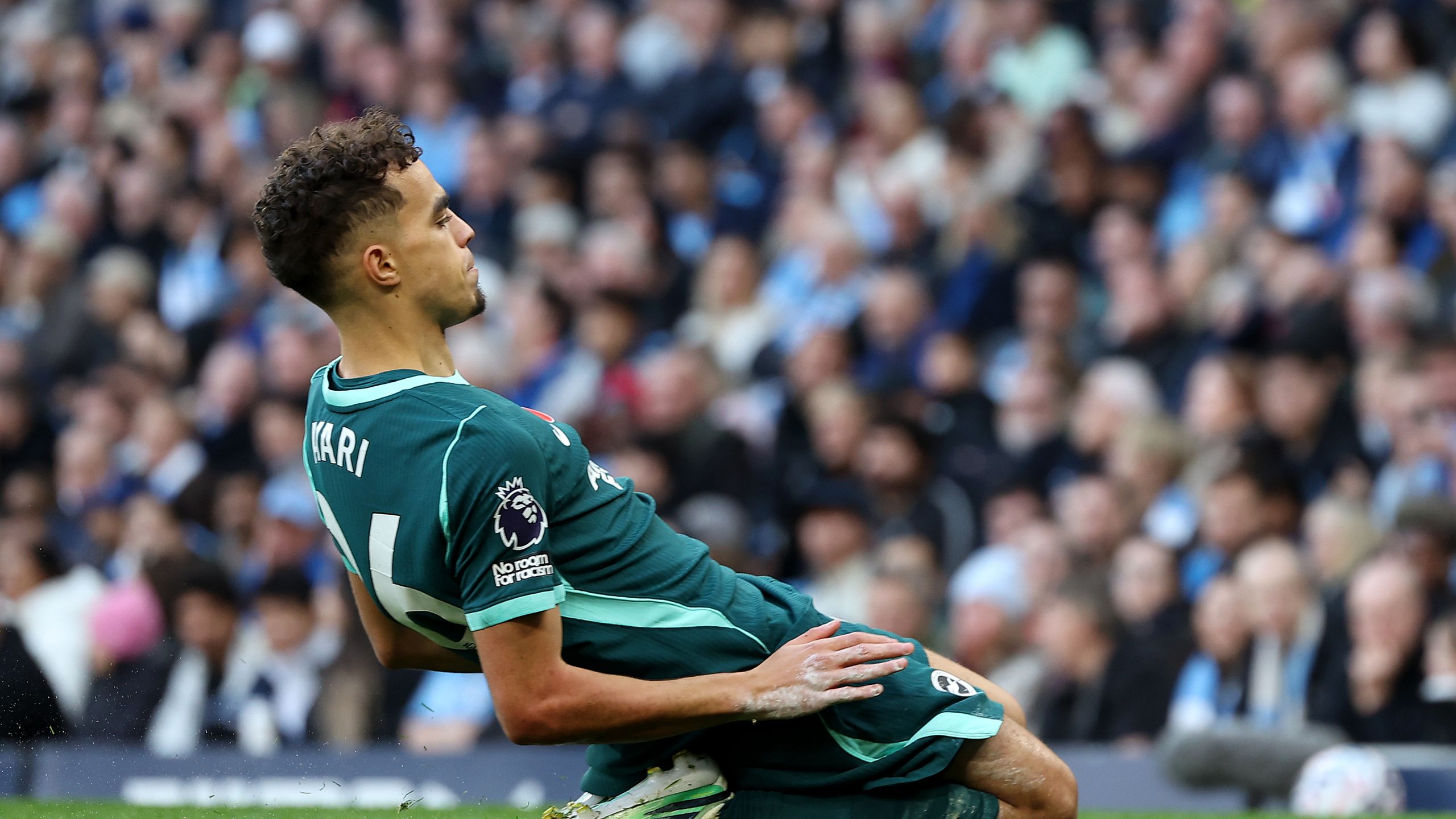 Brighton deserve credit beyond the headline result.
Winning at the Etihad is difficult, particularly against a team with City’s technical quality and attacking depth. Brighton combined an aggressive start with disciplined defending after taking the lead.
Their performance also strengthens the argument that they are serious contenders for a high league finish. With 19 points after nine matches, they are not simply enjoying a brief run of good results. They have placed themselves close to the leading teams and demonstrated that they can compete in difficult away fixtures.
Hürzeler will also take encouragement from the way his players responded to City’s pressure.
The result does not prove that Brighton are ready to challenge for the title. It does, however, show that they can beat one of the strongest sides in the division by executing a clear plan.
For other Premier League opponents, the match provides useful evidence: City can be hurt when their defensive concentration drops, when their attacking rhythm is disrupted and when opponents remain disciplined after scoring first.
Final verdict: A warning, not a title-race disaster
Manchester City’s defeat to Brighton was painful because it exposed several areas that require improvement. The defensive mistake behind Ayari’s goal, the failure to convert attacking opportunities and Brighton’s ability to protect their lead all contributed to the outcome.
But the result should not be exaggerated into proof that City’s title ambitions are collapsing. They remain among the leading teams, and the season is still at an early stage.
The more important question is how quickly Maresca can correct the problems exposed at the Etihad.
Brighton deserve the headlines for their organisation, composure and decisive finishing. City must now respond with greater defensive discipline and sharper attacking execution.
The biggest lesson from Manchester City vs Brighton is simple: dominance means little if it does not produce goals, and one defensive lapse can be enough to decide a match at the highest level.
Do you believe Brighton have exposed a weakness that other Premier League teams can exploit, or was this simply a frustrating afternoon for City? Share your thoughts in the comments and follow The Football Xtra for more in-depth Premier League analysis.