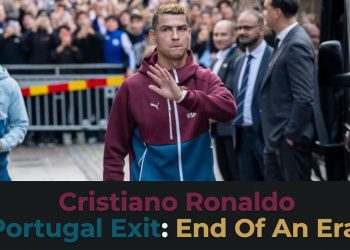

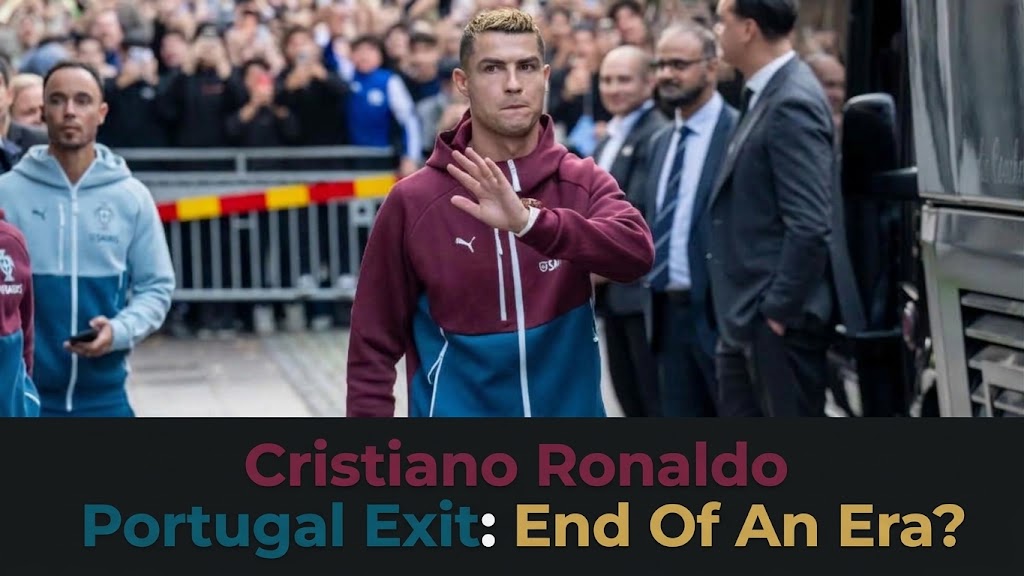
A single departure from a Portugal national team camp has opened a conversation far bigger than one international break. For nearly two decades, Cristiano Ronaldo has been more than a player for the Seleção — he has been the face, the record holder, the emotional reference point and the symbol of Portuguese football’s modern rise.
The Cristiano Ronaldo Portugal Exit story is therefore not only about one moment, one decision, or one international window. It represents a deeper question facing Portugal football: how does a national team built around one of the greatest players in history prepare for the future while still respecting the present?
At 41 years old in 2026, Ronaldo’s international journey is already unlike anything football has witnessed. He has carried Portugal through generations, collected records, won major trophies and remained one of the most recognisable athletes on the planet.
But football eventually forces every nation to confront the same reality: legends do not play forever.
For Portugal, that transition is not simply about replacing goals. It is about replacing influence, leadership, mentality and the psychological advantage that comes from having Cristiano Ronaldo on the pitch.
Cristiano Ronaldo Portugal Exit: Why This Moment Feels Bigger Than One Camp
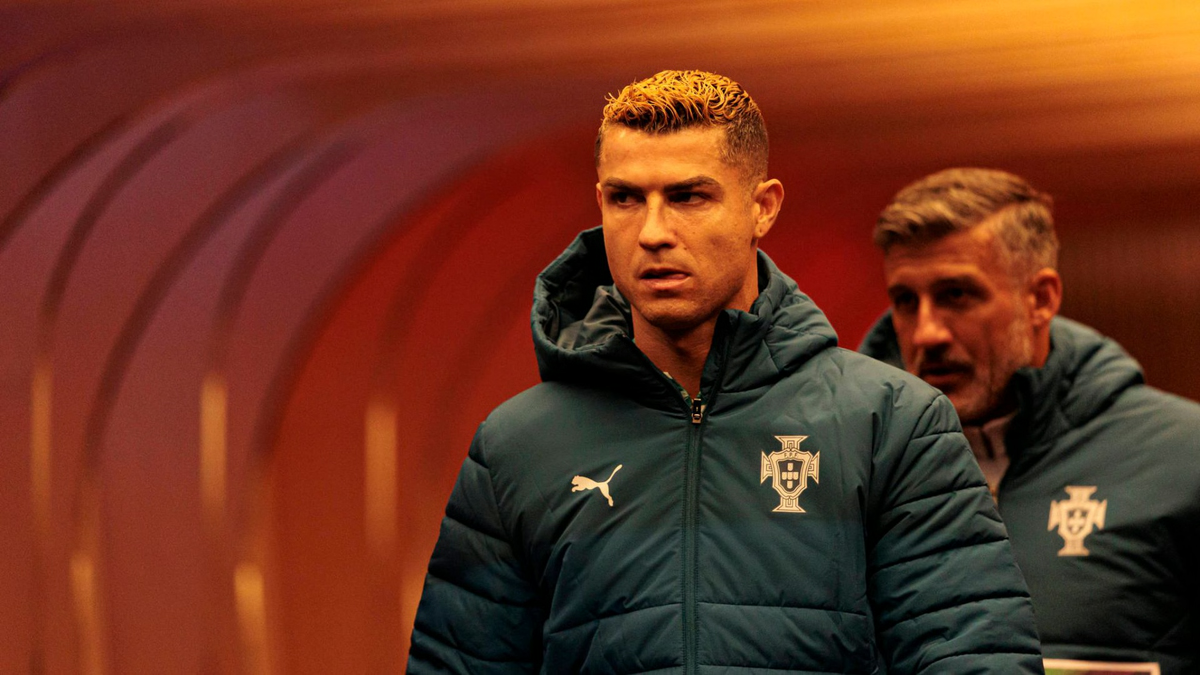 International football has always been different from club football.
At club level, players change teams, systems and environments regularly. But national teams are built around identity, history and emotional connection.
For Portugal, Ronaldo has been the constant figure through several different eras.
He made his senior debut for Portugal in 2003 and became the central figure of a generation that transformed the country from talented outsiders into a global football power.
His international career has included:
- UEFA Euro 2016 triumph
- UEFA Nations League 2019 victory
- Multiple FIFA World Cup appearances
- Record-breaking international goal numbers
- More than 200 appearances for Portugal
The numbers explain his importance, but they do not tell the entire story.
Portugal’s relationship with Ronaldo has always been about more than statistics.
He represented ambition.
He represented professionalism.
He represented the belief that Portugal could compete with football’s biggest nations.
That is why every Ronaldo-related international decision receives global attention.
A normal player leaving a national-team camp is a sporting update.
A Ronaldo exit becomes a conversation about an entire football era.
The Ronaldo Question: Player, Leader Or Symbol?
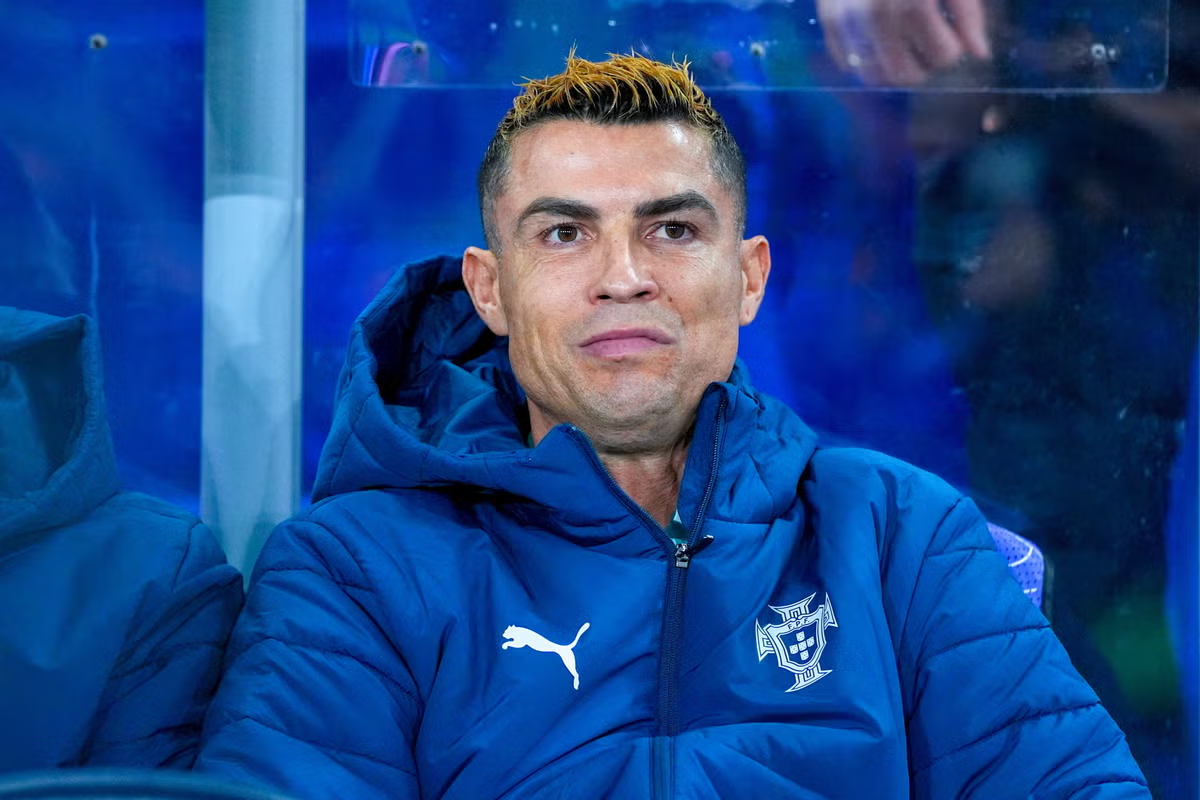 One of the biggest debates around Portugal’s future has never been about Ronaldo’s talent.
His ability has been proven for more than 20 years.
The discussion has always been about his changing role.
The young Ronaldo was a devastating winger:
- explosive acceleration
- one-versus-one ability
- constant movement
- direct attacking threat
The modern Ronaldo is different.
He evolved into a penalty-box specialist:
- elite positioning
- aerial dominance
- finishing instinct
- intelligent movement inside the box
This transformation allowed him to remain productive long after many players would have declined.
However, international football has also changed.
Modern elite teams require:
- aggressive pressing
- defensive contribution from forwards
- tactical flexibility
- positional rotations
This creates a complicated question for Portugal.
Not:
“Can Ronaldo still score goals?”
But:
“What is the best tactical role for Ronaldo in a team competing against the strongest nations?”
That is the challenge facing Portugal’s coaching staff.
Portugal After Ronaldo: The Tactical Challenge Of A New Generation
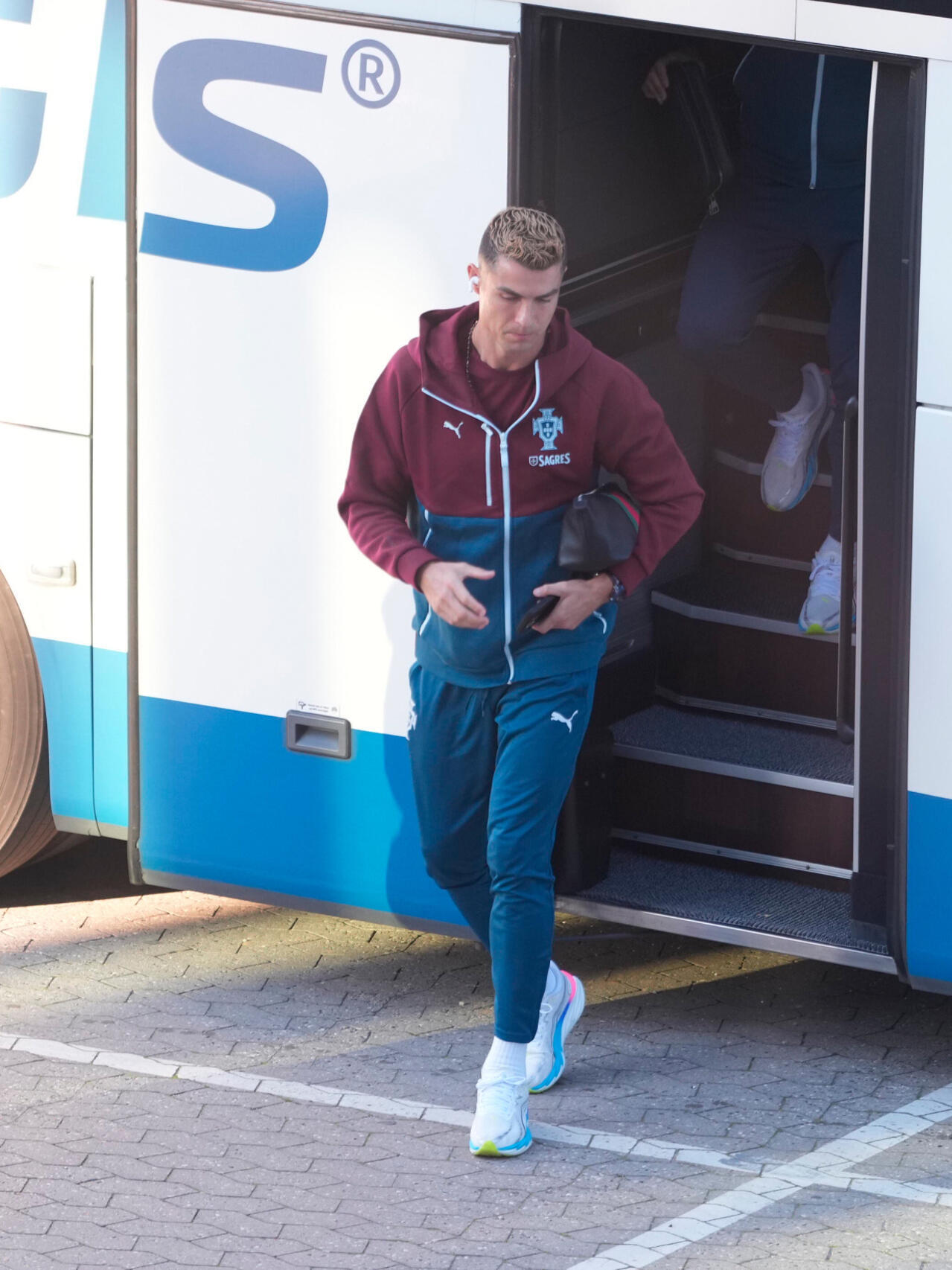 The biggest mistake Portugal could make would be thinking that replacing Ronaldo means finding another Ronaldo.
There will not be another Ronaldo.
The solution is not to recreate one player’s influence.
The solution is to build a different identity.
Portugal currently has one of the deepest talent pools in world football.
The next generation includes players capable of becoming global stars:
- Rafael Leão
- Bernardo Silva
- Bruno Fernandes
- Vitinha
- João Neves
- Nuno Mendes
- Gonçalo Ramos
- Diogo Costa
The question is how these players are organised.
For years, Portugal often had the luxury — and sometimes the challenge — of building around Ronaldo’s strengths.
SEE ALSO: Cristiano Ronaldo’s Wedding: 10 Years, Five Children and One Living Room
A post-Ronaldo Portugal may become more collective.
Instead of asking:
“How do we get Ronaldo into scoring positions?”
The question becomes:
“How do we create a system where multiple players become decisive?”
This could mean:
- more pressing from the front line
- faster attacking transitions
- greater responsibility for midfield creators
- a more balanced attacking structure
The future Portugal team may not have one superstar carrying responsibility.
It may have five or six elite players sharing it.
Roberto Martínez And The Balance Between Respect And Renewal
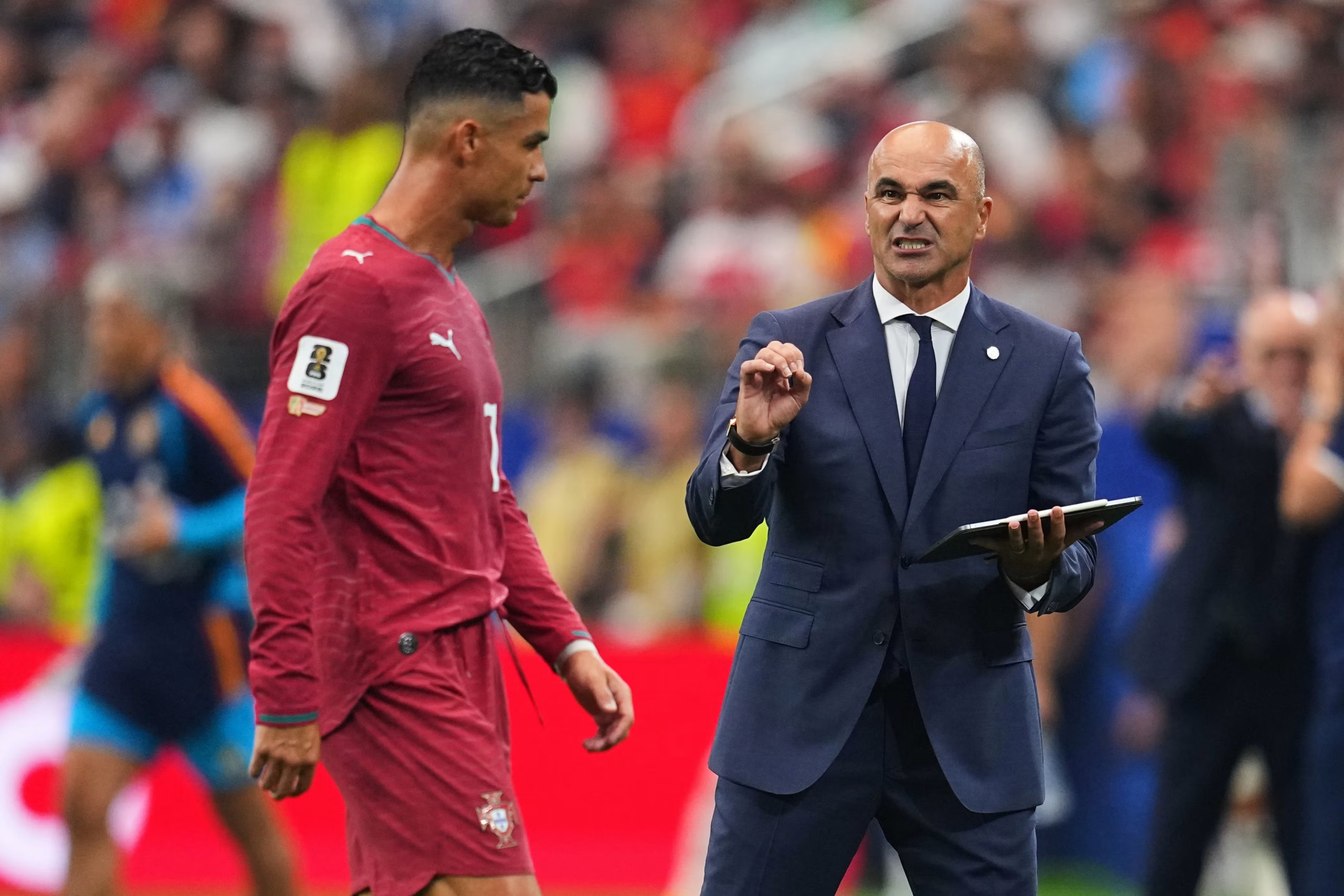 Managing Portugal’s transition requires a delicate balance.
A coach cannot ignore Ronaldo’s legacy.
At the same time, a national team cannot become trapped by history.
This is the difficult position facing Roberto Martínez.
The coach must answer three major questions:
1. When should Ronaldo start?
Experience matters, especially in major tournaments.
But elite football increasingly demands physical intensity and tactical adaptability.
2. Who becomes the new leadership voice?
Every successful national team has emotional leaders.
Spain had Sergio Ramos.
Germany had Philipp Lahm.
Argentina had Lionel Messi.
Portugal must discover who carries that responsibility next.
3. How quickly should the transition happen?
Moving away from Ronaldo too quickly could ignore his value.
Moving too slowly could delay Portugal’s next evolution.
Finding the middle ground is the biggest challenge.
The Financial And Global Impact Of Ronaldo’s International Future
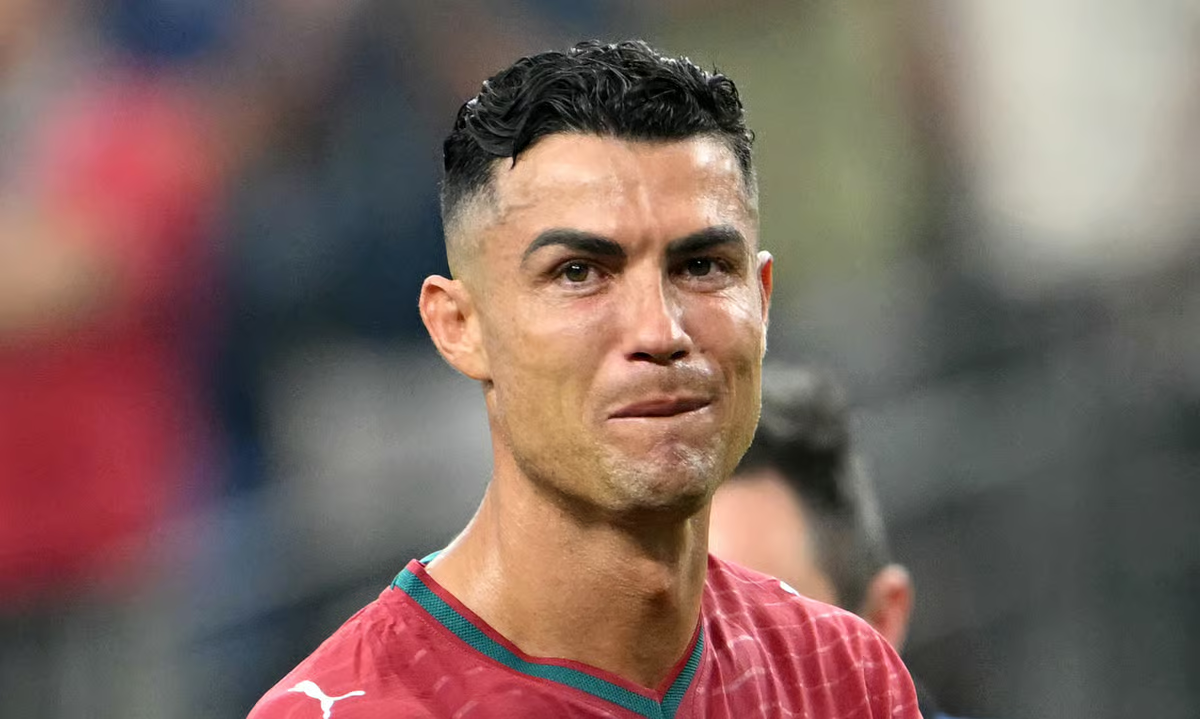 Ronaldo’s importance extends beyond football.
He is one of the most commercially powerful athletes in history.
Portugal’s national team has benefited from enormous global attention because of his presence.
Sponsors, broadcasters and international audiences have followed Portugal partly because Ronaldo created worldwide interest.
A future without Ronaldo will therefore also create a commercial transition.
Portugal’s Football Federation must continue building global appeal through:
- emerging stars
- tournament success
- digital engagement
- international branding
The challenge is not replacing Ronaldo’s popularity overnight.
The challenge is creating the next generation of Portuguese football icons.
World Cup 2026: Ronaldo’s Final International Chapter?
The 2026 FIFA World Cup represents a unique moment.
For many fans, it could be Ronaldo’s final opportunity to compete on football’s biggest international stage.
Whether it becomes his farewell tournament or another chapter depends on many factors:
- fitness
- form
- tactical decisions
- Portugal’s squad balance
But regardless of what happens, Ronaldo’s impact is already secure.
Few players have influenced a national team for such a long period.
Few players have carried expectations at such a level.
Few players have changed how a country sees itself in football.
What Comes Next For Portugal?
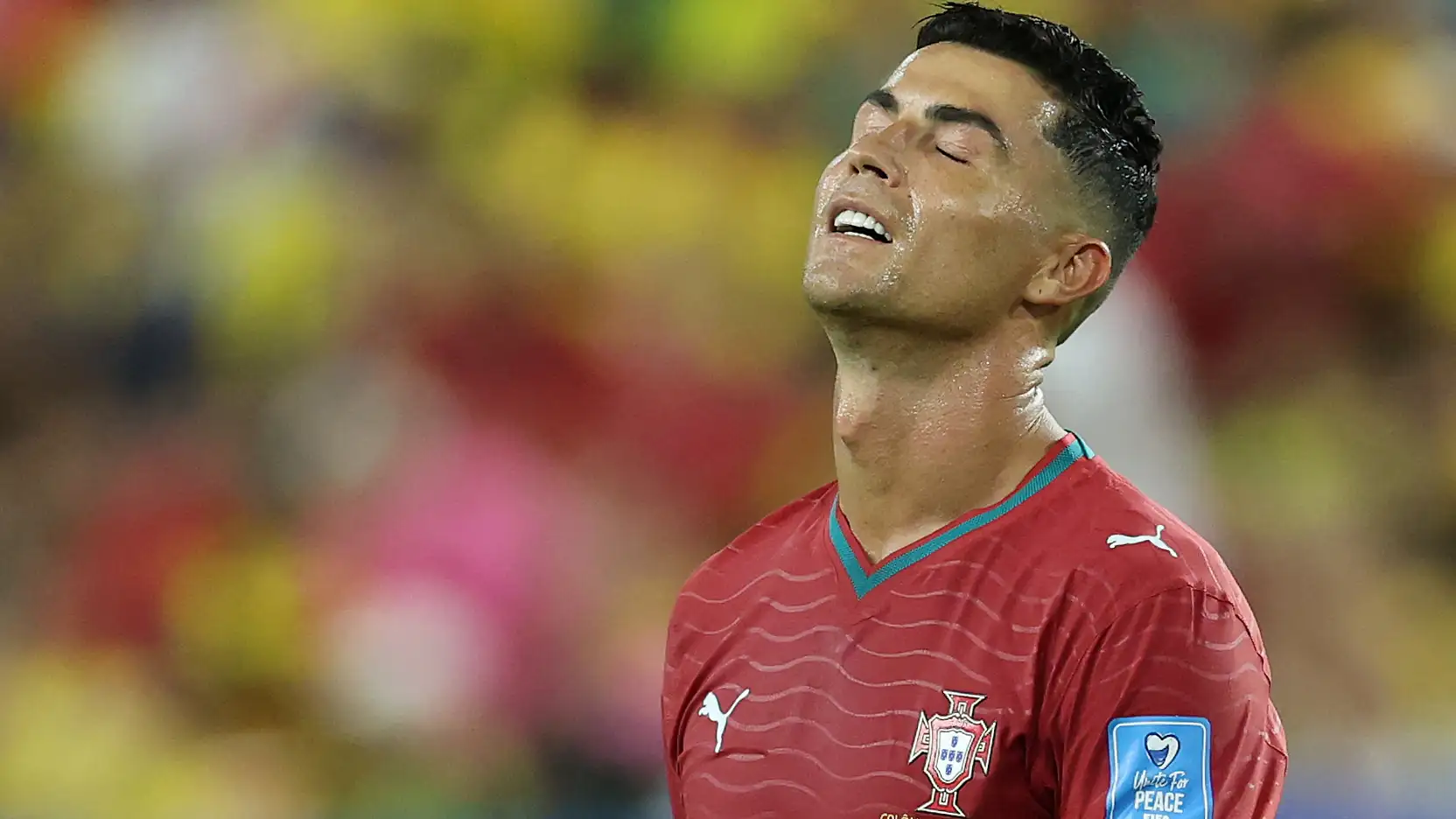 The Cristiano Ronaldo Portugal Exit debate is ultimately not only about Cristiano Ronaldo.
It is about the future of Portuguese football.
Every great football nation eventually faces this moment.
Brazil faced it after Pelé.
Argentina faced it after Maradona.
France faced it after Zidane.
Now Portugal must prepare for life beyond Ronaldo.
The challenge is not forgetting the past.
The challenge is using that past as the foundation for the next era.
Cristiano Ronaldo built one of football’s greatest international legacies.
Now Portugal must prove that the legacy can continue even when the player who created it is no longer the centre of everything.
What do you think? Should Portugal continue building around Ronaldo for as long as possible, or is it time for a complete transition toward the next generation? Share your opinion with The Football Xtra community.