Spain needed little time to remind Croatia why they are world champions. Lamine Yamal scored inside two minutes in Seville, turning Spain’s first home appearance since lifting the World Cup into another demonstration of how quickly Luis de la Fuente’s team can punish an opponent before a match has settled.
The fixture was one of the fastest-rising football searches of the night. Google Trends showed “Spain vs Croatia” above 20,000 searches in the United Kingdom and France, with interest still climbing after kick-off. Yamal gave those searches an immediate story.

Yamal gave Spain exactly the start they wanted
Spain’s early goal was not simply another individual highlight for a player who has made spectacular moments look routine. It reflected a team that starts matches with clear attacking intentions. Yamal receives wide, but his first thought is rarely to stay there. He can attack the outside shoulder, drift into the half-space or carry the ball directly towards goal depending on how the defender reacts.
Against Croatia, the speed of that decision-making immediately stretched a side that had beaten Czechia in its opening Nations League game. Croatia arrived with experience, control and Luka Modrić’s ability to slow a match down. Spain did the opposite: they increased the tempo before Croatia could establish it.
The visitors responded through Dion Beljo in the 28th minute, but Spain restored their advantage through Marc Pubill and went into half-time 2-1 ahead. That sequence was significant because it showed that Spain’s threat is not limited to the first emotional surge of a home match. They can concede momentum and then rebuild it.
Spain are no longer dependent on one route to goal
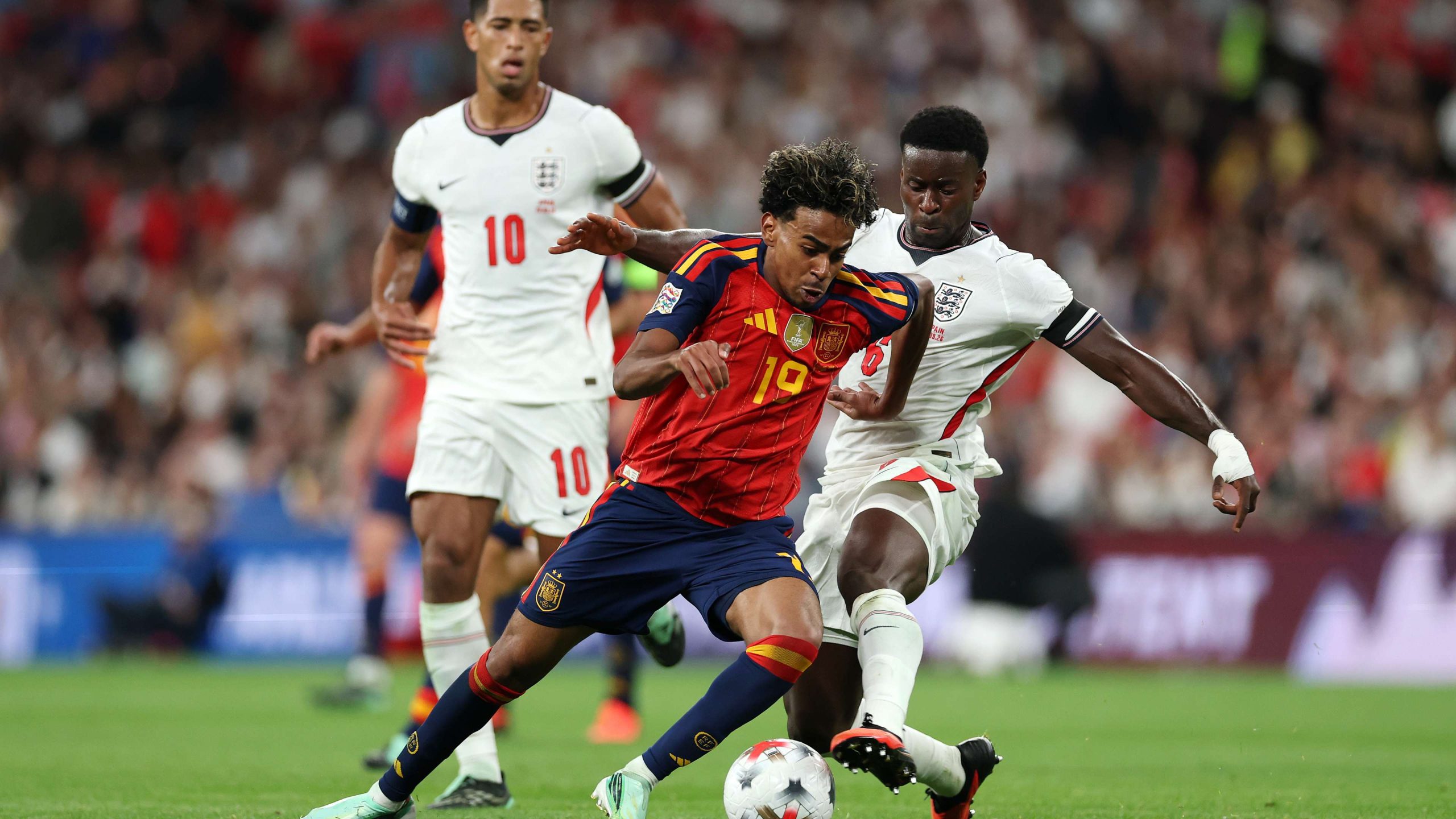
The most difficult feature of this Spain side is the number of different ways they can attack. At Wembley three days earlier, they beat England 3-2 after going behind and changed the game with their pressing, bench options and movement between the lines. We looked at that broader rise in our recent analysis of Lamine Yamal’s growing influence.
Against Croatia, the early phases again showed why Spain are difficult to plan against. If a defence narrows to protect central areas, Yamal and the wide players receive space. If the full-backs step out, Spain can attack the channel behind them. If an opponent sits deeper, the midfielders are comfortable recycling possession until a better angle appears.
That balance is the product of more than technical quality. Spain’s structure gives their best players freedom without leaving the team disconnected. Yamal can attempt an aggressive dribble because there is usually a midfielder positioned to protect the next phase. A full-back can push forward because the holding player understands when to cover.

Croatia are still the right kind of opponent for Spain
Croatia’s equaliser was a reminder that Spain’s control is never complete. Modrić’s teams are comfortable surviving difficult periods because they do not need many touches to restore order. One well-timed pass or a clean second ball can change the emotional direction of a match.
That makes Croatia a useful opponent for a Spain side now carrying the expectations of both European and world champions. De la Fuente’s players are no longer chasing legitimacy. They are defending status, and opponents approach them with a different level of caution.
The challenge is maintaining urgency when every match is framed as a test of whether the champions can be stopped. Spain’s start in Seville suggested that complacency is not yet an obvious problem. The opening goal came from the same aggressive mentality that hurt England at Wembley, where Yamal also scored inside the opening two minutes.
That repetition matters. Great international sides are not defined only by one tournament run. They become difficult to beat because their behaviours remain recognisable from match to match.
There is another detail worth noting. Spain no longer need to dominate every minute to look dangerous. Against England they survived a spell in which the match moved away from them, then used their substitutes to regain control. Croatia’s equaliser created a similar test in Seville. The response was not panic or a rush of low-percentage crosses. Spain continued to move the ball, trusted the width of the pitch and waited for another opening. That emotional control is as important as the technical quality.

De la Fuente has built a team that keeps adding layers
Spain’s success since 2024 has often been explained through the obvious names, but the deeper strength is how quickly new pieces fit into the same framework. Pubill’s goal against Croatia was another example of contributions coming from beyond the headline attackers.
That is where De la Fuente’s work deserves attention. Spain can still play the possession football associated with their national identity, yet they are more direct than the teams of a decade ago. They press with greater aggression, attack transitions more willingly and allow wide players to take risks earlier.
Yamal remains the player who changes the temperature of the game. He is the one defenders fear before he receives the ball, and that fear creates space for others. But Spain’s ability to keep producing answers around him is what turns his talent from an individual advantage into a team-wide problem for opponents.
Read Here: GOAL’s Spain vs Croatia match preview and analysis.