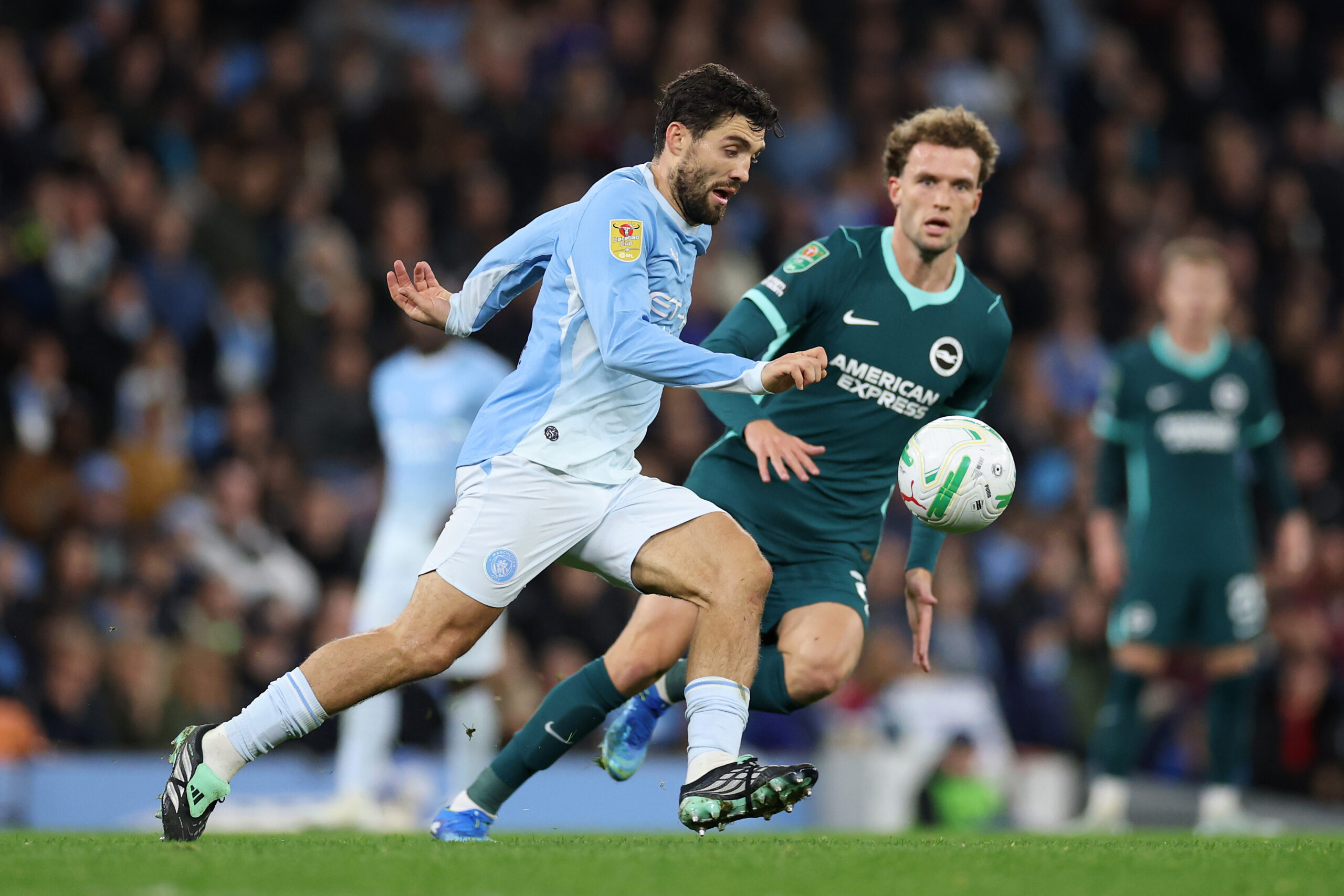
Manchester City may have won the psychological battle in Wednesday’s Carabao Cup meeting, but Brighton have already demonstrated that they can make life uncomfortable for the Premier League leaders. A 2–2 draw at the Etihad Stadium, followed by City’s penalty-shootout victory, exposed a potentially significant weakness: Brighton can create problems when they attack the spaces around City’s defensive structure.
That is the central storyline ahead of Man City vs Brighton. The Seagulls return to Manchester on Saturday with an opportunity to turn their midweek performance into a statement result in the league.
City remain among the strongest attacking teams in the competition, with Erling Haaland providing a constant goal threat. However, their recent defeat against Aston Villa and the two goals conceded against Brighton suggest that their defensive organisation is not beyond examination.
For Enzo Maresca, this is a test of control, defensive balance and tactical adaptation. For Fabian Hürzeler, it is an opportunity to demonstrate that Brighton’s approach can trouble one of the strongest squads in English football.
The question is not whether Brighton can compete with City. Wednesday’s encounter already answered that. The real question is whether they can exploit the same weaknesses more effectively over 90 minutes.
Man City vs Brighton: Why Wednesday’s 2–2 Draw Matters
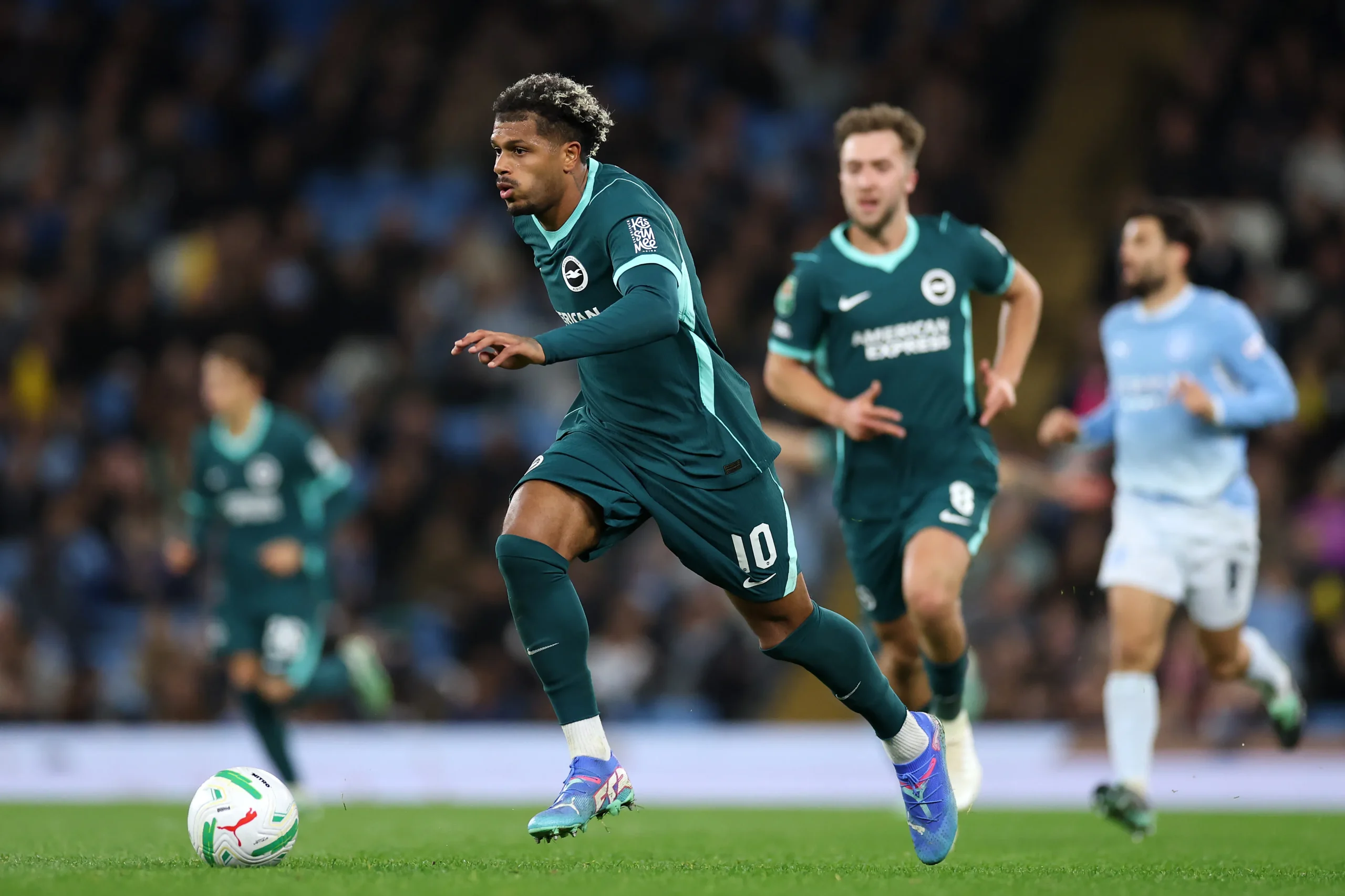 The most important preparation for this match is not a historical meeting from several seasons ago. It is the encounter these teams played only three days earlier.
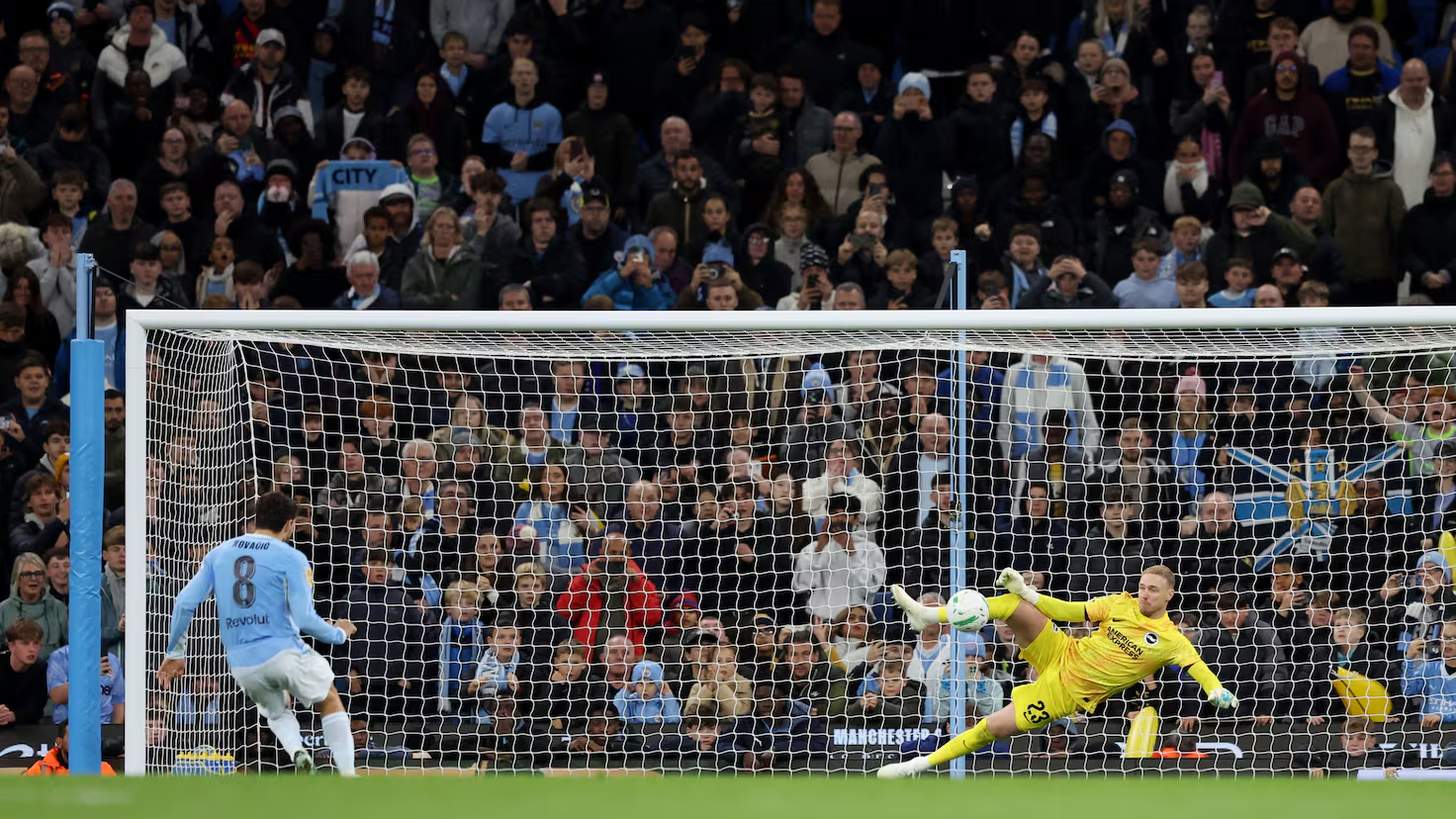
Brighton twice found a way to score against City in the Carabao Cup fourth round. The match finished 2–2 before City advanced after winning the penalty shootout.
That result offers two different interpretations.
From City’s perspective, reaching the next round demonstrated resilience. They recovered from difficult moments, remained competitive and eventually progressed through the goalkeeper’s contribution in the shootout.
From Brighton’s perspective, however, the performance provided evidence that their attacking approach can create problems against City’s defensive structure.
The difference between a cup match and a league encounter is important. Both teams rotated players during Wednesday’s game, and Saturday’s starting line-ups are expected to be considerably different. City are likely to restore several important first-team players, including Haaland, Rúben Dias, Josko Gvardiol and Gianluigi Donnarumma.
Nevertheless, the tactical lessons remain relevant.
Brighton do not need to dominate possession throughout the match to hurt City. They need to recognise the moments when the hosts are vulnerable, move the ball quickly and attack before the defensive structure becomes organised.
That is what makes Man City vs Brighton such an interesting tactical contest.
1. Brighton’s Pressing Could Disrupt City’s Build-Up
 Manchester City traditionally want to establish control from the first phase of possession. Their defenders and midfielders exchange passes to attract opposition pressure before finding players in more advanced positions.
The objective is to create numerical superiority, progress through the opposition’s first defensive line and establish possession in dangerous areas.
Brighton can challenge that process through coordinated pressing.
Rather than allowing City to circulate the ball comfortably, Hürzeler can instruct his forwards and attacking midfielders to close specific passing options. The objective is not necessarily to chase every defender. It is to make City’s preferred passing routes difficult to access.
This distinction is crucial.
If Brighton press without coordination, City can exploit the spaces behind the first wave and move the ball into midfield. However, if the pressing movements are synchronised, the visitors can force City towards the touchlines or encourage hurried passes.
The most important players in this battle will be Brighton’s forwards and central midfielders.
They must recognise when to press the centre-backs, when to block access into midfield and when to retreat into a compact shape.
For City, the solution will involve intelligent movement away from the ball. Their midfielders must create passing angles, while the defenders need to recognise when a direct pass is more effective than another short exchange.
In Man City vs Brighton, the first team to control the quality of the build-up could gain an important advantage.
2. The Space Behind City’s Advanced Players
 One of the risks associated with an attacking system is the space it can leave behind when possession is lost.
City want to push players forward, occupy attacking positions and maintain pressure around the opposition penalty area. That approach can be extremely effective when the team has enough players positioned to counter-press immediately after losing possession.
However, if Brighton escape that pressure, the spaces behind City’s advanced players could become dangerous.
Brighton have attacking players capable of carrying the ball forward and making intelligent movements into open areas. Diego Gómez, Yasin Ayari and Charalampos Kostoulas are among the options who could contribute to those transitions.
The challenge for Brighton is to make their first forward pass count.
If they recover possession but take too long to move the ball, City will have enough time to reorganise. If they progress quickly, however, they could force City’s defenders into uncomfortable one-against-one situations.
This is particularly relevant when City’s full-backs or wide players have advanced high up the pitch.
The visitors must identify which side offers the greatest opportunity and attack it with speed.
For City, defensive protection cannot depend exclusively on the centre-backs. Their midfielders must be positioned to stop Brighton’s first forward pass and prevent the visitors from turning a defensive recovery into an immediate counterattack.
This could become one of the decisive battles in Man City vs Brighton.
3. Erling Haaland Against Brighton’s Defensive Organisation
 Haaland’s return to the starting line-up is expected to provide City with a major attacking boost.
His greatest strength is not simply his finishing. His movement creates problems for defenders before he even receives the ball.
Haaland constantly threatens the space between centre-backs and full-backs. He can attack crosses, run behind a defensive line and occupy defenders who would otherwise move forward to support their midfield.
SEE ALSO: Man City’s Perfect Start Is Over: 5 Questions Arsenal Must Ask After Villa Defeat
Brighton therefore need a disciplined defensive approach.
Lewis Dunk and the other defenders must avoid becoming too focused on Haaland individually. If they follow him too aggressively, City could create space for attacking midfielders to enter the penalty area.
The alternative is to maintain compact distances between the defensive and midfield lines, limit the service reaching Haaland and force City to attack from less dangerous positions.
However, defending Haaland for an entire match is difficult because City can change the direction of their attacks quickly.
Jeremy Doku’s ability to take on defenders, Phil Foden’s movement between the lines and Rayan Cherki’s creativity can all create additional problems.
Brighton must therefore defend the entire attacking structure rather than treating Haaland as the only threat.
The striker’s presence could become decisive in Man City vs Brighton, particularly if City establish sustained possession around Brighton’s penalty area.
4. The Midfield Battle: Who Controls the Second Ball?
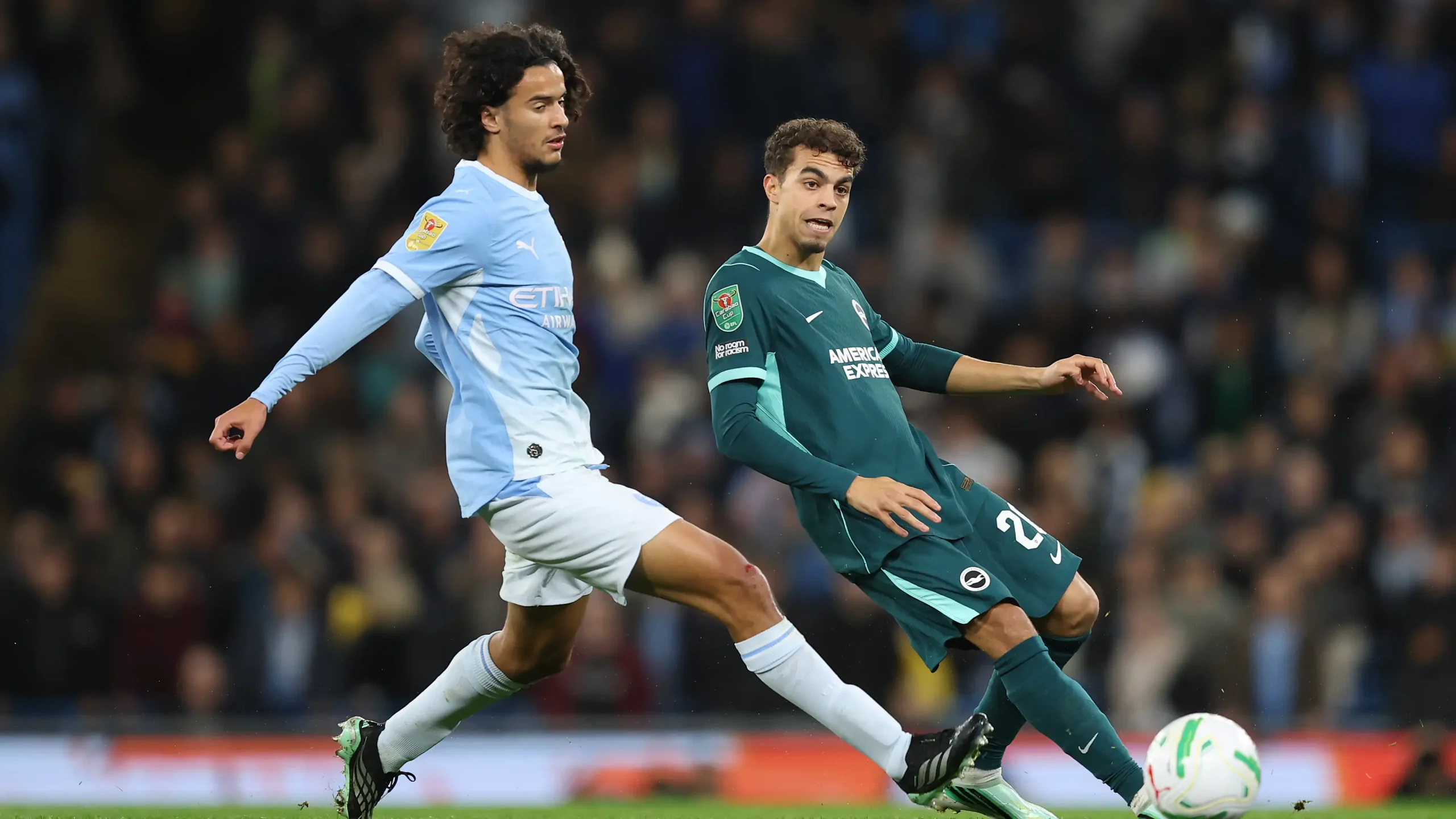 The midfield contest will determine how frequently Brighton can launch transitions and how comfortably City can sustain their attacking pressure.
City’s midfield needs to combine technical quality with defensive responsibility. Elliot Anderson can contribute energy and ball recovery, while Enzo Fernández offers passing ability and the capacity to connect different areas of the pitch.
Ayyoub Bouaddi is another option who has impressed in recent weeks and could be involved in the selection.
Brighton, meanwhile, need their midfielders to remain aggressive without abandoning their defensive positions.
Pascal Groß can provide experience and passing quality, while Yasin Ayari offers movement and energy. Chema Andrés could also have a role if selected.
The battle for second balls will be particularly important.
When a team plays forward under pressure, possession often becomes contested. The side that reacts quickest to loose balls can establish another attacking phase or launch a counterattack.
If City win those situations consistently, Brighton could spend long periods defending. If the visitors recover possession and move forward quickly, they can reduce City’s ability to control the match.
The midfield contest in Man City vs Brighton is therefore about more than passing accuracy or possession percentages. It is about controlling the moments immediately after possession changes.
5. Brighton’s Attacking Width Could Stretch City’s Defence
 Brighton can also create problems by using the width of the pitch.
When a team attacks centrally against a compact defensive structure, it can become predictable. Moving the ball towards the wide areas forces defenders to make decisions about whether to remain narrow or move across to challenge the ball.
That creates opportunities for players to attack the spaces between defenders.
Brighton’s wide players can stretch City’s defensive line, while overlapping full-backs may provide additional passing options. The objective is to make City’s defenders defend more ground and create gaps that can be attacked with intelligent movement.
The absence of Kaoru Mitoma is an important consideration. The Japan international remains unavailable with a thigh injury, reducing one of Brighton’s familiar attacking options.
However, Brighton still have other players capable of providing width and attacking movement.
City must avoid allowing Brighton to establish comfortable possession in the wide areas. Their defenders need support from the midfield, while the players on the opposite side must maintain their positions to prevent switches of play from creating dangerous situations.
If Brighton can move City from side to side, they may find opportunities to attack the penalty area.
This is another reason why Man City vs Brighton could become more complicated than the league positions initially suggest.
Team News: Important Returns and Injury Concerns
City’s squad situation is relatively positive compared with Brighton’s.
Antoine Semenyo is the major confirmed absentee for the hosts because of a knee injury. Matheus Nunes has been listed as a doubt, although other match previews report that he could be available.
Several regular starters are expected to return after being rested in the Carabao Cup, including Haaland, Donnarumma, Dias, Gvardiol and Anderson.
Brighton have a longer injury list.
Kaoru Mitoma, Femi Azeez, Pascal Struijk, Evan Ferguson, Stefanos Tzimas and Zadok Yohanna are among the players reported unavailable. Ferdi Kadioglu and Chema Andrés have also been monitored after fitness concerns.
These absences could influence Hürzeler’s selection, especially in the attacking and defensive areas.
The expected return of several important City players gives Maresca greater flexibility, but Brighton’s ability to compete in Wednesday’s meeting suggests that squad availability alone will not decide the match.
In Man City vs Brighton, the tactical execution of the available players will be just as important as the names on the team sheet.
What the League Table Says About the Stakes
City enter the weekend at the top of the Premier League table with 21 points from eight matches, while Brighton occupy third place with 16 points.
The five-point difference gives City an opportunity to strengthen their position near the top of the table.
Brighton, however, have a different motivation. A victory at the Etihad would reduce the gap to two points and strengthen their argument that they can compete with the leading sides.
City’s recent league form has been strong overall, despite their 2–1 defeat against Aston Villa. Brighton also arrive after a mixed sequence of results, including a 0–2 defeat against Liverpool.
The wider title-race context adds further significance. City cannot afford to treat Brighton as a routine opponent, particularly with other contenders looking to take advantage of any dropped points.
For the visitors, this is an opportunity to turn a promising league campaign into something more ambitious.
Prediction: Can Brighton Turn Their Tactical Plan Into a Shock Result?
 City have the stronger squad on paper, home advantage and the attacking quality to create numerous opportunities.
Haaland’s expected return is especially significant. His movement could force Brighton to defend deeper than they would prefer, reducing their opportunities to press high and launch transitions.
However, Brighton have already shown that they can score against City at the Etihad. Their challenge is to repeat that attacking effectiveness while improving their defensive concentration.
The visitors must be brave enough to press, but disciplined enough to avoid leaving excessive space behind their midfield.
City, meanwhile, need to improve their protection against counterattacks and avoid allowing Brighton to play through the first defensive pressure.
Our prediction: Manchester City 3–2 Brighton.
City’s attacking quality gives them the advantage, but Brighton have enough tactical organisation and forward movement to make this an uncomfortable afternoon for the hosts.
Final Verdict: A Warning City Cannot Ignore
The most interesting element of Man City vs Brighton is that both teams already know what the other can do.
Wednesday’s 2–2 draw provided Brighton with evidence that their attacking approach can trouble City’s defensive organisation. It also gave Maresca an opportunity to identify the problems that must be corrected before the league encounter.
City should not panic because of two goals conceded in a cup match. However, they cannot ignore the spaces Brighton managed to exploit.
The decisive factor will be City’s ability to balance attacking ambition with defensive security. If their midfield protects the defence and their counter-pressing works effectively, they have enough quality to control the match.
If Brighton escape that pressure, the visitors could turn the Etihad into a difficult afternoon for the league leaders.
What do you think? Can Brighton expose City’s defensive weaknesses again, or will Haaland and company secure a convincing victory? Share your prediction in the comments.